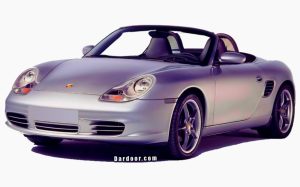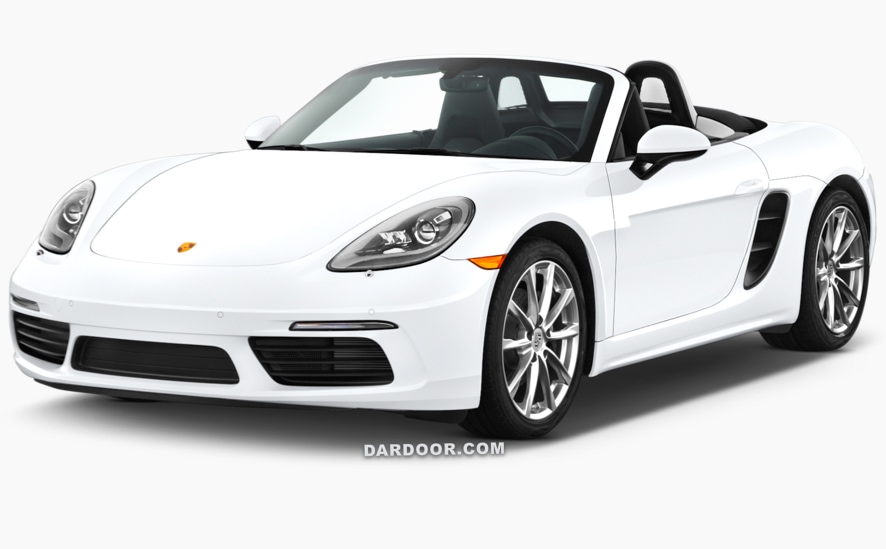
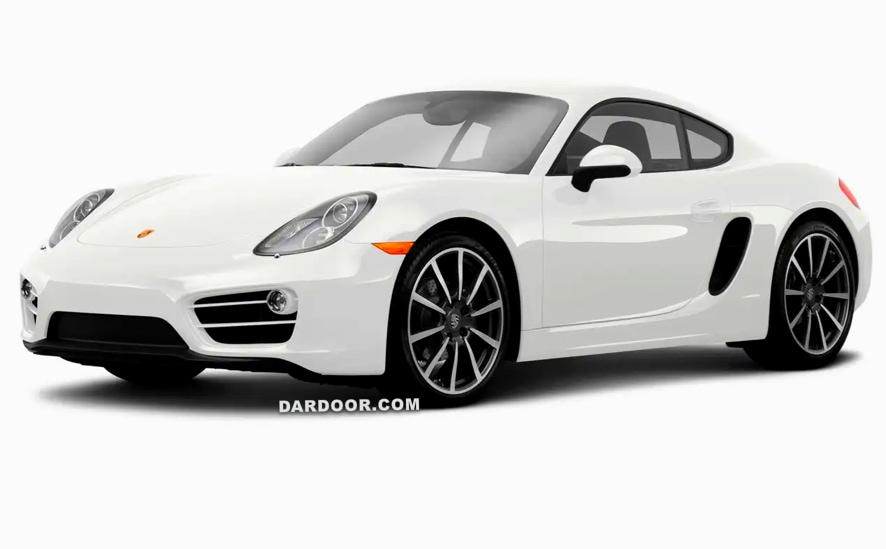
Get the same professional-grade repair information used by Porsche dealership technicians with this original OEM workshop manual for the 2013-2016 Porsche Boxster (Cayman 981).
⚙️ Technical Specs & Performance (2013–2016 Boxster 981)
Note: Exact figures vary by trim (Boxster / Boxster S / GTS) and transmission (6MT or PDK).
- 🧠 Platform: Porsche 981 (mid-engine roadster)
- ⛽ Engines (typical):
- Boxster: 2.7L flat-6 (~265 hp)
- Boxster S: 3.4L flat-6 (~315 hp)
- Boxster GTS (later years): 3.4L flat-6 (~330 hp)
- ⚙️ Transmissions: 6-speed manual or 7-speed PDK dual-clutch
- 🚗 Drivetrain: RWD (rear-wheel drive)
- 🏎️ 0–60 mph (approx.): ~4.7–5.8s depending on trim & gearbox
- 🛑 Brakes: 4-wheel discs, ABS, stability/traction control
- 🪂 Chassis: Sport suspension options, PASM (option), Sport Chrono (option)
- 🧳 Storage: Dual trunk layout (front + rear) typical of mid-engine Porsche
Sources for recall/TSB context and model coverage: rear axle carrier recall (NHTSA 21V-679 / AMB7), hood latch recall (14V698000 / AE04)
🔧 Top 10 Common Mechanical Issues (Reported by Owners & Shops) — Root Cause ✅ + Fix 🛠️
- Ignition coil / plug misfires (rough idle, flashing CEL)
🧩 Root cause: coil pack aging/heat cycling, worn plugs, or oil contamination in plug tubes.
🛠️ Recommended fix: scan misfire counters, replace coils/plugs as a set where needed, inspect plug tube seals and address oil leaks. - Water pump seepage / coolant smell
🧩 Root cause: seal wear over time, thermal cycling, or bearing play.
🛠️ Recommended fix: pressure test cooling system; replace water pump + thermostat if indicated; refill with correct coolant and bleed properly. - Coolant expansion tank cracks / slow coolant loss
🧩 Root cause: plastic tank aging and heat cycles.
🛠️ Recommended fix: inspect for hairline cracks, replace tank/cap, verify no air pockets; re-check level after heat cycles. - Oil separator / PCV (AOS) issues (smoke, idle problems)
🧩 Root cause: internal diaphragm leak causing crankcase ventilation imbalance.
🛠️ Recommended fix: confirm via vacuum/pressure symptoms; replace AOS/PCV assembly; inspect related hoses. - Rear axle carrier fracture risk (safety recall-related)
🧩 Root cause: out-of-spec rear-axle carrier side sections may crack/fracture over time.
🛠️ Recommended fix: verify VIN eligibility; perform recall remedy replacement through Porsche. - Brake squeal complaints
🧩 Root cause: pad compound, glazing, rotor surface condition, and driving style/heat cycles.
🛠️ Recommended fix: measure rotor/pad condition; perform bedding procedure; replace pads/rotors if out of spec; follow Porsche guidance. - PDK shift quality / hesitation (PDK cars)
🧩 Root cause: adaptation values, old fluid, or software/calibration needs (sometimes addressed by TSBs).
🛠️ Recommended fix: check fault memory, confirm fluid service history, perform adaptation reset/relearn using proper tools (PIWIS at a shop). - Convertible top mechanical wear (binds, uneven movement)
🧩 Root cause: linkage wear, alignment, or tension/cable issues over time.
🛠️ Recommended fix: inspect arms/linkages, lubricate pivot points as specified, recalibrate/adjust; replace worn components. - Suspension clunks (control arms/links)
🧩 Root cause: bushing wear, drop links, or top mounts loosening with mileage.
🛠️ Recommended fix: inspect for play, replace worn arms/links, align afterwards. - Exhaust rattle (heat shields or mounts)
🧩 Root cause: loose heat shielding or aged hangers.
🛠️ Recommended fix: tighten/replace clamps and shields; replace failed mounts/hangers; verify no contact under load.
💡 Top 10 Common Electrical Issues — Root Cause ✅ + Fix 🛠️
- Battery drain / low-voltage warnings
🧩 Root cause: aging battery, short-trip usage, or parasitic draw from modules waking up.
🛠️ Recommended fix: battery test + charging system test; measure parasitic draw; update/diagnose modules if draw is abnormal. - TPMS warning light
🧩 Root cause: failing wheel sensor batteries or sensor damage during tire service.
🛠️ Recommended fix: scan TPMS IDs; replace faulty sensors; relearn/program as required. - PCM/ECM-related CEL from misfire or mixture faults
🧩 Root cause: ignition, intake leaks, MAF contamination, or fuel trim issues (not always the ECU).
🛠️ Recommended fix: diagnose by live data (fuel trims, misfires), repair the actual cause (coils, leaks, sensors). - Infotainment glitches (freezing/reboots)
🧩 Root cause: software bugs, low voltage events, or module communication hiccups.
🛠️ Recommended fix: ensure stable battery, check for software updates and module fault codes; reflash/update if available. - Convertible top microswitch/sensor faults
🧩 Root cause: misadjusted switches, sensor drift, or wiring fatigue near moving joints.
🛠️ Recommended fix: scan for top faults, check switch alignment, repair harness routing, replace failed switches. - ABS/PSM lights (intermittent)
🧩 Root cause: wheel speed sensor contamination/failure or low voltage events.
🛠️ Recommended fix: read ABS faults, inspect tone rings/sensors, repair wiring, verify battery/alternator health. - Airbag/SRS warning (seat wiring related)
🧩 Root cause: seat harness defects or connector issues that can disable passenger airbags (campaign/recall in some markets).
🛠️ Recommended fix: verify recalls/campaigns, inspect seat harness/connectors; repair/replace per Porsche procedure. - Key/immobilizer intermittent recognition
🧩 Root cause: weak key fob battery, antenna/range issues, or CAN communication noise.
🛠️ Recommended fix: replace fob battery; scan body module faults; test antenna circuits and wiring. - Cooling fan control anomalies
🧩 Root cause: fan module, relay, or temperature sensor signal irregularities.
🛠️ Recommended fix: command fans via scan tool, verify power/ground, replace module/relay if failing. - CAN communication fault codes (sporadic “U” codes)
🧩 Root cause: low voltage, corroded grounds, damaged wiring, or a noisy module on the network.
🛠️ Recommended fix: load test battery, inspect grounds, check CAN integrity (resistance/voltage), isolate module causing bus disruption.
📊 Pros & Cons (Owner-Friendly Snapshot)
| Pros ✅ | Cons ⚠️ |
|---|---|
| 🏎️ Sharp handling, balanced mid-engine feel | 💸 Porsche parts/labor costs can be high |
| 🔊 Great engine sound & response (NA flat-6) | 🔋 Sensitive to weak batteries / low voltage |
| 🌤️ Convertible fun with real daily usability | 🧰 Convertible top sensors/linkage wear over time |
| 🛑 Strong braking + modern stability systems | 🎯 Some issues require PIWIS-level diagnostics |
| 🧾 Excellent documentation available (OEM manual) | 🧊 Cooling system plastics can age (tanks/hoses) |
🛠️ Maintenance Schedule (Practical)
Always follow your owner’s manual for exact intervals based on climate/driving style.
| Interval ⏱️ | Service Items 🔧 |
|---|---|
| Every 5,000–7,500 mi (or yearly) | 🛢️ Engine oil & filter • 🔍 Visual leak check • 🧯 Brake inspection • 🧭 Tire condition/pressures |
| Every 10,000–15,000 mi | 🌀 Cabin filter • 🧼 Clean drains (convertible area) • 🔋 Battery/charging test |
| Every 20,000–30,000 mi | 🧰 Engine air filter • 🛑 Brake fluid check (replace per time) • 🔧 Suspension bushing inspection |
| Every 40,000–60,000 mi | ⚡ Spark plugs (common wear item) • 🧪 Cooling system pressure check • 🧯 Inspect coils/boots |
| PDK / Transmission service (as scheduled) | ⚙️ PDK fluid/filter service per Porsche schedule • 🧠 Adaptation check if shift quality changes |
Tip 💡: Low voltage causes “ghost” faults across modules—keep the battery healthy and coded correctly for best reliability.
📢 Top 10 Recalls & TSB Highlights (Mix of Safety Recalls + Manufacturer Communications)
Below are the most relevant recall/TSB-style highlights commonly referenced for this generation. Always confirm by VIN using Porsche/NHTSA tools.
- 🧨 Rear axle carrier side sections may fracture (Safety Recall 21V-679 / AMB7) — risk of loss of control; remedy is replacement of affected parts.
- 🔒 Front hood latch/lock may fail to secure hood (Safety Recall 14V698000 / AE04) — hood could open while driving; remedy is hood lock replacement.
- 🎈 Passenger seat wiring/harness may deactivate passenger airbags (Safety recall notice – Canada example) — airbag warning lamp may illuminate; remedy involves dealer repair/replacement.
- 🧠 TSB/Manufacturer communication: Fuel filler flap switching element concern — workshop campaign-style bulletin described in manufacturer communications.
- 🛑 TSB: Brake squeal understanding/handling — guidance for diagnosing/mitigating squeal complaints.
- ⚙️ TSB trend: PDK/shift quality or calibration updates (where applicable) — manufacturer bulletins commonly reference diagnosis steps and software checks.
- 🌡️ TSB trend: Cooling system checks (expansion tank, coolant loss complaints) — common diagnostic pathways in service communications.
- 🧩 TSB trend: Convertible top faults (switches/sensors, calibration) — diagnosis steps for top limit signals and control unit fault memory.
- 🔋 TSB trend: Battery/low-voltage fault cascades — guidance to verify power supply stability before replacing modules.
- ✅ VIN-based recall verification — always run your VIN on Porsche and NHTSA recall tools.
⚠️ Notes: Recall/TSB availability depends on build dates and market. Confirm exact coverage by VIN.
🧾 DTC Trouble Code List (10 Codes Per Module)
Important ✅: DTC meanings can vary by subsystem and scan tool. For Porsche-specific diagnostics, professional tools (e.g., PIWIS) give the best guidance.
🚗 ECM — Engine Control Module
| DTC | Description |
|---|---|
| P0300 | Random/Multiple Cylinder Misfire Detected |
| P0301 | Cylinder 1 Misfire Detected |
| P0171 | System Too Lean (Bank 1) |
| P0174 | System Too Lean (Bank 2) |
| P0420 | Catalyst System Efficiency Below Threshold (Bank 1) |
| P0430 | Catalyst System Efficiency Below Threshold (Bank 2) |
| P0101 | MAF Sensor Range/Performance |
| P0128 | Coolant Thermostat (Temp Below Regulating) |
| P2187 | System Too Lean at Idle (Bank 1) |
| P0507 | Idle Control System RPM Higher Than Expected |
⚙️ TCM — Transmission / PDK Control
| DTC | Description |
|---|---|
| P0700 | Transmission Control System Malfunction (Generic) |
| P0715 | Input/Turbine Speed Sensor Circuit |
| P0720 | Output Speed Sensor Circuit |
| P0730 | Incorrect Gear Ratio |
| P0741 | Torque Converter Clutch Performance (where applicable) |
| P0751 | Shift Solenoid A Performance/Stuck |
| P0761 | Shift Solenoid C Performance/Stuck |
| P0796 | Pressure Control Solenoid C Performance |
| P0868 | Transmission Fluid Pressure Low |
| P17xx | Manufacturer-Specific PDK/TCM Fault Family (scan tool required) |
🛑 ABS / ESC — Brake & Stability System
| DTC | Description |
|---|---|
| C0035 | LF Wheel Speed Sensor Circuit |
| C0040 | RF Wheel Speed Sensor Circuit |
| C0045 | LR Wheel Speed Sensor Circuit |
| C0050 | RR Wheel Speed Sensor Circuit |
| C1100 | ABS Pump Motor / Power Stage Fault (generic family) |
| C1110 | ABS Motor Relay / Supply Circuit |
| C1142 | Battery Voltage Low |
| C1180 | Brake Pressure Sensor Circuit |
| C1210 | Hydraulic Valve Relay / Control Fault |
| C1235 | Wheel Speed Sensor Signal Erratic |
🎈 SRS — Airbag System
| DTC | Description |
|---|---|
| B1000 | SRS Control Unit Internal Fault (generic) |
| B1015 | Driver Airbag Circuit Resistance High |
| B1020 | Passenger Airbag Circuit Fault |
| B1035 | Seat Belt Pretensioner (Driver) Fault |
| B1040 | Seat Belt Pretensioner (Passenger) Fault |
| B1050 | Side Airbag (LH) Circuit Fault |
| B1055 | Side Airbag (RH) Circuit Fault |
| B1100 | Crash Sensor / Impact Signal Fault |
| B1120 | Occupant Detection / Seat Sensor Fault |
| B1210 | SRS Lamp / Indicator Circuit Fault |
🧠 Body Control / CAN Communication
| DTC | Description |
|---|---|
| U0100 | Lost Communication With ECM/PCM |
| U0121 | Lost Communication With ABS Control Module |
| U0155 | Lost Communication With Instrument Panel Cluster |
| U0401 | Invalid Data Received From ECM/PCM |
| U1000 | CAN Communication Line Malfunction |
| B1001 | Body Control Module Internal Fault (generic) |
| B1024 | Central Locking / Actuator Circuit Fault |
| B1042 | Convertible Top Control Signal Fault |
| B1325 | Module Power Supply Voltage Out of Range |
| U1110 | Communication Error (Manufacturer/Network Specific) |
🥊 Top Competitors
If you’re cross-shopping, these rivals come up most often for performance/price/ownership comparisons:
- 🏎️ BMW Z4 — Dardoor Manuals ↗
- ⚡ Audi TT Roadster — Dardoor Manuals ↗
- ✨ Mercedes SLK / SLC — Dardoor Manuals ↗
- 🐆 Jaguar F-Type — Dardoor Manuals ↗
- 🇺🇸 Chevrolet Corvette — Dardoor Manuals ↗
- 🇯🇵 Nissan 370Z Roadster — Dardoor Manuals ↗
✅ Final Verdict
The 2013–2016 Porsche Boxster (981) is one of the best-balanced driver’s cars of its era—sharp chassis, engaging power delivery, and daily usability.
The “gotchas” are mostly maintenance discipline (cooling components, ignition wear items), low-voltage sensitivity, and top/PDK diagnostics that sometimes require Porsche-level scan tools.
If you buy a well-documented car and maintain it proactively, it’s a top-tier modern Porsche ownership experience.
🔍 Always verify open recalls by VIN using Porsche and NHTSA tools.