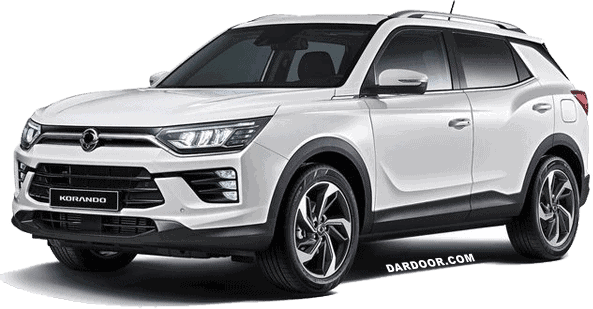
Get the original and colored OEM workshop service and auto repair manual for the 2019-2020 SsangYong Korando (C300), complete with wiring diagrams in a simple PDF file format.
| File Format |
PDF |
| File Language |
English |
| You’ll Get |
439.9 MB |
| Page Count |
3,464 |
| Wiring Diagram |
Included |
| Delivery Method |
Instant Download |
Engines Covered:
Key Features:
- Comprehensive Coverage: This manual includes all the information you need for service, repair, and maintenance of the 2019-2020 SsangYong Korando (C300).
- Wiring Diagrams: It features detailed and clear wiring diagrams to help with electrical system diagnostics and repairs.
- Dealer-Authorized Procedures: The manual follows the exact methods used by official SsangYong dealer mechanics for reliable and accurate repairs.
What’s Inside:
- Step-by-step instructions on how to perform maintenance, service, and repairs.
- Dealer-approved procedures that are both simple and effective.
- Updated and complete guide with all aspects of service, repair, and troubleshooting.
Why Choose This Manual:
- Access the same knowledge used by professional SsangYong technicians.
- Easy-to-use PDF format with clear instructions and illustrations.
- Ideal for both DIY repairs and professional mechanics.
Download the manual today and ensure your 2019-2020 SsangYong Korando (C300) stays in optimal condition!
This manual includes the procedures for maintenance, disassembling, reassembling, inspection, and adjustment of components and diagnostics for guidance of experienced mechanics. Please peruse and utilize this manual fully to ensure complete repair work to keep your vehicle in optimum condition. When replacement of parts during repair work is needed, be sure to use
SsangYong genuine parts.
Table of Contents : 2019-2020 SsangYong Korando Repair Manual
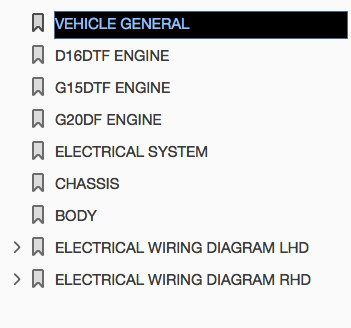
SAMPLE PAGES
CAUTION: This OEM service and workshop repair manual provides detailed procedures for maintenance, disassembly, reassembly, inspection, adjustment, and diagnostics. It is intended as a comprehensive guide for experienced mechanics. To ensure thorough and accurate repairs that maintain your vehicle’s optimal performance, please read and follow this manual carefully. When replacing parts during any repair work, always use
genuine SsangYong parts to ensure quality, safety, and reliability.
🚗 2019–2020 SsangYong Korando – Full Vehicle Overview, Issues, DTCs & Maintenance Guide
The 2019–2020 SsangYong Korando (C300) represents a major step forward for the Korean manufacturer, offering improved refinement, advanced safety technology, and a modern design. Competing in the compact SUV segment, it provides strong value, practicality, and competitive equipment levels at an affordable price, especially in markets across Europe and Asia.
⚙️ Technical Specifications & Performance
- Engine Options: 1.5L GDI-Turbo I4 (163 hp), 1.6L Diesel (136 hp)
- Transmission: 6-speed manual / 6-speed automatic
- Drivetrain: Front-wheel drive (FWD) / optional AWD
- 0–100 km/h: 9.8–12.0 seconds (engine dependent)
- Fuel Efficiency: 6.2–8.5 L/100 km combined
- Dimensions: Length 4,450 mm, Width 1,870 mm, Height 1,620 mm
- Cargo Capacity: 551L (up to 1,248L with seats folded)
🔧 Top 10 Common Mechanical Issues (Root Cause & Fix)
- Turbo lag and hesitation
🔍 Root Cause: Wastegate actuator delay and ECU mapping.
🛠️ Fix: ECU software update and actuator recalibration.
- Excessive brake wear
🔍 Root Cause: Undersized factory rear brakes.
🛠️ Fix: Upgrade pads/rotors with higher heat resistance.
- Hard shifting (automatic)
🔍 Root Cause: Valve body wear and outdated TCU calibration.
🛠️ Fix: TCU update; replace valve body if needed.
- Engine vibration at idle
🔍 Root Cause: Weak lower engine mount.
🛠️ Fix: Replace mount with updated stiffer version.
- Coolant leaks
🔍 Root Cause: Thermostat housing and plastic connectors.🛠️ Fix: Replace with updated reinforced housing.
- Diesel DPF clogging
🔍 Root Cause: Short-trip driving patterns.🛠️ Fix: Perform forced regeneration; clean or replace DPF.
- Suspension knocking noise
🔍 Root Cause: Worn stabilizer links and control arm bushings.🛠️ Fix: Replace sway bar links and bushings.
- Fuel pump noise
🔍 Root Cause: Weak internal pump bearings.🛠️ Fix: Replace in-tank fuel pump assembly.
- Overheating under load
🔍 Root Cause: Radiator airflow restriction.🛠️ Fix: Clean radiator fins; replace coolant; inspect fan clutch.
- Exhaust vibration
🔍 Root Cause: Loose exhaust hangers.🛠️ Fix: Replace worn rubber hangers.
💡 Top 10 Common Electrical Issues (Root Cause & Fix)
- Infotainment freezing
🔍 Root Cause: Software instability in 8–9″ head units.
🛠️ Fix: Firmware update.
- ADAS warnings (Lane Assist / AEB)
🔍 Root Cause: Camera calibration drift.
🛠️ Fix: Recalibrate front camera.
- Electric parking brake fault
🔍 Root Cause: Faulty EPB actuator motor.
🛠️ Fix: Replace EPB actuator.
- Battery drain
🔍 Root Cause: Parasitic draw from BCM.🛠️ Fix: Reprogram BCM or replace faulty module.
- Reverse camera flickering
🔍 Root Cause: Loose wiring harness.🛠️ Fix: Secure and re-crimp connectors.
- AC blower intermittent
🔍 Root Cause: Resistor pack failure.🛠️ Fix: Replace blower resistor.
- Central locking malfunction
🔍 Root Cause: Weak actuator motors.🛠️ Fix: Replace door actuators.
- Instrument cluster errors
🔍 Root Cause: CAN-BUS communication faults.🛠️ Fix: Reflash cluster; inspect harness.
- ABS/ESC warning lights
🔍 Root Cause: Wheel speed sensor failure.🛠️ Fix: Replace affected wheel sensor.
- Faulty TPMS readings
🔍 Root Cause: Aging TPMS sensors.🛠️ Fix: Replace TPMS sensors.
📊 Pros & Cons Comparison with Competitors
| Model |
Pros 👍 |
Cons 👎 |
| SsangYong Korando |
Strong value; Good safety tech; Spacious cabin |
Lower resale value; Limited engine options |
| Kia Sportage |
Refined interior; Reliable |
Higher price |
| Hyundai Tucson |
Comfortable; Strong safety rating |
Less powerful base engine |
| Nissan Qashqai |
Efficient; Good ride quality |
Weak acceleration |
| Mitsubishi ASX |
Durable; Easy maintenance |
Outdated cabin |
| Renault Kadjar |
Comfortable; Economical diesels |
Electronics issues |
🛠️ Maintenance Schedule
| Interval ⏱️ |
Maintenance Task 🔧 |
| Every 10,000 km / 6 months |
Engine oil & filter replacement |
| Every 20,000 km |
Air filter, cabin filter replacement |
| Every 30,000 km |
Brake inspection; tire rotation |
| Every 60,000 km |
Coolant flush; spark plugs (petrol) |
| Every 90,000 km |
Fuel filter (diesel); transmission fluid |
| Every 120,000 km |
Inspect suspension bushings; differential oil (AWD) |
⚠️ Recalls, Advisories & Safety Alerts
- Front collision warning malfunction: Incorrect AEB calibration.
- Fuel hose leak advisory: Potential leak due to weak clamp tension.
- Brake booster performance issue: Reduced brake assist in cold climates.
- Airbag sensor fault: Faulty OCS sensor readings.
- Diesel DPF overheating risk: Excess soot accumulation.
- Electric parking brake failure: Actuator motor internal short.
- Steering column wiring advisory: Harness rubbing on bracket.
- Rear seatbelt anchorage torque issue: Incorrect factory torque spec.
- ESC calibration advisory: Software required updating due to false activation.
- Fuel pump control module recall: Module overheating risk.
🧾 Diagnostic Trouble Codes (DTC) Tables
💻 Engine Control Module (ECM)
| Code |
Description |
| P0300 |
Random/Multiple Cylinder Misfire Detected |
| P0171 |
System Too Lean (Bank 1) |
| P0113 |
Intake Air Temperature Sensor 1 Circuit High |
| P0420 |
Catalyst System Efficiency Below Threshold |
| P0299 |
Turbocharger/Supercharger Underboost Condition |
| P0507 |
Idle Control System RPM Higher Than Expected |
| P0562 |
System Voltage Low |
| P1128 |
Closed Loop Fueling Not Achieved – Bank 1 |
| P2458 |
Diesel Particulate Filter Regeneration Duration |
| P2002 |
Diesel Particulate Filter Efficiency Below Threshold |
⚙️ Transmission Control Module (TCM)
| Code |
Description |
| P0700 |
Transmission Control System Malfunction |
| P0730 |
Incorrect Gear Ratio |
| P0741 |
Torque Converter Clutch Circuit Performance or Stuck Off |
| P0750 |
Shift Solenoid A Malfunction |
| P0765 |
Shift Solenoid D Malfunction |
| P0841 |
Transmission Fluid Pressure Sensor/Switch A Range/Performance |
| P0871 |
Transmission Fluid Pressure Sensor/Switch C Range/Performance |
| P2714 |
Pressure Control Solenoid D Stuck Off |
| P2763 |
Turbine Speed Sensor Circuit High Input |
| P0796 |
Pressure Control Solenoid C Performance or Stuck Off |
🛑 ABS / ESC (Brake System)
| Code |
Description |
| C0035 |
Left Front Wheel Speed Sensor Circuit |
| C0040 |
Right Front Wheel Speed Sensor Circuit |
| C0045 |
Left Rear Wheel Speed Sensor Circuit |
| C0050 |
Right Rear Wheel Speed Sensor Circuit |
| C0110 |
ABS Pump Motor Circuit Malfunction |
| C0065 |
Brake Pressure Sensor Circuit Range/Performance |
| C1234 |
Wheel Speed Correlation – Implausible Signal |
| C1281 |
Yaw Rate Sensor Circuit Malfunction |
| C1421 |
Stop Lamp Switch Circuit |
| C1380 |
ABS/ESC Control Module Internal Failure |
🎈 SRS Airbag System
| Code |
Description |
| B1000 |
Airbag Control Module Internal Fault |
| B1015 |
Driver Airbag Circuit Low Resistance |
| B1016 |
Driver Airbag Circuit Open |
| B1020 |
Passenger Airbag Circuit Short |
| B1053 |
Side Airbag Deployment Loop Fault |
| B1101 |
Airbag Sensor Supply Voltage Low |
| B1209 |
Occupant Classification System Fault |
| B1302 |
Crash Sensor Supply Circuit Malfunction |
| B1352 |
Crash Event Storage Full |
| B1401 |
Seat Belt Pretensioner Deployment Circuit Fault |
📡 Body Control / CAN Communication
| Code |
Description |
| U0100 |
Lost Communication with ECM/PCM |
| U0121 |
Lost Communication with ABS/ESC Module |
| U0140 |
Lost Communication with Body Control Module |
| U0155 |
Lost Communication with Instrument Cluster |
| U1110 |
CAN Bus Off – Communication Error |
| U113E |
Lost Communication with Park Assist Module |
| U1123 |
Lost Communication with Tire Pressure Monitoring System |
| U1403 |
Invalid Data Received from HVAC/Climate Control |
| U1180 |
Lost Communication with Infotainment/Navigation Unit |
| U1410 |
Invalid Data Received from Power Steering Control |