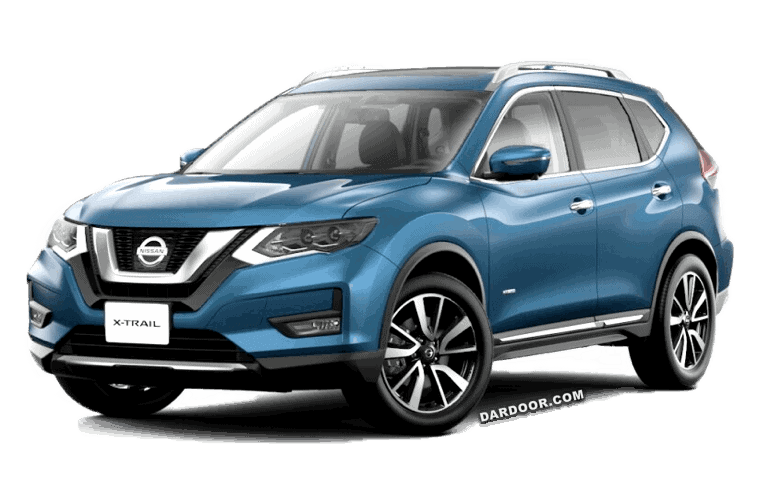
2014–2020 Nissan X-Trail T32 OEM Repair Manual – PDF Download
This is the original OEM workshop service and auto repair manual for the 2014–2020 Nissan X-Trail T32 (Third Generation), delivered in a user-friendly PDF format. It’s the same factory manual used by certified Nissan dealer technicians to diagnose, service, and repair your X-Trail with confidence.
| File Format |
PDF |
| File Language |
English |
| You’ll Get |
242.9 MB |
| Page Count |
9,003 |
| Delivery Method |
Instant Download |
📥 Download the official OEM repair manual now and ensure accurate repairs every time!
🔧 Key Features:
- Complete OEM Repair Manual – Covers all mechanical, electrical, and body systems
- Wiring Diagrams Included – Accurate and detailed electrical schematics
- Factory-Approved Procedures – Trusted by professional Nissan technicians
- Step-by-Step Repair Instructions – For everything from routine service to complex repairs
- Searchable & Printable PDF Format – Instant access on any device
⚙️ Vehicle Compatibility:
- Make: Nissan
- Model: X-Trail T32
- Years: 2014 to 2020
- Body Style: SUV / Crossover
- Platform: Common Module Family (CMF-CD)
💡 Why This Manual?
- ✔ Official OEM content – No third-party edits or missing sections
- ✔ Ideal for home mechanics and professionals
- ✔ Avoid dealership service costs with accurate DIY guidance
- ✔ Lifetime access – One-time download, yours to keep
Delivery: Instant PDF Digital Download
Compatible With: Windows, macOS, Android, iOS
🛠️ Maintain your Nissan X-Trail T32 like a pro.
This manual offers comprehensive instructions for maintenance, disassembly, reassembly, component inspection, adjustment, and diagnostics—specifically designed for experienced mechanics. Proper use of this manual will help ensure thorough repairs and keep your vehicle performing at its best.
Important Note: Before purchasing this manual, please check whether your vehicle is subject to any active Nissan service recalls. In some cases, repairs may be performed free of charge by your local Nissan dealer. When replacing parts, always use genuine Nissan OEM components to ensure safety, reliability, and optimal performance.
Contents: 2014-2020 Nissan X-Trail T32 Repair Manual
- General Information
- Engine
- Transaxle – Transmission
- Suspension
- Brake
- Steering
- Restraints
- Ventilation, Heater – Air Conditioner
- Body Interior
- Body Exterior, Doors, Roof – Vehicle Security
- Driver Controls
- Electrical-Power Control
- Driver Information – Multimedia
- Cruise Control – Driver Assistance
- Maintenance
- Owner’s Manual
SAMPLE PAGES
CAUTION: This OEM service and workshop repair manual provides detailed procedures for maintenance, disassembly, reassembly, inspection, adjustment, and diagnostics. It is intended as a comprehensive guide for experienced mechanics. To ensure thorough and accurate repairs that maintain your vehicle’s optimal performance, please read and follow this manual carefully. When replacing parts during any repair work, always use genuine Nissan parts to ensure quality, safety, and reliability.
2014–2020 Nissan X-Trail (T32) – Complete Guide
The third-generation Nissan X-Trail (T32), sold globally between 2014–2020, is a versatile crossover SUV blending comfort, technology, and practicality. Available in both 5- and 7-seat configurations, with petrol and diesel engine options, the T32 offered competitive features in the compact SUV market, including Nissan’s “Intelligent 4×4” all-wheel-drive system and advanced safety tech.
Technical Specifications & Performance
- Engines: 1.6L turbo-diesel, 2.0L petrol, 2.5L petrol (market dependent)
- Power Output: 128–170 hp
- Transmission: 6-speed manual, Xtronic CVT automatic
- Drivetrain: FWD or Intelligent AWD
- 0–100 km/h: ~9.5–12.5 seconds
- Fuel Economy: 6.0–8.0 L/100 km (combined)
- Towing Capacity: Up to 2,000 kg (diesel AWD)
- Seating Capacity: 5 or 7 seats
Performance Specifications
- Engines: 2.0L/2.5L Petrol, 1.6L/2.0L Diesel, Hybrid (Japan only)
- Horsepower: 141–176 hp depending on engine
- Torque: 147–280 lb-ft
- Transmission: CVT (Xtronic) or 6-speed manual
- Drivetrain: FWD or AWD (Intelligent All-Mode 4×4-i)
- Fuel Economy: 26–36 MPG depending on drivetrain and engine
Common Mechanical Issues Reported By Owners
- CVT Transmission Problems: Hesitation, juddering, and overheating due to CVT belt wear or software issues
- Engine Mount Wear: Causes excessive vibration during acceleration or idle
- Suspension Creaks: Front stabilizer bushings and lower control arms prone to wear
- Brake Noise: Squeaking or grinding from early pad wear or dust buildup
Common Electrical Issues Reported By Owners
- Infotainment System Freezing: Especially on models with NissanConnect
- Battery Drain: Linked to intelligent key system or interior light circuits
- Tail Light Condensation: Water ingress due to poor housing seals
Top 10 Mechanical Issues — with Cause & Repair
- CVT transmission shudder
Cause: Overheating and fluid breakdown in CVT.
Repair: Replace CVT fluid with Nissan NS-3; reprogram TCM; in severe cases, replace CVT unit.
- Diesel DPF clogging
Cause: Short trips prevent regeneration cycle.
Repair: Forced regeneration or replace DPF; update ECU software.
- Timing chain rattle (2.0L petrol)
Cause: Chain tensioner wear.
Repair: Replace chain kit and tensioner.
- Steering column knock
Cause: Intermediate shaft wear.
Repair: Replace shaft and lubricate splines.
- Brake disc warping
Cause: Overheating under heavy braking.
Repair: Replace or machine rotors; use high-quality pads.
- Clutch slipping (manual models)
Cause: Worn clutch friction plate.
Repair: Replace clutch kit and resurface flywheel.
- Water pump leaks
Cause: Seal deterioration.
Repair: Replace pump and gasket; flush coolant.
- Suspension knocking
Cause: Worn stabilizer links.
Repair: Replace sway bar links.
- Fuel injector carbon build-up
Cause: Poor-quality fuel and short trips.
Repair: Ultrasonic cleaning or injector replacement.
- AWD coupling failure
Cause: Lack of fluid maintenance.
Repair: Replace/repair AWD pump; change fluid every 60k km.
Top 10 Electrical Issues — with Cause & Repair
- Airbag warning light
Cause: Faulty clock spring or seat sensor.
Repair: Replace clock spring or seat occupancy sensor.
- Battery drain
Cause: Faulty BCM or parasitic draw.
Repair: Diagnose circuit; software update or BCM replacement.
- Power tailgate not working
Cause: Faulty liftgate motor.
Repair: Replace liftgate actuator/motor.
- Central locking issues
Cause: Failed door lock actuators.
Repair: Replace actuators.
- Infotainment freezing
Cause: Software bug.
Repair: Update firmware or replace unit.
- Parking sensors false alarms
Cause: Moisture ingress.
Repair: Replace defective sensor; reseal connectors.
- Instrument cluster failures
Cause: Faulty circuit board solder joints.
Repair: Re-solder or replace cluster.
- Reverse camera flickering
Cause: Damaged wiring in tailgate loom.
Repair: Repair or replace loom.
- Heater blower intermittent
Cause: Burnt blower resistor.
Repair: Replace resistor pack.
- TPMS sensor failures
Cause: Dead internal batteries.
Repair: Replace TPMS sensors and reprogram system.
📊 Pros and Cons
| Pros 👍 |
Cons 👎 |
| Spacious 7-seat option |
CVT reliability concerns |
| Fuel-efficient diesel engine |
High maintenance costs |
| Good safety features |
Limited off-road capability |
| Comfortable ride |
Electrical glitches common |
| Versatile cargo space |
Resale value lower than rivals |
✅ Pros and Cons Reported By Owners
- ✔️ Pros: Comfortable ride, spacious interior, good fuel economy, AWD availability
- ❌ Cons: CVT reliability concerns, basic infotainment, modest acceleration
🛠️ Maintenance Schedule
| Interval ⏱️ |
Service Task 🔧 |
| Every 10,000 km / 6 months |
Engine oil & filter replacement (0W-20 or 5W-30 Synthetic) |
| Every 20,000 km |
Air filter, cabin filter replacement |
| Every 40,000 km |
Brake fluid replacement; inspect brakes |
| Every 60,000 km |
CVT/AT fluid change, coolant flush (Nissan NS-3) |
| Every 100,000 km |
Spark plugs replacement; inspect timing chain |
- Oil Change: Every 5,000–7,500 miles (0W-20 or 5W-30 synthetic)
- Tire Rotation: Every 6,000 miles
- CVT Fluid: Replace every 60,000 miles (Nissan NS-3)
- Cabin Air Filter: Replace every 15,000 miles
- Coolant: Replace every 75,000 miles or 5 years
- Spark Plugs: Replace every 105,000 miles
Recalls, Advisories & Safety Alerts
- Airbag Recall: Some X-Trail models were recalled for faulty Takata airbag inflators (risk of rupture).
- CVT Software Update: Advisory for reprogramming TCM to reduce CVT overheating and shudder.
- Brake Booster Issue: Certain models required replacement due to reduced braking assistance.
Recalls (2014–2020 X-Trail)
- Rear Hatch Latch: Water ingress may cause hatch to open while driving
- Passenger Airbag Sensor: Incorrect calibration may prevent deployment
- Battery Terminal Corrosion: Can lead to engine stalling or no-start conditions
Technical Service Bulletins (TSBs)
- NTB15-029: CVT judder during acceleration — requires reprogramming TCM
- NTB16-068: Bluetooth connection drops — firmware update recommended
- NTB17-041: Liftgate actuator noise — install updated latch and weather seal
🧾 Diagnostic Trouble Code (DTC) Tables
Engine Control Module (ECM)
| Code |
Description |
| P0171 |
System too lean |
| P0300 |
Random cylinder misfire |
| P0420 |
Catalyst system efficiency below threshold |
| P0507 |
Idle control system RPM too high |
| P0113 |
Intake air temperature sensor high |
| P0101 |
Mass airflow sensor performance |
| P0299 |
Turbo underboost condition |
| P0087 |
Fuel rail/system pressure low |
| P2196 |
O2 sensor signal stuck rich |
| P0011 |
Camshaft timing over-advanced |
Transmission Control Module (TCM)
| Code |
Description |
| P0700 |
Transmission control system malfunction |
| P0730 |
Incorrect gear ratio |
| P0746 |
Pressure control solenoid stuck off |
| P0776 |
Pressure control solenoid stuck on |
| P0841 |
Transmission fluid pressure sensor A |
| P2763 |
Turbine speed sensor high |
| P0868 |
Transmission fluid pressure low |
| P189C |
Gear selector implausible signal |
| P17BF |
Hydraulic pressure loss CVT |
| P2711 |
Unexpected mechanical disengagement |
ABS / ESC System
| Code |
Description |
| C0035 |
Front left wheel speed sensor |
| C0040 |
Front right wheel speed sensor |
| C0073 |
Brake pedal switch circuit |
| C102D |
ABS pump performance |
| C1112 |
Yaw rate sensor fault |
| C0057 |
Brake pressure sensor performance |
| C121C |
Torque request denied |
| C1403 |
Brake booster pressure sensor |
| C123F |
Stability control disabled |
| C2200 |
ABS module internal error |
SRS Airbag System
| Code |
Description |
| B1016 |
Driver airbag circuit open |
| B1020 |
Passenger airbag circuit short |
| B1053 |
Side airbag deployment loop fault |
| B1101 |
Airbag sensor module low voltage |
| B1302 |
Crash sensor supply circuit fault |
| B108A |
Seat position sensor fault |
| B1352 |
Crash event storage full |
| B1209 |
Occupant classification system fault |
| B0020 |
Passenger frontal deployment circuit |
| B0012 |
Driver frontal deployment circuit |
Body Control / CAN Communication
| Code |
Description |
| U0100 |
Lost communication with ECM |
| U0140 |
Lost communication with BCM |
| U0121 |
Lost communication with ABS module |
| U0155 |
Lost communication with instrument cluster |
| U0415 |
Invalid data from ABS |
| U1110 |
CAN data bus off |
| U113E |
Lost communication with park assist |
| U1123 |
Lost communication with TPMS |
| U0184 |
Lost communication with radio |
| U0199 |
Lost communication with door module |
Final Verdict & Conclusion
The 2014–2020 Nissan X-Trail (T32) is a family-friendly SUV offering practicality, fuel efficiency, and advanced safety features. While its CVT transmission is a weak point, proper maintenance helps longevity. With spacious interiors, flexible seating, and strong diesel towing performance, the X-Trail remains a solid choice for buyers seeking a versatile and dependable crossover.
📚 References