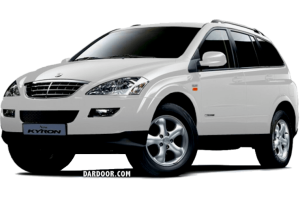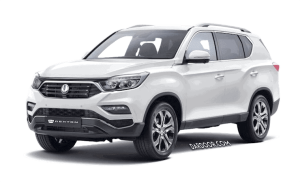
Get the original and colored OEM workshop service and repair manual for the 2013-2014 SsangYong Rexton (Y291), with wiring diagrams, in an easy-to-access PDF format.
The 2013–2014 SsangYong Rexton W pairs a 2.0 diesel with proper 4×4 hardware and up to 3,000 kg towing. Here’s what to check before buying, the most common faults owners report, typical repair costs in the UK, and the DTC codes you’ll actually see when warning lights appear.

📌 Overview
The 2013–2014 SsangYong Rexton W is a traditional, body-on-frame-style SUV vibe in a modern-ish wrapper: 7 seats, proper towing capability, and a diesel built for low-end pull.
In the UK market it stood out for one reason: serious towing capacity for the money, often quoted at 3,000 kg depending on variant.
Under the bonnet in most European/UK-spec 2013–2014 models: the 2.0 e-XDi diesel (Euro 5 era) rated around 155 PS and 360 Nm — exactly the kind of torque curve you want for caravans, trailers, boats, and horseboxes.
Note: specs can vary by market/trim (2WD vs 4WD, manual vs auto, and some markets used 2.7 diesel variants). Always confirm your VIN/trim when ordering parts.
Technical Specs & Performance
⚙️ Powertrain (common UK/Europe spec)
- Engine: 2.0-litre e-XDi diesel (Euro 5 era in Europe)
- Power: ~155 PS (153 bhp / 114 kW)
- Torque: ~360 Nm
- Gearboxes: commonly 6-speed manual or 5-speed automatic
- Drivetrain: 2WD or 4WD depending on trim/market
🏎️ Performance (real-world expectations)
- 0–60 mph: approximately ~10–11 seconds (varies by transmission/weight; some sources are estimated).
- Top speed: around ~109 mph (175 km/h) (varies by spec).
🧱 Weight & towing
- Kerbweight (example UK test figure): ~2,128 kg
- Maximum towing limit (commonly quoted UK): 3,000 kg
📏 Dimensions (typical)
- Wheelbase: ~283.5 cm
- Length: ~475.5 cm
- Width: ~190.0 cm
- Height: ~184.0 cm
- Ground clearance: ~21.6 cm
Top 10 Common Mechanical Issues (Reported by Owners)
🔔 Note: These are the issues most commonly discussed by owners/used-car reviewers and seen in workshop patterns for this kind of diesel 4×4. Costs are UK-style estimates in GBP (£) and vary with labour rates, parts availability, and whether you replace related items “while you’re in there”.
- Rising oil level (diesel dilution) / oil consumption concerns
– Symptoms: Oil level creeping up on dipstick, diesel smell in oil, rough idle, increased regen frequency
– Root Cause: DPF regeneration can introduce fuel into the oil; short trips worsen it. Some reviewers advise checking oil monthly.
– Fix: Use correct oil spec; shorten oil-change intervals; ensure DPF regen completes; investigate injector/leak-down if severe
– Cost to Fix: £120–£220 (oil & filter service) / £300–£900 (if DPF/injector diagnosis or repair needed)
- DPF clogging / forced regeneration
– Symptoms: Loss of power, warning light, frequent fans running, poor MPG, limp mode on motorway inclines
– Root Cause: Short-trip driving + soot loading; EGR issues can accelerate DPF load
– Fix: Proper diagnostic scan; forced regen if safe; DPF clean (off-car if needed); address EGR or boost leaks causing excessive soot
– Cost to Fix: £120–£250 (forced regen/diagnosis) / £350–£800 (professional clean) / £900–£1,800 (replacement) - EGR valve sticking / soot buildup (limp mode)
– Symptoms: Hesitation, poor low-end response, engine light, limp mode, smoke under load
– Root Cause: Exhaust soot fouls EGR mechanism; common on modern diesels if driven gently/short distances
– Fix: Clean or replace EGR; update ECU software if available; verify boost hoses & intake condition
– Cost to Fix: £180–£450 (clean/replace EGR depending on access) / £450–£900 (if intake cleaning included)EGR-related limp mode is commonly discussed on owner forums for diesel turbo SUVs. - Turbo boost leak (hoses/clamps) / whistle
– Symptoms: Whistling under boost, sluggish acceleration, underboost codes, smoke, oil mist around charge pipes
– Root Cause: Split intercooler hose, loose clamps, cracked rubber; leaks can trigger underboost and extra soot
– Fix: Pressure test intake; replace damaged hose(s); re-clamp; check airbox seating and pipework
– Cost to Fix: £90–£220 (hose/clamps) / £250–£650 (if intercooler or multiple pipes involved)Example troubleshooting guidance highlights checking turbo intake hose clamps and airbox seating. - Injector wear / rough running
– Symptoms: Hard starting, uneven idle, diesel knock, smoke, poor MPG, misfire-like shudder under load
– Root Cause: High-pressure diesel injectors wear; contaminated fuel can accelerate issues
– Fix: Injector balance test; replace/overhaul failing injectors; replace fuel filter; confirm rail pressure health
– Cost to Fix: £250–£450 (diagnosis + one injector) / £900–£1,800 (set of injectors fitted, varies widely) - Cooling system leaks (hoses/radiator/thermostat)
– Symptoms: Coolant smell, low coolant warning, overheating in traffic, weak cabin heat, pink/white residue at joints
– Root Cause: Ageing hoses, brittle plastic fittings, thermostat housing seepage
– Fix: Pressure test; replace leaking hose/radiator/thermostat; refill with correct coolant mix and bleed properly
– Cost to Fix: £120–£260 (minor hose) / £300–£900 (radiator/thermostat and labour) - Front suspension wear (ball joints/bushes) & steering knock
– Symptoms: Clunks over bumps, vague steering, uneven tyre wear, wandering, MOT advisories
– Root Cause: Heavy SUV load + UK roads = ball joint and bush wear; some SsangYong models have had ball-joint related safety actions historically (model-dependent).
– Fix: Inspect play; replace worn ball joints/control arms; align wheels afterwards
– Cost to Fix: £220–£520 (one side) / £450–£1,000 (both sides + alignment)UK recall databases show ball-joint related recall actions on SsangYong Rexton line in some years/variants. Always check by reg/VIN. - Differential “groan” / driveline noise
– Symptoms: Groaning while cornering, humming at speed, vibration under load, clonk when taking up drive
– Root Cause: Diff fluid degradation, worn bearings, propshaft U-joints, or rear diff wear (especially with towing)
– Fix: Check diff/transfer oil condition; replace fluids first; inspect bearings/U-joints; rebuild diff if required
– Cost to Fix: £120–£260 (fluids service) / £600–£1,800 (bearing/diff rebuild depending on damage)Used-car inspection advice notes groaning while cornering can point to a damaged differential. - Automatic transmission shudder/harsh shifts (service-related)
– Symptoms: Delayed engagement, flare between gears, shudder at low speed, harsh downshifts when warm
– Root Cause: Old ATF, filter restriction, adaptation issues; towing without frequent ATF changes accelerates wear
– Fix: Correct ATF service (fluid + filter if applicable); scan for TCM faults; consider cooler check if towing often
– Cost to Fix: £220–£450 (ATF service) / £900–£2,500 (valve body/torque converter/transmission repair) - Brake corrosion / sticking calipers (heavier SUV pattern)
– Symptoms: Pulling under braking, vibration, hot wheel smell, poor MPG, MOT brake advisories
– Root Cause: Infrequent use, winter salt, seized slider pins, worn pads/discs on a heavy vehicle
– Fix: Strip/clean sliders; replace discs/pads; rebuild or replace calipers if seized; brake fluid change as scheduled
– Cost to Fix: £180–£420 (pads/discs axle) / £350–£900 (with caliper work)
Top 10 Common Electrical Issues (Reported by Owners)
- Battery drain / weak battery
– Symptoms: Slow crank, random warning lights, car struggles after sitting 2–3 days
– Root Cause: Ageing battery, parasitic draw (aftermarket accessories, modules not sleeping), weak alternator output
– Fix: Battery test; charging system test; parasitic draw test; repair faulty module/circuit if draw is excessive
– Cost to Fix: £120–£220 (battery) / £180–£600 (diagnosis + alternator/repair) - Glow plug / glow control faults (diesel starting)
– Symptoms: Hard cold start, rough first minute, glow light flashing, fault codes stored
– Root Cause: Failed glow plugs or glow control module
– Fix: Test resistance; replace glow plugs as a set if multiple are weak; verify glow module output
– Cost to Fix: £180–£420 (set of plugs fitted) / £300–£650 (with module) - Central locking / door lock actuator failure
– Symptoms: One door won’t lock/unlock, intermittent remote operation, door re-locking itself
– Root Cause: Actuator motor wear or internal latch micro-switch issues
– Fix: Scan body module for lock errors; replace actuator/latch assembly on affected door
– Cost to Fix: £180–£450 per door (parts + labour) - Window regulator or switch faults
– Symptoms: Window slow, stuck, drops crooked, switch works intermittently
– Root Cause: Regulator cable wear, motor fatigue, switch contact wear
– Fix: Inspect tracks; replace regulator/motor if binding; replace switch if signal is inconsistent
– Cost to Fix: £150–£420 (per window) - ABS/ESP warning light (wheel speed sensor / wiring)
– Symptoms: ABS/ESP lights on, traction control disabled, occasional speedo weirdness
– Root Cause: Wheel speed sensor failure, damaged sensor wiring, corroded reluctor ring/hub tone ring
– Fix: Live-data scan; inspect sensor wiring; replace sensor or hub assembly if tone ring is integrated
– Cost to Fix: £140–£320 (sensor) / £300–£750 (hub/bearing assembly) - Parking sensor faults
– Symptoms: Constant beep, “parking assist” error, sensors clicking inconsistently
– Root Cause: Water ingress, sensor corrosion, bumper harness damage
– Fix: Identify dead sensor (listening test + scan); replace faulty sensor; repair harness if needed
– Cost to Fix: £90–£260 (sensor) / £200–£450 (harness/bumper labour) - Infotainment/Bluetooth dropouts
– Symptoms: Bluetooth won’t pair, random disconnects, frozen head unit
– Root Cause: Older firmware, failing module, poor power/ground, internal head unit wear
– Fix: Reset/update if available; check grounds; repair/replace head unit if persistent
– Cost to Fix: £0–£80 (software/reset) / £250–£1,200 (repair/replace head unit) - Blower motor resistor / fan speed issues
– Symptoms: Fan works only on max, intermittent cabin airflow, burning smell near glovebox area
– Root Cause: Resistor pack overheating or blower motor drawing too much current
– Fix: Replace resistor pack; test blower motor current draw; replace blower if out of spec
– Cost to Fix: £120–£320 - Airbag/SRS warning light (clock spring / seat connector)
– Symptoms: SRS light on, horn/steering controls not working (sometimes), MOT failure risk
– Root Cause: Clock spring wear, seat connector corrosion/loose plug under seats
– Fix: Proper SRS scan; repair connectors; replace clock spring if steering controls affected
– Cost to Fix: £120–£450 - 4WD selector/transfer case control faults (electrical side)
– Symptoms: 4WD won’t engage/disengage, blinking 4WD light, binding in turns if stuck engaged
– Root Cause: Switch failure, actuator connector issues, control module faults, vacuum/solenoid issues depending on system design
– Fix: Scan 4WD system; test switch and actuator circuits; inspect vacuum lines/solenoids if equipped
– Cost to Fix: £150–£450 (switch/solenoid) / £450–£1,500 (actuator/module)
Pros & Cons
| Pros | Cons |
|---|---|
| Strong towing credentials (commonly quoted up to 3,000 kg depending on spec) | Diesel systems (EGR/DPF) can punish short-trip driving |
| Useful low-end torque (~360 Nm) for hauling and hills | Heavy kerb weight can mean higher tyre/brake/suspension wear |
| 7-seat practicality with a “workhorse” feel | Parts availability can vary by region (budget time for sourcing) |
| Often good value on the used market for size/capability | Driveline/diff noises can appear on high-mile/tow-heavy examples |
Maintenance Schedule (UK-friendly)
Disclaimer: This is a practical schedule aimed at longevity (especially if you tow or do short trips). Always match fluids/specs to your exact engine/gearbox and the handbook for your VIN.
| Item | Interval | Notes |
|---|---|---|
| Engine oil + filter | Every 12 months or 8,000–10,000 miles | Short trips/towing: lean to the shorter interval; watch for diesel dilution (rising oil level). |
| Air filter | Every 12–24 months | More often if dusty/off-road. |
| Cabin/pollen filter | Every 12 months | Prevents blower strain and smells. |
| Fuel filter | Every 20,000 miles or 24 months | Helps protect injectors and high-pressure system. |
| Brake fluid | Every 2 years | Important for ABS/ESC health. |
| Coolant | Every 5 years | Also inspect hoses/thermostat housing for seepage. |
| Automatic transmission fluid (if auto) | Every 40,000–60,000 miles | Towing: treat 40k as the target. Improves shift quality and lifespan. |
| Transfer case + differential oils | Every 40,000–60,000 miles | Prevents groans/whines; critical if you tow regularly. |
| Suspension & steering inspection | Every service | Check ball joints, bushes, tyre wear patterns. |
👉 Safety note: Use the UK recall checker with your registration/VIN to confirm outstanding safety actions.
Top 5 Competitors
Similar “family + tow + SUV” alternatives owners cross-shop in the UK market:
- Toyota Land Cruiser (J200) ↗
- Land Rover Discovery 4 / LR4 ↗
- Hyundai Santa Fe (2013–2018) ↗
- Kia Sorento (2013) ↗
- Nissan Pathfinder (2013–2014) ↗
Top 10 Recalls, Advisories & Safety Alerts (TSB-Style Highlights)
⚠️ Important: Public recall info can be incomplete without a registration/VIN lookup. For the UK, the most reliable step is always the official recall checker.
- UK Safety Recall Check (Must-Do) — Run your registration/VIN through the official GOV.UK recall service before purchase.
- Suspension ball joint / loss of control (model-year dependent) — SsangYong Rexton line has had ball-joint related safety recall entries in UK databases (coverage varies by build years/variants). Always confirm your exact vehicle.
- Differential/steering noise advisory — Used-car checks mention groaning while cornering can indicate differential damage; treat as a safety/handling inspection point.
- Oil level monitoring advisory — Some reviews stress monitoring oil level regularly; rising oil can indicate diesel dilution/regen issues.
- Towing compliance advisory — If towing near the limit, confirm VIN plate train weights, towbar rating, and noseweight; UK towing reviews list key limits (e.g., towball limit).
- DPF regeneration advisory — If you do short trips, expect higher DPF/EGR maintenance risk. Ensure any DPF warning lights are diagnosed properly before purchase (avoid “delete” bodges).
- Turbo hose/air intake leak advisory — Whistling + underboost can be a simple hose/clamp issue; inspect pipework and airbox seating during pre-purchase checks.
- Brake corrosion advisory — Heavy SUVs can develop corroded lines and thin pads; review MOT history and inspect pipes/pads/discs (common UK ownership pattern).
- ECU/TCU scan advisory — Because many “problems” are sensor/regen related, scan modules for stored faults even if the dash is clean (pending codes matter).
- SRS/airbag warning advisory — Any SRS light should be treated as a must-fix for safety/MOT; scan and repair properly (connectors/clock spring patterns).
DTC Trouble Codes (Quick Reference Tables)
🔔 Note: These are commonly encountered OBD-II and system DTCs that technicians often see on modern diesel SUVs. Exact meanings/tests can vary by scan tool and vehicle configuration.
Engine Control Module (ECM) — 10 Codes
| Code | Meaning (Common) | What to Check First |
|---|---|---|
| P0101 | MAF sensor range/performance | MAF contamination, intake leaks, air filter |
| P0299 | Turbo underboost | Boost hoses/clamps, actuator, leaks |
| P0401 | EGR flow insufficient | EGR valve, soot blockage, vacuum/controls |
| P0402 | EGR flow excessive | EGR stuck open, control solenoid |
| P2002 | DPF efficiency below threshold | DPF loading, regen history, pressure sensors |
| P2458 | DPF regeneration duration | Regeneration interruptions, soot load |
| P2463 | DPF soot accumulation | Driving pattern, EGR/boost issues |
| P0191 | Fuel rail pressure range/performance | Fuel filter, rail sensor, pump health |
| P0201 | Injector circuit (cyl 1) | Harness/connectors, injector resistance |
| P0670 | Glow plug control module | Glow module power/ground, plug current |
Transmission Control Module (TCM) — 10 Codes
| Code | Meaning (Common) | What to Check First |
|---|---|---|
| P0700 | Transmission control system (MIL request) | Scan TCM for specific sub-codes |
| P0715 | Input/Turbine speed sensor | Sensor wiring, sensor signal, connector |
| P0720 | Output speed sensor | Sensor/harness, tone ring issues |
| P0730 | Incorrect gear ratio | ATF level/condition, internal slip |
| P0741 | TCC performance/stuck off | ATF service, solenoid, converter wear |
| P0750 | Shift solenoid A | Solenoid circuit, valve body |
| P0755 | Shift solenoid B | Wiring, solenoid, valve body |
| P0760 | Shift solenoid C | Electrical test + fluid condition |
| P0871 | Transmission fluid pressure sensor/switch | Sensor, wiring, pressure issues |
| P1790 | TCM-related fault (manufacturer-specific) | Scan tool definition, live data, ATF |
ABS / ESC (Brake System) — 10 Codes
| Code | Meaning (Common) | What to Check First |
|---|---|---|
| C0035 | LF wheel speed sensor | Sensor tip, wiring, hub tone ring |
| C0040 | RF wheel speed sensor | Wiring rub, sensor gap, corrosion |
| C0045 | LR wheel speed sensor | Sensor damage, connector water ingress |
| C0050 | RR wheel speed sensor | Hub play, sensor alignment |
| C0110 | Pump motor circuit | ABS pump relay/fuse, power/ground |
| C0121 | Valve relay circuit | Relay, wiring, module |
| C0131 | Brake pressure sensor | Sensor signal plausibility |
| C0240 | Traction control malfunction | Wheel speed data validity, yaw sensor |
| C0460 | Steering angle sensor | Calibration, sensor, alignment |
| C0561 | System disabled (other codes present) | Fix root code(s) first |
SRS Airbag System — 10 Codes
| Code | Meaning (Common) | What to Check First |
|---|---|---|
| B0010 | Driver airbag circuit | Clock spring, connectors |
| B0020 | Passenger airbag circuit | Dash/airbag connector integrity |
| B0051 | Deployment commanded (history) | Module history + inspection |
| B0100 | Front impact sensor | Sensor wiring, crash data |
| B0113 | Seatbelt pretensioner | Seat connector corrosion/loose plug |
| B0121 | Side airbag circuit | Door/seat wiring, connectors |
| B0131 | Occupant classification system | Seat sensor calibration |
| B1001 | SRS module internal fault | Power/ground first, then module |
| B1015 | Battery voltage low | Battery/charging health |
| B1020 | Configuration/variant coding | Module coding, scan tool programming |
Body Control / CAN Communication — 10 Codes
| Code | Meaning (Common) | What to Check First |
|---|---|---|
| U0100 | Lost comm with ECM/PCM | Battery voltage, CAN wiring, grounds |
| U0101 | Lost comm with TCM | Connector corrosion, module power |
| U0121 | Lost comm with ABS | ABS module power/ground |
| U0140 | Lost comm with BCM | BCM fuses, water ingress, CAN lines |
| U0155 | Lost comm with IPC (cluster) | Cluster power/ground, CAN integrity |
| U0164 | Lost comm with HVAC | HVAC module, wiring |
| U0184 | Lost comm with radio | Head unit power/ground, wake line |
| B1325 | System voltage low | Battery/alternator tests |
| B2610 | Remote keyless entry fault | Key battery, receiver, antenna |
| B3130 | Door lock circuit fault | Actuator, latch switch, wiring |
FAQs for Buyers of 2013-2014 SsangYong Rexton (Y291)
1. What engine options are available in the 2013-2014 Rexton?
The Y291 Rexton primarily came with a 2.0-liter turbodiesel engine (e-XDi200) producing around 155 hp and 360 Nm of torque, and a 2.7-liter diesel engine (e-XDi270) with approximately 186 hp and 420 Nm. Both engines are known for decent torque delivery suitable for towing and off-road use.
2. How reliable is the 2013-2014 Rexton?
The Rexton generally has a reputation for being reasonably reliable, particularly the Mercedes-derived diesel engines. Common issues to watch for include electrical gremlins, wear in the four-wheel-drive system components, and occasional turbocharger problems on higher-mileage examples. Regular maintenance is key to longevity.
3. What’s the fuel economy like?
Expect real-world fuel consumption of around 25-30 mpg (9.4-11.3 L/100km) for the 2.0-liter diesel and 22-27 mpg (10.4-12.8 L/100km) for the 2.7-liter in mixed driving. These are body-on-frame SUVs, so fuel economy isn’t their strong suit compared to modern crossovers.
4. What should I look for when inspecting a used Rexton?
Check for complete service history, especially oil changes, as diesel engines need proper maintenance. Inspect the four-wheel-drive system functionality, look for rust on the chassis and body panels, test all electrical systems including the climate control, and check for any oil leaks around the engine and transmission.
5. How capable is it off-road?
The Rexton is quite capable off-road with its body-on-frame construction, low-range transfer case, rear differential lock (on some models), and decent ground clearance. It’s more oriented toward practical off-roading and towing rather than extreme rock crawling, making it suitable for trails, rough terrain, and adverse weather conditions.
6. What’s the towing capacity?
The Rexton can tow up to 3,000-3,500 kg (approximately 6,600-7,700 lbs) depending on the specific model and market. This makes it an excellent choice for those needing to tow caravans, trailers, or boats, which was one of its primary selling points.
7. How does it compare to competitors like the Nissan Pathfinder or Toyota Fortuner?
The Rexton offers similar off-road capability and towing capacity at a generally lower price point. It’s less refined on-road than Japanese competitors and has lower resale value, but provides more equipment for the money and a seven-seat option. Build quality is decent but not quite at Toyota levels.
8. What trim levels were available?
Trim levels varied by market but generally included base S, mid-level EX/SX, and top-spec RX models. Higher trims added features like leather upholstery, upgraded audio systems, parking sensors, sunroof, and additional safety equipment. The seven-seat configuration was available across most trim levels.
9. Are parts and servicing expensive?
Parts are generally more affordable than equivalent Japanese or European SUVs, though availability can sometimes be an issue depending on your location. SsangYong has a smaller dealer network in many markets, so check local service availability before buying. Independent mechanics familiar with Mercedes diesel engines can often service these vehicles.
10. What are common problems to be aware of?
Watch for issues with the EGR valve and diesel particulate filter (DPF) on diesel models, especially if used for short journeys. Electrical issues with window regulators and central locking can occur. The four-wheel-drive system’s actuators and the turbocharger on higher-mileage vehicles may need attention. Check for any dashboard warning lights and ensure the timing belt has been replaced according to the service schedule.
11. Is the 2013–2014 SsangYong Rexton W reliable?
It can be dependable if maintained properly, especially as a tow vehicle. The big “reliability killers” are typical diesel SUV items: DPF/EGR issues from short trips, neglected fluid services (auto/transfer/diffs), and suspension wear on heavy vehicles. Regular checks (oil level, MOT history, full scan) make a massive difference.
12. What’s the smartest pre-purchase check?
Do three things: (1) run the UK recall check using registration/VIN, (2) scan all modules for stored codes (not just the engine), and (3) inspect for drivetrain noises (diff groan), suspension play, and evidence of interrupted DPF regens.
13. Can it really tow 3,000 kg?
Many UK sources list a 3,000 kg towing limit and towball limits depending on spec — but towing legality depends on your exact VIN plate weights, towbar rating, and your driving licence entitlement. Treat the VIN plate as the final word.
14. What’s the most expensive common repair?
If it’s been neglected: DPF replacement, major automatic transmission repair, or a differential rebuild can be the big-ticket items. Buying one with clean diagnostics and strong service history is worth paying extra for.
15. Is it a good SUV for short trips?
It can do them, but diesels prefer longer runs. Repeated short journeys increase DPF/EGR problems, especially in cold weather. If your driving is mostly short urban trips, you’ll need stricter service intervals and periodic longer drives to help regeneration complete.
16. What warning lights should never be ignored?
SRS/Airbag (safety + MOT risk), ABS/ESC (safety systems disabled), and DPF/engine management lights (can trigger limp mode). Always scan and fix the cause—don’t just clear codes.
17. Manual or automatic — which is safer long-term?
Both can be fine. Automatics are great for towing but rely on regular ATF servicing to stay happy—especially if the vehicle tows near its limits. Manuals are simpler but can see clutch wear depending on use.
18. Any “must-do” maintenance if you tow regularly?
Yes: shorten oil changes, service ATF (if automatic), and service transfer case + diffs more frequently.
Also keep brakes, tyres, and suspension in top condition.
But here’s the deal: it’s not a “buy it and forget it” diesel. If you’re a short-trip driver, you must respect DPF/EGR realities. If you tow, you must respect fluids. Find one with a clean history, do a proper scan, verify recalls by VIN, and you’ll likely get a strong-value tow rig that does the job without begging for attention.
Availability and Used Prices for 2013-2014 SsangYong Rexton (Y291) – 2025
Global Availability
The 2013-2014 SsangYong Rexton (Y291 generation, also known as Rexton W) was sold in multiple markets worldwide:
Primary Markets:
- South Korea – Home market with good availability
- United Kingdom – Significant presence
- Europe – Germany, France, Spain, Italy, Netherlands, Belgium, Poland, Czech Republic, Romania, Sweden, Denmark, Finland, Luxembourg
- Australia – Established market
- Asia-Pacific – Thailand, Singapore, Malaysia, Philippines
- Middle East – UAE
- South Africa – Available in Republic of South Africa
Not Available:
- North America – The Rexton was never officially sold in North America market
Current Stock Locations (2025): Used examples are most commonly found in Japan, South Korea, United Kingdom, Thailand, UAE, Singapore, Australia, and Philippines according to export dealers.
Used Prices in 2025
Australia
Between approximately AUD $5,830 to $10,560 CarsGuide for 2013 models depending on trim level and condition.
Export Markets (Japan/Korea Export Dealers)
- 2013 Rexton W: Around USD $3,800-$5,000
- 2014 Rexton W: Around USD $3,758-$4,000 These prices are FOB (Freight On Board) prices from export dealers and don’t include shipping, duties, or destination charges.
United Kingdom
- Used 2013-2014 Rexton models are available with prices varying significantly based on mileage, condition, and trim level
- Approximately 51-64 used Rextons currently listed across UK dealer networks
- The Rexton positioned as a budget alternative to mainstream SUVs, offering value for money
Europe (Continental)
Availability across multiple European countries including Germany, France, Spain, and Eastern European markets. Specific pricing varies by country and local market conditions.
Market Position in 2025
The 2013-2014 Rexton represents exceptional value in the used market due to:
- Heavy depreciation from new prices
- Lower brand recognition compared to Japanese/European competitors
- Strong capability and equipment levels for the price
- Particularly attractive for buyers needing high towing capacity (3,000-3,500kg)
Important Notes:
- Availability is best in markets where SsangYong had official dealers (UK, Australia, parts of Europe, Asia)
- Parts availability may be limited in some regions
- The vehicle is now 11-12 years old, so condition varies significantly
- Service history and maintenance records are crucial given the age
The Y291 Rexton remains popular in export markets, with Japan and South Korea being major sources for used examples being shipped to developing markets in Africa, Middle East, and Asia where the vehicles are valued for their durability and towing capacity.
⚠️ Disclaimer: This guide is informational and based on commonly discussed ownership patterns and published specs. Always confirm exact specifications, recalls, and procedures for your VIN/trim using official sources and a qualified technician. For UK recalls, use the official GOV.UK recall checker.