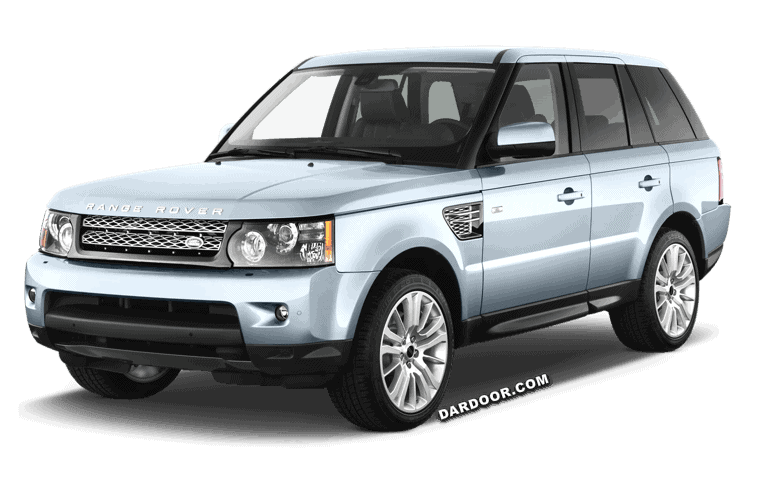
2010–2013 Range Rover Sport (L320) — OEM Workshop Service & Repair Manual (PDF)
Engines Covered
- TDV6 3.0L Diesel
- 5.0L V8 Petrol
- 5.0L V8 Supercharged Petrol
Transmissions Covered
- 6HP28 — 6-Speed Automatic Transmission
- 8HP70 — 8-Speed Automatic Transmission
Key Features
Complete OEM Coverage
Factory repair procedures for all mechanical, electrical, and body systems.
Dealer Diagnostics
Includes full DTC lists, troubleshooting flowcharts, and system testing routines.
User-Friendly PDF
Searchable bookmarks, printable pages, and easy navigation.
What’s Inside
- Engine repair: fuel, cooling, lubrication & emissions
- Transmission service for 6HP28 & 8HP70 units
- 4WD system, differentials, transfer case & driveline
- Suspension, air suspension, brakes, ABS & stability control
- Body repair, interior, SRS airbag & HVAC systems
- Maintenance schedules, fluids & torque specifications
Download & Compatibility
Delivery: Instant digital PDF download
Compatibility: Windows • macOS • iOS • Android
This manual provides detailed instructions for maintenance, disassembly, reassembly, component inspection, adjustment, and diagnostics—intended for use by experienced mechanics. Proper application of this guide will help ensure thorough repairs and maintain your vehicle in peak condition.
Important Note: Before purchasing this manual, please check whether your vehicle is subject to any active service recalls, as authorized dealerships may perform necessary repairs free of charge. When replacing parts, always use genuine OEM components to ensure safety, reliability, and long-term performance.
CONTENTS: 2010-2013 Range Rover Sport Repair Manual, L320
- GENERAL INFORMATION
- CHASSIS
- POWERTRAIN
- ELECTRICAL
- BODY
Sample Pages
CAUTION: This OEM service and workshop repair manual provides detailed procedures for maintenance, disassembly, reassembly, inspection, adjustment, and diagnostics. It is intended as a comprehensive guide for experienced mechanics. To ensure thorough and accurate repairs that maintain your vehicle’s optimal performance, please read and follow this manual carefully. When replacing parts during any repair work, always
use genuine Land Rover parts to ensure quality, safety, and reliability.
2010–2013 Range Rover Sport (L320) – Full Vehicle Overview, Issues, DTCs & Maintenance Guide
The 2010–2013 Range Rover Sport (L320) is a premium mid-size SUV that blends luxury, off-road capability, and powerful engines. With refined on-road manners and serious off-road hardware, it appeals to buyers wanting a high-end 4×4 that can tow, tour, and tackle rough terrain. However, its complexity and weight mean maintenance and repairs can be costly if neglected.
⚙️ Technical Specifications & Performance
- Platform: L320 Range Rover Sport
- Engines (2010–2013):
TDV6 3.0L Diesel; V8 5.0L Petrol; V8 5.0L Supercharged Petrol
- Power Output (approx):
180–188 kW (241–252 hp) 3.0 TDV6;
276 kW (375 hp) 5.0 V8;
375 kW (510 hp) 5.0 V8 Supercharged
- Transmissions:
6HP28 6-speed automatic; 8HP70 8-speed automatic (later models)
- Drivetrain: Permanent 4WD with low range & Terrain Response
- 0–100 km/h: ~9.3 s (3.0 TDV6), ~7.6 s (5.0 V8), ~6.2 s (5.0 SC)
- Fuel Consumption (combined): ~8.5–14.0 L/100 km (varies by engine)
- Towing Capacity (braked): Up to 3,500 kg (7,716 lbs)
- Seating Capacity: 5 seats
🔧 Top 10 Common Mechanical Issues (Root Cause & Fix)
- Air suspension failure / sagging
– Root Cause: Age-related air spring leaks, corroded air lines, or failing compressor.
– Proposed Fix: Smoke/soap test for leaks, replace leaking air bags, repair lines, and replace or rebuild suspension compressor.
- Turbocharger failure (3.0 TDV6)
– Root Cause: Oil starvation from sludge, blocked oil feed lines, or extended oil change intervals.
– Proposed Fix: Replace turbocharger(s), clean/replace oil feed lines, flush lubrication system and maintain strict oil service intervals.
- Crankshaft / bottom-end failure (TDV6)
– Root Cause: Bearing wear and oil pressure issues on high-mileage or poorly serviced engines.
– Proposed Fix: Engine strip-down, crankshaft regrind or replacement, new bearings, and ensure correct oil spec & intervals.
- Timing chain and tensioner wear (5.0 V8)
– Root Cause: Chain guide and tensioner wear leading to rattle on cold start.
– Proposed Fix: Replace timing chains, guides and tensioners with updated parts; verify cam timing.
- Cooling system leaks
– Root Cause: Plastic coolant pipes, radiators and expansion tanks cracking with age/heat cycles.
– Proposed Fix: Pressure test cooling system, replace leaking hoses, radiator, thermostat housing or expansion tank as required.
- Front lower control arm bushing wear
– Root Cause: Heavy vehicle weight and rough roads prematurely wearing rubber bushings and ball joints.
– Proposed Fix: Replace lower arms/bushings and ball joints; carry out wheel alignment.
- Brake disc warping and rapid pad wear
– Root Cause: Vehicle mass and heat buildup from repeated heavy braking.
– Proposed Fix: Replace discs and pads with higher-quality or upgraded components; torque wheels correctly.
- Transfer case / differential noise
– Root Cause: Old or low fluids, bearing wear from heavy towing or off-road use.
– Proposed Fix: Change all driveline oils (transfer case, front/rear diffs) with correct spec; rebuild or replace noisy units.
- Power steering leaks
– Root Cause: Aged hoses, seals and connections on rack and pump assemblies.
– Proposed Fix: Locate leak, replace hoses/seals or steering rack/pump as needed and bleed system.
- Exhaust manifold and gasket leaks (V8)
– Root Cause: Heat cycling leading to warped manifolds and broken studs.
– Proposed Fix: Remove manifold, extract broken studs, machine or replace manifold and fit new gaskets and hardware.
Top 10 Common Electrical Issues (Root Cause & Fix)
- Instrument cluster warning lights / random faults
– Root Cause: Low battery voltage, poor grounds, CAN communication glitches.
– Proposed Fix: Test and replace weak battery, clean ground points, scan with diagnostic tool and clear stored DTCs.
- Parking sensor constant beeping / inoperative
– Root Cause: Water-damaged ultrasonic sensors or broken wiring in bumpers.
– Proposed Fix: Test individual sensors, replace faulty units, repair wiring and ensure correct sensor seating.
- Air suspension height sensor faults
– Root Cause: Corroded connectors or worn height sensors.
– Proposed Fix: Inspect harness, clean connectors, replace defective sensors and recalibrate suspension heights.
- Central locking / keyless entry issues
– Root Cause: Weak key fob batteries, faulty door latches or body control module glitches.
– Proposed Fix: Replace fob batteries, test/replace door latches and reprogram BCM if required.
- Radio / infotainment freezing or black screen
– Root Cause: MOST bus communication issues or failing head unit.
– Proposed Fix: Check fiber-optic links, reset system, update software, or replace head unit / amplifier module.
- Electric window failures
– Root Cause: Worn regulators, motors or broken door loom wiring.
– Proposed Fix: Replace window regulator/motor and repair any damaged wiring in door jamb.
- HVAC blower not working on some speeds
– Root Cause: Failed blower resistor pack or worn blower motor.
– Proposed Fix: Replace resistor pack; if noisy or intermittent, replace blower motor as well.
- ABS / HDC / DSC warning lights
– Root Cause: Failed wheel speed sensors or steering angle sensor miscalibration.
– Proposed Fix: Scan ABS module, replace faulty sensors, recalibrate steering angle using diagnostic equipment.
- Battery drain overnight
– Root Cause: Modules not going to sleep (e.g. telematics, audio, suspension ECU).
– Proposed Fix: Parasitic draw test, identify offending module, update software or replace module.
- Airbag / SRS warning light
– Root Cause: Faulty seat occupancy sensor, pretensioner wiring, or clock spring.
– Proposed Fix: Read SRS codes, repair or replace affected sensor, connector or clock spring and clear DTCs.
📊 Pros & Cons Comparison with Competitors
| Model |
Pros |
Cons |
| Range Rover Sport (L320) |
Excellent off-road capability; Strong towing; Luxurious interior; Powerful V8 & TDV6 options |
High running costs; Complex air suspension; Known engine & electrical issues |
| BMW X5 (E70) |
Sporty handling; Strong diesel options; Premium interior |
Expensive repairs; Suspension & electronics issues |
| Mercedes-Benz ML / GLE (W164/W166) |
Comfortable ride; Strong V6/V8 engines; Prestige badge |
Rust & electronics concerns; Costly parts |
| Audi Q7 (4L) |
Spacious cabin; Quattro AWD; High-quality interior |
Heavy and thirsty; Complex electronics; Expensive suspension repairs |
| Porsche Cayenne (955/957) |
Excellent performance; Sharp handling; Strong engines |
Very high maintenance costs; Air suspension and cooling issues |
| Jeep Grand Cherokee (WK2) |
Good off-road package; Strong towing; Lower purchase price |
Interior quality variable; Reliability mixed |
– Maintenance Schedule
| Interval ⏱️ |
Maintenance Task 🔧 |
| Every 10,000–12,000 km / 6–12 months |
Engine oil & filter change (correct spec for TDV6 or 5.0 V8) |
| Every 20,000 km / 12 months |
Inspect brakes, tires, steering, suspension; check all fluids |
| Every 40,000 km |
Replace fuel filter (diesel); replace cabin (pollen) filter; inspect air filter |
| Every 60,000 km |
Replace air filter; change transfer case & differential oils; inspect drive belts |
| Every 80,000–100,000 km |
Automatic transmission service (fluid & filter, where applicable) |
| Every 5 years / 100,000 km |
Coolant flush; brake fluid replacement; full suspension and bushing inspection |
| As needed |
Air suspension height calibration, wheel alignment, software updates |
⚠️ Recalls, Advisories & Safety Alerts
- Fuel leak risk: Fuel outlet flange or lines could crack, leading to fuel leakage near the tank.
- Brake hose / pipe corrosion: Corroded brake pipes could result in reduced braking performance.
- Power steering hose recall: Potential leaks from high-pressure hoses causing steering assist loss and fire risk.
- Sunroof glass detachment: In rare cases, bonding issues could allow the glass panel to separate.
- ABS / stability control software updates: Incorrect calibration could affect stability control behaviour.
- Fuel pump module issues: Internal pump faults causing hard starting or engine stalling.
- Airbag module / pretensioner concerns: SRS components requiring replacement or reprogramming to ensure correct deployment.
- Parking brake performance: Electronic park brake actuator issues leading to reduced holding force.
- Engine cooling fan operation: Faulty relays or software causing fans not to run correctly and risk of overheating.
- Lighting and indicator faults: Headlamp or rear lamp wiring concerns that could reduce visibility or signalling.
🧾 Diagnostic Trouble Codes (DTC) Tables
Engine Control Module (ECM)
| Code |
Description |
| P0299 |
Turbocharger/Supercharger Underboost Condition |
| P0401 |
EGR Flow Insufficient Detected |
| P0420 |
Catalyst System Efficiency Below Threshold (Bank 1) |
| P0087 |
Fuel Rail/System Pressure Too Low |
| P0116 |
Engine Coolant Temperature Range/Performance |
| P0234 |
Turbocharger/Supercharger Overboost Condition |
| P0300 |
Random/Multiple Cylinder Misfire Detected |
| P2002 |
Diesel Particulate Filter Efficiency Below Threshold (TDV6) |
| P244A |
Diesel Particulate Filter Differential Pressure Too Low/High |
| P2563 |
Turbocharger Boost Control Position Sensor Circuit Range/Performance |
Transmission Control Module (TCM)
| Code |
Description |
| P0700 |
Transmission Control System Malfunction (request from TCM) |
| P0730 |
Incorrect Gear Ratio |
| P0734 |
Gear 4 Incorrect Ratio |
| P0741 |
Torque Converter Clutch Circuit Performance or Stuck Off |
| P0751 |
Shift Solenoid A Performance or Stuck Off |
| P0796 |
Pressure Control Solenoid C Performance/Stuck Off |
| P0868 |
Transmission Fluid Pressure Low |
| P2701 |
Transmission Friction Element B Apply Time Range/Performance |
| P2714 |
Pressure Control Solenoid D Stuck Off |
| P2763 |
Turbine Speed Sensor Circuit High |
ABS / ESC (Brake System)
| Code |
Description |
| C0035 |
Left Front Wheel Speed Sensor Circuit |
| C0040 |
Right Front Wheel Speed Sensor Circuit |
| C0045 |
Left Rear Wheel Speed Sensor Circuit |
| C0050 |
Right Rear Wheel Speed Sensor Circuit |
| C0110 |
ABS Pump Motor Circuit Malfunction |
| C0131 |
ABS Pressure Circuit Malfunction |
| C1234 |
Wheel Speed Correlation Fault |
| C1278 |
Steering Angle Sensor Malfunction |
| C1380 |
ABS Control Module Internal Failure |
| C1411 |
Yaw Rate Sensor Fault |
SRS Airbag System
| Code |
Description |
| B1000 |
SRS Control Module Internal Fault |
| B1016 |
Driver Airbag Circuit Open |
| B1020 |
Passenger Airbag Circuit Short to Ground |
| B1053 |
Side Airbag Deployment Loop Fault |
| B108A |
Seat Position Sensor Fault |
| B1101 |
Airbag Sensor Low Voltage |
| B1209 |
Occupant Classification System Fault |
| B1302 |
Crash Sensor Supply Circuit Fault |
| B1352 |
Crash Event Storage Full |
| B140F |
Seat Belt Pretensioner Circuit Fault |
Body Control / CAN Communication
| Code |
Description |
| U0100 |
Lost Communication with ECM/PCM |
| U0121 |
Lost Communication with ABS Control Module |
| U0140 |
Lost Communication with Body Control Module |
| U0155 |
Lost Communication with Instrument Cluster |
| U0132 |
Lost Communication with Ride Level Control Module |
| U0415 |
Invalid Data Received from ABS Module |
| U0421 |
Invalid Data Received from Ride Level Control Module |
| U110F |
Lost Communication with Fuel Pump Control Module |
| U1123 |
Lost Communication with Tire Pressure Monitor System |
| U1262 |
Communication Bus Fault |
Final Verdict & Conclusion
The 2010–2013 Range Rover Sport (L320) delivers a compelling mix of luxury, presence and genuine off-road ability. Powerful TDV6 and V8 engines, a classy cabin and strong towing capability make it ideal for long-distance touring and daily use alike. However, its complex suspension, electronics and diesel/V8 powertrains require diligent maintenance and a healthy repair budget. For buyers prepared to maintain it properly, the L320 can be a rewarding and capable premium SUV; for those seeking low running costs and simplicity, a less complex rival may be a safer choice.