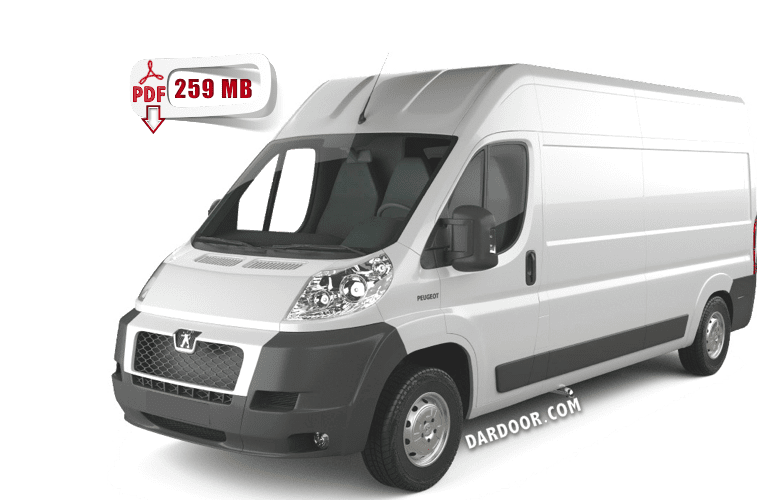
2006-2017 Peugeot Boxer II Repair Manual

$16.90

This is the original OEM workshop service and repair manual for the 2006–2017 Peugeot Boxer II in a simple and searchable PDF format.

2006–2017 Peugeot Boxer II OEM Repair Manual with Wiring Diagrams – PDF Download

This is the original OEM workshop service and repair manual for the 2006–2017 Peugeot Boxer II in a simple and searchable PDF format. This comprehensive factory guide includes everything from mechanical procedures to complete wiring diagrams, and it’s the same manual used by authorized Peugeot technicians at the dealership level.

File Format PDF
File Language English
You’ll Get 259 MB
Page Count 3,520
Delivery Method Instant Download
Searchable & Printable YES
Wiring Included YES
📥 Download the official OEM service manual today and get professional-grade repair guidance at your fingertips.

🚐 Also Known As:

  • Fiat Ducato
  • Citroën Jumper (1994–present)
  • Citroën Relay (UK; 2007–present)
  • Peugeot Boxer (1994–present)
  • Ram ProMaster (2014–present)
  • Opel Movano (2021–present)
  • Vauxhall Movano (2021–present)
  • Peugeot Manager (Mexico; 1994–present)
  • Alfa Romeo AR6 (1981–1993)
  • Talbot Express (1981–1993)
  • Peugeot J5 (1981–1993)
  • Citroën C25 (1981–1993)
  • Fiat Talento (1981–1993)

🔧 Key Features:

  • Complete OEM Workshop Manual – Includes repair procedures for engine, transmission, suspension, brakes, steering, and more
  • Wiring Diagrams Included – Full schematics for accurate electrical diagnostics
  • Dealer-Level Instructions – The same factory content used by Peugeot service centers
  • Fully Searchable PDF Format – Easy navigation and printable sections
  • Ideal for DIY & Professionals – Covers everything from routine service to advanced repair

📦 Delivery & Compatibility:

  • Delivery: Instant Digital Download
  • Platform: Compatible with Windows, macOS, iOS, Android

🛠️ Take control of your Peugeot Boxer maintenance and repairs!

This manual provides detailed instructions for maintenance, disassembly, reassembly, component inspection, adjustment, and diagnostics—intended for use by experienced mechanics. Proper application of this guide will help ensure thorough repairs and maintain your vehicle in peak condition.

Important Note: Before purchasing this manual, please check whether your vehicle is subject to any active service recalls , as authorized dealerships may perform necessary repairs free of charge. When replacing parts, always use genuine OEM components to ensure safety, reliability, and long-term performance.

Table of Contents : 2006-2017 Peugeot Boxer II Repair Manual

Table of Contents : 2006-2017 Peugeot Boxer II Repair Manual

Sample Pages


CAUTION : This OEM service and workshop repair manual provides detailed procedures for maintenance, disassembly, reassembly, inspection, adjustment, and diagnostics. It is intended as a comprehensive guide for experienced mechanics. To ensure thorough and accurate repairs that maintain your vehicle’s optimal performance, please read and follow this manual carefully. When replacing parts during any repair work, always use genuine Peugeot parts to ensure quality, safety, and reliability.

2006–2017 Peugeot Boxer II: Overview, Specs, Common Problems, Maintenance, Recalls & DTC Codes

The Peugeot Boxer II (X250) is a large front-wheel-drive work van built to haul, tow, and survive fleet life. It’s also shared-platform engineering (with the same “big-van” family as the Boxer/Relay/Jumper/Ducato line), which is great for parts availability—but it also means a few repeat-problem patterns show up across years and engines.

Overview

  • Best for: trades, delivery fleets, camper conversions, high payload duty
  • Watch-outs: diesel emissions hardware (EGR/DPF), water ingress into electrical areas, wear items (clutch/DMF), and age-related wiring/earth faults
  • Engines (most common): 2.2 HDi + 3.0 HDi; later years also saw newer diesel updates in some markets.

Technical Specs & Performance (Typical Range)

👉 Note: Figures vary by year/market/body length/roof height and GVW class. Use this as a practical range, not a single-trim promise.
Category Typical Specs
Body styles Panel van, chassis cab, crew van, minibus (market-dependent)
Drive Front-wheel drive (FWD)
Engines (common) 2.2 HDi (multiple outputs), 3.0 HDi (higher output)
Power (range) Approx. 100–177 hp / 100–177 PS (depending on engine and year)
Torque (range) Approx. 250–400 Nm (engine/output dependent)
Gearbox 5- or 6-speed manual; automated manual in some variants/markets
Towing (braked) Varies by GVW/engine; commonly up to ~2,500–3,000 kg (market/variant dependent)
Running costs note Service intervals and engine updates changed over time (e.g., emissions/Euro updates).

Top 10 Common Mechanical Issues (Owner-Reported Patterns)

🔔 Note: Each issue below includes symptoms, root cause, fix approach, and a typical independent-garage cost range in Euro.
  1. Timing belt wear / overdue belt service (2.2 HDi variants)
    • Symptoms: chirping/whine, rough running, belt cracking, service history gaps
    • Root cause: long intervals + hard fleet use; tensioner/idler wear accelerates belt risk
    • Fix: full belt kit (belt+tensioners+idlers) and water pump if applicable; reset service record
    • Typical cost: €450–€1,050
  2. Turbocharger wear / low boost
    • Symptoms: loss of power, limp mode, whistle/siren noise, smoke under load
    • Root cause: oil starvation (extended oil intervals), boost leaks, contaminated oil feed/return
    • Fix: diagnose boost leaks; clean/replace oil feed; rebuild/replace turbo; update oil service routine
    • Typical cost: €650–€2,200
  3. EGR valve clogging / sticking
    • Symptoms: hesitation, rough idle, poor mpg, engine light, smoke
    • Root cause: soot buildup from short trips and heavy load cycles
    • Fix: EGR clean (if viable) or replacement; check related sensors and intake fouling
    • Typical cost: €180–€650
  4. DPF restriction / repeated regenerations
    • Symptoms: warning light, limp mode, rising oil level (some cases), frequent regen smell
    • Root cause: low-speed routes, failed sensors, EGR issues, poor maintenance
    • Fix: forced regen + root-cause diagnosis; clean/replace DPF; address EGR/sensors/injector health
    • Typical cost: €250–€1,800
  5. Clutch + dual-mass flywheel (DMF) wear
    • Symptoms: judder, slipping under load, rattling at idle, hard shifts
    • Root cause: stop-start driving, heavy payloads, driver technique, DMF spring wear
    • Fix: clutch kit; DMF if play/noise; inspect hydraulics and gearbox mounts
    • Typical cost: €750–€1,900
  6. Crank pulley / harmonic balancer deterioration
    • Symptoms: belt wobble, squeal, vibration, charging/PS issues if belt slips
    • Root cause: rubber isolator breakdown with age/heat
    • Fix: replace crank pulley; inspect auxiliary belt/tensioner
    • Typical cost: €220–€650
  7. Cooling system leaks (hoses/radiator/thermostat housing)
    • Symptoms: coolant loss, overheating, sweet smell, crusty deposits around joints
    • Root cause: plastic housing fatigue, hose swelling, clamp loosening over time
    • Fix: pressure test; replace failed component; refresh coolant; check fan operation
    • Typical cost: €120–€900
  8. Injector sealing issues / diesel smell / black tar (“blow-by”)
    • Symptoms: chuffing noise, diesel smell, tar around injectors, hard start
    • Root cause: injector washer failure, improper torque, carbon buildup on seat
    • Fix: remove injector, clean seat, fit new seal kit, correct torque procedure
    • Typical cost: €180–€850 (more if injectors are seized)
  9. Front suspension bush/ball joint wear
    • Symptoms: clunks, uneven tyre wear, vague steering, wandering under braking
    • Root cause: payload stress, poor roads, age-related rubber cracking
    • Fix: replace worn arms/bushes/ball joints; alignment
    • Typical cost: €200–€900
  10. Starter / charging system struggles (heavy use + age)
    • Symptoms: slow crank, click-no-start, intermittent starting, battery warning
    • Root cause: worn starter contacts, weak battery, corroded grounds, alternator decline
    • Fix: load test battery; clean grounds; repair/replace starter or alternator as needed
    • Typical cost: €120–€750

Top 10 Common Electrical Issues (Owner-Reported Patterns)

  1. Instrument cluster resets / intermittent blank display
    • Symptoms: gauges drop, display flicker, random warning lights
    • Root cause: low voltage events, poor grounds, cluster connector oxidation
    • Fix: battery/charging test; clean earth points; inspect cluster connector; repair cluster if needed
    • Typical cost: €80–€450
  2. Parasitic battery drain (module not sleeping)
    • Symptoms: flat battery overnight/after 2–3 days
    • Root cause: door/BCM wake-up loop, aftermarket accessories, water ingress into connectors
    • Fix: parasitic draw test; isolate circuit; repair water ingress; re-code/replace offending module
    • Typical cost: €120–€650
  3. Central locking unreliable
    • Symptoms: one door won’t lock/unlock, remote works intermittently
    • Root cause: actuator wear, loom break in door hinge area, latch micro-switch failure
    • Fix: wiring repair; replace actuator/latch; check fuses/BCM output
    • Typical cost: €120–€520
  4. Power window failures
    • Symptoms: slow window, dead switch, one-touch not working
    • Root cause: worn regulator/motor, switch contact wear, broken loom
    • Fix: inspect regulator; replace motor/regulator; repair loom; re-initialize window if needed
    • Typical cost: €110–€480
  5. ABS warning light from wheel speed sensor/reluctor issues
    • Symptoms: ABS/ESP light, traction control disabled, pulsing brakes at low speed
    • Root cause: sensor contamination, damaged wiring, corroded reluctor ring
    • Fix: scan for wheel-specific fault; repair wiring; replace sensor/hub as required
    • Typical cost: €90–€650
  6. Blower motor works only on certain speeds
    • Symptoms: fan dead on low speeds, only max works
    • Root cause: resistor pack failure or HVAC control fault
    • Fix: replace resistor/module; check blower current draw
    • Typical cost: €90–€260
  7. Wiper faults (no park / intermittent issues)
    • Symptoms: wipers stop mid-screen, intermittent stops, odd timing
    • Root cause: wiper motor park switch wear, linkage stiffness, water in connectors
    • Fix: free linkage; repair connector; replace motor if needed
    • Typical cost: €120–€480
  8. Rear lighting faults (corrosion / poor earth)
    • Symptoms: brake/indicator intermittent, bulb warnings, melted sockets
    • Root cause: moisture ingress, corroded contacts, weak earth points
    • Fix: clean contacts; replace lamp holder; refresh earth wiring
    • Typical cost: €40–€220
  9. Glow plug light / glow circuit faults
    • Symptoms: hard starting cold, glow warning persists, engine light
    • Root cause: failed glow plugs, relay/module issues, wiring resistance
    • Fix: test each plug; replace set where sensible; replace relay/module if confirmed
    • Typical cost: €120–€520
  10. CAN communication warnings (multiple random faults)
    • Symptoms: multiple warning lights, intermittent “check” messages, limp events
    • Root cause: low voltage, corroded connectors, water ingress, failing module on the bus
    • Fix: battery/alternator test first; inspect known water points; network scan; isolate module
    • Typical cost: €120–€900

Top Competitors

 Pros & Cons

Pros Cons
Strong payload-focused platform and wide body/roof options Diesel emissions components can be expensive when neglected (EGR/DPF)
Simple, serviceable drivetrain layout (especially manuals) Water ingress/connector corrosion can trigger electrical gremlins
Good parts availability due to shared large-van platform family Clutch/DMF wear is common in stop-start heavy use
Torque delivery suits heavy loads (engine-dependent) Older examples can be noisy/rough if fleet-maintained poorly

Maintenance Schedule (Practical)

🔔 Note: Intervals depend on engine, duty cycle, and market guidance. This table is a safe “fleet-proof” baseline for longevity.
Interval Service Items
Every 10,000–15,000 km or 12 months Engine oil + filter; inspect leaks; check belts/hoses; battery/charging test
Every 20,000–30,000 km Air filter; cabin filter; brake inspection; wheel alignment check (tyre wear)
Every 40,000–60,000 km Fuel filter (diesel); gearbox oil inspection (change if heavy duty use); coolant condition check
Every 2 years Brake fluid; coolant refresh (if specified by engine/market); inspect earth straps and main connectors
Timing belt interval (engine-specific) Replace belt kit (and water pump where applicable) based on OEM interval or earlier for heavy use
As needed (highway vs city dependent) DPF health checks; EGR inspection/cleaning; injector leak-off test if starting/performance changes

Recalls, Advisories, Safety Alerts & TSB Highlights

Recalls and campaigns are VIN-specific. The safest workflow is: check your VIN on Peugeot’s official recall checker and book a dealer visit if anything is outstanding—campaign work is typically carried out free of charge.

1- Airbag campaign checks (Takata-type industry campaigns can exist by region/model) — verify by VIN using official tools.

2- Emissions software updates / drivability complaints — TSB-style updates for ECU calibrations have been reported in fleet contexts (verify by VIN/dealer bulletin).

3- Fuel system leak risk inspections — some diesel platforms see campaigns around lines/clips/chafe points (VIN check recommended).

4- Brake hose routing/abrasion checks — safety inspection item on some vans (VIN/dealer confirmation recommended).

5- Steering column / joint inspection — periodic campaign-type checks can appear depending on supplier batch (VIN dependent).

6- Seat belt anchorage / pretensioner checks — restraint-system campaigns are typically VIN-specific (VIN check recommended).

7- ABS/ESC module updates — some campaigns are “software + inspection” rather than full replacement (VIN dependent).

8- Door latch / sliding door retention — commercial vans sometimes receive latch reinforcement updates (VIN dependent).

9- Wiring harness chafe points — known TSB theme on many vans: protective sleeving/clip updates to prevent shorts.

10- Corrosion/water ingress advisory checks — not always a recall, but commonly appears in service bulletins as preventative inspection guidance.

11- Brake Pipe Fixings (2016-2019 models, extends to later Boxer III) The brake pipe fixings may not conform to specification, with insufficient clearance between pipes and fixing studs, potentially causing pipe damage and brake fluid leaks Regit Car Recalls UK . This was a major safety recall affecting thousands of vehicles.

12- Front Brake Hose Chafing (2003-2004) Wear on brake hoses caused by chafing against the wheel arch could cause brake fluid leaks, initially illuminating the red warning lamp Regit . Affected hoses were replaced and protective devices added.

13- Spare Wheel Winch Failure (2006-2008) The spare wheel winch may fail and not secure the wheel to the vehicle, allowing it to detach Regit . Complete winch replacement was required.

14- Handbrake Mechanism Defect (Multiple years) The handbrake mechanism may not meet correct specification, potentially allowing the vehicle to roll away under certain conditions Regit . Repairs involved inspecting, replacing brake pads, and re-adjusting cables.

15- Brake Vacuum Circuit Freezing (Date unspecified) Braking assistance could be adversely affected by freezing of moisture accumulating in the vacuum circuit Regit . Solution involved fitting separate air vents with filters to electrovalves.

16- Accelerator Pedal Return Issue (Multiple years) The accelerator pedal may not return correctly Regit . Replacement of the accelerator pedal end stop was required.

17- Emissions System Software Error (Later models, some post-2017) A software error in the engine control unit prevents the malfunction indicator light from switching on if the urea injector malfunctions Car-Recalls , affecting SCR and DPF systems. This could allow vehicles to operate beyond regulatory emission limits.

🔔 Note: The Boxer has reportedly had 17 safety recalls total across all generations. Always check your specific VIN with Peugeot or the DVSA (UK) / equivalent authority in your region to confirm if your vehicle is affected by any outstanding recalls. Many of these recalls involve critical brake system components and should be addressed immediately if your vehicle is affected.


DTC Trouble Codes (Quick Reference Tables)

👉 Tip: These are commonly encountered code families for diesel vans; exact definitions can vary by ECU software. Always confirm with a scan tool and live data.

Engine Control Module (ECM) – 10 Common Codes

Code Typical Meaning Common Direction
P0401 EGR flow insufficient EGR clog/stick; intake soot; check vacuum/actuator
P0402 EGR flow excessive EGR stuck open; control fault
P0234 Turbo overboost Sticking VGT/wastegate; boost control; sensor
P0299 Turbo underboost Boost leak; turbo wear; MAP issues
P0101 MAF range/performance MAF contamination; intake leaks
P0113 IAT high input Sensor circuit/open; connector corrosion
P0191 Fuel rail pressure range/performance Fuel filter, pump, regulator, injector leak-off
P0201 Injector circuit cylinder 1 Injector wiring/connector; ECU driver
P2002 DPF efficiency below threshold DPF load; sensors; regen issues
P2458 DPF regen duration Driving pattern; sensor faults; blocked DPF

Transmission Control Module (TCM) – 10 Common Codes

Many Boxers are manual; these codes apply mainly to automated manual / automatic variants where equipped.

Code Typical Meaning Common Direction
P0700 Transmission control system (MIL request) TCM stored fault; scan TCM for specifics
P0715 Input/turbine speed sensor Sensor/wiring; connector
P0720 Output speed sensor Sensor/wiring; tone wheel
P0730 Incorrect gear ratio Clutch slip (AMT); actuator; hydraulic issues
P0740 TCC circuit (where applicable) Solenoid/wiring; fluid condition
P0750 Shift solenoid A Solenoid/wiring; valve body
P0760 Shift solenoid C Solenoid/wiring; valve body
P0810 Clutch position control error (AMT) Calibration; actuator wear
P0900 Clutch actuator circuit (AMT) Actuator wiring; control unit
P0919 Gear shift position control error Sensor/actuator; linkage calibration

ABS / ESC (Brake System) – 10 Common Codes

Code Typical Meaning Common Direction
C0035 LF wheel speed sensor Sensor/hub; wiring
C0040 RF wheel speed sensor Sensor/hub; wiring
C0045 LR wheel speed sensor Sensor/hub; wiring
C0050 RR wheel speed sensor Sensor/hub; wiring
C0110 Pump motor circuit ABS pump; relay; wiring
C0131 Brake pressure sensor Sensor/connector; module
C0241 Traction control/engine torque request CAN comms; low voltage
C0265 EBD performance Hydraulic issue; module; brake imbalance
C0287 Steering angle sensor Calibration; sensor fault
U0121 Lost communication with ABS CAN wiring; power/ground to module

SRS Airbag System – 10 Common Codes

Code Typical Meaning Common Direction
B0010 Driver airbag circuit Clock spring; connector under wheel
B0020 Passenger airbag circuit Connector; occupant system checks
B0051 Deployment loop resistance Connector corrosion; wiring
B0074 Seat belt pretensioner (driver) Connector under seat; wiring
B0079 Seat belt pretensioner (passenger) Connector under seat; wiring
B0081 Side airbag circuit Door/seat loom; connector
B0090 Crash sensor Sensor mounting; wiring
B0100 Occupant classification Seat sensor; calibration
U0151 Lost communication with restraint module CAN/power/ground issue
B1000 Module internal fault Confirm power/ground; module diagnosis

Body Control / CAN Communication – 10 Common Codes

Code Typical Meaning Common Direction
U0100 Lost communication with ECM CAN integrity; low voltage; connector corrosion
U0140 Lost communication with BCM BCM power/ground; CAN wiring
U0155 Lost communication with cluster Cluster connector; network issues
U0164 Lost communication with HVAC HVAC module power/ground; network
U0184 Lost communication with radio Aftermarket head unit; wiring faults
B1325 System voltage low Battery/alternator; main grounds
B1370 Ignition run/start circuit Ignition switch; BCM input
B1600 Immobiliser/key communication Key transponder; antenna ring
B1620 Door lock actuator circuit Actuator; loom break in door hinge
U0001 High-speed CAN bus Short/open on CAN; module pulling bus down

FAQs for Buyers

Is the 2006–2017 Boxer II a good van for high mileage?

Yes—if servicing is consistent. The biggest killers are neglected oil changes, ignored EGR/DPF warnings, and running with boost leaks.

What’s the #1 “expensive surprise” item?

DPF/EGR-related chains of failure (sensor → regen failure → DPF load → limp mode). Fix the root cause early.

How do I reduce DPF problems?

Use correct oil spec, avoid endless short trips, and address EGR/boost leaks quickly so regens can complete normally.

Why does it throw random warning lights after a battery issue?

Low voltage can upset multiple modules on the CAN network. Always start with battery + alternator testing and clean grounds.

Is water ingress really that common?

On older commercial vans, yes. It doesn’t need to be “flooding”—a small leak onto connectors can create repeating faults.

Should I buy one with a full service history only?

Strongly recommended. Missing timing belt history (where applicable) should be treated as “needs doing now.”

Manual vs automated manual—what’s safer?

Manual is usually simpler and cheaper long-term. Automated manuals add actuator/calibration complexity.

How do I check recalls properly?

Use Peugeot’s official VIN recall checker and follow dealer guidance for outstanding campaigns.

What engines are available?

The Boxer II offers diesel engines ranging from 2.2L to 3.0L, with power outputs from approximately 100 to 180 horsepower. The most common are the 2.2 HDi and 3.0 HDi units.

What’s the fuel economy like?

Expect around 25-35 mpg depending on engine size, load, body configuration, and driving conditions. The 2.2L engines are generally the most economical.

What body configurations are available?

The Boxer comes in numerous configurations: panel van, chassis cab, window van, minibus, motorhome base, and various wheelbase/roof height combinations.

Is it the same as other vans?

Yes, the Boxer II is a “badge-engineered” vehicle sharing its platform with the Citroën Relay/Jumper and Fiat Ducato. They’re essentially the same van with different branding.

What’s the payload capacity?

Payload varies widely by configuration, typically ranging from 1,000 to 2,000+ kg depending on GVW (Gross Vehicle Weight) rating and body style.

Are parts expensive?

Parts are generally affordable and widely available since the platform is shared with Citroën and Fiat. Many components are interchangeable between the three brands.

What are common reliability issues?

DPF (Diesel Particulate Filter) problems, turbocharger failures, EGR valve issues, injector problems, and electrical gremlins are commonly reported.

What transmission options exist?

Primarily 5-speed and 6-speed manual transmissions. Some models offer a 6-speed automated manual (Comfort-Matic).

Is it good for conversion to a camper/motorhome?

Yes, the Boxer is one of the most popular bases for motorhome and camper conversions due to its size options, payload capacity, and availability.

What’s the typical lifespan?

With proper maintenance, these vans can exceed 200,000-300,000+ miles, though diesel system components may need attention along the way.

Final Verdict

The 2006–2017 Peugeot Boxer II is a classic “works for a living” van: strong torque, big-body practicality, and straightforward mechanical access in many areas.
Treat it like a commercial tool (short oil intervals, proactive belt/aux-belt work, early diagnosis of EGR/DPF/boost faults), and it’s capable of serious mileage.
Ignore warning lights and stretch maintenance, and it becomes the kind of van that “mysteriously” lives at the workshop.

For VIN-specific recall accuracy, always confirm via Peugeot’s official recall tools before purchase or long trips.
Brands

File Format

PDF

File Language

English

You'll Get

259 MB

Page Count

3,520

Instant Download

YES

Wiring Diagram Included

YES