


Get the original OEM workshop PDF document for the 2014 Mazda Mazda3, complete with wiring diagrams and body repair manuals in PDF.
2014 Mazda Mazda3 Repair Manual
$29.90
This manual provides detailed instructions for maintenance, disassembly, reassembly, component inspection, adjustment, and diagnostics—intended for use by experienced mechanics. Proper application of this guide will help ensure thorough repairs and maintain your vehicle in peak condition.
Important Note: Before purchasing this manual, please check whether your vehicle is subject to any active service recalls, as authorized dealerships may perform necessary repairs free of charge. When replacing parts, always use genuine OEM components to ensure safety, reliability, and long-term performance.
Table of Contents : 2014 Mazda Mazda3 Repair Manual
SAMPLE PAGES
A few pages will help you make the right decision
CAUTION: This OEM service and workshop repair manual provides detailed procedures for maintenance, disassembly, reassembly, inspection, adjustment, and diagnostics. It is intended as a comprehensive guide for experienced mechanics. To ensure thorough and accurate repairs that maintain your vehicle’s optimal performance, please read and follow this manual carefully. When replacing parts during any repair work, always use genuine Mazda parts to ensure quality, safety, and reliability.
2014 Mazda Mazda3 (BM/BN) — Specs, Common Problems (With Fixes), Recalls/TSBs & DTC Codes
2014 Mazda Mazda3 (also known as Mazda Axela in some markets) kicked off the 3rd generation with SKYACTIV tech, sharp handling, and excellent fuel economy. Below you’ll find technical specs, owner-reported issues with root causes + fixes, competitors, maintenance schedule, recalls/TSB highlights, and common diagnostic trouble codes.
Technical Specs & Performance (2014 Mazda3)
- Platform / Generation: 3rd Gen Mazda3 (BM)
- Drivetrain: FWD (AWD not offered on 2014)
- Engines (varies by market/trim):
- 2.0L SKYACTIV-G I4 (common output: ~155 hp / ~150 lb-ft)
- 2.5L SKYACTIV-G I4 (common output: ~184 hp / ~185 lb-ft)
- Transmissions: 6-speed manual / 6-speed automatic (trim dependent)
- 0–60 mph (approx.): ~8.0–8.5s (2.0L) | ~6.8–7.3s (2.5L)
- EPA Fuel Economy (U.S., varies by body/engine/trans): up to ~29/41 mpg (2.0L sedan manual) and up to ~30/41 mpg (2.0L sedan auto)
- Seating: 5 passengers
Top 10 Common Mechanical Issues (Root Cause + Fix)
- Front suspension clunk / squeak
Root cause: Strut mount/bushing wear or stick-slip friction in front strut components.
Fix: Inspect struts, mounts, bushings; replace worn parts; perform alignment; verify no loose fasteners. - Steering wheel off-center / pull
Root cause: Alignment out of spec, road crown sensitivity, or improper steering wheel centering after service.
Fix: Perform full 4-wheel alignment; center steering wheel; road-test on flat surface; calibrate if required. - Thermostat / slow warm-up (P0128-type symptoms)
Root cause: Thermostat stuck open or coolant temp sensor drift.
Fix: Test thermostat operation + ECT sensor; replace faulty component; bleed cooling system properly. - Rough idle / hesitation
Root cause: Dirty throttle body, vacuum leak, or MAF/MAP sensor contamination.
Fix: Smoke-test for leaks; clean throttle body; inspect intake boots; clean/replace MAF if needed; reset adaptives. - Misfire under load
Root cause: Worn spark plugs/coil packs or carbon buildup (driving style + fuel quality).
Fix: Replace plugs at interval; swap-test coils; inspect injectors; consider intake cleaning if deposits are confirmed. - Brake noise / vibration
Root cause: Rotor glazing/warping, pad material transfer, or seized slide pins.
Fix: Measure rotor runout; resurface/replace rotors; replace pads; service caliper pins with correct grease. - Fuel smell / leak concern (specific recall-related possibility)
Root cause: Fuel tank inlet/check valve weld issue on affected production batches (recall scenario).
Fix: Verify VIN for recall; dealer inspection; replace tank if required under recall remedy. - A/C not cold enough
Root cause: Low refrigerant due to small leak (O-rings/condenser) or weak compressor control.
Fix: Leak test + UV dye; repair leak; evacuate and recharge to spec; verify pressures and fan operation. - Wheel bearing humming noise
Root cause: Bearing wear from mileage/impact/potholes.
Fix: Confirm with road test + chassis ears; replace affected hub assembly; torque axle nut to spec. - Oil consumption / seepage
Root cause: Aging seals (valve cover) or extended oil change intervals.
Fix: Repair seep points; use correct oil spec; shorten intervals if driving is severe (short trips/cold climate).
Top 10 Common Electrical Issues (Root Cause + Fix)
- Backup camera flicker / distorted image
Root cause: Camera internal failure or harness/connector issues (recall applies to certain vehicles).
Fix: Check VIN for recall; inspect wiring; replace camera/harness per recall procedure. - Battery drain (parasitic draw)
Root cause: Module staying awake, aftermarket device, or weak battery health.
Fix: Perform parasitic draw test; isolate circuit; update software if applicable; replace weak battery. - Random warning lights / intermittent electrical glitches
Root cause: Low battery voltage, poor ground, or CAN communication noise.
Fix: Load-test battery; clean grounds; scan all modules; repair any corrosion in connectors. - Infotainment reboot/freezing (Mazda Connect)
Root cause: Software instability or failing CMU (control module).
Fix: Update firmware to latest supported version; check for TSB guidance; replace module if confirmed faulty. - Power window slow or stops
Root cause: Binding window tracks or weak motor/regulator.
Fix: Clean/lube tracks; inspect regulator; replace motor/regulator if current draw is high. - Keyless entry / push-start intermittently fails
Root cause: Weak key fob battery, antenna issue, or BCM logic fault.
Fix: Replace fob battery; re-learn fob; scan BCM for codes; inspect antennas and wiring. - Charging system behavior issues in heavy rain (recall scenario)
Root cause: Belt slip leading PCM to assume charging failure (certain configurations/recall campaign).
Fix: Verify VIN for recall; dealer PCM reprogram; inspect belt tension/condition. - CAN communication faults (U-codes)
Root cause: Voltage dips, poor grounds, water intrusion, or module network conflict.
Fix: Check battery/alternator; inspect grounds; network scan; pinpoint bus fault with wiring diagram. - ABS/traction lights intermittently on
Root cause: Wheel speed sensor contamination/damage or tone ring issue.
Fix: Inspect sensors and tone rings; clean debris; repair wiring; replace faulty sensor. - Airbag/SRS light on
Root cause: Seat connector looseness, clock spring wear, or occupant sensor fault.
Fix: Scan SRS codes; inspect seat wiring/connectors; test clock spring; repair per service manual safety procedures.
Top Competitors
- Toyota Corolla (E140/E150) — OEM Repair Manual ↗
- Honda Civic (FB/FG) — OEM Repair Manual ↗
- Hyundai Elantra (2010–2015) — OEM Repair Manual ↗
- Volkswagen Golf (MK7) — OEM Repair Manual ↗
Pros & Cons
| Pros 👍 | Cons 👎 |
|---|---|
| Sharp handling & sporty feel | Road noise can be noticeable on some tires |
| Excellent fuel economy (2.0L) | Rear visibility limited (hatch especially) |
| Strong reliability reputation overall | Infotainment can be buggy without updates |
| Available 2.5L is quick and fun | Some recall-related items to check by VIN |
| Comfortable daily driver | Brake noise/vibration complaints on some cars |
Maintenance Schedule
| Interval | Service Items |
|---|---|
| Every 5,000–7,500 miles | Oil & filter • Tire rotation • Visual leak check • Brake inspection |
| Every 15,000 miles | Cabin filter • Suspension/steering inspection • Battery/charging test |
| Every 30,000 miles | Engine air filter • Throttle body inspection/clean as needed • Brake fluid check |
| Every 50,000–60,000 miles | Spark plugs (by engine/spec) • Coolant inspection • AT service (as recommended for severe use) |
| As needed | Wheel alignment • Brake pads/rotors • Battery • Bulbs • A/C service |
Top 10 Recalls & TSB Highlights (2014 Mazda3)
Tip: Always confirm using your VIN on official recall portals before booking repairs.
- Recall: Rearview camera image may flicker/distort (backup camera visibility risk).
- Recall: Parking brake actuator shaft corrosion/binding may prevent proper engagement/disengagement.
- Recall: Fuel tank inlet check valve weld may fail causing fuel leak (fire risk).
- Recall: Alternator belt slip in heavy rain may trigger charging logic issue (stall/assist loss risk on affected configs).
- TSB: Steering wheel off-center condition — alignment/centering procedure updates.
- TSB: Clacking/thumping noise from front area at full-lock start-off — repair procedure for front-end noise.
- TSB: Front suspension squeak/popping — strut/bushing-related service guidance.
- TSB: Steering wheel shimmy/vibration — tire balance method recommendations.
- TSB: Steering wheel surface wear/peeling — material/repair guidance.
- TSB: Scheduled maintenance service guidance updates for technicians.
DTC Trouble Code List
Engine Control Module (ECM)
| DTC | Description |
|---|---|
| P0300 | Random/Multiple Cylinder Misfire Detected |
| P0301 | Cylinder 1 Misfire Detected |
| P0171 | System Too Lean (Bank 1) |
| P0420 | Catalyst System Efficiency Below Threshold (Bank 1) |
| P0128 | Coolant Thermostat (Below Regulating Temp) |
| P0101 | Mass/Volume Air Flow Circuit Range/Performance |
| P0113 | Intake Air Temperature Sensor High Input |
| P0507 | Idle Control System RPM Higher Than Expected |
| P0442 | EVAP System Small Leak Detected |
| P0455 | EVAP System Large Leak Detected |
Transmission Control Module (TCM)
| DTC | Description |
|---|---|
| P0700 | Transmission Control System Malfunction |
| P0715 | Input/Turbine Speed Sensor Circuit |
| P0720 | Output Speed Sensor Circuit |
| P0730 | Incorrect Gear Ratio |
| P0740 | Torque Converter Clutch Circuit Malfunction |
| P0750 | Shift Solenoid A Malfunction |
| P0755 | Shift Solenoid B Malfunction |
| P0760 | Shift Solenoid C Malfunction |
| P0776 | Pressure Control Solenoid Performance/Stuck |
| P0868 | Transmission Fluid Pressure Low |
ABS / ESC (Brake System)
| DTC | Description |
|---|---|
| C0035 | Left Front Wheel Speed Sensor |
| C0040 | Right Front Wheel Speed Sensor |
| C0045 | Left Rear Wheel Speed Sensor |
| C0050 | Right Rear Wheel Speed Sensor |
| C0110 | Pump Motor Circuit |
| C0121 | Valve Relay Circuit |
| C0131 | Pressure Sensor Circuit |
| C0196 | Yaw Rate Sensor Circuit |
| C1095 | Hydraulic System Malfunction |
| C1111 | ABS Power Supply/Voltage Issue |
SRS Airbag System
| DTC | Description |
|---|---|
| B0001 | Driver Frontal Airbag Circuit |
| B0005 | Passenger Frontal Airbag Circuit |
| B0010 | Driver Seat Belt Pretensioner Circuit |
| B0020 | Passenger Seat Belt Pretensioner Circuit |
| B0028 | Side Airbag Sensor Circuit |
| B0051 | Occupant Classification/Detection Fault |
| B1000 | SRS Control Unit Internal Fault |
| B1018 | Airbag Warning Lamp Circuit |
| B1049 | Crash Zone Sensor Fault |
| B1100 | Curtain Airbag Circuit Fault |
Body Control / CAN Communication
| DTC | Description |
|---|---|
| U0100 | Lost Communication With ECM/PCM |
| U0121 | Lost Communication With ABS Control Module |
| U0155 | Lost Communication With Instrument Panel Cluster |
| U0401 | Invalid Data Received From ECM/PCM |
| U1000 | CAN Communication Line Malfunction |
| B1318 | Low Battery Voltage |
| B1D01 | Door Lock/Unlock Circuit Fault |
| B1E00 | Immobilizer/Key Communication Fault |
| B2100 | Power Window Circuit Fault |
| B2601 | Ignition/Key Switch Input Circuit |
Platform / Model Notes (Siblings)
- Also known as: Mazda Axela (name used in several markets)
- Shared tech family: SKYACTIV engine/trans philosophy overlaps with similar-era Mazda models (e.g., Mazda6 and CX-5 depending on market/powertrain).
Bottom Line
The 2014 Mazda Mazda3 is one of the best-driving compact cars of its era, with standout fuel economy (especially the 2.0L), strong build quality, and a fun chassis.
To buy smart: confirm open recalls by VIN, keep alignment/suspension in check, and update infotainment firmware if you experience glitches.
Related products
-

2010-2014 Mazda CX-9 Grand Touring Repair Manual
$16.90 Add to cart -

2019 Mazda CX-3 Repair Manual
$16.90 Add to cart -

2018-2020 Mazda3 Wiring Diagram
$16.90 Add to cart -

2007 Mazda CX-7 Repair Manual
$16.90 Add to cart -
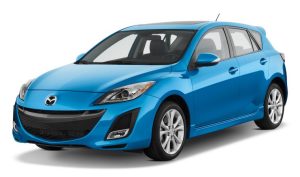
2010 Mazda3 Repair Manual
$14.90 Add to cart -

2012-2015 MAZDA Mazda5 Repair Manual
$19.90 Add to cart -

2008 Mazda CX-9 Repair Manual
$19.90 Add to cart -
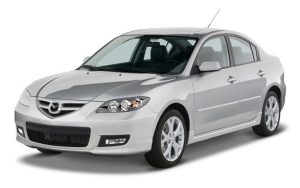
2007 Mazda3 Repair Manual
$16.90 Add to cart