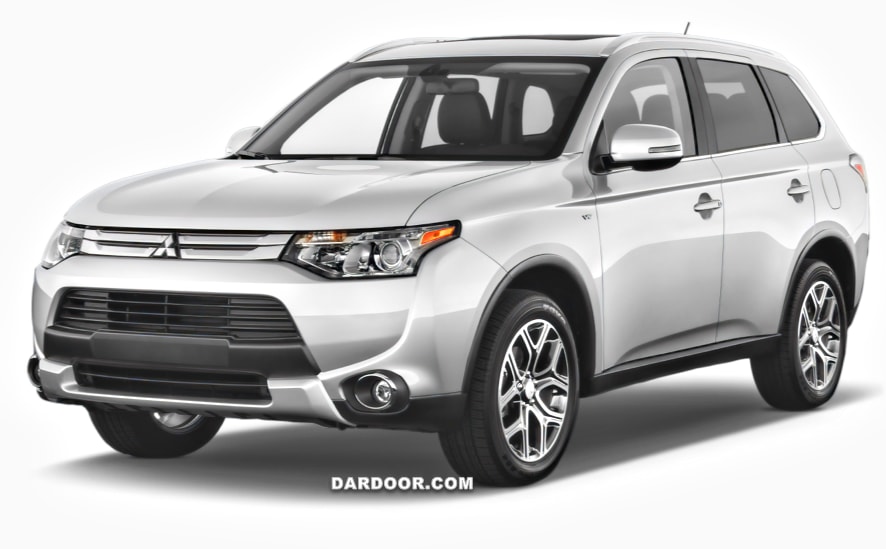
2013–2018 Mitsubishi Outlander (GF) — OEM Workshop Service & Repair Manual with Wiring Diagrams (PDF)
Download the original OEM workshop document for the 2013–2018 Mitsubishi Outlander (Third Generation, GF) in a simple, user-friendly PDF format. This is the same factory-grade service information used by professional technicians, including step-by-step repair procedures, diagnostics, specifications, and complete electrical wiring diagrams for accurate troubleshooting.
| File Format |
PDF |
| File Language |
English |
| You’ll Get |
238.2 MB |
| Page Count |
4,131 |
| Wiring Diagram |
Included |
| Delivery Method |
Instant Download |
Work to factory standards—reduce guesswork and complete repairs with confidence.
Vehicle Coverage
- Make/Model: Mitsubishi Outlander
- Years: 2013, 2014, 2015, 2016, 2017, 2018
- Generation/Chassis: Third Generation (GF)
- Includes: Workshop Repair Manual + Electrical Wiring Diagrams
Key Features
Complete OEM Coverage
Factory procedures for service, repair, and maintenance across all major systems.
Full Wiring Diagrams
Schematics, connectors, pinouts, grounds, fuses/relays, and power distribution layouts.
Diagnostics & DTCs
Troubleshooting flowcharts, test values, and fault-code repair guidance.
Searchable PDF
Fast navigation with bookmarks; print only what you need for the job.
What’s Inside
- Maintenance schedules, fluids, capacities, and torque specifications
- Engine mechanical repair, cooling, lubrication, fuel & emissions systems
- Transmission and drivetrain service (CVT/AT/MT where applicable)
- AWD/4WD systems (where equipped), axles, hubs, and bearings
- Brakes (ABS/ESC), suspension, and steering systems
- Electrical: wiring diagrams, module locations, networks, connectors
- Body, interior, HVAC, and safety systems (SRS/airbags)
- Diagnostics, inspections, and troubleshooting procedures
Download & Compatibility
Delivery: Instant digital PDF download
Compatibility: Windows • macOS • iOS • Android
This manual provides detailed instructions for maintenance, disassembly, reassembly, component inspection, adjustment, and diagnostics—intended for use by experienced mechanics. Proper application of this guide will help ensure thorough repairs and maintain your vehicle in peak condition.
Important Note: Before purchasing this manual, please check whether your vehicle is subject to any active service recalls, as authorized dealerships may perform necessary repairs free of charge. When replacing parts, always use genuine OEM components to ensure safety, reliability, and long-term performance.
Table of Contents: 2013-2018 Mitsubishi Outlander Repair Manual
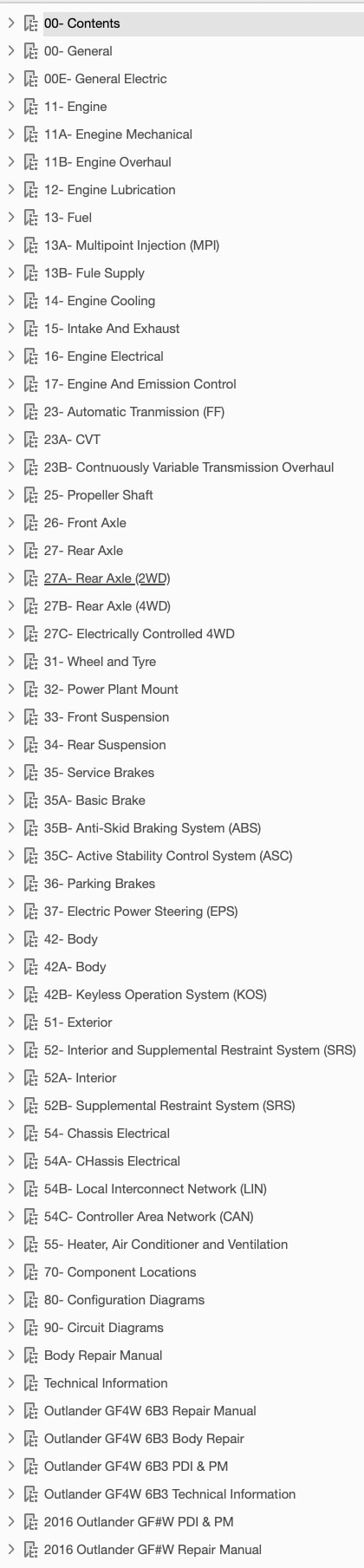
Sample Pages
CAUTION: This OEM service and workshop repair manual provides detailed procedures for maintenance, disassembly, reassembly, inspection, adjustment, and diagnostics. It is intended as a comprehensive guide for experienced mechanics. To ensure thorough and accurate repairs that maintain your vehicle’s optimal performance, please read and follow this manual carefully. When replacing parts during any repair work,
always use genuine Mitsubishi parts to ensure quality, safety, and reliability.
2013-2018 Mitsubishi Outlander: Comprehensive Guide
Overview
The 2013-2018 Mitsubishi Outlander is a compact/midsize crossover SUV that underwent a complete redesign for the 2014 model year. It offers three-row seating in a compact package, making it one of the more affordable options for families needing seven seats.
Generation: Third generation (2013-2021, but this covers 2013-2018) Body Style: 5-door SUV Seating: 5 or 7 passengers (depending on configuration)
Key Highlights
- Affordable pricing compared to competitors
- Available third-row seating
- Good warranty coverage (10-year/100,000-mile powertrain)
- Available S-AWC (Super All-Wheel Control) system
- Spacious interior for the class
Technical Specifications
Engine Options
2013:
- 2.4L 4-cylinder: 166 hp, 162 lb-ft torque
- 3.0L V6: 224 hp, 215 lb-ft torque
2014-2015:
- 2.4L 4-cylinder: 166 hp, 162 lb-ft torque
- 3.0L V6: 224 hp, 215 lb-ft torque
2016-2018:
- 2.4L 4-cylinder: 166 hp, 162 lb-ft torque
- 3.0L V6: 224 hp (2016-2017), 227 hp (2018), 215 lb-ft torque
Transmission
- CVT (Continuously Variable Transmission) – standard on all models
- 6-speed automatic (2013 models with V6)
Drivetrain
- Front-wheel drive (FWD) – standard
- All-wheel drive (AWD) – optional
Dimensions
- Wheelbase: 105.1 inches
- Length: 184.8 inches (2014-2018)
- Width: 71.3 inches
- Height: 66.1-67.3 inches
- Ground Clearance: 8.5 inches
- Curb Weight: 3,307-3,858 lbs
Fuel Economy (EPA estimates)
- 2.4L FWD: 25-26 city / 31-32 highway mpg
- 2.4L AWD: 24-25 city / 29-30 highway mpg
- 3.0L V6: 20 city / 27-28 highway mpg
Cargo Capacity
- Behind third row: 10.3 cubic feet
- Behind second row: 34.2 cubic feet
- Maximum (seats folded): 63.3 cubic feet
Fuel Tank
Towing Capacity
- 1,500 lbs (2.4L)
- 3,500 lbs (3.0L V6)
Top 10 Mechanical and Electrical Issues
1. CVT Transmission Failure/Juddering
Symptoms:
- Shuddering or jerking during acceleration (especially 15-30 mph)
- Hesitation when accelerating
- Transmission slipping or delayed engagement
- Whining or grinding noises
- Check engine light with CVT-related codes
Root Cause:
- CVT fluid breakdown and contamination
- Faulty valve body
- Worn CVT belt/pulley system
- Software calibration issues
- Overheating due to inadequate cooling
Fix:
- CVT fluid replacement with Mitsubishi genuine fluid (Diaqueen CVT-J1)
- Software updates/reprogramming
- Valve body replacement
- Complete CVT replacement in severe cases
Cost:
- Fluid change: $150-$300
- Software update: $100-$200
- Valve body: $800-$1,500
- CVT replacement: $3,500-$6,000
2. Air Conditioning Compressor Failure
Symptoms:
- A/C blowing warm air
- Loud clicking, grinding, or squealing noise from engine bay
- A/C clutch not engaging
- Intermittent cooling
- Burning smell from A/C vents
Root Cause:
- Defective compressor bearings (common on 2014-2015 models)
- Compressor clutch failure
- Refrigerant leaks
- Electrical connector issues
- Internal compressor seizure
Fix:
- A/C compressor replacement
- Receiver/dryer replacement
- System flush and recharge
- Check and repair electrical connections
Cost:
- Complete repair: $800-$1,400
- Parts: $400-$700
- Labor: $400-$700
3. Engine Stalling/Rough Idle Issues
Symptoms:
- Engine stalling at idle or when coming to a stop
- Rough or erratic idle
- Check engine light
- Poor acceleration
- Engine stumbling
Root Cause:
- Faulty throttle body
- Carbon buildup in intake system
- Defective idle air control valve
- Vacuum leaks
- Mass airflow sensor issues
- Software calibration problems
Fix:
- Throttle body cleaning
- Software update/ECU reprogramming
- Throttle body replacement
- Intake system cleaning
- Replace faulty sensors
Cost:
- Throttle body cleaning: $100-$200
- Software update: $100-$150
- Throttle body replacement: $300-$600
- Sensor replacement: $150-$400
4. Brake System Problems (Premature Wear)
Symptoms:
- Squealing or grinding noises when braking
- Pulsating brake pedal
- Premature brake pad wear (sometimes under 20,000 miles)
- Reduced braking performance
- Brake warning light
Root Cause:
- Soft brake pad material used by manufacturer
- Caliper guide pins seizing
- Rotor warping due to design
- Brake pad delamination
- Inadequate brake cooling
Fix:
- Replace brake pads with higher-quality aftermarket pads
- Resurface or replace rotors
- Clean and lubricate caliper slide pins
- Replace calipers if seized
Cost:
- Front brake job: $250-$450
- Rear brake job: $200-$350
- All four with rotors: $600-$900
5. Transfer Case/AWD System Failure
Symptoms:
- Grinding or whining noise from underneath vehicle
- AWD warning light illuminated
- Vibration during acceleration
- Loss of AWD functionality
- Binding sensation when turning (on 4WD lock mode)
Root Cause:
- Transfer case bearing failure
- Inadequate lubrication
- Transfer case fluid contamination
- Electronic control module failure
- Coupling unit wear
Fix:
- Transfer case fluid change
- Transfer case bearing replacement
- Complete transfer case replacement
- AWD control module replacement
Cost:
- Fluid change: $150-$250
- Bearing replacement: $800-$1,500
- Transfer case replacement: $2,500-$4,000
- Control module: $500-$1,200
6. Electrical System Issues (Battery Drain)
Symptoms:
- Dead battery after sitting overnight
- Electrical accessories draining battery
- Flickering lights
- Radio/infotainment system not working
- Difficulty starting
Root Cause:
- Parasitic drain from entertainment system
- Faulty alternator
- Battery discharge from ETACS (Electronic Time and Alarm Control System)
- Defective relays
- Software glitches in body control module
Fix:
- Diagnose and repair parasitic drain
- Software updates for ETACS
- Replace faulty alternator
- Replace battery if damaged
- Repair or replace faulty relays/modules
Cost:
- Diagnostic: $100-$150
- Battery replacement: $150-$250
- Alternator: $400-$700
- Module repair/replacement: $300-$800
7. Fuel System Problems (Fuel Pump/Sender)
Symptoms:
- Inaccurate fuel gauge reading
- Engine sputtering or stalling
- Difficulty starting
- Loss of power at highway speeds
- Check engine light with fuel system codes
Root Cause:
- Faulty fuel level sender
- Fuel pump failure
- Clogged fuel filter
- Fuel pressure regulator issues
- Contaminated fuel
Fix:
- Fuel pump/sender unit replacement
- Fuel filter replacement
- Fuel system cleaning
- Pressure regulator replacement
Cost:
- Fuel pump/sender replacement: $500-$900
- Fuel filter: $100-$200
- Fuel system service: $150-$300
8. Suspension Noise and Wear
Symptoms:
- Clunking or rattling noises over bumps
- Squeaking from front suspension
- Uneven tire wear
- Vehicle pulling to one side
- Poor handling
Root Cause:
- Worn front strut mounts/bearings
- Failing stabilizer bar links
- Control arm bushing deterioration
- Shock absorber failure
- Ball joint wear
Fix:
- Replace strut mounts and bearings
- Replace stabilizer links
- Replace control arm bushings
- Shock/strut replacement
- Alignment after repairs
Cost:
- Strut mounts: $300-$600
- Stabilizer links: $150-$300
- Control arm bushings: $400-$700
- Complete strut assembly: $600-$1,200 (pair)
9. Steering Column Issues (Clicking/Grinding)
Symptoms:
- Clicking noise when turning steering wheel
- Grinding sensation in steering column
- Steering wheel difficult to turn
- Noise from behind dashboard when steering
- Intermittent power steering assist
Root Cause:
- Worn steering column universal joint
- Defective clock spring
- Steering shaft bearing failure
- Inadequate lubrication
- Loose steering column mounting
Fix:
- Steering column universal joint replacement
- Clock spring replacement
- Lubricate steering shaft
- Tighten or replace mounting brackets
Cost:
- Universal joint: $300-$600
- Clock spring: $400-$700
- Steering column service: $200-$400
10. Rear Differential/Axle Noise (AWD Models)
Symptoms:
- Whining or howling noise from rear axle
- Noise increases with speed
- Grinding during turns
- Vibration from rear of vehicle
- Clunking when engaging/disengaging AWD
Root Cause:
- Rear differential bearing wear
- Low or contaminated differential fluid
- Worn pinion bearings
- Damaged ring and pinion gears
- Inadequate lubrication
Fix:
- Rear differential fluid change
- Differential bearing replacement
- Complete rear differential rebuild or replacement
- Drive axle replacement if damaged
Cost:
- Fluid change: $100-$200
- Bearing replacement: $600-$1,200
- Differential rebuild: $1,500-$2,500
- Complete replacement: $2,000-$3,500
Top 5 Competitors
- Strengths: Superior reliability, better resale value, more refined powertrain, spacious interior
- Weaknesses: No third-row option, higher price
- Why it’s better: More reliable, better driving dynamics, stronger resale value
- Strengths: Legendary reliability, excellent resale value, available hybrid, proven track record
- Weaknesses: Firm ride, no third-row (until 2023), higher price
- Why it’s better: Much better reliability and resale value
- Strengths: Better driving dynamics, upscale interior, refined powertrain, fun to drive
- Weaknesses: Less cargo space, no third-row option, firmer ride
- Why it’s better: More engaging to drive, better interior quality
- Strengths: Comfortable ride, spacious interior, available third row (2014-2016), competitive pricing
- Weaknesses: CVT reliability concerns (similar to Outlander), less powerful
- Why they’re comparable: Similar pricing, both have CVT issues, comparable features
- Strengths: Standard AWD, better off-road capability, good safety ratings, boxer engine
- Weaknesses: No third-row option, less cargo space, CVT concerns
- Why it’s better: Standard AWD, better off-road capability, slightly better reliability
Top 10 Recalls, Advisories & TSB Highlights
Recalls
1. NHTSA Recall 15V-527 (2014-2015 Models)
- Issue: Master brake cylinder may develop internal leaks, increasing stopping distance
- Risk: Reduced braking performance, increased crash risk
- Fix: Replace master cylinder
2. NHTSA Recall 16V-679 (2016 Models)
- Issue: Parking brake may not hold vehicle on incline due to software error
- Risk: Vehicle rollaway
- Fix: Software update to parking brake control module
3. NHTSA Recall 16V-888 (2016-2017 Models)
- Issue: Steering shaft may fracture, causing loss of steering
- Risk: Crash risk due to loss of steering control
- Fix: Replace steering shaft
4. NHTSA Recall 19V-120 (2016-2017 Models)
- Issue: Fuel pump impeller may crack and fail
- Risk: Engine stall, crash risk
- Fix: Replace fuel pump
5. NHTSA Recall 20V-023 (2013-2015 Models)
- Issue: Air bag control unit may short circuit, preventing deployment
- Risk: Increased injury risk in crash
- Fix: Replace air bag control unit
6. NHTSA Recall 18V-355 (2018 Models)
- Issue: Passenger air bag may not deploy due to manufacturing defect
- Risk: Increased injury risk
- Fix: Replace passenger air bag
7. NHTSA Recall 13V-308 (2013 Models)
- Issue: Fuel tank filler pipe may crack
- Risk: Fuel leak, fire risk
- Fix: Replace fuel tank
8. NHTSA Recall 17V-350 (2017 Models)
- Issue: Incorrect tire information label
- Risk: Tire over/under inflation, blowout risk
- Fix: Replace tire information label
Technical Service Bulletins (TSBs)
9. TSB 14-54-004 (2014-2015 Models)
- Issue: CVT shudder/judder during acceleration at 15-30 mph
- Solution: CVT software update and fluid replacement
10. TSB 16-33-001 (2014-2016 Models)
- Issue: Engine idle vibration, rough idle
- Solution: ECM software update
Maintenance Schedule
Every 6 Months or 7,500 Miles
- Engine oil and filter change (conventional oil)
- Tire rotation
- Visual inspection of brakes, suspension, steering
- Check all fluid levels
Every 12 Months or 15,000 Miles (if using synthetic oil)
- Engine oil and filter change
- Tire rotation
- Brake inspection
- Battery test
Every 30,000 Miles
- Air filter replacement
- Cabin air filter replacement
- Brake fluid flush (recommended)
- Inspect drive belts
- Inspect cooling system
Every 60,000 Miles
- CVT fluid replacement (critical – do not skip)
- Spark plug replacement
- Engine air filter
- Cabin air filter
- Brake fluid flush
- Coolant replacement
- Inspect fuel system
Every 90,000 Miles
- CVT fluid replacement
- All items from 30,000-mile service
- Timing chain inspection (2.4L – usually doesn’t need replacement)
- Transmission mount inspection
Every 100,000 Miles
- Transfer case fluid change (AWD models)
- Rear differential fluid change (AWD models)
- Front differential fluid check/change (AWD models)
- Replace drive belts
- Coolant flush
As Needed
- Brake pads: typically 25,000-50,000 miles
- Brake rotors: 50,000-70,000 miles
- Battery: 3-5 years
- Tires: 40,000-60,000 miles
- Wiper blades: annually
Critical Maintenance Notes
- CVT fluid changes are absolutely critical – follow Mitsubishi’s “severe service” schedule (every 30,000 miles) if you want the transmission to last
- Use only Mitsubishi Genuine CVT fluid (Diaqueen CVT-J1)
- Do not skip transfer case fluid changes on AWD models
- Regular brake inspections are important due to premature wear issues
10 FAQs for Buyers
1. Is the Mitsubishi Outlander reliable?
The 2013-2018 Outlander has below-average reliability compared to competitors like Honda CR-V and Toyota RAV4. The CVT transmission is the biggest concern, with many owners reporting issues between 50,000-100,000 miles. However, with diligent maintenance (especially CVT fluid changes), many owners have had good experiences.
2. Which model year is most reliable?
The 2018 model is generally considered the best of this generation, as Mitsubishi had addressed many early issues. The 2013 model had the most problems being the first year of the redesign. 2016-2018 are preferred over 2014-2015.
3. Should I buy the 4-cylinder or V6?
- 2.4L 4-cylinder: Better fuel economy, adequate for most driving, but underpowered for highway passing and towing
- 3.0L V6: More power, better for towing (3,500 lbs vs 1,500 lbs), smoother acceleration, but worse fuel economy
- Recommendation: V6 if you tow or frequently drive with passengers/cargo; 4-cylinder for mostly city/commuting use
4. How long does the CVT transmission last?
With proper maintenance (fluid changes every 30,000-40,000 miles), the CVT can last 150,000+ miles. However, many owners report issues between 50,000-100,000 miles. Never skip CVT fluid changes and only use Mitsubishi genuine fluid.
5. Is AWD worth it?
AWD adds about $1,500-$2,000 to the price and reduces fuel economy by 1-2 mpg. It’s worth it if you:
- Live in snowy/icy climates
- Drive on unpaved roads regularly
- Need better traction in rain Not necessary if you primarily drive in good weather on paved roads.
6. What’s the real-world fuel economy?
Owners report:
- 2.4L FWD: 24-27 mpg combined
- 2.4L AWD: 22-25 mpg combined
- 3.0L V6: 19-22 mpg combined Lower than EPA estimates, especially in city driving.
7. Is the third-row seating usable?
The third row is best for:
- Children under 12
- Emergency use for adults on short trips
- Very small adults (under 5’6″)
It’s cramped with limited legroom and headroom. Most competitors don’t offer a third row in this class, so it’s a unique feature, but don’t expect full-size SUV space.
8. What should I look for when buying used?
Must check:
- CVT transmission service history (critical!)
- Transfer case fluid changes (AWD models)
- Any signs of transmission issues (shuddering, slipping)
- A/C compressor operation (common failure)
- Brake condition
- Check for all recall completions
- Engine idle quality
- No warning lights
Red flags:
- No CVT service records
- High mileage (100,000+) without maintenance proof
- Any transmission hesitation or shudder
- Multiple previous owners
- Flood/accident history
9. How does the warranty compare?
New vehicle warranty (original owner):
- Basic: 5 years/60,000 miles
- Powertrain: 10 years/100,000 miles
- Rust: 7 years/100,000 miles
Used vehicle (subsequent owners):
- Basic: 5 years/60,000 miles (transferable)
- Powertrain: 5 years/60,000 miles (reduced from 10 years)
The warranty is one of Outlander’s strong points, especially if buying certified pre-owned.
10. What’s a fair price for a used 2013-2018 Outlander?
Approximate market values (as of 2024-2025):
- 2013-2014: $8,000-$12,000
- 2015-2016: $11,000-$15,000
- 2017-2018: $14,000-$19,000
Factors affecting price:
- AWD adds $1,000-$2,000
- V6 adds $500-$1,500
- GT/SEL trims command premium
- Maintenance records increase value
- High mileage (100,000+) significantly decreases value
Final Buyer Recommendations
✅ Buy If:
- You need affordable 7-passenger seating
- You prioritize warranty coverage (buying newer with remaining warranty)
- You’re committed to strict maintenance schedules (especially CVT service)
- You want AWD at a lower price than competitors
- You’re buying a 2016-2018 model with documented service history
- You don’t plan to keep it past 100,000 miles
- You can perform or afford preventive maintenance
⚠️ Buy with Caution If:
- You’re looking at 2013-2015 models (more issues)
- Mileage is over 80,000 miles without CVT service proof
- You need maximum reliability (better options available)
- You plan to tow regularly (V6 is better but still not ideal)
- You want strong resale value
❌ Avoid If:
- You can’t commit to CVT maintenance schedule
- You need proven long-term reliability
- You’re buying high mileage (100,000+) without warranty
- There’s no service history available
- The vehicle shows signs of transmission issues
- You want best-in-class resale value
- You can afford a Honda CR-V or Toyota RAV4 instead
Best Alternatives:
- Honda CR-V – Better reliability, no third row but much better overall
- Toyota RAV4 – Best reliability in class, excellent resale
- Mazda CX-5 – Better driving experience, higher quality interior
- Nissan Rogue – Similar pricing, comparable features (but also has CVT concerns)
Smart Buying Strategy:
- Target: 2016-2018 models with under 60,000 miles
- Prioritize: Complete service records, especially CVT fluid changes
- Insist on: Pre-purchase inspection by Mitsubishi dealer
- Verify: All recalls completed
- Budget: $500-800/year for maintenance beyond basic service
- Plan: Sell before 120,000 miles to avoid major repair costs
- Consider: Certified Pre-Owned for extended warranty protection
Our Final Verdict
The 2013-2018 Mitsubishi Outlander offers excellent value for the money and unique features like available third-row seating at a competitive price. However, it’s not the most reliable option in its class. If you’re willing to stay on top of maintenance (particularly CVT service), buy a later model year (2016+), and don’t plan on keeping it past 100,000 miles, it can be a good budget-friendly option.
For buyers prioritizing reliability and long-term ownership, spending more on a Honda CR-V or Toyota RAV4 will likely save money and headaches in the long run. The Outlander is best suited for budget-conscious buyers who understand the maintenance requirements and don’t mind trading some reliability for initial cost savings and the convenience of seven seats.