

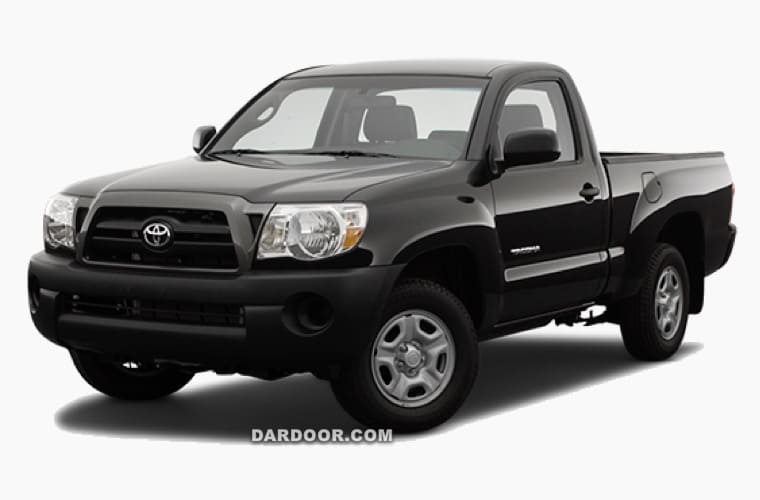
This is the official OEM workshop document for the 2005-2006 Toyota Tacoma repair manual, complete with the wiring diagram in PDF format.
2005-2006 Toyota Tacoma Repair Manual
$19.90
2005–2006 Toyota Tacoma OEM Service & Repair Manual with Wiring Diagrams – PDF Download
🔧 Master Every Repair with the Official Workshop Manual!
Unlock the full potential of your Toyota Tacoma with this original OEM workshop service and repair manual for the 2005 and 2006 Toyota Tacoma ↗, complete with detailed wiring diagrams, all bundled into a simple-to-use PDF format. This is the exact same manual used by certified Toyota dealer technicians—giving you factory-accurate guidance at your fingertips.
| File Format | |
| File Language | English |
| File Size | 247.8 MB |
| Page Count | 6,044 |
| Wiring Diagram | Included (EM01D0U) |
| Delivery Method | Instant Download |
📥 Download now and get professional-grade guidance in your garage. Instant PDF Download – No waiting, no shipping, just wrenching!
✅ Manual Features:
-
Covers All 2005 & 2006 Tacoma Models and Trims
Engines Covered:
- 2.7L I4 (2TR-FE)
- 4.0L V6 (1GR-FE)
Transmission Types:
-
-
Manual & Automatic – 2WD / 4WD
-
Key Features:
- Wiring Diagrams Included – All circuits, sensors, and connectors
- Step-by-Step Factory Repair Procedures
- Routine Maintenance, Diagnostics & Troubleshooting
- Chassis, Suspension, Drivetrain, HVAC, Electrical, and More
- Printable PDF Format – Instant Download & Lifetime Access
🛠 What Can You Do with This Manual?
- Perform your own oil changes, brake jobs, and suspension work
- Troubleshoot and repair electrical issues with accurate wiring diagrams
- Rebuild or service the engine and transmission
- Maintain your Tacoma just like a Toyota-certified technician
🔎 Ideal For:
-
- DIY mechanics
- Auto repair shops
- Off-roaders & Tacoma enthusiasts
- Anyone looking to save on repairs and ensure quality work
Why This Manual?
Whether you’re performing routine maintenance, addressing electrical issues, or handling major repairs, this guide is your go-to resource. With step-by-step instructions and clear visuals, you’ll have the confidence and knowledge needed to tackle any task for your 2005-2006 Toyota Tacoma.
This manual includes the procedures for maintenance, disassembling, reassembling, inspection, and adjustment of components and diagnostics for guidance of experienced mechanics. Please use this manual to ensure complete repair work to keep your vehicle in optimum condition. When replacement parts during repair work are needed, use OEM genuine parts ↗.
Table of Contents : 2005-2006 Toyota Tacoma Repair Manual
- Introduction
- Preparation
- Service Specifications
- Maintenance
- 1GR-FE Engine Control System
- 2TR-FE Engine Control System
- 1GR-FE Engine Mechanical
- 1GR-FE Fuel
- 2TR-FE Fuel
- 1GR-FE Emission
- 1GR-FE Intake
- 1GR-FE Exhaust
- 1GR-FE Cooling
- 1GR-FE Lubrication
- 2TR-FE Lubrication
- 1GR-FE Starting
- 2TR-FE Starting
- 1GR-FE Charging
- A340E Automatic Transmission
- A750E Automatic Transmission
- Clutch
- R155 Manual Transmission
- R155F Manual Transmission
- RA60 Manual Transmission
- Manual Transmission
- Automatic Transmission
- Deferential
- 4×4/4WD
- Driveshaft
- Steering
- Suspension
- Brakes (including ABS)
- Body
- Heater and Air Conditioning
- Automatic Climate Control
- Electrical (including SRS)
- Supplemental Restraint System (SRS)
- Engine Repair
- Air Conditioning
- Exhaust
- Emissions Control
- Ignition
- Steering
- Wiring Diagrams
- Valve Timing Procedures
- Chain & Gear Replacement
- General Removal & Installation Instructions
- Safety Precautions
- Special Tools
- Tensioner Adjustments
- Tightening Torques
- Timing Marks
- Valve Timing Instructions
- Tensioner Release & Reset Methods
- Chain Routing & Sprocket/Gear Valve Timing Mark.
SAMPLE PAGES
CAUTION ↗: This OEM service and workshop repair manual provides detailed procedures for maintenance, disassembly, reassembly, inspection, adjustment, and diagnostics. It is intended as a comprehensive guide for experienced mechanics. To ensure thorough and accurate repairs that maintain your vehicle’s optimal performance, please read and follow this manual carefully. When replacing parts during any repair work, always use genuine Toyota parts ↗ to ensure quality, safety, and reliability.
📝 Comprehensive Overview: 2005–2006 Toyota Tacoma (Second Generation)
The 2005–2006 Toyota Tacoma introduced the second-generation Tacoma, offering improved comfort, stronger engines, and better safety over the first generation. Available with inline-4 or V6 engines and
manual or automatic transmissions, these trucks earned a reputation for durability—but early second-gen
models also developed several well-documented mechanical, electrical, and corrosion-related problems.
🔍 Quick Facts
| Model | 2005–2006 Toyota Tacoma |
| Class | Compact/Midsize Pickup |
| Body Styles | Regular Cab, Access Cab, Double Cab |
| Drivetrain Options | Rear-Wheel Drive (RWD) or 4WD |
| Towing Capacity | Up to 6,500 lbs (V6, Tow Package) |
| Payload Capacity | 1,100–1,600 lbs |
| Made In | USA (California & Texas) |
🔧 Trim Levels & Key Features
| Trim | Key Features |
| Base / PreRunner | Basic features, steel wheels, manual locks/windows |
| SR5 | Power accessories, upgraded audio, optional alloy wheels |
| TRD Off-Road | Bilstein shocks, skid plates, locking rear diff (4WD) |
| TRD Sport | Sport suspension, hood scoop, body-color styling |
| X-Runner | Lowered RWD street truck, 6-speed manual, sport suspension (rare) |
⚙️ Engine Options & Performance
| Engine | Horsepower | Torque | Transmission | MPG (City/Hwy) |
| 2.7L DOHC I4 (2TR-FE) | 159 hp | 180 lb-ft | 5-sp manual / 4-sp auto | 20 / 26 (RWD) |
| 4.0L DOHC V6 (1GR-FE) | 236 hp | 266 lb-ft | 6-sp manual / 5-sp auto | 17 / 21 (4WD) |
✅ The 4.0L V6 is known for its strong towing and off-road ability, while the 2.7L I4 is better suited for light-duty and economy.
🛠️ Top 10 Common Mechanical Issues (with Symptoms, Cause, Fix & Cost)
- 🧱 Frame Rust / Corrosion (Critical)
👀 Symptoms: Flaking metal, holes in frame, failed safety inspection
🔎 Root Cause: Inadequate corrosion protection on early 2nd-gen frames
✅ Fix: Toyota frame replacement campaign (if eligible) or professional frame repair
💰 Cost to Fix: $0 (recall-covered) / $3,000–$8,000 (out of warranty)
- ⚙️ Clutch Throw-Out Bearing Noise (Manual)
👀 Symptoms: Squealing or chirping noise when clutch pedal is pressed
🔎 Root Cause: Premature wear of throw-out bearing
✅ Fix: Replace clutch release bearing (often with full clutch kit)
💰 Cost to Fix: $900–$1,600
- 🔥 Head Gasket Failure (4.0L V6 – early cases)
👀 Symptoms: Overheating, coolant loss, white exhaust smoke
🔎 Root Cause: Manufacturing defects and thermal stress
✅ Fix: Head gasket replacement; inspect heads/block
💰 Cost to Fix: $2,500–$4,500
- 🛞 Front Wheel Bearing Failure
👀 Symptoms: Growling/humming noise, vibration at speed
🔎 Root Cause: Bearing wear accelerated by load and off-road use
✅ Fix: Replace wheel bearing/hub assembly
💰 Cost to Fix: $450–$900 per side
- 🛑 Warped Brake Rotors
👀 Symptoms: Steering wheel shake during braking
🔎 Root Cause: Heat buildup and thin factory rotors
✅ Fix: Replace rotors and pads; torque wheels correctly
💰 Cost to Fix: $300–$700
- 🛢️ Timing Chain Tensioner Leak (V6)
👀 Symptoms: Oil seepage at front of engine, burning oil smell
🔎 Root Cause: Seal deterioration over time
✅ Fix: Replace tensioner gasket/seal
💰 Cost to Fix: $400–$900
- 🚙 Driveshaft Clunk
👀 Symptoms: Thump when stopping or accelerating
🔎 Root Cause: Dry slip yoke splines
✅ Fix: Clean and grease driveshaft per TSB procedure
💰 Cost to Fix: $80–$200
- 🧊 Radiator Cracking
👀 Symptoms: Coolant leaks, overheating warning
🔎 Root Cause: Plastic tank fatigue with heat cycles
✅ Fix: Replace radiator and cap; bleed system
💰 Cost to Fix: $450–$900
- 🛞 Suspension Bushing Wear
👀 Symptoms: Clunking over bumps, uneven tire wear
🔎 Root Cause: Rubber bushing degradation
✅ Fix: Replace worn bushings or control arms
💰 Cost to Fix: $500–$1,500
- ⛓️ Rear Differential Seal Leak
👀 Symptoms: Gear oil on axle housing
🔎 Root Cause: Seal wear and pressure buildup
✅ Fix: Replace axle seals; service differential fluid
💰 Cost to Fix: $400–$900
⚡ Top 10 Common Electrical Issues (with Symptoms, Cause, Fix & Cost)
- 🔑 Key Fob / Immobilizer Issues
👀 Symptoms: No start, security light flashing
🔎 Root Cause: Failed transponder or antenna ring
✅ Fix: Reprogram or replace key/antenna
💰 Cost to Fix: $150–$450
- 💡 Dashboard Warning Lights Flickering
👀 Symptoms: Random ABS, VSC, or CEL lights
🔎 Root Cause: Weak battery or poor ground connections
✅ Fix: Battery replacement; clean grounds
💰 Cost to Fix: $120–$250
- 🎛️ Blower Motor Failure
👀 Symptoms: No airflow from vents
🔎 Root Cause: Motor brush wear or resistor failure
✅ Fix: Replace blower motor or resistor
💰 Cost to Fix: $250–$550
- 📡 ABS Wheel Speed Sensor Faults
👀 Symptoms: ABS/VSC warning lights
🔎 Root Cause: Sensor contamination or wiring damage
✅ Fix: Clean or replace sensor; repair wiring
💰 Cost to Fix: $180–$450
- 🔌 Power Outlet / USB Failure
👀 Symptoms: No power to accessories
🔎 Root Cause: Blown fuse or worn socket
✅ Fix: Replace fuse or socket
💰 Cost to Fix: $50–$150
- 🚪 Power Window Motor Failure
👀 Symptoms: Window stuck or slow movement
🔎 Root Cause: Motor and regulator wear
✅ Fix: Replace window regulator/motor
💰 Cost to Fix: $300–$650
- 🔊 Audio System Failure
👀 Symptoms: No sound or intermittent audio
🔎 Root Cause: Head unit internal failure
✅ Fix: Replace or upgrade head unit
💰 Cost to Fix: $300–$1,000
- 🚨 Airbag Warning Light
👀 Symptoms: SRS light illuminated
🔎 Root Cause: Seat connector corrosion or clock spring fault
✅ Fix: Repair wiring or replace clock spring
💰 Cost to Fix: $250–$900
- 🌡️ Temperature Gauge Inaccurate
👀 Symptoms: Erratic temp readings
🔎 Root Cause: Faulty coolant temperature sensor
✅ Fix: Replace sensor; verify wiring
💰 Cost to Fix: $120–$300
- 🧠 ECU Communication Errors
👀 Symptoms: Multiple warning lights, scan tool errors
🔎 Root Cause: CAN wiring or voltage issues
✅ Fix: Diagnose network; repair wiring; battery test
💰 Cost to Fix: $200–$800
📅 Maintenance Schedule
| Maintenance Item | Interval (Miles) | Notes |
| Engine Oil & Filter | Every 5,000 mi | Use 5W-30 synthetic preferred |
| Transmission Fluid (Auto) | Every 60,000 mi | More often if towing/off-road |
| Coolant Flush | Every 100,000 mi | Use Toyota Super Long Life coolant |
| Brake Fluid | Every 30,000 mi | Or every 3 years |
| Timing Chain (V6) | No scheduled replacement | Timing chain, not belt |
| Spark Plugs | Every 30,000 mi (I4) / 60,000 mi (V6) | Iridium plugs |
| Rear Differential Fluid | Every 30,000 mi | Especially if towing/off-roading |
| Air Filter / Cabin Filter | Every 15,000–30,000 mi | Replace more often in dusty areas |
📘 Need the OEM Tacoma manual?
✅ 2005–2006 Toyota Tacoma Repair Manual (OEM PDF + Wiring Diagrams) ↗
🚨 Recalls • Advisories • Safety Alerts • TSB Highlights
Important: Recall applicability depends on VIN, region, and whether the remedy was already completed. Always verify with Toyota/NHTSA by VIN before purchase.
- Parking brake pedal cable lock nut — inspection/tighten to proper torque.
- Seat position / seat belt fastening sensor harness (connector pins) — could affect restraint strategy; remedy includes inspection/sub-harness.
- Driver airbag may not deploy (spiral cable / clockspring) — vibration may damage cable; replace spiral cable assembly.
- Spiral cable assembly voluntary safety recall (Toyota Canada) — airbag warning light + potential non-deploy described.
- Rear leaf spring fracture/corrosion — broken leaf may contact fuel tank; recall replacement described.
- Seat belt pretensioner screws may loosen (Access Cab) — inspection and repair/replace with thread-locking/sealant described.
- FMVSS label compliance (tire/rim/load label) — distribution-region labeling recalls were listed for certain vehicles.
- Leaf spring recall notice (model-year coverage described in listings) — confirm by VIN for eligibility.
- Frame corrosion / CRC / settlement-related manufacturer communications — Toyota communications describe parts preparation / frame replacement planning in certain contexts.
- Canada recall database examples for Toyota safety issues — use Transport Canada recall tools to validate your specific VIN.
👷♂️ Pro tip: Run your VIN on both Toyota recall portals and your local government database (US: NHTSA; Canada: Transport Canada).
🆚 Competitors at the Time
| Model | Pros | Cons |
| Nissan Frontier ↗ | Strong V6, off-road trims | Smaller cabin, dated design |
| Ford Ranger ↗ | Affordable, reliable I4 | Less powerful, tighter interior |
| Chevy Colorado ↗ | Available I5 engine | Lower build quality |
| Honda Ridgeline ↗ | Car-like comfort, AWD | Less off-road/towing capability |
✅ Pros
- ✅ Legendary Toyota reliability and resale value
- ✅ Available in multiple body styles and off-road trims
- ✅ Strong 4.0L V6 performance
- ✅ Easy to work on with a large aftermarket support
- ✅ Comfortable ride and durable interior
❌ Cons
- ❌ Frame rust (check before buying)
- ❌ Rear drum brakes on all trims
- ❌ Limited rear-seat legroom in Access Cab
- ❌ Outdated infotainment and safety tech (no stability control until later years)
🧠 DTC Trouble Code List (Top 10 per Module)
These are common codes seen on many Toyota/OBD-II vehicles. Actual definitions can vary by engine/transmission and calibration—always confirm with a proper scan tool + service info.
🧩 Engine Control Module (ECM) — 10 Common DTCs
| Code | Meaning (Common) | Typical Starting Checks |
|---|---|---|
| P0171 | System Too Lean (Bank 1) | Vacuum leaks, MAF, fuel pressure |
| P0300 | Random/Multiple Misfire | Plugs/coils, injector balance, compression |
| P0301 | Misfire Cylinder 1 | Swap coil, check plug, injector |
| P0420 | Catalyst Efficiency Below Threshold | Exhaust leaks, O2 sensors, cat health |
| P0430 | Catalyst Efficiency (Bank 2) | Same as P0420; bank-specific |
| P0440 | EVAP System Malfunction | Gas cap, smoke test, hoses |
| P0441 | EVAP Incorrect Purge Flow | Purge valve, vacuum switching, canister |
| P0455 | EVAP Large Leak | Gas cap, cracked lines, canister |
| P0456 | EVAP Small Leak | Smoke test, vent valve, seals |
| P0128 | Coolant Temp Below Thermostat Regulating | Thermostat, coolant level, ECT sensor |
⚙️ Transmission Control Module (TCM) — 10 Common DTCs
| Code | Meaning (Common) | Typical Starting Checks |
|---|---|---|
| P0700 | Transmission Control System (MIL Request) | Pull TCM codes, fluid condition |
| P0715 | Input/Turbine Speed Sensor | Sensor, wiring, connector |
| P0720 | Output Speed Sensor | Sensor, tone ring, wiring |
| P0730 | Incorrect Gear Ratio | Fluid, clutch wear, valve body |
| P0741 | TCC Performance/Stuck Off | TCC solenoid, fluid, converter |
| P0750 | Shift Solenoid A | Solenoid resistance, harness |
| P0755 | Shift Solenoid B | Solenoid, connector corrosion |
| P0760 | Shift Solenoid C | Solenoid, valve body debris |
| P0770 | Shift Solenoid E | Electrical tests + fluid check |
| P2714 | Pressure Control Solenoid D (Performance) | Solenoid, line pressure, valve body |
🛑 ABS / ESC (Brake System) — 10 Common DTCs
| Code | Meaning (Common) | Typical Starting Checks |
|---|---|---|
| C0200 | Front Speed Sensor RH Circuit | Sensor gap, wiring, tone ring |
| C0205 | Front Speed Sensor LH Circuit | Sensor, connector corrosion |
| C0210 | Rear Speed Sensor RH Circuit | Harness chafe, sensor test |
| C0215 | Rear Speed Sensor LH Circuit | Sensor, debris/damage |
| C1241 | Low Battery Positive Voltage | Battery/alternator voltage drop |
| C1223 | ABS Control System Malfunction | Scan freeze frame, check power/ground |
| C1256 | Accumulator Low Pressure | Hydraulic unit, leaks, pump |
| C1336 | Zero Point Calibration of Yaw Rate | Calibration procedure, alignment |
| C1271 | Pump Motor Relay / Circuit | Relay, wiring, pump draw |
| C1201 | Engine Control System Malfunction (shared) | Check ECM codes; clear & re-test |
🧨 SRS Airbag System — 10 Common DTCs
| Code | Meaning (Common) | Typical Starting Checks |
|---|---|---|
| B1801 | Driver Squib Circuit | Clock spring, connectors, harness |
| B1802 | Driver Squib Circuit (alt) | Same checks as above |
| B1811 | Passenger Squib Circuit | Connector under dash/airbag |
| B1816 | Passenger Squib Circuit (alt) | Inspect harness/connector |
| B1821 | Side Squib (LH) Circuit | Seat wiring, connector |
| B1826 | Side Squib (RH) Circuit | Seat wiring, connector |
| B1650 | Occupant Classification System | Seat sensor, calibration |
| B1660 | Passenger Airbag ON/OFF Indicator | Indicator circuit, OCS |
| B0111 | SRS ECU Malfunction (generic) | Power/ground, water intrusion |
| B0100 | SRS System (general fault) | Full scan, check freeze-frame |
📡 Body Control / CAN Communication — 10 Common DTCs
| Code | Meaning (Common) | Typical Starting Checks |
|---|---|---|
| U0100 | Lost Comm with ECM/PCM | Battery voltage, grounds, CAN wiring |
| U0121 | Lost Comm with ABS Module | ABS power/ground, CAN continuity |
| U0140 | Lost Comm with Body Control Module | BCM connectors, water intrusion |
| U0155 | Lost Comm with Instrument Cluster | Cluster power, CAN lines |
| U0164 | Lost Comm with HVAC Module | HVAC control power/ground |
| U0230 | Lost Comm with Rear Gate/Body Module | Harness at tailgate/bed area |
| B1241 | Battery Voltage Low (Body) | Battery, alternator, grounds |
| B2312 | Door Lock Circuit Malfunction | Actuator, switch, wiring |
| B2321 | Keyless Entry / Receiver Issue | Receiver, fob battery, antenna |
| B1507 | Immobilizer System Malfunction | Key chip, antenna ring, scan data |
❓ Frequently Asked Questions
Is the 2005–2006 Toyota Tacoma reliable?
Yes, mechanically strong, but frame corrosion and early V6 issues must be checked before buying.
What is the biggest problem with these Tacomas?
Frame rust is the most serious and expensive issue if not covered by recall.
Which engine is better?
The 4.0L V6 offers better power and towing, while the 2.7L I4 is simpler and more economical.
Is it safe to drive with frame rust?
No. Severe frame corrosion can cause structural failure and is unsafe.
Are parts expensive?
Parts availability is excellent and costs are reasonable compared to other trucks.
What should I inspect first before buying?
Start with the frame condition (rust/holes), then check leaf springs, wheel bearings, EVAP readiness, and confirm recall completion by VIN.
Is the 4.0L V6 a good engine?
Yes—generally very durable with basic maintenance. Most issues are age/wear related (gaskets, sensors, cooling parts), not major internal failures.
Why does the check engine light come on so often?
On older trucks, EVAP leaks (cap/valves/canister/hoses) are a frequent cause, especially in cold climates or after off-road use.
Are leaf springs really a safety concern?
They can be if a leaf fractures and contacts the fuel tank. Toyota and Transport Canada described this risk in recall notices—verify your VIN’s recall status.
What’s the best way to verify recalls?
Use Toyota’s recall lookup and your government recall database (US: NHTSA; Canada: Transport Canada).
📚 Service Manual & Resources
- Toyota Factory Service Manual (FSM): Best option for detailed diagnostics and repairs
- Haynes/Chilton Manuals: Good for general and basic maintenance
- Online Forums: TacomaWorld, Tacomaforum.com, ToyotaNation
- Aftermarket Support: Huge aftermarket for off-road upgrades and repairs
🏁 Verdict: The 2005–2006 Toyota Tacoma is an extremely durable and versatile midsize truck, perfect for those who need a reliable daily driver, off-roader, or work truck. Just be sure to check for frame rust and keep up with maintenance, and it’ll reward you with hundreds of thousands of miles of dependable service.
- ⭐ Best pick: clean-frame truck with documented maintenance
- ⚠️ Avoid: heavy rust, patched frames, unresolved airbag/leaf spring campaigns
- 🧰 Ownership tip: budget for bearings, EVAP parts, suspension refresh as mileage climbs
🔥A true legend among trucks—reliable, mod-friendly, and built to last. 🛻
| File Format | |
|---|---|
| File Language | English |
| File Size | 247.8 MB |
| Page Count | 6,044 |
| Wiring Diagram Included | YES |
| Instant Download | YES |
Related products
-
2007 Toyota Yaris Repair Manual
$16.90 Add to cart -

2005-2012 Toyota Avalon Repair Manual
$19.90 Add to cart -
2004-2007 Toyota Corolla Matrix Repair Manual
$16.90 Add to cart -
2008-2015 Toyota Tundra Repair Manual
$36.00 Add to cart -
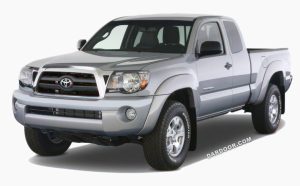
2005-2008 Toyota Tacoma Repair Manual
$19.90 Add to cart -
2005-2010 Toyota Scion tC Repair Manual
$19.90 Add to cart -
2009-2011 Toyota Venza Wiring Diagram
$16.90 Add to cart -
2010-2015 Toyota Prius Repair Manual
$19.90 Add to cart