Timing Belt Replacement Guide: Procedure, Tools, and Maintenance Tips
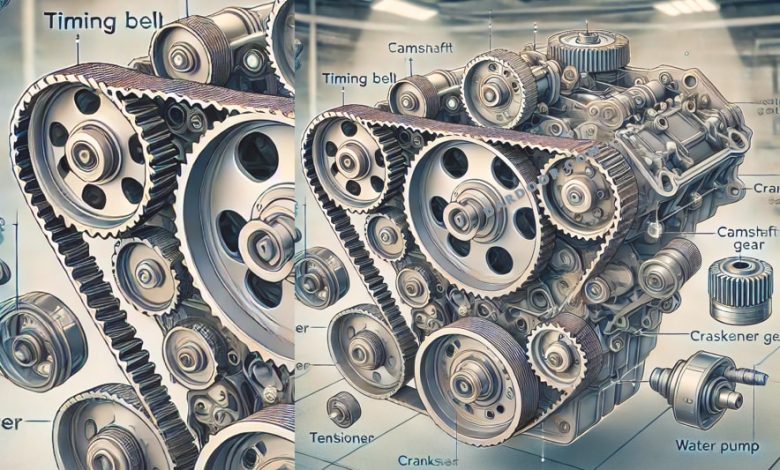
1. How the Timing Belt Works
The timing belt synchronizes the crankshaft and camshaft rotations, ensuring that valves open and close in sync with piston movement. It drives the water pump in many engines and may also power balance shafts or injection pumps in diesel vehicles. Made of rubber and high-tensile fibers, it operates under high tension and extreme temperatures.
2. Symptoms of a Failing Timing Belt
- Ticking or rubbing noise from the front of the engine
- Engine misfires or lack of power
- Oil leaks near the timing cover
- Engine won’t start or dies suddenly
- Check engine light (often with crank/cam sensor codes)
3. Replacement Intervals & OEM Recommendations
Replacement intervals vary by manufacturer but generally fall between 60,000 and 100,000 miles (96,000–160,000 km). Always consult the service manual or Dardoor’s OEM service guides for your vehicle.
- Timing Belt Specifications & Intervals
- Timing Belt Kit Parts Lookup
4. Tools Required for the Job
- Socket and wrench set (metric/SAE)
- Torque wrench
- Timing light (if required)
- Camshaft and crankshaft locking tools (engine specific)
- Harmonic balancer puller
- OEM timing marks diagram
- Threadlocker, coolant, and gasket sealer
5. Step-by-Step Replacement Guide
- Disconnect the battery and raise the front of the vehicle securely.
- Remove the accessory belts and timing cover.
- Align timing marks at TDC using OEM diagrams (available on Dardoor Timing Diagrams).
- Remove the crankshaft pulley and water pump if required.
- Release tensioner and remove the old belt carefully.
- Install the new timing belt, starting at the crank gear and moving clockwise, keeping proper tension.
- Re-tension the belt using the OEM-specified method (manual, spring, or hydraulic).
- Turn the engine over by hand twice and recheck timing marks.
- Reinstall covers, pulleys, and belts. Refill coolant if water pump was replaced.
- Reconnect the battery and start the engine. Verify timing and listen for abnormal noises.
6. Common Installation Errors
- Skipping one tooth on the camshaft—leads to poor idle and misfires
- Incorrect tension—can cause slippage or premature wear
- Failing to torque pulleys or tensioner bolts—causes movement under load
- Omitting replacement of tensioner or water pump—can result in early failure
7. Torque Specs and Alignment
Always refer to OEM torque specifications for:
- Camshaft sprocket bolts
- Crankshaft bolt (use angle torque when specified)
- Tensioner mounting bolts
- Water pump and pulley bolts
🔗 Refer to Dardoor’s Torque Specification Charts for your vehicle.
8. Preventive Maintenance Tips
- Replace timing belt along with tensioners and water pump every cycle
- Inspect seals and gaskets for leaks during timing service
- Check oil level regularly—low oil can stress camshafts and tensioners
- Use OEM or high-quality aftermarket components (e.g., Gates, Aisin)
- Never reuse tensioners or belts once removed
9. Frequently Asked Questions
Q: Can I replace a timing belt without special tools?
Basic tools suffice for some engines, but others require cam/crank locking tools. Refer to your vehicle-specific guide on Dardoor.
Q: What’s the difference between timing belts and chains?
Belts are quieter and lighter but need periodic replacement. Chains last longer but can fail due to tensioner or guide wear.
Q: What happens if the belt snaps?
In interference engines, pistons strike open valves, causing major engine damage. Always replace on schedule to avoid failure.
10. OEM Resources & Conclusion
Proper timing belt maintenance ensures your engine runs smoothly, efficiently, and safely. Follow OEM intervals, use high-quality parts, and consult diagrams during installation.
- Timing Belt Specs & Intervals
- Timing Belt Kit Lookup
- OEM Timing Diagrams
- Torque Specifications Chart
Regular belt service saves you thousands in engine repair. Stay ahead with preventive care.