The Ultimate 2026 Guide to EV Charger Adapters
How to Choose the Best EV Charger Adapter for Your Needs (North America Edition)
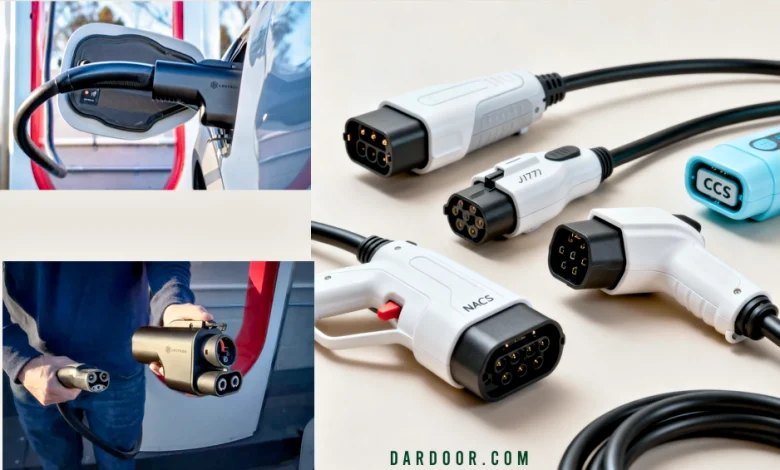
Understand NACS, CCS1, J1772, and CHAdeMO; choose safe, compatible adapters for Canada & the U.S., with power limits, standards, and real-world tips.
Quick Navigation
North American Charging Standards & Connectors
| Connector / Standard | Typical Use | Voltage / Current (Nominal) | Notes |
|---|---|---|---|
| SAE J1772 (Type 1) | AC Level 1 & Level 2 | 120 V (~12–20 A), 240 V (up to ~48–80 A)* | Default AC connector for most non-Tesla EVs in North America. |
| NACS (Tesla-style) | AC & DC (Tesla), broader adoption underway | AC up to ~19 kW; DC commonly 400–800 V, high current | Rapidly becoming an open standard; non-Tesla access varies by market/vehicle. |
| CCS1 | DC fast charging | Up to ~1000 V; 300–500+ A (station-dependent) | Primary DC fast standard for non-Tesla EVs in Canada/U.S. |
| CHAdeMO | Legacy DC fast | Typically ≤500 V; ~125–200 A | Declining availability; still present in some regions and older sites. |
* Your EVSE, circuit, and onboard charger will cap AC current. Always respect the weakest link.
Charging Levels & Electrical Implications
Level 1 (AC 120 V)
Typical household outlets adding ~3–5 mi/h (5–8 km/h). Useful for overnight topping up or emergencies. Adapters here are simple but must still meet safety standards.
Level 2 (AC 240 V)
Common for home/workplace. 16–48 A (≈3.8–11.5 kW) are typical; some setups support higher currents. Select adapters rated above your intended continuous load.
DC Fast (Level 3)
High voltage (often 400–800 V) and high current. Requires adapters that support protocol handshakes and thermal limits. Not all vehicles/networks permit cross-ecosystem use.
Selection Criteria: Ratings, Protocols, Safety, and Usability
1) Electrical Ratings & Derating
- Voltage/Current Headroom: Choose an adapter rated above your max continuous draw (e.g., 48 A use → 60 A rating).
- Thermal Design: Quality copper, low-resistance contacts, heat-resistant shells, and—on DC—thermal sensing/cutoffs.
- Environmental Derating: High ambient heat, sun exposure, or rain can reduce safe continuous current.
2) Compatibility & Protocols
- Signal Lines: Control Pilot/Proximity (AC), PLC or CAN (DC). DC adapters often include active electronics.
- Vehicle/Network Permissions: Some DC scenarios require OEM approval or software whitelisting.
- Firmware Updates: Prefer adapters with updatable firmware to support new models/networks.
3) Safety & Certifications
- Certifications: Look for UL, CSA, ETL, or TÜV marks relevant to NA use.
- Protection: Overcurrent, over/undervoltage, short-circuit, ground fault, and temperature protection.
- Ingress & Durability: IP65+ for outdoor; robust strain relief; UV-stable materials.
4) Physical & Usability Factors
- Cable Gauge/Length: Balance flexibility vs voltage drop and heat.
- Ergonomics: Grip, latch quality, weather covers, and plug orientation for tight spaces.
- Portability: Compact, lightweight adapters are easier to keep in the trunk.
Common North American Use Cases
Home Charging (Garage/Driveway)
Most owners install a dedicated 240 V circuit (e.g., NEMA 14-50 or hardwired EVSE). If you switch between Tesla and non-Tesla EVs, a J1772↔NACS adapter adds flexibility. Ensure compliance with the NEC (U.S.) or CEC + provincial codes (Canada).
Public Level 2 (AC)
Many public L2 stations use J1772. Tesla vehicles need a J1772→NACS adapter; non-Tesla vehicles may need Tesla→J1772 for Destination Chargers. Confirm current limits (e.g., 40 A vs 48 A) and weather-resistant design.
DC Fast (CCS1, NACS)
Non-Tesla EVs primarily use CCS1 networks (Electrify America/Canada, EVgo, etc.). Access to Tesla Superchargers for non-Tesla drivers is expanding, but may require hardware/software enabling and compatible adapters. Always verify model-level support.
Travel & Cross-Border
Carrying multiple adapters increases route resilience in remote areas. Keep firmware updated and test gear before long trips. Remember: the car’s onboard limits often cap practical speeds more than the adapter rating.
Practical Tips & Best Practices
- Confirm your EV’s onboard limits (AC kW, DC kW) before overspending on oversized adapters.
- Test new adapters locally before road trips; check for heat build-up and stable lock.
- Inspect & clean contacts periodically; replace if pins discolor, loosen, or deform.
- Store properly: Avoid extreme heat/cold; use a padded case; don’t kink the cable.
- Check network policies: Some operators restrict non-certified adapters, especially for DC.
- Leave headroom: If you expect 48 A continuous, choose ≥60 A adapters; for DC, prefer higher voltage/current margins.
- Stay updated: Standards and permissions evolve; apply firmware updates when available.
Fast Decision Flow
- Identify your vehicle connector (Tesla → NACS; most others → J1772 for AC, CCS1 for DC).
- Decide scenarios: Home AC, public L2, DC fast, Tesla Destination/Supercharger, travel.
- Match ratings: Pick adapters whose continuous ratings exceed your expected load.
- Verify protocols: Handshakes/permissions for DC; firmware updatability preferred.
- Check certifications: UL/CSA/ETL, ingress rating, and thermal safeguards.
- Consider ergonomics: Cable length, weight, latch quality.
- Test & monitor: Trial run before trips; inspect periodically.
SAE J1772 Adapters (non-Tesla vehicles)
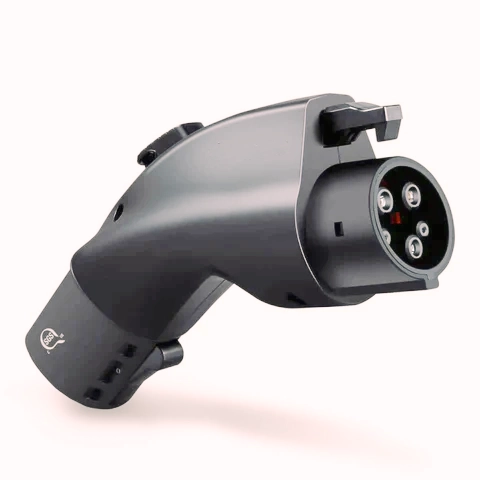
This adapter unlocks compatibility for EVs equipped with a J1772 connector, giving drivers seamless access to the entire range of Tesla chargers—including the Tesla Wall Connector, Tesla Mobile Connector, and Tesla Destination Charger. Perfect for those seeking the convenience of Tesla’s extensive Level 2 charging network, it ensures reliable charging at thousands of locations across Canada and the US.
80 Amp, 250 V Tesla – J1772 Adapter
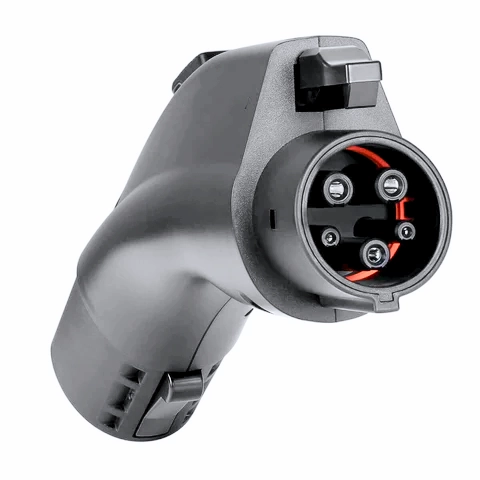
Engineered for use with higher-capacity home and commercial Tesla charging equipment, this robust adapter significantly boosts compatibility for J1772-equipped EVs, supporting rapid charge rates up to an impressive 80 amps. As one of the most powerful adapters available for non-Tesla electric vehicles, it’s the ideal choice for drivers who regularly charge at Tesla Wall Connectors or Tesla Destination Chargers.
Perfect for those seeking faster Level 2 charging at residential or workplace locations, its advanced design ensures safe and efficient performance while maintaining compatibility with the latest Tesla infrastructure. Please note: this adapter does not support Tesla Supercharger DC fast charging—usage is limited to Level 2 AC chargers.
Tesla J1772 Charging Adapter (80 Amp, 250V)

This versatile adapter empowers Tesla owners to charge at any public Level 2 station outfitted with a J1772 connector, dramatically expanding access to thousands of charging locations in North America. Supporting up to 80 amps for fast replenishment, it is fully compatible with standard 240-volt public charging infrastructure.
Engineered with a weather-resistant, rugged exterior, and featuring a user-friendly plug-and-play design, this adapter delivers reliable performance in any environment. Convenient and indispensable, it’s the perfect solution for Tesla drivers seeking maximum flexibility and hassle-free charging on the go.
Tesla CCS Adapter (500V, 500A)
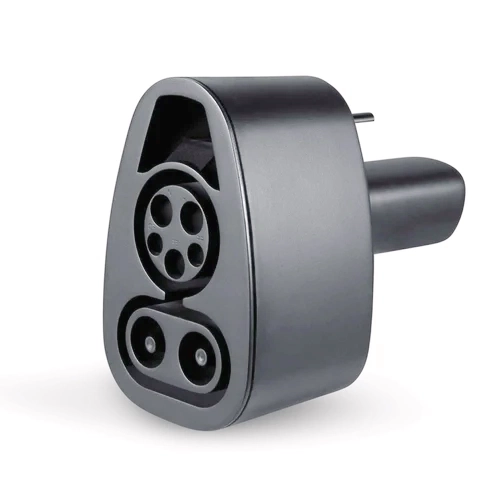
Purpose-built for high-speed DC fast charging, this adapter empowers Tesla vehicles equipped with CCS capability to connect directly to CCS1 DC fast charging stations—unlocking rapid charging virtually anywhere in North America. Designed to handle up to 500 volts and 500 amps, it allows for charging rates up to an impressive 250 kW, minimizing downtime on long trips.
Engineered with integrated temperature monitoring, the adapter provides both optimal safety and reliable high-power delivery—even during extended charging sessions. It’s the ideal solution for Tesla models manufactured after October 2020 or for any Tesla retrofitted with CCS support, ensuring maximum charging flexibility and convenience at the fastest available public stations.