The Three-Door Toyota 4Runner: A Digital Dream of Sporty Luxury in a Compact Off-Roader
A Bold Reinvention
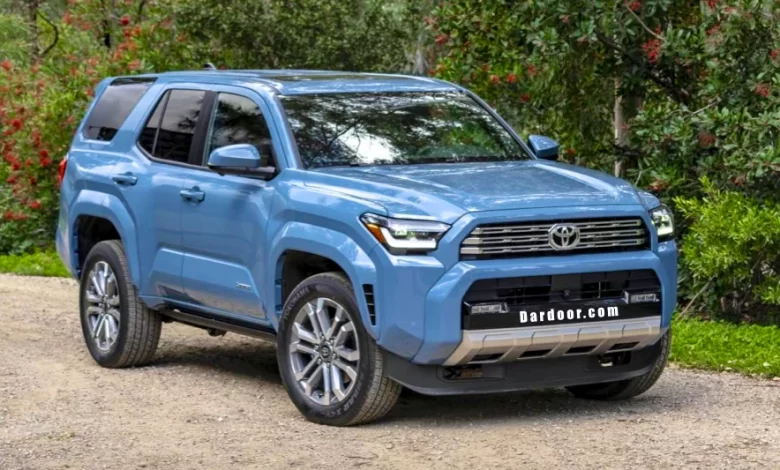
The Three-Door Toyota 4Runner: A Digital Dream of Sporty Luxury in a Compact Off-Roader
The Toyota 4Runner has long been a stalwart in the rugged SUV segment, blending go-anywhere capability with everyday practicality. Now in its sixth generation, the 4Runner continues to dominate trails and suburbs alike. But what if Toyota decided to inject a dose of sporty flair into this beloved off-roader? Enter the 2026 Toyota 4Runner Three-Door—a digital rendering that reimagines the SUV as a shorter, sleeker, and more lavish utility truck. While this concept has ignited the imaginations of enthusiasts, Toyota has made it clear: the three-door variant isn’t on its roadmap. Let’s explore why this pixel-perfect proposal has fans buzzing, even as the automaker doubles down on its five-door formula.
The Digital 4Runner Three-Door: A Bold Reinvention
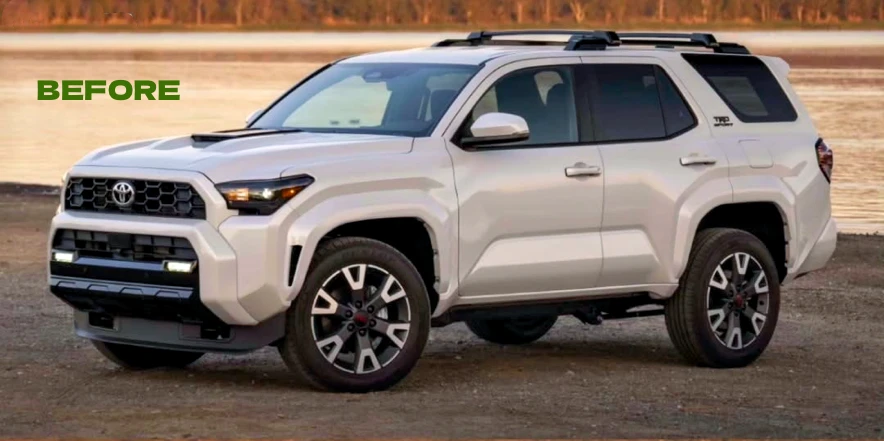
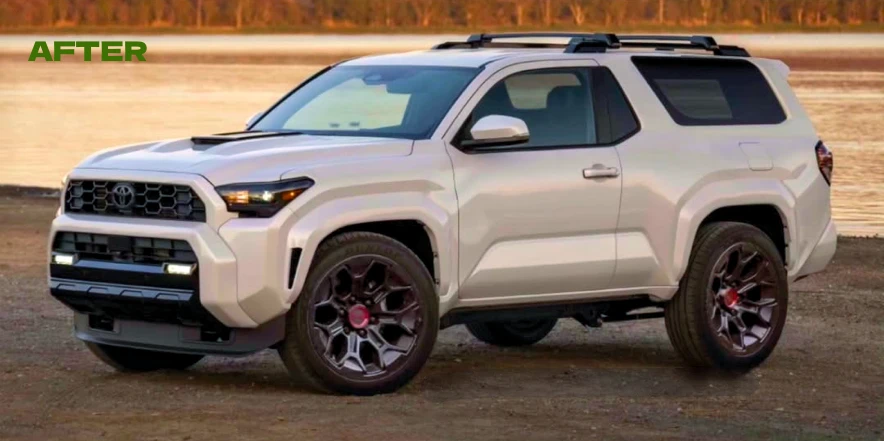
The three-door 4Runner concept, crafted by digital artist Kelsonik, takes the sixth-generation SUV and pares it down to a compact, athletic silhouette. By shortening the wheelbase and enlarging the front doors, the design prioritizes style without sacrificing accessibility. The rear three-quarter panels and windows are stretched, creating a dynamic profile that contrasts with the utilitarian bulk of the standard five-door model. Larger wheels and a lowered stance amplify its sporty demeanor, while the front fascia—borrowed directly from the production 4Runner—maintains its rugged identity with familiar headlights, hood, and bumper.
Kelsonik’s vision cleverly balances nostalgia and modernity. The roof rails remain intact, hinting at adventure-ready functionality, and the rear retains its signature boxy shape. Yet the shortened chassis transforms the 4Runner into something akin to a “hot hatch” of the off-road world—a nimble, urban-friendly machine that could theoretically dart through city streets before tackling backcountry trails.
But there’s a catch: the three-door configuration shrinks interior space. Passengers in the rear would face tighter quarters, and cargo capacity would likely take a hit. For a vehicle celebrated for hauling gear and families, this trade-off may explain Toyota’s reluctance to greenlight such a model.
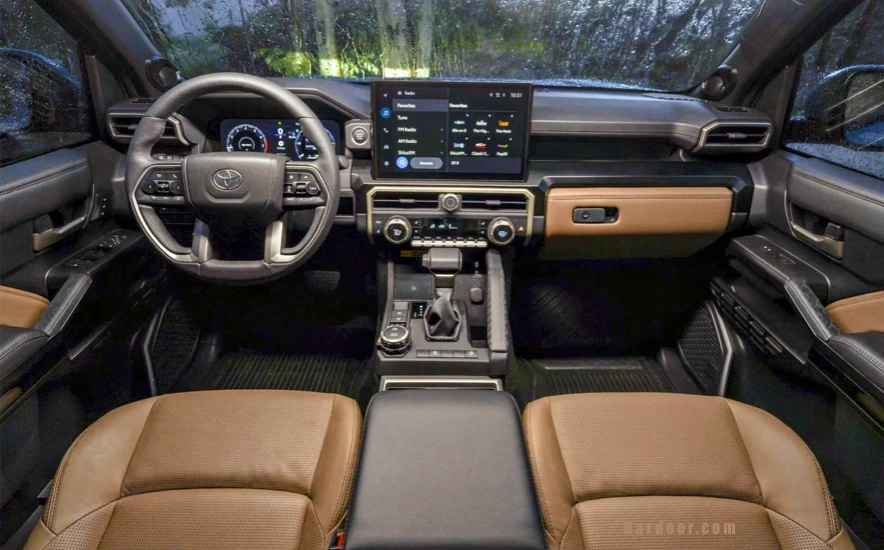
Why Toyota Won’t Build It (And Why It’s Fascinating Anyway)
Toyota’s silence on the three-door concept speaks volumes. The automaker is laser-focused on expanding its electrified lineup, refining its TNGA-F platform, and meeting demand for its existing SUVs. The five-door 4Runner already serves a broad audience, from off-road purists to suburban commuters, and introducing a niche variant could dilute resources.
Market trends also play a role. Compact SUVs are thriving, but consumers increasingly prioritize practicality. Models like the Ford Bronco two-door and Jeep Wrangler Unlimited prove there’s appetite for shorter wheelbases, but Toyota’s strategy leans toward versatility. The 4Runner’s five-door layout offers seating for five (or seven, in some trims) and ample cargo space—features that align with family-oriented buyers.
Still, Kelsonik’s rendering taps into a latent desire for experimentation. The three-door 4Runner embodies a “what if” scenario: a sportier, more agile iteration of a classic nameplate. It’s a reminder that even in an era of electrification and automation, enthusiasts crave vehicles that spark joy—even if they exist only in the digital realm.
The Real Deal: Sixth-Gen 4Runner’s Lineup and Power
While the three-door remains a fantasy, the production 4Runner is very much a reality. The 2024–2026 models boast a diverse lineup, starting with the SR5 trim at 40,770andclimbingtopremiumhybridsliketheTrailhunterat66,900. Here’s a breakdown:
Gas-Powered Trims
- SR5 ($40,770): The entry point, offering essential off-road tech and a robust 2.4L turbocharged engine.
- TRD Sport ($47,250): Adds adaptive suspension and styling upgrades for on-road performance.
- TRD Off-Road ($49,190): Focuses on trail prowess with locking differentials and crawl control.
- Limited ($55,400): Luxury takes the wheel, with leather seats and advanced infotainment.
i-Force Max Hybrid Trims
Toyota’s hybrid powertrain pairs a 2.4L engine with an electric motor, delivering 326 hp and a stump-pulling 465 lb-ft of torque. Trims include:
- TRD ($51,990): Balances efficiency and off-road capability.
- TRD Pro ($66,900): The apex predator, with Fox shocks and bespoke armor.
- Trailhunter ($66,900): Designed for overlanding, featuring rugged skid plates and integrated gear mounts.
Both gas and hybrid models use an 8-speed automatic transmission, with rear-wheel drive standard and 4WD optional. The hybrid’s 1.87 kWh battery doesn’t enable electric-only driving but drastically improves low-end torque—ideal for rock crawling or towing.
TNGA-F Platform: The Backbone of a Legend
The sixth-gen 4Runner rides on Toyota’s TNGA-F architecture, a body-on-frame platform shared with the Tundra, Tacoma, and Lexus GX. This design prioritizes durability and off-road performance, with a reinforced ladder frame, improved approach/departure angles, and modular components that simplify customization.
For adventurers, this means the 4Runner can withstand punishing trails while offering a refined on-road experience. The platform also supports hybrid tech without compromising payload or towing capacity (up to 6,000 lbs in gas models). In a market increasingly dominated by unibody crossovers, the 4Runner’s commitment to body-on-frame construction is a badge of honor.
Competitors: Bronco, Wrangler, and the Compact SUV Wave
The 4Runner’s rivals read like a hall of fame for off-roaders: the Ford Bronco and Jeep Wrangler. Both offer two-door variants, appealing to buyers seeking a more maneuverable footprint. The Bronco, in particular, has carved a niche with its retro styling and removable doors—a feature Toyota has yet to explore.
However, the 4Runner counters with a reputation for bulletproof reliability and a smoother ride quality. While the Wrangler leans into its heritage and the Bronco chases innovation, the 4Runner straddles both worlds, offering modern tech (like Toyota Safety Sense 3.0) without abandoning its rugged roots.
A Concept That Challenges Conventions
Kelsonik’s three-door 4Runner is more than a flight of fancy—it’s a provocation. It asks: What if Toyota embraced bold design risks? What if the 4Runner catered to urbanites craving style as much as substance? While the answer, for now, is a firm “NO,” the concept underscores the SUV’s cultural resonance.
Toyota’s decision to stick with the five-door formula is pragmatic, but the three-door’s digital existence keeps the conversation alive. In a world of cookie-cutter crossovers, the 4Runner remains a symbol of adventure—whether it has three doors or five.
So, do you dig the digital 3-door variant? Let us know—and maybe, just maybe, Toyota’s listening.