The 25 Best
Luxury SUVs
The definitive guide to automotive opulence
Cayenne Turbo
E-Hybrid Coupé
2024 – 2025 Production
The Porsche Cayenne Turbo E-Hybrid Coupé is the most powerful production Cayenne ever built, fusing a twin-turbocharged 4.0-litre V8 with a sophisticated electric motor to produce a combined 729 horsepower — a figure that was once the exclusive territory of supercars.
Beneath its sleek fastback silhouette lies Porsche’s latest-generation Turbo Hybrid system, capable of dispatching 0–100 km/h in a breathtaking 3.7 seconds, while also offering a serene all-electric range for urban commuting. The engineering duality is nothing short of theatrical.
The cabin is a masterwork of Porsche’s design philosophy: purposeful, driver-centric, and wrapped in the finest available leathers and carbon fibre trim. The curved instrument cluster draws the eye, while the GT Sport steering wheel communicates with surgical precision.
The Cayenne rides on Porsche Active Suspension Management with the optional Porsche Dynamic Chassis Control Sport system — effectively making this 2,300 kg SUV feel like a sports car through corners.
Its 21.8 kWh lithium-ion battery pack supports DC fast charging, adding an EV range of approximately 75 km — enough for most daily drives without touching the V8. The regenerative braking is intelligently calibrated so as not to compromise the signature Porsche pedal feel.
Inside, the panoramic glass roof floods the cabin with light while the Burmester® 3D High-End Surround Sound System delivers concert-hall acoustics at 220 km/h. Night Vision Assist, a head-up display, and massaging seats complete the sensory tapestry.
Porsche offers an extraordinary breadth of personalisation through its Exclusive Manufaktur programme — paint colours, two-tone leather, bespoke stitching, and custom exterior accents allow every car to be singular.
The Coupé body style shaves drag and adds visual drama over the standard Cayenne, with a more rakish roofline that flows into a powered spoiler at the tail. It is a shape that rewards admiration from every angle.
The updated 2025 model year introduces revised front fascia styling, additional driver-assistance suite updates, and enhanced battery thermal management for improved cold-weather EV performance.
In a market saturated with “performance SUVs,” the Cayenne Turbo E-Hybrid Coupé remains the gold standard: unapologetically fast, impossibly refined, and engineered by people who built their reputation on the 911.
Nautilus
2024 – 2025 Production
The 2025 Lincoln Nautilus is a thoroughly reimagined mid-size luxury SUV that channels the brand’s “Quiet Luxury” philosophy into every surface, seam, and system. Its exterior wears a calm, architectural confidence — unflashy but unmistakably premium.
Under the hood, a 2.7-litre twin-turbocharged EcoBoost V6 delivers 335 horsepower with an eight-speed automatic transmission, providing brisk performance without the theatrics of a sports-tuned chassis. Lincoln’s goal is always serene velocity.
The interior of the 2025 Nautilus is where the transformation is most profound. A sweeping 48-inch Panoramic Display dominates the dashboard — the largest in any Lincoln — and integrates infotainment, climate, and driver information into a single curved canvas.
Standard 24-way adjustable Perfect Position front seats with Active Motion technology gently shift your seating position over time to reduce fatigue on long journeys — a feature borrowed from the flagship Navigator.
Lincoln’s Revel® Ultima 3D Audio system, developed with acoustic engineers from Universal Music Group, delivers 28 speakers tuned for the specific acoustics of the Nautilus cabin. Music doesn’t play in the Nautilus — it inhabits it.
The Centre of Quiet feature, borrowed from Lincoln Black Label models, uses targeted active noise cancellation to reduce the perceived sound level for front-seat occupants by an additional 10 decibels — creating a near-chamber silence at highway speeds.
Lincoln’s BlueCruise hands-free highway driving system comes available on higher trims, allowing driver-monitoring camera-verified hands-free driving on pre-mapped highways across North America.
The 2025 Nautilus benefits from enhanced standard safety features: adaptive cruise with Stop-and-Go, lane-centring, and Lincoln’s Pre-Collision Assist with Pedestrian Detection are now standard across all trims.
Exterior details — a distinctive grille pattern, flushed door handles that power out on approach, and illuminated Lincoln Star script — create a sense of ceremony even before you open the door.
The Nautilus competes admirably with European luxury brands while offering a distinctly American interpretation of comfort: vast, quiet, technologically rich, and anchored in the belief that serenity is the ultimate luxury.
Mercedes-Maybach
EQS SUV
2023 – 2025 Production
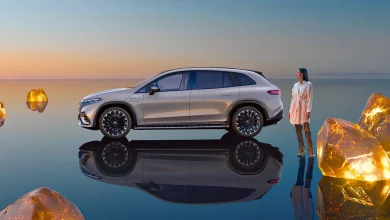
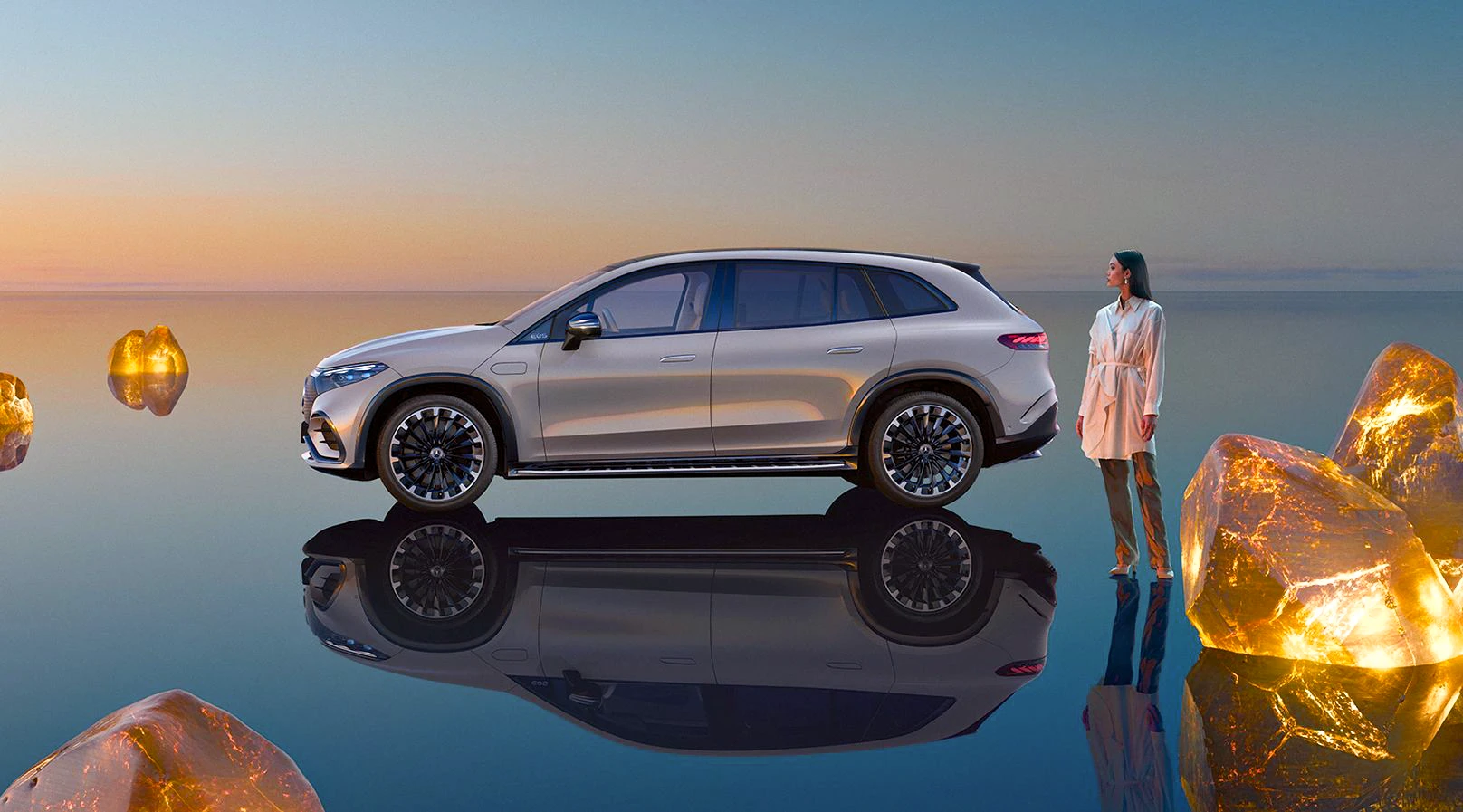
The Mercedes-Maybach EQS SUV sits at the absolute apex of the electric luxury SUV world — a vehicle that makes no compromises between zero-emission technology and the most extravagant interior trappings imaginable.
Powered by dual electric motors producing a combined 649 horsepower, the EQS SUV accelerates with the quiet insistence of immense torque — 858 Nm delivered instantaneously and without drama. Range exceeds 600 km on a single charge under WLTP conditions.
The MBUX Hyperscreen stretches across the full width of the dashboard — a single curved glass element housing three displays and MBUX artificial intelligence that learns driver preferences with every journey. It is the most sophisticated cockpit in automotive production today.
Second-row passengers experience the full Maybach treatment: two individual executive reclining seats with legroom measured in small-apartment terms, heated and ventilated with massage functions, and footrests that extend electrically at the touch of a screen.
The Maybach Night Sky headliner features 289 individually programmable fibre-optic stars embedded in real Nappa leather — a feature that transforms the cabin ceiling into a private planetarium at night.
Active Noise Cancellation, combined with the EQS’s near-silent electric drivetrain, creates a cabin noise level that borders on the disconcerting in its stillness. The standard Burmester® 3D Surround Sound system with 15 speakers fills that silence magnificently on request.
Standard equipment includes a Magic Carpet Ride air suspension with road surface scanning — the system literally reads the road ahead using stereo cameras to pre-adjust the suspension for upcoming imperfections.
Hand-finished Maybach exclusive leather is standard, along with bicolour exterior finishes, 22-inch alloy wheels, and distinctive Maybach pinstripe brightwork running the length of the vehicle.
The EQS SUV charges at up to 200 kW DC, adding 300 km of range in approximately 30 minutes. At home, the 22 kW AC onboard charger is among the fastest available on any production SUV.
For those for whom money is genuinely no object, the Maybach EQS SUV is the current endpoint of the luxury electric SUV’s evolution — a machine that makes arriving at your destination the least interesting part of the journey.
Polestar 3
2024 – 2025 Production
The Polestar 3 is the brand’s flagship electric SUV — a vehicle that distils Scandinavian minimalism, sustainable sourcing, and Volvo-derived engineering prowess into one of the most desirable EVs on sale today.
The Long Range Dual Motor Performance variant produces 517 horsepower, dispatching 0–100 km/h in 4.7 seconds. Optional Performance Software Upgrade from Polestar Engineering unlocks additional torque with near-instant delivery via an over-the-air update.
Polestar’s sustainable interior philosophy means wool-blend upholstery, responsible leather, and materials certified by 100% renewable energy sources. Every surface has been selected for its environmental credentials alongside its tactile quality.
The 14.5-inch portrait touchscreen runs Android Automotive OS with Google built-in — offering Google Maps navigation with EV route planning, Google Assistant voice control, and a curated suite of automotive applications.
The 111 kWh battery supports 610 km of WLTP range in the Long Range Single Motor configuration, and the Dual Motor model still achieves a very useful 560 km. DC fast charging at 250 kW replenishes the battery rapidly on longer journeys.
Öhlins electronically controlled dampers — derived from motorsport — are standard on the Performance Pack, providing continuously adjustable suspension that responds in milliseconds to road conditions and driving style.
The frameless door design, panoramic fixed roof, and clean-lined exterior were developed with the Polestar Design Studio in Gothenburg — a team obsessed with eliminating excess and celebrating structure.
A bespoke Bowers & Wilkins sound system with 25 speakers and 1,610 watts uses the vehicle’s structure itself as a resonating chamber — a collaboration between Polestar’s engineers and B&W’s audio specialists that took three years to perfect.
Interior details include an open-pore wood inlay sourced from FSC-certified forests, ergonomic sport seats with integrated headrests, and ambient lighting designed by renowned Swedish lighting studio Øivind Slaatto.
Polestar offers a direct-to-consumer sales model with a price-promise guarantee — no negotiation, no dealership pressure, just transparent pricing delivered to your door with white-glove handover service.
Q8 e-tron
2023 – 2025 Production
The Audi Q8 e-tron is the fully electric evolution of the e-tron SUV — a mature, polished, and quietly formidable electric luxury vehicle that epitomises Audi’s philosophy of “Vorsprung durch Technik” in its most sophisticated contemporary form.
The flagship SQ8 e-tron delivers 503 horsepower and 973 Nm of torque via three electric motors — two on the rear axle, one on the front — enabling torque vectoring between individual rear wheels for exceptional cornering precision.
Audi’s Virtual Exterior Mirrors — camera-based digital wing mirrors with in-cabin OLED displays — replace traditional glass mirrors, reducing aerodynamic drag and improving rearward visibility in all conditions. It is a technology that genuinely improves the experience.
The 114 kWh gross battery (106 kWh usable) provides a WLTP range of up to 600 km in the standard Q8 e-tron, making it one of the longest-range electric SUVs available. The SQ8 e-tron achieves approximately 513 km.
Audi’s quattro all-wheel drive system is reimagined in electric form — the front and rear motors can be individually controlled for torque distribution, replacing the mechanical differentials of the combustion era with pure software intelligence.
The interior features Audi’s signature dual-touchscreen MMI system, premium Bang & Olufsen 3D Premium Sound System, ambient lighting with 30 colours, and Valcona leather in a space that feels as curated as a Bauhaus exhibition.
Standard equipment across the range includes matrix LED headlights, air suspension with adjustable ride height, adaptive cruise control with Stop & Go, and Audi’s Predictive Efficiency Assist system that learns and adapts to habitual routes.
The optional air suspension can be specified with Audi adaptive air suspension sport — lowering the ride height at speed for improved aerodynamics and raising it for off-road or parking scenarios.
DC fast charging at up to 170 kW is supported — a 10–80% charge takes approximately 31 minutes at a compatible charger. The Q8 e-tron also supports bidirectional charging for vehicle-to-home energy transfer in select markets.
Audi continues to offer the Q8 e-tron Sportback variant — a sleek fastback alternative with a more aerodynamic profile, extended range, and identical performance credentials in a more visually dramatic package.
Mercedes-Benz GLB
2020 – 2025 Production
The Mercedes-Benz GLB is the brand’s entry into the compact luxury SUV segment with a decisive advantage: optional third-row seating in a body no larger than a GLC. It is the most versatile compact luxury SUV on the market for small families seeking genuine Mercedes quality.
Its boxy, upright proportions recall the G-Class in spirit while housing a modern MBUX infotainment system, dual 10.25-inch screens, and ambient lighting with 64 colour choices — luxury appointments at a relatively accessible price point.
Available with a choice of turbocharged four-cylinder petrol or diesel engines, as well as the AMG GLB 35 with 302 horsepower, the range covers a broad spectrum of driving needs with consistent refinement throughout.
The optional third row folds flat into the floor and can be electrically deployed — accommodating two additional adults (or four children) in markets where a seven-seat premium crossover under $50,000 is a genuine rarity.
4MATIC all-wheel drive is available across most variants, distributed intelligently between axles via Mercedes’ electromechanical coupling — offering genuine off-road capability well beyond what buyers of compact SUVs typically expect.
The MBUX system’s natural language processing allows conversational inputs — “it’s too warm in here” adjusts climate control without requiring menu navigation — reducing cognitive distraction and making the system feel genuinely intuitive.
Build quality inside the GLB punches well above its price point: genuine metal trim accents, soft-touch surfaces on all major touchpoints, and Mercedes’ signature analogue clock on upper trims create a cabin that feels premium without trying too hard.
Standard driver assistance features include Active Blind Spot Assist, Active Lane Keeping Assist, and Mercedes’ ATTENTION ASSIST drowsiness detection — a comprehensive package at a class-competitive price.
The GLB received a comprehensive mid-cycle update for 2024 with revised exterior styling, upgraded MBUX software, new wheel designs, and enhanced standard equipment across all trims.
For buyers who want the three-pointed star without extending to the GLE’s footprint or price, the GLB delivers a remarkable proportion of the larger vehicle’s ambition in a form that lives comfortably in urban environments and fills garages without anxiety.
BMW X3
2024 – 2025 Production
The fourth-generation BMW X3 arrives for 2024 with a dramatic visual evolution — sharper lines, a wider kidney grille, and a more muscular stance that finally matches the original X3’s sporting intentions with contemporary elegance and an entirely revamped interior.
The new iDrive 8.5 Curved Display wraps a 12.3-inch digital instrument cluster with a 14.9-inch infotainment touchscreen in a single sweeping glass element — among the most beautiful BMW cabins yet, combining Teutonic precision with genuine warmth.
The 2.0-litre turbocharged four-cylinder in the xDrive30 produces 255 horsepower while the M50 xDrive — the performance flagship — delivers a compelling 398 hp from a 3.0-litre turbocharged inline-six with its signature smooth power delivery.
Alongside the combustion variants, BMW now offers the iX3 — the fully electric sibling producing 286 hp with a 75 kWh battery, 460 km WLTP range, and DC fast charging at 185 kW — appealing to buyers making the transition to electric luxury.
The X3’s handling remains its defining characteristic: the SUV-class benchmark for driver engagement, offering a steering feel and body control that no rival at the price has convincingly replicated. It remains the driver’s choice in its segment.
Interior quality has taken a significant step up with the new generation — genuine metal surfaces, Vernasca leather, optional Merino leather, and a substantially reduced reliance on hard plastics. BMW has listened, and the result is tangibly better.
New M Sport and M Sport Pro packages add 20-inch alloys, adaptive M Sport suspension with electronically controlled dampers, sport seats, and performance brake systems that transform the X3’s already capable dynamics into something approaching M car territory.
Standard safety technology now includes BMW’s Personal CoPilot suite: Adaptive Cruise Control with Stop & Go, Active Lane Keeping Assistant, Rear Cross Traffic Alert, and an available Highway Driving Assistant with hands-free capability.
The X3 is manufactured at BMW’s Spartanburg, South Carolina plant — the highest-volume BMW factory globally — giving American buyers the satisfaction of knowing their car was built domestically.
After two decades as the segment benchmark, the X3 continues to define what a luxury compact SUV should be: properly engineered, sharply styled, and rewarding to drive on every road in every condition.
Genesis GV80
2021 – 2025 Production
The Genesis GV80 announced to the world that Korea could produce a luxury SUV that rivals the German establishment on every meaningful metric — and in some cases, surpasses them in value, technology, and interior quality per dollar spent.
Its exterior design language — the Crest Grille, Quad Lamps, and Two Lines — is unmistakably Korean, yet deeply sophisticated. The GV80 turns heads not by volume but by elegance, wearing its proportions with the confidence of a far more established luxury brand.
The 3.5-litre twin-turbocharged V6 produces 375 horsepower and 391 lb-ft of torque — more than enough to dismiss the “Genesis is just a Hyundai” mythology with a single flex of the right pedal at a motorway entry ramp.
Inside, the quilted Nappa leather surfaces, open-pore walnut trim, and 14.5-inch touchscreen — the largest in its class at launch — set a new benchmark for material quality at this price point that German competitors were forced to acknowledge.
Multi-chamber air suspension is standard on higher trims — an item typically reserved for vehicles costing $20,000–$30,000 more. It delivers a ride quality that is among the most supple in the mid-size luxury segment.
The available 21-speaker Lexicon® Reference Audio system was developed specifically for the GV80’s cabin architecture — delivering spatially precise audio reproduction that competes with any Meridian or Harman Kardon installation at similar price points.
Genesis’ Genesis-to-Go valet service — where brand representatives collect the car for service and return it washed — is included with every vehicle for the first three years, and is emblematic of the brand’s hospitality-first ownership philosophy.
The GV80 Coupe, added for 2024, features a fastback roofline variant that trades some rear headroom for a more dramatically styled profile — confirming Genesis’s design ambitions continue to evolve at pace.
Safety technology includes a 360-degree camera system with enhanced augmented reality overlays for parking, Highway Driving Assist II with lane change functionality, and Remote Smart Parking Assist for hands-free parallel and perpendicular parking.
Genesis offers a 5-year/60,000-mile basic warranty and 10-year/100,000-mile powertrain warranty — the most comprehensive in the luxury segment and a powerful statement of engineering confidence from Hyundai’s prestige division.
Lexus TX
2024 – 2025 Production
The Lexus TX is the brand’s newest and largest three-row luxury SUV — a vehicle crafted specifically for families who refuse to sacrifice serenity, craftsmanship, or Lexus’ legendary reliability for the sake of practical passenger capacity.
Available with three powertrains — a 2.4-litre turbocharged four-cylinder, a 2.4-litre turbo hybrid, and a 3.5-litre V6 plug-in hybrid — the TX suite offers a powertrain to suit every operating style, with the PHEV delivering an electric range of approximately 33 miles.
The third row of the TX is genuinely usable for adult passengers — a distinction that separates Lexus’s engineering approach from competitors who treat rear seating as a theoretical checkbox. Generous headroom and a thoughtful entry configuration make it a pleasure.
The interior showcases Lexus’ Tazuna philosophy — a holistic approach to cockpit design where all controls flow naturally to hand without requiring the driver to divert attention. Every surface has been evaluated not just visually but ergonomically over thousands of hours of development testing.
The available Mark Levinson® Reference Surround Sound system with 21 speakers was designed and tuned within the TX’s cabin architecture — treating the interior as an acoustic instrument rather than just a box into which speakers are placed.
Standard Lexus Safety System+ 3.0 includes Pre-Collision System with pedestrian, cyclist, and motorcycle detection; Radar Cruise Control with Curve Speed Management; and Lane Departure Alert with Steering Assist.
Build quality is quintessentially Lexus — every switchgear click is weighted, every surface gap is identical, every material choice is made with decades-long durability in mind. In the luxury class, no brand has matched Lexus’s JD Power reliability consistency across the past twenty years.
The TX rides on a dedicated platform distinct from the RX — wider, longer, and purpose-built for three-row accommodations — ensuring that structural integrity, noise isolation, and passenger comfort were not compromised in achieving the larger footprint.
Digital rearview mirror technology transforms the standard interior mirror into a high-resolution display fed by a rear camera — eliminating the rear visibility blind spots caused by rear headrests and tall cargo loads.
With the TX, Lexus has extended its reputation for hushed, quality-obsessed luxury into the larger family SUV space — a segment where the brand was previously absent and where buyers were forced to choose between European sportiness and domestic scale.
Rivian R1S
2022 – 2025 Production
The Rivian R1S is not merely an electric SUV — it is a reimagining of what the adventure vehicle can be in an electric era: capable of towing 7,700 lbs, wading through 3-foot water crossings, climbing 45-degree inclines, and yet arriving at the destination with a serene luxury cabin intact.
The quad-motor “Max Pack” configuration produces an astonishing 835 horsepower — placing it in supercar performance territory while accommodating seven passengers, a roof-mounted tent, and a full weekend of camping equipment.
The R1S uses 21-inch all-terrain tires as a standard fitment — the first luxury electric SUV to acknowledge that buyers might genuinely venture beyond sealed roads. Air suspension with 15 inches of ground clearance in high mode underlines the commitment.
Rivian’s “gear tunnel” — a pass-through storage compartment between the second row and the rear — is an innovation that has no equivalent in the automotive world: a lockable, weatherproof storage volume accessible from either side of the vehicle.
The interior is decidedly Californian in its minimalism: a clean, floating 15.6-inch touchscreen, hand-stitched wood-look accents crafted from sustainable FSC-certified materials, and a seven-speaker Meridian audio system as standard.
Rivian’s over-the-air software update capability means the R1S you own today will gain new features, improved range estimates, and enhanced driver assistance capabilities over time — a living product rather than a static purchase.
Camp Mode converts the R1S into a generator for campsite power, running fans, lighting, and small appliances via exterior power outlets. The optional Camp Kitchen stores a two-burner stove in a dedicated underbody drawer — an optional accessory that no other luxury brand offers.
The optional Large Pack battery provides over 400 miles of EPA-rated range, addressing range anxiety concerns for buyers who plan extended road trips between charging infrastructure. DC fast charging at up to 200 kW is supported.
Customer service and the Rivian ownership experience — via the company’s app, its Service+ mobile repair programme, and an owned network of Adventure Network chargers — represents a complete ecosystem rather than a standalone product.
The R1S has redefined what buyers expect from an electric adventure SUV: the bar is now quad-motor, 800+ horsepower, 400-mile range, and a gear tunnel. The competition is still catching up.
Cadillac Escalade ESV
2021 – 2025 Production
The Cadillac Escalade ESV is perhaps the most recognisable luxury SUV in American culture — a vehicle that has served as the default expression of domestic success for two decades, and which continues to evolve without abandoning the imposing presence that made it iconic.
The ESV (Extended Stretch Vehicle) adds 15 additional inches over the standard Escalade’s already-generous footprint, creating a third-row environment that offers genuine adult legroom — more, in fact, than many luxury sedans provide in the rear.
The Escalade’s most extraordinary feature is its 38-inch curved OLED display — the largest in any production vehicle — curving seamlessly across the dashboard to integrate a 7.2-inch touch control panel, a 14.2-inch infotainment screen, and a 16.9-inch digital instrument cluster in a single flowing element.
The 6.2-litre V8 produces 420 horsepower and 460 lb-ft of torque — a number that sounds modest until the Escalade ESV, all 6,200+ lbs of it, moves with a composure and pace that belies its cathedral proportions.
Magnetic Ride Control 4.0 — the fastest-reacting damping system in automotive production — continuously adjusts each wheel’s damping in milliseconds based on road surface input, giving the ESV a ride quality that its size makes seem impossible.
AKG Studio Reference Sound system with 36 speakers produces 28 unique listening zones throughout the cabin — a performance level achieved by treating the interior panels as acoustic instruments and positioning speakers accordingly.
Super Cruise — Cadillac’s hands-free driving technology — is available, allowing hands-free highway driving on more than 400,000 miles of pre-mapped roads across the US and Canada. It remains the most comprehensive hands-free system from any American brand.
Night Vision with pedestrian detection projects a thermal imaging display onto the instrument cluster to identify pedestrians and large animals in darkness up to 300 metres ahead — a feature lifted from the technology canon of fighter aircraft.
The Escalade is available in Luxury, Premium Luxury, Sport, and Platinum trims — the latter featuring semi-aniline leather, genuine wood trim, and a distinctly presidential interior ambience that continues to make it the default choice of dignitaries and executives worldwide.
A diesel V6 and the 6.2-litre V8 with 10-speed automatic are joined by the 3.0-litre Duramax turbo-diesel — offering remarkable fuel economy (23 mpg highway) for a vehicle of this mass, without sacrificing the commanding road presence.
Range Rover
Plug-In Hybrid
2022 – 2025 Production
The fifth-generation Range Rover PHEV is arguably the most complete luxury SUV available today — a vehicle that has distilled sixty years of Range Rover heritage into a machine of almost aristocratic composure, now offered with the environmental credentials of plug-in hybrid technology.
The 3.0-litre straight-six mild-hybrid engine pairs with a 105 kWh lithium-ion battery to deliver a combined 510 horsepower and 700 Nm of torque — numbers that propel this 2,600 kg leviathan to 100 km/h in 5.0 seconds without drama or fuss.
The P510e variant delivers up to 113 km of pure electric range under WLTP conditions — the highest EV range of any large luxury SUV PHEV. For buyers with short city commutes and long weekend escapes, this may effectively eliminate petrol consumption on most days.
The new generation interior is the best Range Rover has ever built: a clean, architectural dashboard dominated by a curving 13.1-inch Pivi Pro touchscreen and a second 13.7-inch driver display. Physical buttons are absent; haptic surfaces and voice control replace them.
Land Rover’s Terrain Response 2 system automatically selects the optimal drivetrain and suspension settings for any surface — grass, snow, sand, rock, or tarmac — without requiring driver input. The PHEV’s electric drivetrain adds instant-torque off-road advantage on slippery terrain.
Air suspension with Adaptive Dynamics continuously monitors body movement 500 times per second and adjusts damping accordingly, maintaining the legendary Range Rover “magic carpet” ride quality regardless of surface quality or speed.
Four-zone climate control, heated and ventilated seats in all four positions, a 35-speaker Meridian Signature Sound system, and an optional Executive rear seating configuration with extending footrests create a cabin of genuine Mayfair splendour.
The Range Rover’s wading depth of 900mm is unchanged in the PHEV — the battery pack is sealed and the electric motors are waterproof, maintaining Land Rover’s legendary amphibious competence while adding zero-emission urban capability.
Long-wheelbase variants add approximately 200mm of rear passenger space, transforming the already-generous interior into a space that challenges dedicated luxury limousines for rear-seat comfort and equipment quality.
The Range Rover PHEV represents the vehicle that land Rover’s engineers have been working toward for sixty years: a machine that is equally at home on a Cotswolds country estate, a Park Lane hotel forecourt, or a mountain pass in the Dolomites — without compromise in any of these environments.
Ferrari Purosangue
2023 – 2025 Production
Ferrari calls the Purosangue a “Ferrari with four seats and four doors” — emphatically refusing the “SUV” label — and in experiencing it, one understands why. This is a vehicle that corners faster, sounds more glorious, and demands more driver engagement than any SUV has any right to.
The naturally aspirated 6.5-litre V12 — positioned entirely behind the front axle for optimal weight distribution — produces 715 horsepower at 7,750 rpm and screams to a 8,250 rpm redline in a manner that is physically emotional and genuinely unlike any other production vehicle in the world.
Active Suspension Technology (AASf) — with 48-volt active suspension — replaces traditional passive springs with active hydraulic actuators at each corner, controlling body roll, pitch, and squat with a precision that makes the 2,033 kg Purosangue handle with the agility of a sports car.
The suicide rear doors — opening rear-hinged — provide access to rear seats with the drama appropriate to a Ferrari, and offer a rear occupant experience that is legitimately comfortable: proper headroom, adjustable seatbacks, individual ventilation, and a full digital rear-seat console.
The Purosangue uses a dual-clutch 8-speed transmission with a rear-mounted transaxle configuration — placing the gearbox at the rear for near-perfect 49:51 front-to-rear weight distribution. The resulting balance is astonishing for a vehicle with this footprint.
Interior quality reflects Ferrari’s Classiche philosophy: the finest Italian leather, carbon-fibre accents machined in-house at Maranello, and a cockpit orientation that positions the driver as the absolute priority — with rear-seat occupants enjoying a thoroughly considered secondary environment.
The active exhaust system creates a variable soundtrack — from refined grand-touring murmur at urban speeds to a full-orchestra V12 fortissimo on the open road. Ferrari’s engineers spent hundreds of hours tuning individual exhaust frequencies for maximum emotional impact.
Ferrari has limited Purosangue production to no more than 20% of annual total Ferrari output — preserving exclusivity and ensuring that every example will appreciate. Currently, waiting lists extend to 2026 and beyond at most dealerships globally.
The optional Tailor Made programme allows bespoke exterior colours, interior leathers, stitching patterns, and trim materials developed with Ferrari’s in-house personalisation studio — a process that typically takes six to twelve months and produces genuinely unique vehicles.
In creating the Purosangue, Ferrari has demonstrated that the concept of a family-practical Ferrari is not a contradiction — it is an evolution, and one executed with the same obsessive precision that gave the world the F40, the LaFerrari, and the 250 GTO.
Bentley Bentayga
2016 – 2025 Production
When Bentley launched the Bentayga in 2016, the establishment was sceptical — could the house of W.O. Bentley’s grand touring heritage translate into an SUV without losing its soul? A decade and many awards later, the answer is definitively, magnificently yes.
The twin-turbocharged 4.0-litre V8 produces 542 horsepower; the range-topping Bentayga Speed’s 6.0-litre W12 delivers 626 hp and achieves 0–100 km/h in 3.9 seconds — making it the world’s fastest production SUV until the Lamborghini Urus arrived.
The Bentayga Hybrid marries the V6 PHEV system with a 14.1 kWh battery for approximately 40 km of electric range and a combined 449 horsepower — offering Bentley’s luxury in a form accessible to congestion charge zones and ultra-low emission areas globally.
Inside, the Bentayga is a monument to British craft — hand-stitched leather takes 150 hours per car; the optional Naim for Bentley audio system uses bespoke speaker cones and cabinet panels machined from solid aluminium; and the veneer panels are bookmatched from individual tree sections.
Bentley’s 48-volt eAWS (electric active wheel steering) rear-wheel steering system reduces the turning circle by 0.6 metres — the equivalent of removing an entire car length from the vehicle’s effective size in urban environments.
The optional Airline Seat Specification transforms the rear of the four-seat Bentayga into an executive environment with individually reclining seats, extending ottomans, and a 17-speaker Naim system oriented specifically for rear-seat occupants.
Bentley’s Mulliner personalisation division offers the Bentayga in virtually any exterior colour, interior leather combination, or veneer species imaginable — the Bentayga Mulliner edition represents the absolute pinnacle, with unique exterior brightwork and the most exclusive interior appointments available from the factory.
Standard Bentley Dynamic Ride uses a 48-volt electric active anti-roll bar system — eliminating body roll without compromising ride quality. The result is a vehicle that corners flat yet rides luxuriously, a combination that no passive suspension can achieve.
Bentley has released a comprehensive mid-life update for 2021 that introduced a revised interior with a 10.9-inch touchscreen, revised exterior styling, and new technology features — keeping the Bentayga competitive against newer rivals.
The Bentayga remains the gold standard of traditional luxury SUVs: a vehicle where natural materials, human craft, and mechanical engineering combine to produce something that feels beyond mere transportation — a statement of taste, prosperity, and absolute commitment to quality.
Aston Martin DBX707
2022 – 2025 Production
The Aston Martin DBX707 — named for its 707-horsepower output — is the most powerful production SUV available from a traditional luxury sports car manufacturer, produced in limited numbers at Aston’s dedicated St Athan facility in Wales.
Its twin-turbocharged 4.0-litre AMG-sourced V8 is tuned beyond the standard DBX to produce 707 ps (697 horsepower) and 900 Nm of torque, channelled through a nine-speed wet-clutch automatic transmission to all four wheels via a torque-vectoring rear differential.
The DBX707 accelerates to 100 km/h in 3.1 seconds and reaches a top speed of 310 km/h — figures that rival the Ferrari Purosangue and make it comprehensively the fastest Aston Martin SUV ever built. It breathes through a spectacular active exhaust that is unapologetically theatrical.
Carbon-ceramic brakes measuring 410mm at the front are standard — a specification derived from Aston’s hypercar programme and capable of generating 2.2g of deceleration while fading less than conventional steel systems during extended track use.
The interior retains the GT character that defines all Aston Martins: a driver-centric layout with exceptional tactile quality, optional Bridge of Weir leather (a Scottish tannery providing the finest automotive hides in the British Isles), and an available 360-degree camera with 12-inch touchscreen.
The DBX707’s suspension is lowered 10mm versus the standard DBX, with recalibrated adaptive dampers, stiffer anti-roll bars, and retuned air spring characteristics — creating an SUV that corners with a directness and engagement that most sports cars envy.
Aston Martin’s Q division — the bespoke personalisation service — can specify virtually any interior colour, leather, stitch pattern, or exterior paint combination for the DBX707, producing examples that are uniquely individual from other vehicles in the range.
New 23-inch forged alloy wheels — the largest standard fitment on any Aston Martin — are exclusive to the 707 and contribute to the visual drama of an already visually arresting SUV profile.
The standard Aston Martin DBX (from approximately $196,000) remains in production alongside the 707, offering 542 horsepower for buyers whose priority is grand touring comfort over ultimate performance credentials.
Owning a DBX707 means joining an exclusive community: Aston Martin produces only a few thousand examples per year, and the brand’s heritage — from Le Mans victories to James Bond — imbues every key turn with cultural gravitas that no newer brand can manufacture.
Volvo XC90
2015 – 2025 Production
The second-generation Volvo XC90 — launched in 2015 — singlehandedly transformed Volvo from a safe, sensible brand into a genuine luxury contender, and its influence on the entire mid-size luxury SUV segment has been profound and enduring.
The Recharge PHEV T8 combines a 2.0-litre turbocharged petrol engine with an electric rear motor to produce 455 horsepower total, with a 38-litre battery delivering approximately 59 km of pure electric range — making it one of the most capable PHEV SUVs available.
The XC90 Recharge’s interior remains among the most beautiful in its class: a natural tablet of Swedish crystal, open-pore wood veneers from certified forests, and a leather-free option using a recycled material called Nordico — woven from recycled PET plastic and sustainably managed cork.
The central 9-inch portrait-format touchscreen — revolutionary at launch and still elegant a decade later — runs Android Automotive OS with Google built-in, integrating navigation, entertainment, and vehicle settings in a single intuitive interface.
The optional Bowers & Wilkins Signature Sound System for the XC90 was developed with the specific acoustic properties of the XC90 cabin in mind — 19 speakers, 1,400 watts, and tuned over 18 months by audio engineers working exclusively in pre-production vehicles.
Volvo’s Care Key allows owners to limit the XC90’s top speed when lending the vehicle to younger drivers — a feature that demonstrates Volvo’s safety philosophy extends beyond regulatory compliance into genuine care for all road users.
The XC90 Excellence is Volvo’s ultra-exclusive four-seat specification: rear individual seats with extending footrests, a rear console with refrigerator and champagne glasses, and a tailored blanket in the centre armrest compartment.
Pilot Assist — Volvo’s semi-autonomous driving system — maintains lane position and following distance hands-free up to 130 km/h. Combined with City Safety automatic emergency braking that detects pedestrians, cyclists, and large animals, the XC90 has set safety benchmarks for its class throughout its production run.
Despite being in its second generation since 2015, the XC90 has remained competitive through continuous updates — most recently adopting the new Google-based infotainment system, revised exterior styling, and the comprehensive Recharge PHEV powertrain upgrade.
Volvo is replacing the XC90 with the EX90 — a fully electric successor — though the XC90 Recharge continues in production for buyers not yet ready to commit to a fully electric lifestyle. Both vehicles represent Volvo’s commitment to the Swedish ideal: refined, responsible, and beautifully considered.
Porsche Macan EV
2024 – 2025 Production
The all-new Porsche Macan for 2024 has made the radical transition to a fully electric powertrain — and in doing so, has potentially created the definitive electric compact luxury SUV, combining Porsche’s sports-car heritage with 800-volt charging architecture.
Built on Volkswagen Group’s PPE (Premium Platform Electric) architecture, the Macan 4 and Macan Turbo offer 408 and 630 horsepower respectively — the latter dispatching 0–100 km/h in 3.3 seconds, which is faster than many dedicated sports cars.
The 800-volt electrical architecture enables HPC charging at up to 270 kW — adding 100 km of range in less than 5 minutes under ideal conditions. This is the most significant charging advantage in its class and makes long-distance electric travel genuinely practical.
Range extends to approximately 516 km WLTP in the Macan 4 — competitive with petrol alternatives in terms of usable journey capability. Porsche’s intelligent range management pre-conditions the battery while charging for maximum performance after a stop.
The Macan’s new interior features Porsche’s curved instrument cluster familiar from the Cayenne, a 10.9-inch passenger display, and the latest PCM infotainment with over-the-air update capability. The build quality and ergonomics are benchmarking for the class.
Porsche’s characteristic rear-biased torque distribution and torque vectoring between rear wheels gives the electric Macan a handling character that is unmistakably Porsche — athletic, communicative, and rewarding in a way that many EVs sacrifice for comfort.
The braking system features a particularly sophisticated recuperation strategy — with one-pedal driving available, and a brake blending system that transitions seamlessly between regenerative and hydraulic braking for natural, consistent pedal feel throughout the deceleration range.
Optional features include Porsche Active Suspension Management (PASM), air suspension (available on Macan Turbo), and rear-wheel steering — equipping the Macan with a chassis specification that would have been extraordinary at any price just five years ago.
A dedicated Porsche Sound Experience transforms the cabin with synthesised but genuinely musical electric motor tones — Porsche’s acoustic engineers worked to create a soundtrack that evolves with vehicle speed and driver demand, rather than playing a pre-recorded loop.
With the Macan EV, Porsche has demonstrated that electrification need not compromise driving engagement — and has potentially redefined the expectations for what a compact luxury electric SUV must deliver, raising a bar that its competitors are already measuring themselves against.
Mercedes-Benz G-Class
1979 – Present
The Mercedes-Benz G-Class has been in continuous production since 1979 — an almost unprecedented achievement in automotive history — and its silhouette is as iconic today as it was when it was designed to serve military and utility customers across the world.
The current G 580 with EQ Technology is Mercedes’ fully electric G-Class: four individual electric motors — one per wheel — produce a combined 587 horsepower, enabling torque-vectoring that surpasses even the mechanical G-Class’s legendary off-road capability.
The G-Wagon Tank Turn — exclusive to the electric model — rotates the vehicle on its own axis by spinning the left and right motors in opposite directions at maximum torque. It is the automotive equivalent of a tank’s pivot turn and serves little practical purpose, yet perfectly encapsulates the G 580’s absurdist charm.
The combustion G 500 continues with a twin-turbocharged 4.0-litre V8 producing 422 horsepower, while the AMG G 63 extracts 577 hp from the same architecture — adding AMG Speedshift TCT 9-speed transmission and a specially developed performance suspension for absurdly rapid progress both on and off road.
Three lockable differentials — front, centre, and rear — in the combustion G-Class remain unique in the luxury segment: no other vehicle at any price can lock all three axle differentials simultaneously, providing a mechanical grip advantage on the most challenging terrain imaginable.
The G-Class interior is a fascinating paradox: traditional exterior architecture housing thoroughly modern appointments. The MBUX system with twin 12.3-inch screens, Nappa leather, Burmester® surround sound, and optional G manufaktur customisation packages bring the cabin into the twenty-first century without disturbing the character.
Brabus — the world’s most celebrated Mercedes tuner — offers extensively modified G-Class models up to the 900-horsepower Brabus 900 Rocket Edition, demonstrating that the G-Class’s engineering foundation is robust enough to accommodate almost any level of performance ambition.
Hand-assembly at Magna Steyr’s Graz, Austria facility gives each G-Class a level of production care that high-volume manufacturers cannot match: individual chassis alignment, hand-fitted interior components, and comprehensive quality inspection before delivery.
The G-Class’s entry gate prices have escalated dramatically — base models now start around $140,000, with AMG G 63s exceeding $200,000 and Brabus editions reaching $500,000+ — yet demand consistently exceeds supply, with waiting lists extending twelve to eighteen months in most markets.
The G-Class is not merely a vehicle — it is a cultural artifact, a status symbol as recognisable as a Rolex or a Hermès Birkin, and one that has transcended automotive fashion cycles to become a permanent icon of both extreme luxury and extreme capability.
Tesla Model X
2015 – 2025 Production
The Tesla Model X is the electric SUV that proved electric vehicles could be desirable, fast, and practical simultaneously — a vehicle that, when launched in 2015, fundamentally altered the automotive industry’s trajectory toward electrification.
The Plaid tri-motor variant produces a staggering 1,020 horsepower, accelerating to 60 mph in 2.5 seconds — a figure that places it among the fastest-accelerating production vehicles ever made, in a package that seats seven and offers 300 miles of range.
The falcon-wing rear doors remain the Model X’s most theatrical party piece: vertically opening on dual hinges, they adapt to available space, opening in parking spaces as narrow as 12 inches without striking adjacent vehicles. Practical, impractical, and endlessly impressive simultaneously.
The Bioweapon Defense Mode — activated via the 17-inch touchscreen — engages a HEPA filtration system capable of filtering 99.97% of particulates, bacteria, and viruses from cabin air. Tesla demonstrated this working inside a contaminated testing environment, and it works as advertised.
With a 100 kWh battery, the standard Model X achieves up to 348 miles EPA-rated range, supported by Tesla’s Supercharger network — the largest, most reliable, and most geographically distributed fast-charging network available to any EV brand globally.
The 17-inch central touchscreen controls virtually every vehicle function — mirrors, seats, climate, suspension height, charging settings, entertainment — without physical buttons or stalks. The 2021 refresh removed the traditional steering column controls in favour of a “Yoke” steering wheel on the Plaid.
Autopilot — Tesla’s semi-autonomous driving system — is standard on all models. Full Self-Driving capability is available as a subscription or purchase, providing city and highway driving assistance with continuous over-the-air capability improvements.
The panoramic windscreen extends over the driver’s head, providing a cathedral-like sense of openness and a forward visibility angle that makes merging, cornering, and navigation feel genuinely more intuitive than conventional vehicles with standard windscreen proportions.
The three-row seating for seven is genuinely adult-usable in all rows — the middle row does not fold flat to access the third, instead sliding forward on a track system that preserves second-row space while opening a path to the rear.
Despite intensifying competition from Rivian, Mercedes, Porsche, and BMW, the Model X remains an automotive landmark: the vehicle that demonstrated electric cars could outsell their petrol equivalents not because of compromise, but because of capability.
Lexus RX Hybrid
2023 – 2025 Production
The fifth-generation Lexus RX is the most significant reinvention of the world’s best-selling luxury SUV — a vehicle that invented the luxury SUV segment in 1998 and continues, 27 years later, to define the benchmark for refined, reliable, quality-obsessed mid-size luxury motoring.
The RX 350h self-charging hybrid combines a 2.5-litre four-cylinder with front and rear electric motors for a combined 246 horsepower and, crucially, the exceptional fuel efficiency for which Lexus hybrid technology is globally renowned — approximately 36 mpg combined in typical use.
The new RX 450h+ PHEV delivers 302 combined horsepower from a larger lithium-ion battery, offering approximately 37 miles of pure electric range — transforming the RX into a near-zero-emission daily commuter without sacrificing the long-distance touring capability that makes it a compelling choice for all buyers.
The fifth-generation RX interior is a dramatic evolution — departing from Lexus’s conservative past toward a more architecturally bold cabin with a driver-focused cockpit, a floating 14-inch infotainment screen with haptic feedback, and materials crafted with Lexus’s trademark obsessive precision.
The Lexus Interface multimedia system, running on a 14-inch or 9.8-inch touchscreen depending on trim, has improved substantially from its predecessor — though over-the-air updates continue to refine the experience, demonstrating Lexus’s willingness to improve via software in real time.
The RX 500h F Sport Performance — the performance flagship — produces 367 horsepower from a turbocharged 2.4-litre four-cylinder mated to a front electric motor, driving all four wheels through a six-speed direct-shift automatic for sharper responses and a more engaging character.
Mark Levinson® Reference Surround Sound system — available across the range — delivers a 17-speaker, 1,800-watt audio experience that Lexus positions as a “concert hall on wheels.” The tuning was conducted over two years with Mark Levinson’s audio engineers working exclusively in RX pre-production vehicles.
The panoramic roof option — spanning nearly the full length of the cabin — creates a sense of space in the five-seat RX that mitigates the absence of a third row and makes the interior feel notably less claustrophobic than the footprint suggests it should be.
JD Power Initial Quality and Long-Term Dependability studies have consistently placed Lexus at or near the top of their respective rankings for the past two decades. For buyers who plan to keep their vehicle for ten years or more, the RX Hybrid’s reliability reputation is a compelling purchasing argument.
The new RX wears sharper, more muscular exterior styling than its predecessor — particularly in the F Sport specification with unique grille treatment, lower body cladding, and 21-inch forged alloy wheels that finally give the RX an exterior presence commensurate with its interior quality.
Lincoln Navigator
2018 – 2025 Production
The Lincoln Navigator is Lincoln’s flagship SUV — America’s definitive luxury full-size three-row — and the most convincing statement that an American brand can build a vehicle that challenges the Cadillac Escalade on interior refinement while asserting its own distinctly tranquil character.
The 3.5-litre twin-turbo EcoBoost V6 produces 440 horsepower — more than the base Escalade V8 — and delivers that output with the effortless composure that defines the Lincoln experience. A 10-speed automatic transmission manages the power with seamless, imperceptible shifts.
Lincoln’s Perfect Position Seats — 30-way adjustable in the first row — include Active Motion technology that slowly shifts the seating position every 8 minutes to reduce fatigue during long journeys. On a cross-country drive, this one feature alone may justify the Navigator’s price premium over competitors.
The interior’s Black Label specification transforms the Navigator into a presidential experience: semi-aniline leather in exclusive colour themes, engraved door trim, real wood inlays, and the Lincoln Starlight headliner with fibre-optic stars woven into the roof lining.
Revel® Ultima 3D Audio system — 28 speakers, 1,400 watts — uses the interior architecture itself as part of the acoustic equation, with speakers positioned in the A and C pillars, under seats, and in the headliner to create three-dimensional, spatially precise audio throughout all three rows.
The Navigator’s face-lifted 2022 model introduced a new grille design, revised interior with a new 48-inch Panoramic Display panel for 2024, and enhanced standard equipment across all grades — keeping it competitive against the continuously updated Escalade.
Like all Lincolns, the Navigator is sold with complimentary Lincoln Pickup & Delivery: Lincoln technicians collect the vehicle for service, provide a complimentary loaner, and return it washed — a concierge ownership model that mainstream brands cannot match.
Extended-length “L” variants add additional third-row headroom and cargo space, providing a total of 103.3 cubic feet of cargo volume with all rear seats folded — among the most practical cargo configurations of any three-row luxury SUV on the market.
Available BlueCruise hands-free driving technology enables driver-monitoring-verified hands-free highway travel on over 130,000 miles of pre-mapped roads. Subsequent subscription updates continue to expand the geographic coverage and capability of the system.
The Lincoln Navigator is the quietly confident alternative to the boisterous Escalade — an interior that speaks in a lower register, a ride that prioritises serenity over sensation, and an ownership experience that values the owner’s time as highly as their investment.
Jeep Grand Wagoneer
2022 – 2025 Production
The Jeep Grand Wagoneer revives one of the most iconic American automotive nameplates with a thoroughness and ambition that suggests Jeep is genuinely committed to competing at the highest level of the full-size luxury SUV segment — not merely participating in it.
The 6.4-litre HEMI V8 in the flagship Grand Wagoneer Series III produces 471 horsepower, while the Wagoneer S — the fully electric sibling — delivers 600 horsepower with over 400 miles of expected range, positioning Jeep squarely in the technology conversation alongside Tesla and Rivian.
The interior digital ecosystem is extraordinary: up to five screens totalling over 75 inches of combined display area are available — driver cluster, central touchscreen, passenger display, and a second-row touchscreen panel — making the Grand Wagoneer one of the most technologically immersive interiors in the full-size segment.
McIntosh Laboratory Audio — the legendary American high-fidelity manufacturer — provides an exclusive 23-speaker system tuned specifically for the Grand Wagoneer interior. McIntosh amplifiers, which typically retail for tens of thousands of dollars in home audio, are installed behind the dashboard trim.
Jeep’s heritage-led wood and leather interior is crafted in partnership with established American material suppliers: Nappa leather from US tanneries, quilted seating patterns with heritage-woven accents, and real-wood inlays sourced from sustainably managed American forests.
The quadra-Trac 4WD system with selectable terrain modes — Auto, 4WD Lock, Rock, Sand, Snow, and Mud — combined with Jeep’s Trail Rated capability (approach angle, ground clearance, water fording) makes the Grand Wagoneer the most off-road capable vehicle in the full-size luxury SUV segment.
Rear-seat entertainment — available in the second row — includes a 10.25-inch touchscreen providing access to streaming services, games, and rear climate control independently of the front occupants. Second-row seat ventilation and heating are standard on upper trims.
The extended Grand Wagoneer L adds approximately 7 inches of wheelbase, translating into meaningful third-row legroom increases and a cargo capacity of over 116 cubic feet with all seats folded — a measurement that challenges dedicated cargo van competitiveness.
Stellantis’s “Premium American” design philosophy for the Grand Wagoneer draws consciously on the original 1963 Wagoneer’s integrated fender flares, wood-side panelling heritage, and broad shoulderline — a vehicle that is unmistakably American yet thoroughly contemporary.
For American buyers seeking a patriotic alternative to German, British, or Japanese luxury SUV brands, the Grand Wagoneer offers a compelling domestic option: maximum technology, genuine capability, authentic heritage, and competitive luxury appointment at prices that undercut European competition.
Land Rover Defender
2020 – 2025 Production
The new Defender arrived in 2020 carrying the weight of one of the most beloved nameplates in automotive history — and against every sceptic’s prediction, it delivered: a vehicle that is genuinely more capable off-road than its predecessor while being infinitely more refined, comfortable, and technologically advanced on-road.
Available in 90 (two-door), 110 (four-door), and 130 (eight-seat) body styles, with engines ranging from mild-hybrid four-cylinders to the V8-powered Defender 90 V8 producing 525 horsepower — the Defender range covers a genuinely extraordinary breadth of use cases and buyer profiles.
Ground clearance of 291mm, approach and departure angles of 38° and 40° respectively, and a water wading depth of 900mm give the Defender a catalogue of off-road capability numbers that no pure road-biased luxury SUV can approach. In the field, these translate to a vehicle that simply goes where others dare not venture.
The new Defender’s monocoque construction — abandoned in favour of body-on-frame traditionalists — provides the structural rigidity needed for its innovative air suspension, which adjusts ride height across six positions: Access, Comfort, Standard, Off-Road, Mud & Ruts, and Rock Crawl modes.
Configurable Terrain Response 2 allows experienced off-roaders to individually customise throttle response, centre differential lock, HDC speed, and active locking rear differential — creating a vehicle that responds to driver expertise rather than imposing a single automated approach to all terrain.
The interior is a masterstroke of rugged modernism: a waterproof 11.4-inch Pivi Pro touchscreen, magnesium crossbeam structure visible across the dashboard, utilitarian storage solutions concealed behind pop-out access panels, and a removable centre jump seat allowing the front row to seat three occupants in the 110.
The Defender 130 introduces an eight-seat configuration — the first Defender ever to accommodate this many occupants — with three rows and a rearward-facing third row that references the classic Defender commercial variants beloved by adventure tourism operators globally.
Land Rover’s Defender V8 — with a 5.0-litre supercharged V8 producing 525 horsepower — represents the performance apex: 0–60 mph in 4.9 seconds in a vehicle with 291mm of ground clearance. The combination is so perfectly absurd that it has become the aspirational choice for urban adventurers who will never leave the tarmac.
The Defender’s versatility is enhanced by a comprehensive accessories ecosystem: roof tents, external shower systems, expedition equipment, auxiliary lighting, and a Defender-specific bike carrier system allow buyers to configure their vehicle as a platform for genuine adventure.
The new Defender has become the most commercially successful Land Rover in the brand’s history — demonstrating that buyers around the world were waiting for a vehicle that combined icon status, genuine capability, modern luxury, and adventurous spirit in one coherent package.
Lamborghini Urus
2018 – 2025 Production
The Lamborghini Urus SE is the world’s most extreme luxury performance SUV — a vehicle that has single-handedly made Lamborghini the most financially profitable it has ever been, by introducing the brand’s visual aggression, performance DNA, and Italian theatre to the family SUV market.
The Urus SE plug-in hybrid combines the 4.0-litre twin-turbo V8 with an electric motor to produce a combined 800 horsepower — a figure that once seemed implausible in an SUV, making it the most powerful production SUV available from any traditional manufacturer as of 2025.
The Urus SE accelerates to 100 km/h in 3.4 seconds and reaches 312 km/h — faster than most sports cars. The addition of 60 km of electric-only range through the SE’s PHEV system adds practicality without diluting the performance credentials that define the Lamborghini brand.
ANIMA — Lamborghini’s driving mode selector — offers five modes for the Urus: Strada, Sport, Corsa, Neve (snow), and Terra (off-road). Each fundamentally reconfigures the vehicle’s character, from grand tourer to track weapon, with no intermediate compromise positions offered.
The carbon-ceramic brake system — standard on the SE — measures 440mm at the front and can bring the Urus from 100 km/h to a standstill in 33.8 metres. The brakes fade less than conventional systems under sustained track use, allowing the Urus to be genuinely competitive on circuit lap times.
Lamborghini’s Ad Personam customisation programme offers more than 400 exterior colours, multiple interior leather combination options, exposed carbon fibre in virtually every interior surface, and unique stitching patterns — creating an ownership experience where two identical Urus examples are genuinely rare.
The interior is functionally Lamborghini: a fighter-jet-style flip-up cover over the start button, a hexagonal design language throughout, carbon-fibre structural elements exposed as decorative features, and sports seats that grip occupants as a reminder that every drive is an event.
The Urus’s fame has transcended the automotive world — it appears in rap music videos, Instagram aspirational content, and VIP airport arrival photography at a rate that no other luxury SUV approaches. Its cultural impact has been transformative for Lamborghini’s brand positioning globally.
Lamborghini’s quality programme at Sant’Agata Bolognese ensures each Urus receives hand-finished detail attention: leather edges hand-stitched by artisans trained in the Italian tradition, carbon weave patterns matched across visible panels, and a comprehensive final inspection by master quality controllers.
With the Urus SE, Lamborghini has demonstrated that the super-SUV concept — once dismissed as a marketing exercise — is now an engineering achievement that delivers genuine supercar performance alongside genuine family utility, redefining what is possible when ambition and resources combine without restraint.
Rolls-Royce
Cullinan
2018 – Present Production
The Rolls-Royce Cullinan is the world’s most luxurious SUV — and arguably the most luxurious vehicle of any type available with a production number greater than one. Named for the world’s largest rough gem diamond, it delivers on that name at every point of contact.
A 6.75-litre twin-turbocharged V12 engine produces 563 horsepower and, more importantly, an almost incomprehensible 850 Nm of torque — delivered from just 1,600 rpm, generating the sensation of a vehicle that can travel at any speed the law permits without perceptible effort. It is the most effortless luxury machine in automotive production.
The Cullinan Series II, released for 2025, introduces a comprehensive exterior redesign with new illuminated grille fascia, revised body panels, and updated interior with a new Rolls-Royce Starlight headliner. The bespoke Rolls-Royce Whispers App allows Cullinan owners to interact with other Rolls-Royce customers globally — a social network accessible only by invitation.
Air suspension with self-levelling across all four corners and camera-based road surface preparation ensures the Cullinan’s signature “magic carpet ride” quality regardless of road surface — the system reads the road surface 1,000 metres ahead and pre-prepares the suspension for impending imperfections.
The Cullinan’s standard specification includes the Gallery dashboard — an illuminated, glass-enclosed display case housing curated artefacts chosen by the owner or Rolls-Royce’s bespoke team. A 1,300-watt audio system is standard; the optional Bespoke Audio system with proprietary speaker technology is tuned in the Goodwood factory by audio engineers working exclusively on Rolls-Royce vehicles.
The optional Recreation Module — an electrically deployable tailgate seat with fold-out tables, refrigerated drawers, and individual seat armrests — transforms the rear of the Cullinan into a private viewing platform for events, country sports, or simply observing sunsets. It is a feature with no parallel in automotive history.
Rolls-Royce’s Bespoke programme transforms the Cullinan into a vehicle that could never exist without a specific owner: paint colours mixed to match their yacht’s hull, leather matched to a family heirloom, inlays made from wood recovered from a demolished ancestral home. The Cullinan becomes genuinely and absolutely personal.
The Cullinan maintains genuine off-road competence: all-wheel drive, a raised ride height mode, and a drive mode selector including “Off-Road” that adjusts throttle, transmission, and stability programmes for unpaved surfaces. A Rolls-Royce will venture off-road with the same composure it brings to a London street.
Glass in the Cullinan is laminated to a specification that reduces external noise to near-anechoic chamber levels. At 120 km/h, the interior is quieter than many padded recording studios. The silence is not simply an absence of sound — it is a presence, a luxury experienced nowhere else on four wheels.
The Cullinan is, finally, the answer to the question that luxury buyers have always had: what if the standard of luxury applied to private aviation or ocean-going yachts were applied to a vehicle that could take you from a country estate to a city helipad to an alpine retreat, without asking anything of its occupants beyond the pleasure of the journey?
The Rise of Chinese Luxury EVs
China’s new generation of electric luxury SUVs is redefining global expectations — combining cutting-edge technology, opulent appointments, and competitive pricing in ways that established European and American brands are only beginning to comprehend.
NIO ES8 / ES6
NIO’s flagship SUVs feature a pioneering Battery-as-a-Service (BaaS) subscription model allowing owners to swap depleted batteries in under 3 minutes at NIO Power Swap Stations. The ES8’s 100 kWh battery delivers 580 km WLTP range. Interior quality rivals Mercedes standards, with a 12.8-inch AMOLED central screen, 23-speaker Dolby Atmos audio, and NOMI — an AI assistant with an embedded facial display that represents the most sophisticated factory-fitted AI companion in any production vehicle globally.
BYD Yangwang U8
The Yangwang U8 is BYD’s hyper-luxury electric off-road SUV — a vehicle capable of floating on water using its four-wheel electric drive system to propel it across rivers. Four electric motors produce 1,100 horsepower, enabling a claimed 0–100 km/h of 3.0 seconds. The U8 can rotate on its own axis like the G-Class EQ, drift controllably, and complete a reverse 360-degree spin. Available in a standard EV or EREV (extended range) configuration, the U8 is arguably the most technically ambitious SUV ever built by any manufacturer.
Li L9 / MEGA
Li Auto’s L9 is the best-selling six-seat premium SUV in China’s domestic market — a remarkable feat given its competition with Audi, BMW, and Mercedes. Its EREV (Extended Range EV) powertrain eliminates range anxiety by adding a petrol range extender to a 44 kWh battery, providing over 1,300 km total range. The L9’s 15.7-inch “refrigerator-style” rear-seat entertainment system, foldable second-row seats, and ultra-quiet 31 dB(A) interior noise level have made it the default family luxury choice for China’s affluent middle class.
XPENG G9 / X9
XPENG’s G9 was the world’s first 800-volt mass-market electric SUV, capable of adding 200 km of range in 5 minutes through its S4 ultra-fast charging infrastructure. The X9 is XPENG’s large luxury MPV flagship featuring a Dolby Atmos 22-speaker audio system, a 15.3-inch rear entertainment display, and XPENG’s XNGP intelligent driving system — one of the most advanced city and highway autonomous driving platforms available on any production vehicle globally.
AITO M9
The AITO M9, co-developed by Huawei and Seres, is built around Huawei’s HarmonyOS automotive ecosystem — the most deeply integrated smart-vehicle platform in any production car. Its 101 kWh battery (EV version) delivers 630 km WLTP range; the EREV version extends range to over 1,000 km. The zero-gravity massage rear seats, 40-speaker Huawei Sound audio system, and the Huawei AR-HUD that projects navigation information across a 70-inch virtual windscreen have made the M9 China’s best-selling premium SUV above ¥500,000 — outselling every European competitor in its price bracket.
Zeekr X / 001
Zeekr is Geely’s premium electric brand and the fastest-growing luxury EV brand in China. The 001 — a shooting-brake crossover — produces up to 544 horsepower from a dual-motor setup and charges at 200 kW DC, adding 300 km in 15 minutes. The interior features recycled ocean plastic upholstery, a 35.5-inch ultra-wide rear entertainment screen option, and Zeekr’s unique Golden Ticket service — 20 free 100 kWh charges per year. The Zeekr 009, the brand’s flagship MPV, is available in a full Gold Edition specification that rivals business-class aviation in rear-seat experience.
Avatr 12 / 11
Avatr is the luxury EV brand of the CNEEC/Chery/Huawei consortium — combining automotive engineering from established Chinese manufacturers with Huawei’s HarmonyOS and intelligent driving software. The Avatr 12 sedan and Avatr 11 SUV both feature dual-motor configurations delivering 425–578 horsepower, 700 km WLTP range, and Huawei’s Lidar-based intelligent driving system that is considered among the most capable in China’s domestic market. Avatr’s interior philosophy — “Space Art” — uses aerospace-grade material applications in a cabin that feels genuinely unlike any European or American competitor.
BYD Han / Tang EV
BYD’s Tang EV is the brand’s flagship seven-seat electric SUV — the vehicle that demonstrated Chinese EVs could compete with German luxury SUVs on interior quality, technology, and performance simultaneously. The Tang EV’s 500+ km range, 505 horsepower, and 0–100 km/h time of 4.4 seconds, combined with DiLink 4.0 with a rotating 12.3-inch screen, represent exceptional value in any global market where it is sold. BYD’s Blade Battery technology — a lithium iron phosphate (LFP) prismatic cell that cannot thermal runaway — makes it among the safest EV batteries in production today.
Hongqi E-HS9
Hongqi (“Red Flag”) is China’s official state luxury brand — the vehicle of presidents and party leaders — and the E-HS9 is its full-size electric flagship SUV. The E-HS9 produces 551 horsepower, has a 90 kWh battery delivering over 500 km of range, and seats six in an executive configuration that competes directly with the Mercedes EQS SUV and BMW iX. The interior features Red Flag’s “Chinese Imperial Palace” design philosophy — jade-inlaid trim panels, hand-embroidered silk headliner fabric, and individually crafted calligraphy-inspired instrument engravings that make it the most distinctively Chinese luxury interior available in any production vehicle globally.