

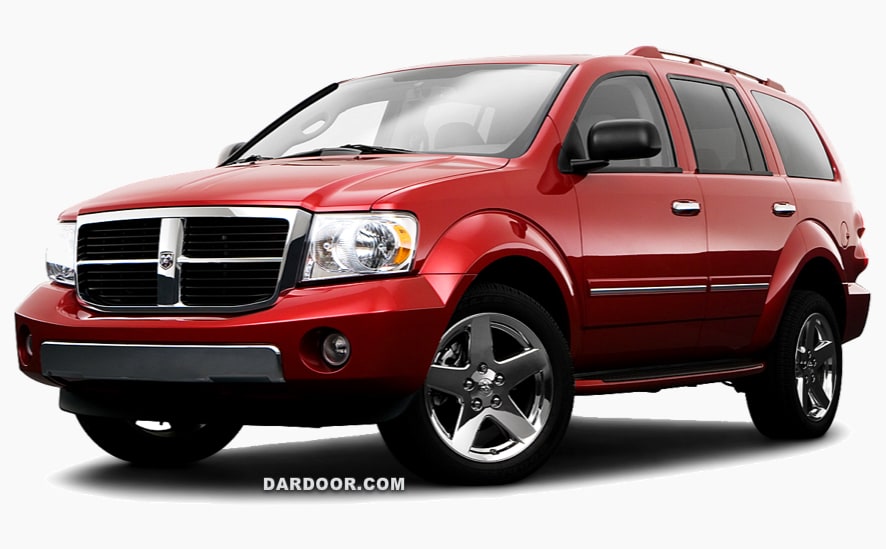
Get the official OEM workshop document for the 2004-2006 Dodge Durango, covering 3.7L, 4.7L, and 5.7L engines, complete with wiring diagrams in a user-friendly PDF format.
2004-2006 Dodge Durango Repair Manual
$16.90
Original OEM Workshop Manual: 2004-2006 Dodge Durango
Get the official OEM workshop document for the 2004-2006 Dodge Durango, covering 3.7L, 4.7L, and 5.7L engines, complete with wiring diagrams in a user-friendly PDF format.
| File Format | |
| File Language | English |
| You’ll Get | 142.9 MB |
| Page Count | 6,661 |
| Wiring Diagram | Included |
| Delivery Method | Instant Download |
Equip yourself with the tools and information to keep your Dodge Durango in optimal condition. Download your copy today!
Key Features:
- Comprehensive Coverage: Includes detailed service, repair, and maintenance procedures for all components of the Dodge Durango.
- Engines Covered:
- 3.7L V6
- 4.7L V8
- 5.7L V8 HEMI
- Wiring Diagrams: Detailed electrical schematics for troubleshooting and repairs.
- Professional-Grade Information: The same manual Dodge dealership technicians use for accurate diagnostics and repairs.
- User-Friendly PDF Format: Easy to navigate and accessible for both professional mechanics and DIY enthusiasts.
This manual includes the procedures for maintenance, disassembling, reassembling, inspection, and adjustment of components and diagnostics for the guidance of experienced mechanics. Please use this manual thoroughly to ensure complete repair work to keep your vehicle in optimum condition. Please make sure to use Dodge OEM genuine spare parts.
Table of Contents : 2004-2006 Dodge Durango Repair Manual
SAMPLE PAGES
Important Note: Before purchasing this manual, please check whether your vehicle is subject to any active service recalls, as authorized dealerships may perform necessary repairs free of charge. When replacing parts, always use genuine OEM components to ensure safety, reliability, and long-term performance..
CAUTION: This manual provides detailed instructions for maintenance, disassembly, reassembly, component inspection, adjustment, and diagnostics—intended for use by experienced mechanics. Proper application of this guide will help ensure thorough repairs and maintain your vehicle in peak condition.
2004–2006 Dodge Durango: Comprehensive Buyer’s Guide
Overview
The 2004–2006 Dodge Durango is a body-on-frame, full-size SUV that offered three rows of seating and substantial towing capability. This generation represented a mid-cycle refresh of the second-generation Durango (2004–2009), featuring updated styling, improved interiors, and new powertrain options.
Generation: Second Generation (DN platform) Body Style: 4-door SUV Seating: 7-8 passengers (depending on configuration) Manufacturing: Newark Assembly Plant, Delaware
Technical Specifications
Engine Options
3.7L V6 (PowerTech)
- Displacement: 3.7L (226 ci)
- Configuration: V6, SOHC, 12-valve
- Horsepower: 210 hp @ 5,200 rpm
- Torque: 235 lb-ft @ 4,000 rpm
- Fuel Type: Regular unleaded
4.7L V8 (PowerTech)
- Displacement: 4.7L (287 ci)
- Configuration: V8, SOHC, 16-valve
- Horsepower: 230 hp @ 4,600 rpm
- Torque: 290 lb-ft @ 3,600 rpm
- Fuel Type: Regular unleaded
5.7L V8 HEMI
- Displacement: 5.7L (345 ci)
- Configuration: V8, OHV, 16-valve
- Horsepower: 335 hp @ 5,200 rpm
- Torque: 370 lb-ft @ 4,200 rpm
- Fuel Type: Regular unleaded (premium recommended)
- Features: Multi-Displacement System (MDS) cylinder deactivation
Transmission
- 4-speed automatic (all engines)
- 5-speed automatic (45RFE/545RFE, available with V8 engines)
Drivetrain
- Rear-wheel drive (RWD) standard
- Part-time 4WD available
- Full-time 4WD available (Quadra-Trac II)
Dimensions & Capacities
| Specification | Measurement |
|---|---|
| Length | 200.4 inches |
| Width | 71.5 inches |
| Height | 70.9-72.4 inches |
| Wheelbase | 119.0 inches |
| Curb Weight | 4,700-5,300 lbs |
| Towing Capacity | 6,200-8,950 lbs |
| Fuel Tank | 27 gallons |
| Cargo Volume | 17.5 cu ft (behind 3rd row) / 87.5 cu ft (seats folded) |
Fuel Economy (EPA Est.)
- 3.7L V6: 14-15 city / 19-20 highway mpg
- 4.7L V8: 13-14 city / 17-18 highway mpg
- 5.7L HEMI V8: 12-13 city / 17-18 highway mpg
Suspension
- Front: Independent, upper/lower A-arms, coil springs, stabilizer bar
- Rear: Live axle, leaf springs, stabilizer bar
Brakes
- Front: Ventilated disc
- Rear: Disc
- ABS standard
Top 10 Mechanical & Electrical Issues
1. Ball Joint Failure
Symptoms:
- Clunking noise when going over bumps
- Wandering or loose steering feel
- Uneven tire wear
- Vibration in steering wheel
Root Cause: The lower ball joints are a known weak point and wear prematurely due to inadequate lubrication and design issues, particularly on 4WD models.
Fix: Replace both lower ball joints (should be done in pairs). Alignment required after replacement.
Cost: $400-$800 (parts + labor)
2. Rear Differential Leak
Symptoms:
- Puddles of gear oil under rear axle
- Whining or howling noise from rear end
- Burning smell
- Low differential fluid level
Root Cause: Pinion seal and/or differential cover gasket deterioration due to age, heat cycles, and pressure buildup from restricted breather vent.
Fix: Replace pinion seal and/or cover gasket. Clean breather vent. Refill with proper gear oil.
Cost: $250-$500
3. Blend Door Actuator Failure (HVAC)
Symptoms:
- Clicking or tapping noise from dashboard
- Temperature control not working properly
- Air only blows hot or cold regardless of setting
- Airflow direction stuck in one position
Root Cause: Plastic gears inside the blend door actuator strip or break, preventing proper movement of temperature blend doors.
Fix: Replace faulty blend door actuator(s). Dashboard disassembly required for access.
Cost: $200-$600 (depending on which actuator and labor complexity)
4. Intake Manifold Gasket Leak (4.7L V8)
Symptoms:
- Coolant loss with no visible external leak
- White smoke from exhaust
- Engine overheating
- Rough idle or misfire
- Sweet smell from exhaust
Root Cause: The composite intake manifold gasket deteriorates over time from heat cycles, allowing coolant to leak into cylinders or oil passages.
Fix: Replace intake manifold gaskets. May require machining intake manifold surface if warped.
Cost: $600-$1,200
5. Transmission Solenoid Pack Failure
Symptoms:
- Harsh or delayed shifting
- Transmission slipping
- Check Engine Light with P0750-P0770 codes
- Stuck in limp mode (2nd or 3rd gear only)
Root Cause: Solenoid pack in valve body fails due to internal wear, contamination from degraded transmission fluid, or electrical failure.
Fix: Replace transmission solenoid pack and valve body. Flush transmission and replace fluid/filter.
Cost: $800-$1,500
6. Fuel Pump Failure
Symptoms:
- Engine cranks but won’t start
- Loss of power during acceleration
- Sputtering at high speeds
- Engine stalling
- Whining noise from fuel tank
Root Cause: Fuel pump motor wears out prematurely, often exacerbated by running vehicle with low fuel levels or contaminated fuel.
Fix: Replace fuel pump assembly (includes sending unit). Fuel tank must be dropped.
Cost: $500-$900
7. Exhaust Manifold Crack (V8 engines)
Symptoms:
- Loud ticking or tapping noise from engine, especially when cold
- Exhaust smell in cabin
- Loss of power
- Check Engine Light with exhaust leak codes
Root Cause: Cast iron exhaust manifolds crack due to thermal stress and expansion/contraction cycles, particularly common on driver’s side.
Fix: Replace cracked exhaust manifold(s) with updated design or aftermarket headers. Replace manifold bolts.
Cost: $600-$1,200 per side
8. Transfer Case Shift Motor Failure (4WD models)
Symptoms:
- Unable to shift between 2WD/4WD modes
- “Service 4WD System” message on dashboard
- Grinding noise when attempting to shift
- 4WD won’t engage or disengage
Root Cause: Electric shift motor on transfer case fails due to internal gear wear, corrosion, or circuit board failure.
Fix: Replace transfer case shift motor/encoder assembly.
Cost: $300-$600
9. Sway Bar Link Failure
Symptoms:
- Clunking or rattling noise over bumps
- Excessive body roll in turns
- Noise when turning steering wheel
- Vibration through steering
Root Cause: Sway bar end links wear out due to rubber bushing deterioration and ball joint wear from normal use and road conditions.
Fix: Replace sway bar end links (front and/or rear). Should be replaced in pairs.
Cost: $150-$350
10. Alternator Failure
Symptoms:
- Battery warning light illuminated
- Dimming headlights/interior lights
- Electrical accessories malfunctioning
- Battery keeps dying
- Whining or grinding noise from alternator
Root Cause: Voltage regulator failure, worn brushes, or bearing failure in alternator, often accelerated by heat and vibration.
Fix: Replace alternator. Test battery and charging system. Inspect belt condition.
Cost: $300-$600
Top 5 Competitors (2004–2006)
1. Ford Explorer (2002–2005)
- Engines: 4.0L V6 (210 hp), 4.6L V8 (239 hp)
- Towing: Up to 7,160 lbs
- Key Advantage: More refined ride, better interior
- Key Disadvantage: Lower towing capacity than HEMI Durango
2. Chevrolet TrailBlazer (2002–2009)
- Engines: 4.2L I6 (291 hp), 5.3L V8 (300 hp), 6.0L V8 SS (395 hp)
- Towing: Up to 7,700 lbs
- Key Advantage: Strong I6 engine, available SS performance model
- Key Disadvantage: Smaller third row, less cargo space
3. Toyota 4Runner (2003–2009)
- Engines: 4.0L V6 (245-270 hp), 4.7L V8 (235-260 hp)
- Towing: Up to 7,300 lbs
- Key Advantage: Superior reliability, better resale value, strong off-road capability
- Key Disadvantage: Higher price, less powerful than HEMI
4. Nissan Pathfinder (2005–2012)
- Engine: 4.0L V6 (266 hp)
- Towing: Up to 6,000 lbs
- Key Advantage: Better fuel economy, more car-like handling
- Key Disadvantage: Lower towing capacity, no V8 option
5. GMC Envoy (2002–2009)
- Engines: 4.2L I6 (291 hp), 5.3L V8 (300 hp)
- Towing: Up to 7,700 lbs
- Key Advantage: Upscale interior, strong inline-6 engine
- Key Disadvantage: Similar reliability concerns to TrailBlazer
Top 10 Recalls, Advisories & TSB Highlights
Recalls
1. Recall 04V-553 (November 2004)
- Issue: Rear axle pinion nut may not have been properly torqued
- Risk: Axle shaft could separate, causing loss of vehicle control
- Fix: Inspect and properly torque pinion nut
2. Recall 05V-152 (April 2005)
- Issue: Fuel tank may crack at filler neck weld
- Risk: Fuel leak, fire hazard
- Fix: Replace fuel tank
3. Recall 08V-140 (March 2008)
- Issue: Front lower control arm ball joint may separate
- Risk: Loss of steering control, crash risk
- Fix: Replace lower control arms
4. Recall 07V-266 (June 2007)
- Issue: Brake lamp switch may fail
- Risk: Brake lights won’t work, no shift interlock function
- Fix: Replace brake lamp switch
5. Recall 05V-019 (January 2005)
- Issue: Rear seatback may not latch properly
- Risk: Seat could fold forward in crash
- Fix: Inspect and repair/replace latch mechanism
Technical Service Bulletins (TSBs)
6. TSB 02-006-05 (Front Suspension Noise)
- Issue: Clunking from front suspension over bumps
- Solution: Replace upper control arm bushings with revised parts
7. TSB 18-065-08 (HVAC Clicking Noise)
- Issue: Clicking or tapping noise from HVAC system
- Solution: Replace blend door actuator with updated part
8. TSB 21-002-05 (Rear Axle Noise)
- Issue: Whining or growling from rear differential
- Solution: Replace rear differential with updated design
9. TSB 08-034-06 (MIL Illumination – Evaporative System)
- Issue: Check Engine Light with P0455/P0456 (large/small EVAP leak)
- Solution: Replace fuel filler cap or inspect EVAP canister/lines
10. TSB 18-001-07 (A/C Odor)
- Issue: Musty smell from A/C vents
- Solution: Clean evaporator with anti-microbial treatment, replace cabin air filter
Maintenance Schedule
Every 3,000–5,000 Miles
- Engine oil and filter change (3,000 for severe duty, 5,000 normal)
- Tire rotation
- Inspect brake pads/rotors
Every 15,000 Miles
- Replace cabin air filter (if equipped)
- Inspect steering/suspension components
- Lubricate chassis components
Every 30,000 Miles
- Replace engine air filter
- Replace spark plugs (V6)
- Inspect drive belts
- Flush brake fluid
- Differential fluid change (4WD front, all rear)
Every 50,000 Miles
- Replace spark plugs (V8)
- Transmission fluid and filter change
- Transfer case fluid change (4WD)
Every 60,000 Miles
- Replace coolant
- Replace PCV valve
- Inspect fuel system
Every 100,000 Miles
- Replace timing chain components (inspect tensioners)
- Replace water pump (preventive)
- Inspect/replace ball joints and tie rod ends
As Needed
- Battery testing (every 3 years)
- Serpentine belt replacement (every 60,000-100,000 miles or if cracked)
- Brake pads/rotors (typically 30,000-50,000 miles)
10 FAQs for Buyers
Q1: Is the 5.7L HEMI worth the extra cost over the 4.7L V8?
A: If you need maximum towing capacity (8,950 lbs vs. 7,400 lbs) or want significantly more power, yes. The HEMI provides much better acceleration and passing power. However, fuel economy is only marginally worse, and the MDS cylinder deactivation helps on highway cruising. Maintenance costs are similar. For occasional towing under 6,000 lbs, the 4.7L is adequate and more affordable.
Q2: Which is more reliable: 2WD or 4WD models?
A: 2WD models are generally more reliable simply because they have fewer components to fail (no transfer case, front differential, or shift motor issues). However, 4WD Durangos are still reasonably reliable if properly maintained. The part-time 4WD system is simpler and more durable than Quadra-Trac II full-time AWD.
Q3: What are the most expensive repairs to budget for?
A: Transmission replacement/rebuild ($2,500-$4,000), rear differential rebuild ($1,200-$2,000), ball joint replacement on all four corners ($800-$1,500), and HVAC blend door actuators requiring dash removal ($600-$1,000). Budget $1,000-$2,000 annually for unexpected repairs on higher-mileage examples.
Q4: How many miles can these engines reliably achieve?
A: With proper maintenance, the 4.7L V8 and 5.7L HEMI can easily reach 200,000+ miles. The 3.7L V6 is also durable but less common. Key is regular oil changes, cooling system maintenance, and addressing issues promptly. Transmissions are the weak link—expect rebuilds around 150,000-180,000 miles.
Q5: Are parts expensive and hard to find?
A: No. As a popular Chrysler/Dodge platform, parts are widely available and reasonably priced. Aftermarket support is excellent. Many components are shared with the Dakota pickup, Ram 1500, and Jeep Grand Cherokee, keeping costs down. Expect to pay $500-$1,500 annually for routine maintenance and minor repairs.
Q6: What’s the best model year: 2004, 2005, or 2006?
A: 2006 is generally preferred as it received minor refinements and had most early production issues resolved. However, all three years are mechanically similar. Focus on vehicle history, maintenance records, and condition rather than specific model year. Avoid early 2004 models from the first few months of production.
Q7: Common rust areas to inspect?
A: Frame rails (especially near rear suspension mounts), rocker panels, rear wheel wells, tailgate lower edge, and exhaust system. Durrangos from rust-belt states are particularly susceptible. Inspect undercarriage thoroughly with flashlight—surface rust is normal, but flaking or perforated metal is a deal-breaker.
Q8: Is the third row usable for adults?
A: The third row is best suited for children or short trips. Legroom and headroom are tight for adults over 5’8″. Access is awkward via second-row fold-and-tumble mechanism. If you regularly need adult seating for 7-8, consider a full-size SUV like Suburban/Expedition or minivan instead.
Q9: What should I look for during a test drive?
A: Listen for front suspension clunking (ball joints), rear differential whining, transmission harsh shifts or slipping, HVAC clicking noises, and exhaust manifold ticking. Test 4WD engagement (if equipped). Check for smooth braking without pulsation. Verify all electrical accessories work. Watch for overheating on temperature gauge.
Q10: Are these good for towing long-distance?
A: Yes, particularly HEMI models. The Durango was designed for towing with adequate cooling, transmission coolers, and sturdy frame. The 5.7L HEMI provides excellent power reserves. However, fuel economy drops to 8-12 mpg when towing heavy loads. Ensure transmission has been serviced regularly and add auxiliary transmission cooler for heavy towing.
Final Buyer Recommendations
✅ BUY IF:
- You need 7-passenger seating with robust towing capability (6,000+ lbs)
- You want V8 power at an affordable price point
- You prefer traditional body-on-frame SUV construction
- You’re comfortable with DIY maintenance or have trusted mechanic
- You find well-maintained example with complete service records
- You primarily drive in conditions where 4WD is genuinely useful
❌ AVOID IF:
- You prioritize fuel economy over capability
- You need a truly reliable daily driver with minimal repair budget
- You require adult-sized third-row seating regularly
- You drive primarily in urban/suburban environments (consider car-based crossover)
- You find examples with 150,000+ miles without transmission service records
- You’re looking at severely rusted examples from salt-belt states
🎯 Sweet Spot Configuration:
2006 Durango SLT 4WD
- 5.7L HEMI V8 with MDS
- Part-time 4WD (more reliable than Quadra-Trac II)
- Tow package with transmission cooler
- Power driver seat, leather interior
- Premium audio system
- 75,000-125,000 miles
- Complete maintenance history
- Rust-free southern/western vehicle
- One or two owner
- Target Price: $6,000-$10,000 (depending on condition/mileage)
🔍 Pre-Purchase Inspection Priorities:
- Undercarriage inspection for rust, frame damage, leaks
- Ball joints and suspension components (jack up and check for play)
- Transmission fluid condition (should be red/pink, not brown/burnt)
- Differential service history and fluid condition
- Compression test on all cylinders
- Scan for diagnostic codes (even if Check Engine Light is off)
- Cooling system pressure test (intake manifold gasket leak check)
- 4WD engagement test on all transfer case settings
- HVAC function test (all temperature settings, modes, zones)
- Brake inspection including parking brake function
💡 Ownership Tips:
- Join Durango forums (DurangoOwners.net, DodgeDurango.net) for troubleshooting and DIY guides
- Budget $100-150/month for maintenance and repairs on 100K+ mile examples
- Change transmission fluid every 50K regardless of “lifetime” claims
- Address suspension noises immediately before ball joint failure causes tire/alignment damage
- Use Top Tier gasoline to minimize fuel system deposits
- Flush coolant every 3 years to prevent intake manifold gasket failure
- Consider aftermarket warranty if purchasing high-mileage example (100K+)
Our Final Verdict
The 2004–2006 Dodge Durango offers exceptional value for buyers needing a capable, V8-powered SUV with three-row seating and serious towing ability. The 5.7L HEMI provides muscle-car performance in an SUV package at bargain prices. However, reliability is below average compared to Toyota/Lexus competitors, and fuel economy is poor.
These are best suited for buyers who understand they’re purchasing a 15-20-year-old American SUV with known issues but also proven durability when properly maintained. With realistic expectations and diligent maintenance, a well-chosen Durango can provide years of reliable, capable service at minimal purchase cost.
Overall Rating: 7/10 — Strong capability and value offset by reliability concerns and fuel costs.
Related products
-
2007 Dodge RAM Repair Manual
$16.90 Add to cart -
2003 Dodge RAM Repair Manual
$14.90 Add to cart -
2015-2018 Dodge Charger Repair Manual
$35.90 Add to cart -
Download 2005-2006 Dodge Grand Caravan Repair Manual
$14.90 Add to cart -
2008 Dodge RAM Truck Repair Manual
$16.90 Add to cart -
2015-2016 Dodge Challenger Repair Manual
$16.90 Add to cart -
2011-2016 Dodge Durango Repair Manual
$24.90 Add to cart -
2011-2014 Dodge Challenger Repair Manual
$16.90 Add to cart