

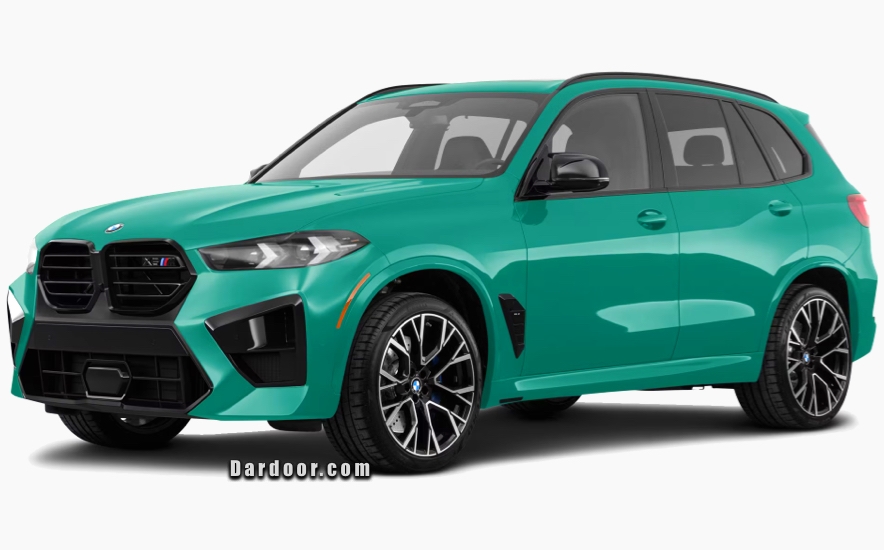
Get the official OEM service and repair manual for the 2020–2024 BMW X5 (G05) in a convenient, easy-to-navigate PDF format.
2020-2024 BMW X5 Repair Manual
$39.00
Original OEM Workshop Manual for 2020–2024 BMW X5 (G05) – PDF Download
Get the official OEM service and repair manual for the 2020–2024 BMW X5 (G05) in a convenient, easy-to-navigate PDF format. This is the same professional-grade manual used by BMW dealership technicians, offering factory-approved procedures for diagnostics, repairs, maintenance, and troubleshooting.
| File Format | |
| File Language | English |
| You’ll Get | 265.7 MB |
| Page Count | 22,755 |
| Delivery Method | Instant Download |
📥 Download the official OEM workshop manual today and perform professional-grade repairs with ease.
Key Features:
- ✅ Complete OEM Coverage – Engine, transmission, drivetrain, suspension, brakes, steering, HVAC, and more
- ✅ Step-by-Step Repair Procedures – From routine maintenance to complex diagnostics
- ✅ Fully Searchable & Printable – Easily find and print the sections you need
- ✅ Genuine Dealer Information – Exact same documentation used at BMW service centers
Vehicle Details:
- Make: BMW
- Model: X5
- Chassis Code: G05
- Years: 2020–2024
💡 Why Choose This Manual?
- ✔ OEM Accuracy – No generic or third-party errors
- ✔ Perfect for DIY owners, professional technicians, and repair shops
- ✔ One-time purchase – No subscriptions or renewals required
- ✔ Access anywhere – Compatible with Windows, Mac, iOS, Android
Delivery Method: Instant PDF Download
Compatibility: Works on any device with a PDF reader
This manual provides detailed procedures for maintenance, disassembly, reassembly, component inspection, adjustment, and diagnostics, serving as a guide for experienced mechanics. Review and utilize this manual thoroughly to ensure complete repair work and maintain your vehicle in top condition.
Important Note: Before purchasing this manual, check if your vehicle is subject to a BMW service recall, as your local dealer may repair it free of charge. When replacing parts during repairs, always use genuine BMW OEM spare parts.
Table of Contents : 2020-2024 BMW X5 Repair Manual
Sample Pages: 2020-2024 BMW X5 Repair Manual
CAUTION: This OEM service and workshop repair manual provides detailed procedures for maintenance, disassembly, reassembly, inspection, adjustment, and diagnostics. It is intended as a comprehensive guide for experienced mechanics. To ensure thorough and accurate repairs that maintain your vehicle’s optimal performance, please read and follow this manual carefully. When replacing parts during any repair work, always use genuine BMW parts to ensure quality, safety, and reliability.
2020–2024 BMW X5 (G05) Comprehensive Buyer’s Guide
Overview
The 2020–2024 BMW X5 (G05) represents the fourth generation of BMW’s flagship luxury midsize SUV. Built on BMW’s CLAR (Cluster Architecture) platform, the G05 offers a blend of performance, technology, and luxury. The model received a significant facelift (LCI – Life Cycle Impulse) in 2024 with updated styling, enhanced powertrains, and upgraded technology.
Technical Specifications
Engine Options:
2020–2023 (Pre-LCI):
- sDrive40i/xDrive40i: 3.0L turbocharged inline-6 (B58), 335 hp, 330 lb-ft torque
- xDrive50i (2019 only): 4.4L twin-turbo V8 (N63), 456 hp, 479 lb-ft torque
- M50i (2020–2023): 4.4L twin-turbo V8 (S63) with mild hybrid, 523 hp, 553 lb-ft torque
- xDrive45e (PHEV): 3.0L inline-6 + electric motor, 389 hp combined, 30 miles electric range
- X5 M/M Competition: 4.4L twin-turbo V8 (S63), 592/616 hp
2024+ (LCI):
- sDrive40i/xDrive40i: 3.0L inline-6 (B58) with 48V mild hybrid, 375 hp, 398 lb-ft torque (power increase)
- M60i: 4.4L twin-turbo V8 with 48V mild hybrid, 523 hp, 553 lb-ft torque
- xDrive50e (PHEV): 3.0L inline-6 + electric motor, 483 hp combined, 40 miles electric range (improved)
- X5 M Competition: 4.4L twin-turbo V8 (S68) with 48V mild hybrid, 617 hp, 553 lb-ft torque
Transmission:
- 8-speed automatic (Steptronic) across all models
Drivetrain:
- sDrive40i: Rear-wheel drive (US only)
- All others: xDrive all-wheel drive
Dimensions:
- Length: 194.3 inches
- Width: 78.9 inches
- Height: 69.1 inches
- Wheelbase: 117.1 inches
- Cargo capacity: 33.9 cu ft (seats up), 72.3 cu ft (seats down)
Performance:
- 0-60 mph: 4.1 seconds (M60i), 3.7 seconds (X5 M Competition)
- Towing capacity: Up to 7,200 lbs
- Fuel economy (xDrive40i): 21/26 mpg (city/highway)
Top 10 Mechanical & Electrical Issues
1. Air Suspension Failure
Symptoms: Uneven ride height, clunking over bumps, warning messages like “Check Rear Axle Level,” sagging or drooping, poor handling
Root Cause: Air compressor failure, leaking air springs/struts, faulty air suspension control module (common after 60,000–80,000 miles)
Fix: Replace air struts, air compressor, or control module; inspect air lines for leaks
Cost: $2,000–$4,500 (both rear air struts + compressor)
2. iDrive Software & Connectivity Issues
Symptoms: iDrive system freezing, random reboots, Apple CarPlay/Android Auto disconnecting, inability to connect iPhone, unresponsive menus
Root Cause: Software bugs (especially early 2019–2020 models), outdated firmware, faulty Bluetooth/telematics modules
Fix: Software updates via dealership or over-the-air (OTA), module reset, telematics control unit replacement
Cost: Free (under warranty or software update), $500–$1,500 (module replacement)
3. High-Voltage Battery Fire Risk (PHEV Models)
Symptoms: Battery warning lights, unusual battery behavior, potential fire risk
Root Cause: Manufacturing defect in Samsung high-voltage batteries (2020 xDrive45e models), debris inside battery cells causing short circuits
Fix: Battery replacement under recall (BMW Recall 20V-601)
Cost: Free (covered under recall)
4. V8 Engine Excessive Oil Consumption
Symptoms: Low oil warning lights, need to add oil between service intervals (1+ quart per 1,000 miles), blue smoke from exhaust
Root Cause: “Hot vee” turbocharger configuration on N63/S63 V8 engines causes high oil consumption, potential ring/seal wear
Fix: Monitor oil levels closely, top up as needed; potential engine rebuild or replacement in severe cases
Cost: $200–$500/year for oil top-ups; $8,000–$15,000+ (engine rebuild/replacement)
5. Parking Brake Module Failure
Symptoms: Parking brake warning light illuminates while driving, parking brake won’t engage/release, check control messages
Root Cause: Faulty parking brake control module, actuator failure
Fix: Replace parking brake module/actuator
Cost: $800–$1,500
6. Transmission Slipping/Jerking
Symptoms: Delayed gear engagement, harsh or rough shifts, slipping sensation, vehicle “stuttering” around 10 mph in traffic
Root Cause: Worn transmission fluid, software calibration issues, mechatronic unit failure, mechanical wear
Fix: Transmission fluid change, software update, mechatronic unit replacement, or transmission rebuild
Cost: $300–$600 (fluid change), $2,000–$4,000 (mechatronic unit), $5,000–$8,000 (transmission rebuild)
7. Central Locking/Key Fob Issues
Symptoms: Doors fail to lock/unlock, key fob not responding, inconsistent operation, “Safe Share Detected” warning
Root Cause: Faulty door actuators, central locking module failure, electrical wiring problems
Fix: Replace door actuators, central locking module, or repair wiring
Cost: $400–$800 per door actuator, $800–$1,200 (central module)
8. Over-the-Air (OTA) Software Update Failures
Symptoms: OTA updates download but won’t install, update process stalls, software shows as incomplete
Root Cause: Software bugs, communication issues between app and vehicle, improper update protocol
Fix: Manual software installation at dealership
Cost: Free (under warranty), $150–$300 (out of warranty)
9. Dual Storage System (DSS) Battery Failure
Symptoms: “Replace Battery” warning, difficulty starting, electrical system malfunctions, battery draining when parked
Root Cause: Software error causing microcontroller reset in power management, parasitic electrical drain, 12V battery failure
Fix: Software update, dual storage battery replacement
Cost: $500–$1,200 (battery replacement + programming)
10. DPF Clogging (Diesel Models – Non-US)
Symptoms: Loss of power, check engine light, DPF regeneration required frequently, poor fuel economy
Root Cause: Short trips/urban driving prevents proper DPF regeneration, low-quality diesel fuel, carbon buildup
Fix: Forced DPF regeneration, DPF cleaning, or replacement; drive on highway regularly
Cost: $200–$500 (regeneration/cleaning), $2,000–$3,500 (DPF replacement)
Top 5 Competitors
1. Mercedes-Benz GLE
- Starting Price: ~$62,000 (lower than X5)
- Strengths: More luxurious interior, smoother ride, available third row, AMG performance variants
- Weaknesses: Less engaging to drive, touch-sensitive controls can be frustrating
2. Audi Q7
- Starting Price: ~$60,000 ($6,000 cheaper than X5)
- Strengths: Standard third-row seating, more interior space, Quattro AWD, six ISOFIX points
- Weaknesses: No physical HVAC controls (touch-only), less sporty handling
3. Porsche Cayenne
- Starting Price: ~$88,800 (significantly more expensive)
- Strengths: Best-in-class driving dynamics, superior handling, extensive customization options
- Weaknesses: Expensive (even base models), options can push price over $100,000+
4. Genesis GV80
- Starting Price: ~$58,000 ($8,000+ cheaper)
- Strengths: Exceptional value, premium interior, strong warranty (10-year/100,000-mile powertrain)
- Weaknesses: Less brand prestige, smaller dealer network
5. Range Rover Sport
- Starting Price: ~$83,000
- Strengths: Superior off-road capability, luxurious interior, commanding presence
- Weaknesses: Questionable reliability, expensive maintenance, higher ownership costs
Top 10 Recalls, Advisories & TSB Highlights
1. High-Pressure Fuel Pump (Recall 19V-513)
- Models Affected: 2019–2020 X5 with N63/S63 V8 engines
- Issue: Incorrectly tightened mounting screws can cause fuel line leaks
- Fix: Replace high-pressure fuel pumps and mounting screws
2. High-Voltage Battery Fire Risk (Recall 20V-601)
- Models Affected: 2020 xDrive45e PHEV
- Issue: Manufacturing debris in Samsung batteries can cause short circuits and fire
- Fix: High-voltage battery replacement
3. Sunroof Control Unit (Recall – 2022 models)
- Models Affected: 2019–2022 X5
- Issue: Sunroof may close without key fob present, potential injury risk
- Fix: Software update to roof function control unit
4. Emissions Recall – Transmission Sleep Mode
- Models Affected: 2021–2023 X5 (produced June 2020–December 2022)
- Issue: Transmission may not enter “sleep mode” when vehicle is off, emissions issue
- Fix: Software update
5. TSB: Coolant Leak from Low-Temperature Cooling Circuit
- Models Affected: N63R V8 engines
- Issue: Coolant leaking from expansion tank
- Fix: Replace expansion tank
6. TSB: Tailgate Spindle Drive Failure
- Issue: Faulty tailgate spindle drives can fail over time
- Fix: Replace tailgate spindle drive mechanism
7. TSB: Steering Column Noise
- Issue: Thump, groan, or creaking sounds when adjusting steering column
- Fix: Lubrication, replacement of steering column components
8. TSB: Rear Cross-Traffic Alert Malfunction
- Issue: Rear cross-traffic warning sensors stop working
- Fix: Sensor replacement, software calibration
9. TSB: Condensation in Taillights
- Issue: Moisture buildup inside taillight assemblies
- Fix: Taillight seal replacement or entire assembly replacement
10. TSB: DSCi Hydraulic Valve Fault
- Issue: Faulty hydraulic valve causes sporadic red check control messages
- Fix: DSC control module replacement
Maintenance Schedule
Every 10,000 Miles or 12 Months:
- Engine oil and oil filter change
- Multi-point inspection (suspension, belts, hoses, brakes, steering linkage)
- Tire rotation
- Check fluid levels (coolant, brake, washer)
30,000 Miles:
- All 10,000-mile services
- Replace cabin air filter
- Inspect brake pads/rotors
- Check battery condition
60,000 Miles:
- All previous services
- Replace spark plugs
- Replace engine air filter
- Replace fuel filter
- Inspect parking brake lining
- Inspect drive belts
90,000 Miles:
- All previous services
- Replace transmission fluid
- Check power steering fluid
- Inspect/replace hoses and connections
- Replace brake pads/rotors (if needed)
BMW Ultimate Care: Free scheduled maintenance for first 3 years/36,000 miles (2017+ models)
Annual Maintenance Cost: Approximately $1,900–$3,900/year
10 FAQs for Buyers
Q1: Is the BMW X5 G05 reliable?
The G05 is generally more reliable than previous generations, especially 2021+ models. However, early 2019–2020 models had more software/electrical issues. Expect higher-than-average maintenance costs.
Q2: Should I buy the xDrive40i or M50i/M60i?
The xDrive40i offers the best balance of performance, fuel economy, and reliability. The V8 models (M50i/M60i) are powerful but consume excessive oil and require premium fuel. Choose V8 only if you prioritize performance over running costs.
Q3: Is the xDrive45e/xDrive50e PHEV worth it?
If you have a short commute (under 30–40 miles) and can charge daily, the PHEV offers excellent efficiency. The 2024+ xDrive50e with 40 miles of range and 483 hp is significantly improved. Be aware of the 2020 battery recall.
Q4: What are the biggest problems with the G05 X5?
Air suspension failures, iDrive software glitches, V8 oil consumption, parking brake module issues, and OTA update failures are the most common complaints.
Q5: Does the X5 have a third row?
No. BMW discontinued the third-row option with the G05 generation. Consider the larger BMW X7 or Audi Q7 if you need three rows.
Q6: What’s the difference between Pre-LCI (2020–2023) and LCI (2024+)?
The 2024 LCI refresh brought updated exterior styling, more power (375 hp for 40i, 483 hp for PHEV), 48V mild-hybrid on all engines, iDrive 8.5, and improved PHEV range. LCI models also have fewer early-production bugs.
Q7: How expensive is X5 maintenance?
Expect $19,000+ over 10 years. Oil changes cost $300–$400, brake jobs $800–$1,500, and air suspension repairs $2,000–$4,500. Extended warranty strongly recommended.
Q8: Should I get the adaptive air suspension?
Air suspension provides superior ride comfort and adjustability but can be expensive to repair ($2,000–$4,500). Steel springs with adaptive dampers are more reliable but less comfortable.
Q9: Are 2019 X5s safe to buy?
Early 2019 production models (especially December 2018 builds) had more issues with software, steering column, control arms, and sunroof seals. Target mid-2020 or later production for better reliability.
Q10: What mileage should I avoid?
Air suspension issues typically appear around 60,000–80,000 miles. Budget for air suspension, spark plugs, and transmission service around this mileage. Below 50,000 miles is ideal for used purchases.
Final Buyer Recommendations
Best Model Years to Buy:
- 2021–2023 (Pre-LCI): Software issues resolved, mature production, good value
- 2024+ (LCI): Most advanced, better powertrains, improved PHEV, but higher price
Best Engine Choice:
- Daily driver: xDrive40i (335 hp 2020–2023, 375 hp 2024+) – reliable B58 engine, best fuel economy
- Performance enthusiast: M60i or M Competition – if you can afford fuel/oil costs
- Eco-conscious: xDrive50e PHEV (2024+) – 40 miles electric, 483 hp combined
What to Avoid:
- Early 2019 models (December 2018–June 2019 production)
- 2020 xDrive45e PHEV (battery recall risk – ensure recall completed)
- High-mileage (70,000+ miles) models with air suspension (expensive repairs looming)
- V8 models without extended warranty (oil consumption, expensive repairs)
Pre-Purchase Checklist:
✅ Run full diagnostic scan with ISTA (BMW’s official tool) – reveals hidden faults
✅ Check recall completion status (especially 20V-601 for PHEV, 19V-513 for V8)
✅ Verify all software updates installed
✅ Inspect air suspension for leaks, uneven ride height
✅ Test iDrive, Apple CarPlay, all electronic functions
✅ Check service history (10,000-mile oil changes critical)
✅ Look for oil consumption records on V8 models
✅ Test parking brake operation
✅ Verify OTA update capability works
Extended Warranty:
Highly Recommended – especially for air suspension, electrical systems, and V8 engines. Look for coverage up to 100,000 miles.
Best Value:
2021–2022 xDrive40i (CPO) – Certified Pre-Owned with warranty, mature software, reliable B58 engine, lower insurance/fuel costs than V8.
Bottom Line:
The 2020–2024 BMW X5 G05 is a compelling luxury SUV with excellent performance, advanced technology, and strong driving dynamics. While more reliable than previous generations, it still requires diligent maintenance and has known issues with air suspension, software, and V8 oil consumption. Buyers should target 2021+ models, prioritize the xDrive40i for reliability, and strongly consider an extended warranty. The 2024 LCI refresh represents the most refined version with improved powertrains and technology.
| Brands | |
|---|---|
| File Format | |
| File Language | English |
| You'll Get | 265.7 MB |
| Page Count | 22,755 |
| Indexed | YES |
| Searchable & Printable | YES |
| Instant Download | YES |
| Permissions | All Permissions, No Password Protected |
Related products
-
2014-2020 BMW 4 Series Repair Manual
$26.90 Add to cart -

2010-2017 BMW X3 Series Repair Manual
$19.90 Add to cart -

2011-2016 BMW Z4 35is Repair Manual
$19.90 Add to cart -
2017-2022 BMW 5 Series G30 530e Repair Manual
$42.00 Add to cart -

2006-2013 Mini Cooper S Repair Manual
$14.90 Add to cart -
2019-2023 BMW 3 Series Repair Manual
$36.00 Add to cart -

2017-2020 BMW X2 Repair Manual
$36.00 Add to cart -

2014-2018 BMW X4 Repair Manual
$24.90 Add to cart