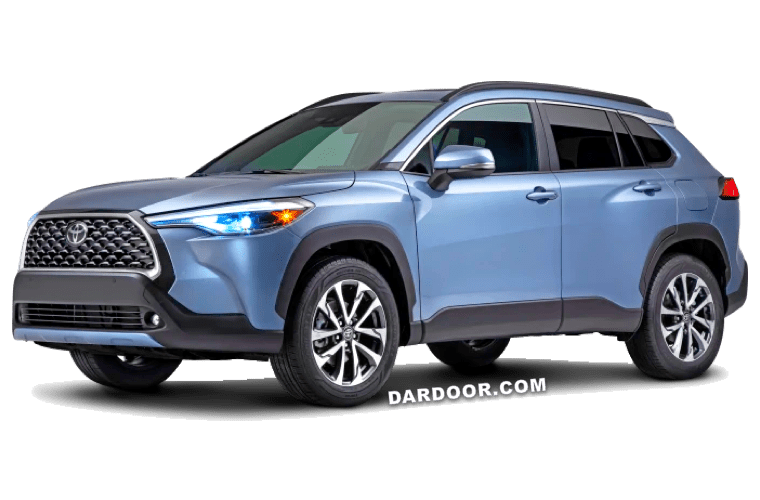
Get the original OEM electrical manual for the 2020-2022 Toyota Corolla Cross wiring diagram, (RHD & LHD), (Petrol and Hybrid), in a simple PDF format.
⚙️ Technical Specifications & Performance
- Platform: TNGA-C (shared with Corolla)
- Engine Options (market-dependent):
1.8L I4 petrol, 2.0L I4 petrol, 1.8L hybrid (petrol + electric motor) - Power Output: Approx. 138–169 hp (petrol), 120–140 hp system output (hybrid)
- Transmission: CVT / Direct-Shift CVT; some markets with 6-speed manual (limited)
- Drivetrain: FWD or AWD (Electronic on-demand for some trims)
- 0–100 km/h: ~8.5–11.5 seconds depending on engine and drivetrain
- Fuel Efficiency: ~6.0–7.5 L/100 km (petrol); ~4.5–5.5 L/100 km (hybrid, combined)
- Seating Capacity: 5 occupants
- Cargo Capacity: ~430–487 L (with rear seats up, depending on market)
🔧 Top 10 Common Mechanical Issues (Root Cause & Proposed Fix)
- CVT hesitation or rubber-band feeling
🔍 Root Cause: Normal CVT characteristics amplified by worn fluid or aggressive driving cycles.
🛠️ Fix: Perform CVT fluid drain and fill with correct Toyota CVT fluid; reprogram TCM if updated calibration is available. - Front brake noise or minor vibration
🔍 Root Cause: Pad glazing or light rotor run-out from repeated light braking.
🛠️ Fix: Resurface or replace front rotors; install high-quality pads and torque wheel nuts correctly. - Suspension clunk over speed bumps
🔍 Root Cause: Wear in stabilizer bar links or front strut top mounts.
🛠️ Fix: Inspect and replace stabilizer links and/or strut mounts; check torque of suspension fasteners. - Uneven tire wear (inside edges)
🔍 Root Cause: Aggressive factory alignment (toe/camber) combined with soft OE tires.
🛠️ Fix: Perform a 4-wheel alignment to a more conservative spec; rotate tires regularly and use higher-quality replacements. - Engine vibration at idle
🔍 Root Cause: Engine mount wear or carbon build-up affecting idle quality, especially on higher mileage units.
🛠️ Fix: Inspect and replace worn engine mounts; clean throttle body and intake where needed; check spark plugs. - Hybrid system fan noise (hybrid models)
🔍 Root Cause: Dust accumulation in the battery cooling fan and ducting.
🛠️ Fix: Clean hybrid battery cooling ducts and fan; ensure luggage area vents are unobstructed. - Rear axle squeaks
🔍 Root Cause: Bushings in the torsion beam (or multi-link, depending on market) drying out or wearing.
🛠️ Fix: Lubricate or replace worn bushings; inspect shock absorbers for leakage. - Steering pull to one side
🔍 Root Cause: Misalignment from pothole impacts and uneven tire pressures.
🛠️ Fix: Correct tire pressures, perform alignment, and check for bent rims or damaged control arms. - Slow engine warm-up in cold climates
🔍 Root Cause: Thermostat not closing fully or stuck partially open.
🛠️ Fix: Replace thermostat with OEM unit; ensure correct coolant mixture and bleed system properly. - Exhaust heat shield rattle
🔍 Root Cause: Loose or corroded heat shield bolts/clips.
🛠️ Fix: Tighten or replace hardware; add large washers or upgraded clamps where necessary.
💡 Top 10 Common Electrical Issues (Root Cause & Proposed Fix)
- Infotainment system freezing or lag
🔍 Root Cause: Software bugs or overloaded memory when using navigation and smartphone mirroring simultaneously.
🛠️ Fix: Perform head unit software/firmware update; reset to factory settings if necessary. - Bluetooth pairing or audio drop-outs
🔍 Root Cause: Compatibility issues with certain phones or outdated firmware.
🛠️ Fix: Update head unit software; delete and re-pair devices; ensure latest phone OS updates are installed. - Lane departure alert or PCS warning lights
🔍 Root Cause: Camera/radar sensor obstruction (dirt, snow, aftermarket accessories) or misalignment.
🛠️ Fix: Clean sensor areas; recalibrate camera/radar at dealer after windshield or bumper repairs. - Keyless entry intermittent
🔍 Root Cause: Weak key fob battery or RF interference.
🛠️ Fix: Replace fob battery; test with spare key; check for interference sources or BCM DTCs. - Automatic headlights not responding correctly
🔍 Root Cause: Dirty or faulty light sensor on the dashboard.
🛠️ Fix: Clean sensor area; replace the ambient light sensor if readings are out of spec. - Reverse camera flicker or black screen
🔍 Root Cause: Loose harness connections at the tailgate or moisture in the camera module.
🛠️ Fix: Inspect and secure connectors; replace camera if water intrusion is evident. - Power window auto-up/down not working
🔍 Root Cause: Loss of initialization after battery disconnect.
🛠️ Fix: Re-initialize window by fully closing and holding the switch for a few seconds (per owner’s manual). - Instrument cluster warning lights after jump-start
🔍 Root Cause: Low voltage event causing transient CAN errors.
🛠️ Fix: Clear codes, ensure battery is healthy, and test charging system; avoid improper jump-starting. - Heated seats not warming evenly (where fitted)
🔍 Root Cause: Partial open circuit in heating element.
🛠️ Fix: Test resistance of elements; replace seat heater pad as needed. - Parking sensors beeping constantly
🔍 Root Cause: Dirt/ice on sensor face or one faulty ultrasonic sensor.
🛠️ Fix: Clean sensors; scan for DTCs; replace defective sensor.
📊 Pros & Cons Comparison with Competitors
| Model | Pros 👍 | Cons 👎 |
|---|---|---|
| Toyota Corolla Cross | Excellent reliability reputation; Efficient petrol & hybrid options; Comfortable ride; Good safety package | Modest power; Not the quietest in class; Interior materials more functional than premium |
| Toyota RAV4 | More power; Larger cabin & cargo; Strong resale value | Higher price; Slightly thirstier; Larger footprint for city use |
| Honda HR-V | Flexible interior; Good fuel economy; Honda reliability | Less power; Cabin noise at highway speeds |
| Hyundai Kona | Distinctive styling; Strong turbo option; Long warranty | Tighter rear space; Smaller cargo area |
| Mazda CX-30 | Premium-feeling interior; Sporty handling; Refined ride | Rear space is tight; Higher trims can be pricey |
| Nissan Kicks | Very efficient; Affordable; Easy to park | No AWD; Lower power; Simpler interior |
🛠️ Maintenance Schedule
| Interval ⏱️ | Maintenance Task 🔧 |
|---|---|
| Every 8,000–10,000 km / 6–12 months | Engine oil & filter replacement; visual inspection of belts, hoses, and fluid levels |
| Every 20,000 km | Tire rotation; brake inspection; check steering & suspension |
| Every 30,000–40,000 km | Replace engine air filter; replace cabin/pollen filter |
| Every 60,000 km | Inspect spark plugs; replace if required (may be longer for iridium); inspect CVT fluid |
| Every 80,000–100,000 km | Replace brake fluid; replace coolant per Toyota schedule; inspect hybrid cooling system (hybrid models) |
| Every 100,000–120,000 km | Replace spark plugs (if not yet replaced); more thorough suspension and steering inspection; replace CVT fluid where specified |
⚠️ Recalls, Advisories & Safety Alerts
Note: The following are typical examples of issues and campaigns that may affect vehicles in this class and era. Always check official Toyota and local safety authority databases using the VIN for accurate recall information.
- Airbag control module software updates: Potential for incorrect crash detection requiring ECU reprogramming.
- Radar sensor alignment campaign: Pre-collision system performance affected after minor front impacts or bumper repairs.
- Fuel pump performance advisory: Certain fuel pump batches may cause hesitation or stalling, replaced as a preventive measure.
- Rear seat belt retractor inspection: Ensure proper locking function during rapid deceleration.
- Brake booster vacuum check: Reduced braking assistance in specific production batches under certain conditions.
- Parking brake cable or actuator inspection: Verification that the parking brake holds correctly on slopes.
- Hybrid inverter cooling (hybrid models): Campaigns to improve cooling or reprogram inverter protection logic.
- Instrument cluster software update: Occasional incorrect warning light illumination addressed via reflash.
- Trailer wiring harness accessory advisory: Check for proper integration to avoid lighting or ABS signals interference when towing.
- Rearview camera visibility check: Ensure image clarity and compliance with safety regulations.
🧾 Diagnostic Trouble Codes (DTC) Tables
💻 Engine Control Module (ECM)
| Code | Description |
|---|---|
| P0171 | System Too Lean (Bank 1) |
| P0300 | Random/Multiple Cylinder Misfire Detected |
| P0301 | Cylinder 1 Misfire Detected |
| P0302 | Cylinder 2 Misfire Detected |
| P0303 | Cylinder 3 Misfire Detected |
| P0304 | Cylinder 4 Misfire Detected |
| P0113 | Intake Air Temperature Sensor 1 Circuit High |
| P0128 | Coolant Thermostat (Coolant Temperature Below Regulating Temperature) |
| P0420 | Catalyst System Efficiency Below Threshold (Bank 1) |
| P0456 | EVAP System Small Leak Detected |
⚙️ Transmission Control Module (TCM)
| Code | Description |
|---|---|
| P0700 | Transmission Control System Malfunction (request from TCM) |
| P0717 | Input/Turbine Speed Sensor No Signal |
| P0720 | Output Speed Sensor Circuit |
| P0730 | Incorrect Gear Ratio |
| P0741 | TCC System Performance or Stuck Off |
| P0766 | Shift Solenoid D Performance or Stuck Off |
| P0796 | Pressure Control Solenoid C Performance or Stuck Off |
| P2714 | Pressure Control Solenoid D Stuck Off |
| P2757 | Torque Converter Clutch Pressure Control Solenoid Performance |
| P2810 | Shift Solenoid H Electrical |
🛑 ABS / ESC (Brake System)
| Code | Description |
|---|---|
| C0035 | Left Front Wheel Speed Sensor Circuit |
| C0040 | Right Front Wheel Speed Sensor Circuit |
| C0045 | Left Rear Wheel Speed Sensor Circuit |
| C0050 | Right Rear Wheel Speed Sensor Circuit |
| C0110 | ABS Pump Motor Circuit Malfunction |
| C0126 | Insufficient Brake Fluid or Vacuum |
| C1234 | Wheel Speed Correlation Fault |
| C1241 | Low Power Supply Voltage to ABS |
| C1336 | Zero-Point Calibration of Yaw/Acceleration Sensor Not Done |
| C1422 | Master Cylinder Pressure Sensor Malfunction |
🎈 SRS Airbag System
| Code | Description |
|---|---|
| B0101 | Open in Driver Airbag Squib Circuit |
| B0102 | Short to Battery in Driver Airbag Squib Circuit |
| B0103 | Short to Ground in Driver Airbag Squib Circuit |
| B0111 | Open in Passenger Airbag Squib Circuit |
| B0112 | Short to Battery in Passenger Airbag Squib Circuit |
| B0116 | Open in Side Airbag Squib (Front LH) Circuit |
| B0118 | Open in Side Airbag Squib (Front RH) Circuit |
| B0135 | Open in Curtain Shield Airbag LH Circuit |
| B0136 | Open in Curtain Shield Airbag RH Circuit |
| B1650 | Seat Belt Pretensioner LH Circuit Malfunction |
📡 Body Control / CAN Communication
| Code | Description |
|---|---|
| U0100 | Lost Communication with ECM/PCM |
| U0121 | Lost Communication with ABS/Brake System Control Module |
| U0140 | Lost Communication with Body Control Module (BCM) |
| U0155 | Lost Communication with Instrument Panel Cluster |
| U0230 | Lost Communication with Power Seat Control Module |
| U1110 | Lost Communication with EPS (Electric Power Steering) |
| U1120 | Lost Communication with Air Conditioning Control Module |
| U1130 | Lost Communication with Audio/Navigation Unit |
| U1145 | Invalid Data Received from ABS Module |
| U1180 | Lost Communication with Telematics/Communication Module |
✅ Final Verdict & Conclusion: The 2020–2022 Toyota Corolla Cross delivers exactly what many compact SUV buyers want: sensible space, strong fuel economy, and the long-term reliability associated with Toyota. While it isn’t the most powerful or luxurious option in its class, its efficient drivetrains, simple ergonomics, and solid safety credentials make it a smart, low-stress daily driver. For owners who prioritize dependability and running costs over excitement, the Corolla Cross is an excellent choice.