Key Features
Dealer-Level Accuracy
Same factory procedures and specs used by Hyundai technicians.
Searchable & Printable
Find sections quickly and print only the pages you need.
Download & Compatibility
Delivery: Instant digital PDF download
Compatibility: Windows, macOS, iOS, Android
This manual provides detailed instructions for maintenance, disassembly, reassembly, component inspection, adjustment, and diagnostics—intended for use by experienced mechanics. Proper application of this guide will help ensure thorough repairs and maintain your vehicle in peak condition.
Important Note: Before purchasing this manual, please check whether your vehicle is subject to any active service recalls, as authorized dealerships may perform necessary repairs free of charge. When replacing parts, always use genuine OEM components to ensure safety, reliability, and long-term performance.
Table of Contents : 2017 Hyundai Ioniq Repair Manual
1-General Information.
2-Engine Electrical System.
3-Emission Control System.
4-Engine Control+Fuel System.
5-Clutch System.
6-DCT System.
7-Driveshaft and axle.
8-Suspension System.
9-Steering System.
10-Restraint.
11-Brake System.
12-Body (Interior and Exterior).
13-Heating. Ventilation. Air Conditioning.
14-Hybrid Control System.
15-Hybrid Motor System.
SAMPLE PAGES
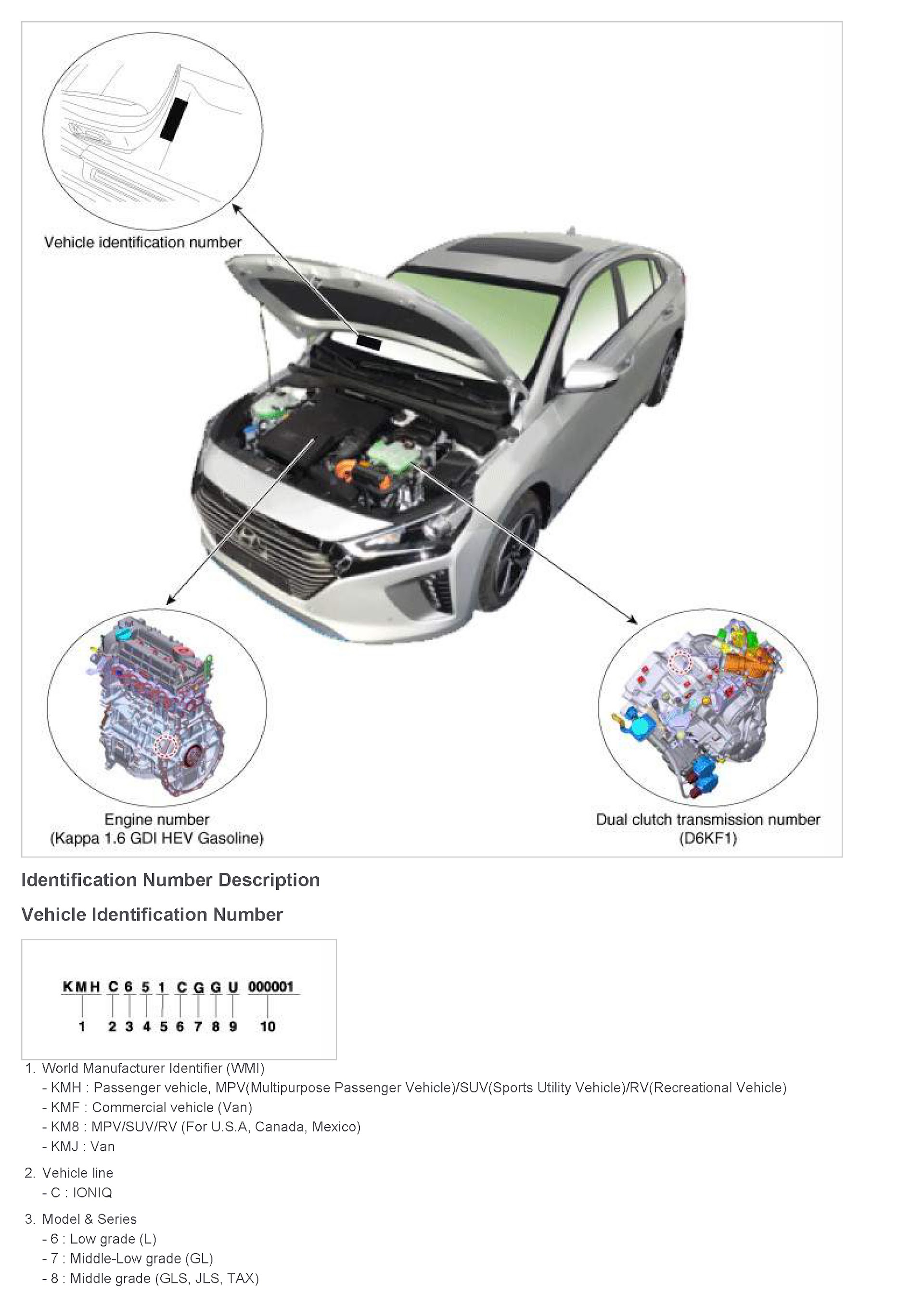
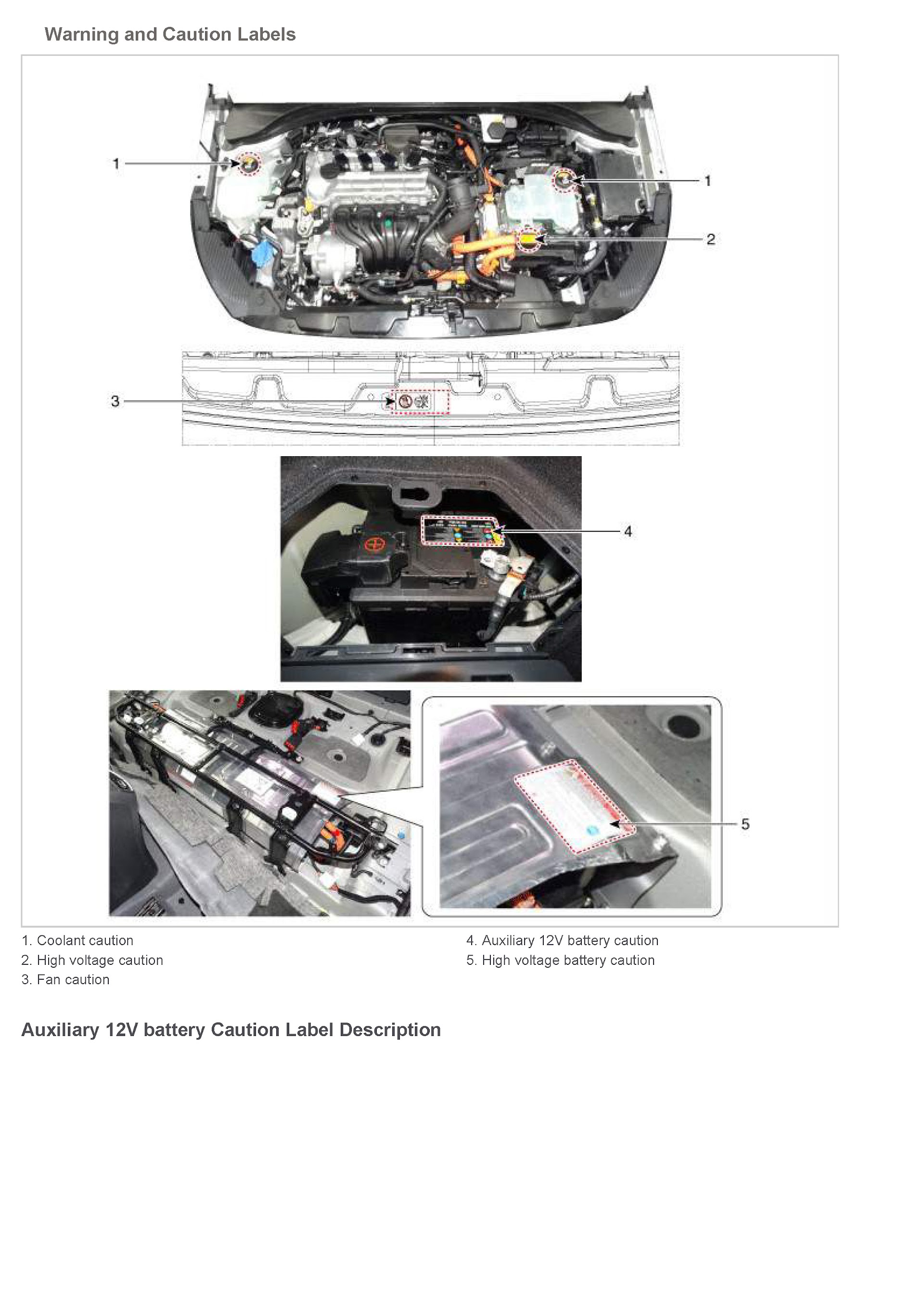
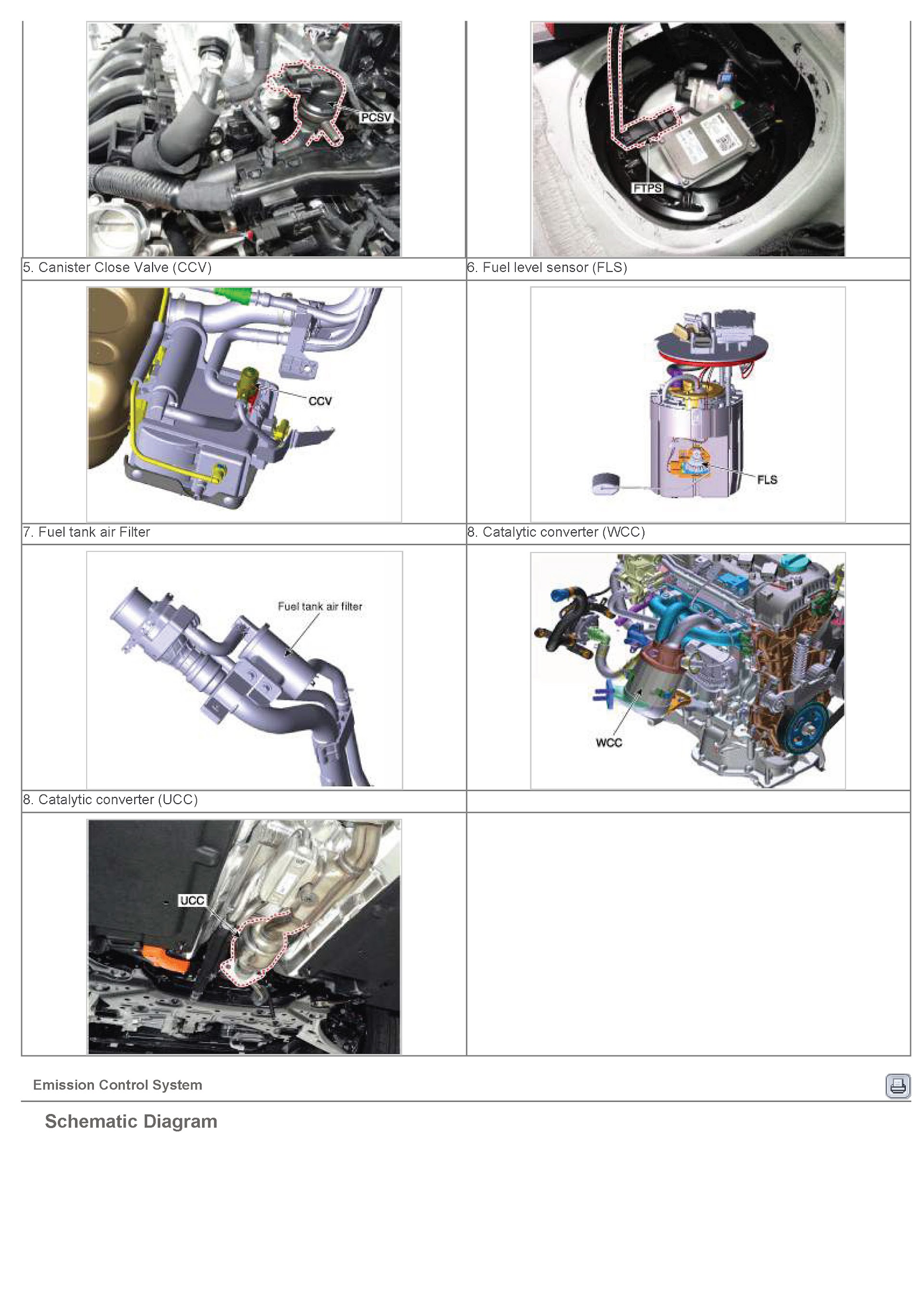
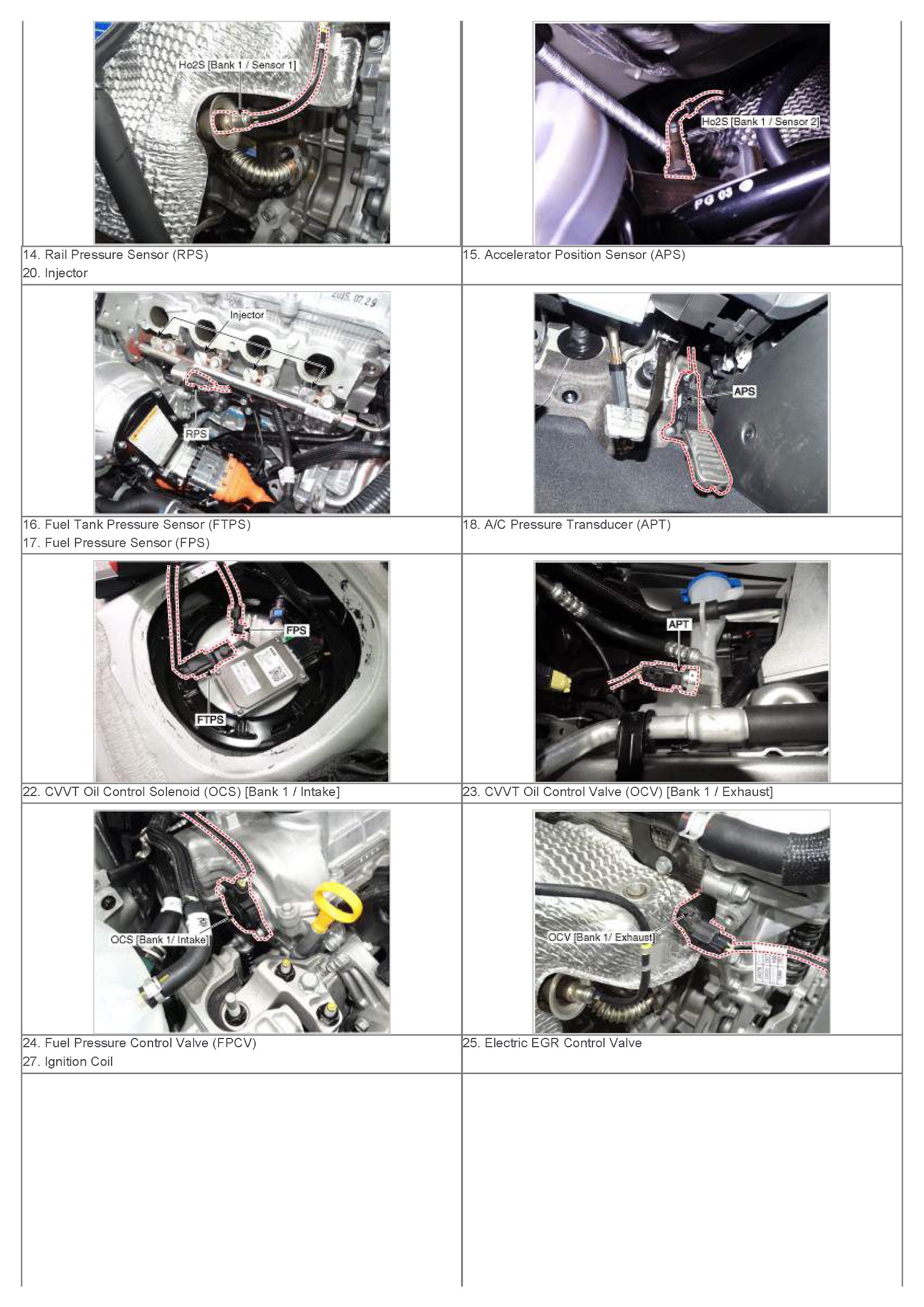
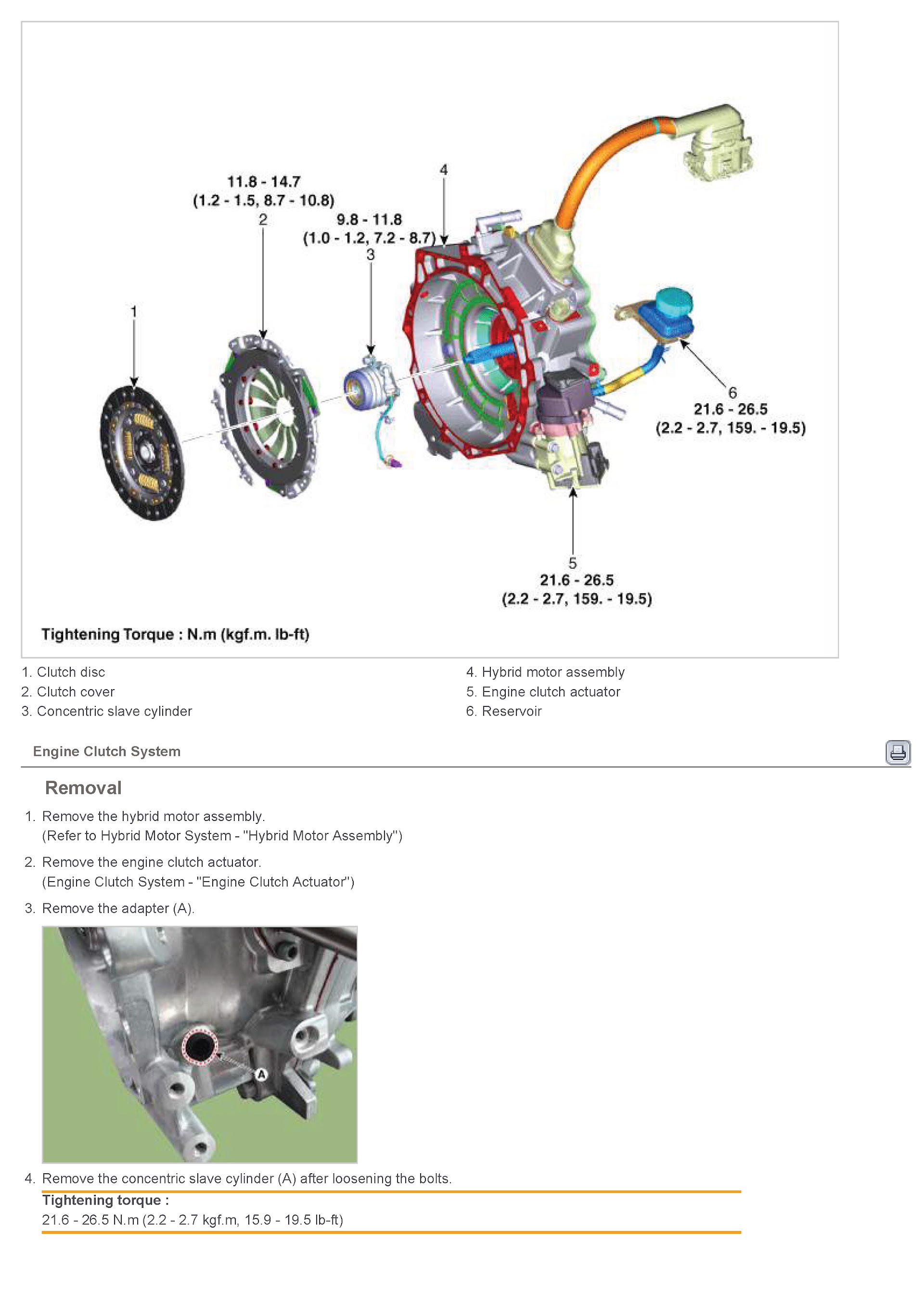
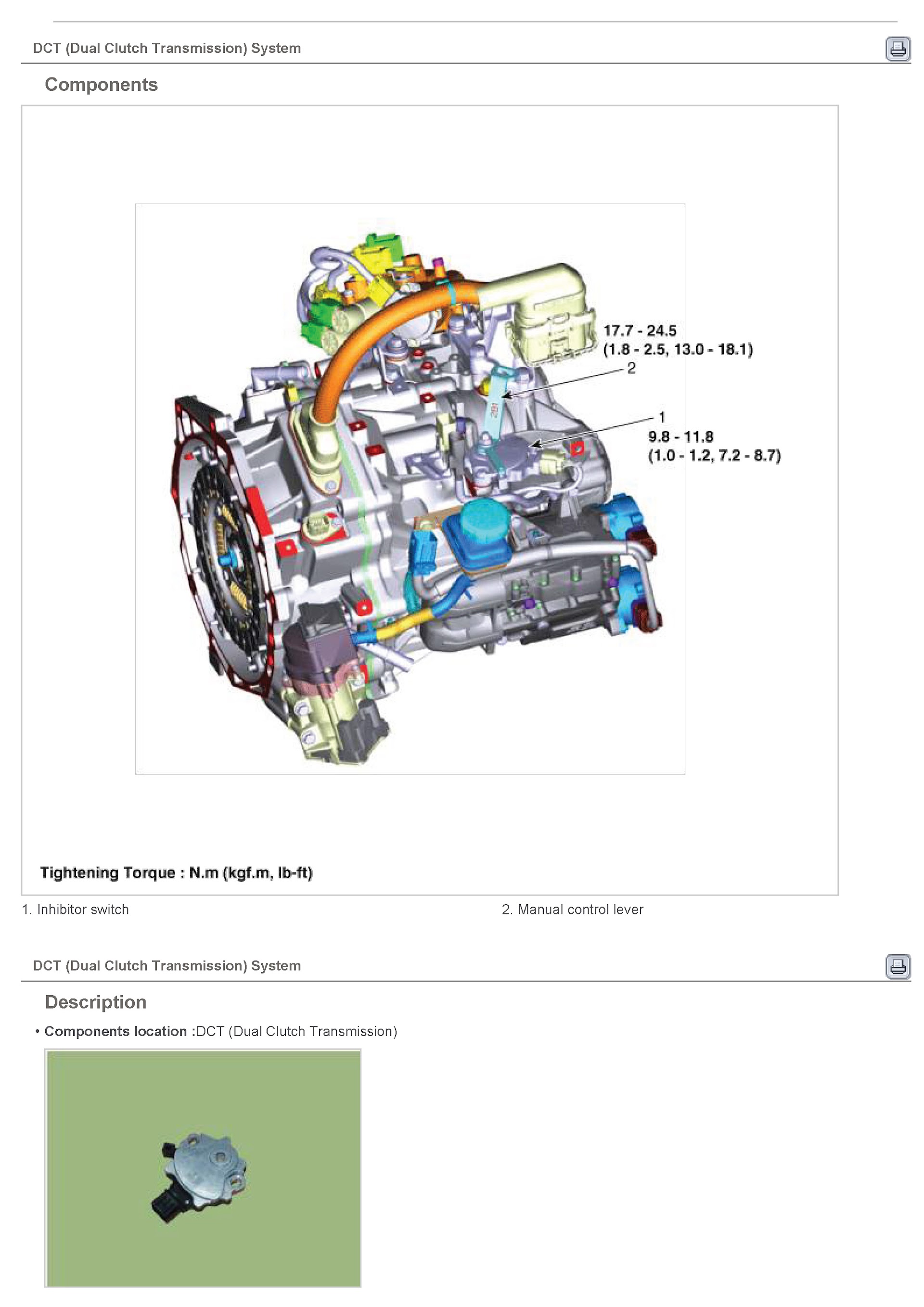
CAUTION: This OEM service and workshop repair manual provides detailed procedures for maintenance, disassembly, reassembly, inspection, adjustment, and diagnostics. It is intended as a comprehensive guide for experienced mechanics. To ensure thorough and accurate repairs that maintain your vehicle’s optimal performance, please read and follow this manual carefully. When replacing parts during any repair work, always use
genuine Hyundai parts to ensure quality, safety, and reliability.
🚗 2017 Hyundai Ioniq – Full Vehicle Overview, Issues, DTCs & Maintenance Guide
The 2017 Hyundai Ioniq is a compact eco-friendly vehicle available in hybrid, plug-in hybrid, and full-electric variants. Designed to compete with Toyota Prius and similar green cars, it offers advanced safety, excellent efficiency, and modern tech features.
⚙️ Technical Specifications & Performance
- Engine Options: 1.6L GDI Atkinson-cycle with electric motor (Hybrid/Plug-in), 28 kWh electric motor (EV)
- Power Output: 139 hp (Hybrid), 118 hp (EV)
- Transmission: 6-speed DCT (Hybrid/PHEV), single-speed reduction gear (EV)
- 0–100 km/h: 8.9–10.2 seconds
- Fuel Efficiency: 4.1 L/100km (Hybrid), up to 200 km EV range
- Battery: 1.56 kWh (Hybrid), 8.9 kWh (PHEV), 28 kWh lithium-ion polymer (EV)
🔧 Top 10 Common Mechanical Issues (Cause & Repair)
- Brake wear
Cause: Regenerative braking imbalance.
Repair: Replace pads/rotors and recalibrate regen system.
- Suspension noise
Cause: Worn stabilizer bushings.
Repair: Replace bushings.
- Transmission hesitation
Cause: DCT clutch actuator wear.
Repair: Reprogram or replace actuator.
- Cooling system leaks
Cause: Weak water pump seals.
Repair: Replace seals/pump.
- Hybrid battery overheating
Cause: Faulty cooling fan.
Repair: Replace battery fan.
- Steering vibration
Cause: Worn tie rods.
Repair: Replace tie rods and align wheels.
- Engine knocking
Cause: Low-quality fuel deposits.
Repair: Fuel system cleaning.
- Exhaust rattling
Cause: Loose heat shields.
Repair: Secure/replace heat shields.
- Air conditioning weak
Cause: Low refrigerant or compressor wear.
Repair: Recharge or replace compressor.
- Wheel bearing noise
Cause: Bearing wear.
Repair: Replace bearings.
💡 Top 10 Common Electrical Issues (Cause & Repair)
- Infotainment rebooting
Cause: Software glitches.
Repair: Update firmware.
- Battery drain
Cause: Faulty DC-DC converter.
Repair: Replace converter.
- Instrument cluster blank
Cause: CAN bus fault.
Repair: Inspect wiring, replace module.
- Charging issues
Cause: Defective charging port relay.
Repair: Replace relay.
- Blind spot monitor error
Cause: Sensor misalignment.
Repair: Recalibrate sensor.
- Navigation failure
Cause: Corrupted SD card.
Repair: Replace/update card.
- HV battery fault codes
Cause: Weak cells.
Repair: Replace faulty cells.
- AC not engaging (EV)
Cause: High-voltage relay issue.
Repair: Replace relay.
- Random warning lights
Cause: Loose ground connections.
Repair: Tighten/repair wiring.
- Keyless entry failure
Cause: Weak fob battery.
Repair: Replace fob battery.
📊 Pros and Cons
| Pros 👍 |
Cons 👎 |
| Excellent fuel economy |
Limited rear headroom |
| Multiple eco-friendly options |
Road noise at high speeds |
| Affordable price vs rivals |
DCT can be jerky |
| Advanced safety features |
Limited EV range (28 kWh) |
| Comfortable cabin |
Resale value lower than Toyota Prius |
🛠️ Maintenance Schedule
| Interval ⏱️ |
Maintenance Task 🔧 |
| Every 10,000 km / 6 months |
Engine oil & filter change (Hybrid/PHEV) |
| Every 20,000 km |
Cabin air filter, brake inspection |
| Every 30,000 km |
Coolant check, tire rotation |
| Every 60,000 km |
Transmission fluid service |
| Every 100,000 km |
Spark plugs (Hybrid), HV battery inspection |
| Every 160,000 km |
Coolant replacement, belt inspection |
⚠️ Recalls, Advisories & Safety Alerts
- Airbag module recall: Incorrect inflator installation. 📅 Recall: 2018
- Hybrid system relay fault: Risk of stalling. 📅 Recall: 2019
- DC charging port overheating: Affects EV model. 📅 Recall: 2020
- Consumer Reports Recall Information
🧾 DTC Trouble Codes
ECM (Engine Control Module)
| Code |
Description |
| P0101 |
Mass air flow circuit range issue |
| P0113 |
Intake air temperature high input |
| P0300 |
Random/multiple cylinder misfire |
| P0420 |
Catalyst system low efficiency |
| P0442 |
Evaporative emission leak (small) |
| P0500 |
Vehicle speed sensor malfunction |
| P0606 |
ECM/PCM processor fault |
| P0700 |
Transmission control system fault |
| P0A0F |
Engine failed to start |
| P1C73 |
Hybrid battery voltage sensor fault |
TCM (Transmission Control Module)
| Code |
Description |
| P0715 |
Input shaft speed sensor failure |
| P0720 |
Output speed sensor fault |
| P0730 |
Incorrect gear ratio |
| P0741 |
TCC performance stuck off |
| P0750 |
Shift solenoid A fault |
| P0766 |
Shift solenoid D fault |
| P0793 |
Intermediate shaft speed sensor |
| P17F0 |
DCT clutch overheating |
| P17F1 |
DCT clutch degradation |
| P2813 |
Hydraulic pressure loss |
ABS / ESC
| Code |
Description |
| C0035 |
Wheel speed sensor LF circuit |
| C0040 |
Wheel speed sensor RF circuit |
| C0050 |
Wheel speed sensor RR circuit |
| C0065 |
Brake pedal travel sensor fault |
| C0110 |
ABS pump motor failure |
| C0131 |
Brake pressure sensor circuit |
| C0156 |
Yaw rate sensor malfunction |
| C1234 |
Steering angle sensor fault |
| C1513 |
ABS relay circuit |
| C1604 |
System communication error |
SRS Airbag
| Code |
Description |
| B1100 |
Driver airbag circuit open |
| B1101 |
Passenger airbag circuit fault |
| B1113 |
Side airbag module fault |
| B1135 |
Seat belt pretensioner circuit |
| B1150 |
OCS sensor fault |
| B1180 |
Airbag module power fault |
| B1200 |
Crash sensor fault |
| B1210 |
Passenger side module open |
| B1231 |
Roll rate sensor fault |
| B1241 |
Internal SRS module fault |
Body Control / CAN Communication
| Code |
Description |
| U0001 |
High-speed CAN communication bus |
| U0100 |
Lost comm. with ECM/PCM |
| U0121 |
Lost comm. with ABS control module |
| U0140 |
Lost comm. with body control module |
| U0151 |
Lost comm. with airbag module |
| U0164 |
Lost comm. with HVAC module |
| U0184 |
Lost comm. with radio unit |
| U0199 |
Lost comm. with door module |
| U0401 |
Invalid data from ECM |
| U1000 |
CAN bus error |
✅ Final Verdict & Conclusion: The 2017 Hyundai Ioniq delivers on its eco-focused promise with excellent efficiency, modern safety, and affordable ownership costs. While the DCT gearbox and limited EV range can be drawbacks, the Ioniq offers a well-rounded, reliable, and environmentally friendly choice for urban and highway driving. Proper maintenance ensures long-term dependability.