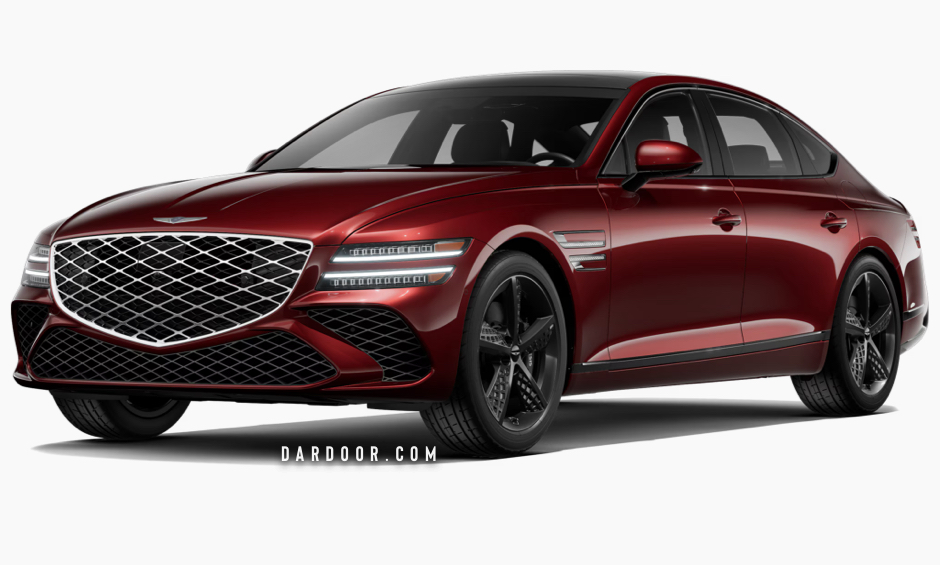
This is the original OEM Electrical Wiring Diagram Manual for the Genesis G80, covering model years 2017 through 2026 across both DH and RG3 generations, including gasoline and full electric (EV) variants.
You’ll get an owner-focused reliability breakdown, top reported issues (with Symptoms + Root Cause + Fix + Cost ranges), maintenance schedule, recalls/TSBs highlights, and a practical DTC table set.
Overview
2017–2020 Genesis G80 (DH)
The DH-era G80 is a comfort-first luxury sedan with big naturally aspirated engines (V6/V8 depending on year/market) and a traditional “quiet highway tank” personality.
If you want an older-school luxury feel, DH is the one.
2021–2026 Genesis G80 (RG3)
RG3 is the modern G80: lighter on its feet, more tech-forward, and typically powered by turbocharged 4-cylinder and twin-turbo V6 engines paired with an 8-speed automatic.
Canadian-market specs for the current G80 list the 2.5T and 3.5T as key powertrains. (Official spec listing.) Genesis ↗
2022–2025 (and some markets beyond) Electrified G80 (EV, RG3)
The Electrified G80 keeps the G80’s luxury vibe but swaps in dual motors and a large battery pack. Genesis global specs list a dual-motor AWD system (front 136 kW + rear 136 kW) and a 94.5 kWh battery on the spec page (market-dependent). Genesis ↗
Important note on “2017–2026” coverage: Engine/transmission availability varies by country and trim. This article is written to help owners across the range, so some issues apply only to certain engines (e.g., 3.3T vs 3.5T vs EV).
Technical Specs & Performance
Key specs by generation
| Generation | Years | Typical Powertrains | Transmission | Drive | Notes |
|---|---|---|---|---|---|
| DH | 2017–2020 | V6 / V8 (market & year dependent) | 8-speed automatic | RWD / AWD | Traditional luxury feel; simpler infotainment than RG3. |
| RG3 | 2021–2026 | 2.5T I4, 3.5T TT V6 (market & year dependent) | 8-speed automatic | RWD / AWD | Canada specs list 2.5T + AWD + 8-speed as core configuration; 3.5T also available by trim. Genesis ↗ |
| Electrified G80 (EV) | 2022–2025+ (market dependent) | Dual-motor AWD | Single-speed reduction gear | AWD | Genesis global specs list 136 kW front + 136 kW rear motors and 94.5 kWh battery (market dependent). Genesis ↗ |
Real-world performance snapshot
- RG3 3.5T (recent testing): Car and Driver reported ~5.1s 0–60 mph for a V6 model in testing context (year referenced in their G80 page). Car and Driver ↗
- Electrified G80 range/charging context: Car and Driver notes an ~87.2 kWh pack and an estimated ~282 miles (EPA estimate context), with fast-charge capability discussed. Car and Driver ↗
- DH dimensions reference: 2017 spec listings show a ~118.5-inch wheelbase and ~196.5-inch length (varies slightly by source/trim). Car and Driver ↗
Top 10 Common Mechanical Issues Reported by Owners (Symptoms • Root Cause • Fix • Cost)
These are the most common “real owner pain points” across DH, RG3, and Electrified G80, with notes where an issue is engine-specific. Cost ranges are typical North American shop pricing (parts + labor) and can swing a lot by trim, region, and shop rate.
- Turbo oil feed line leak / seep (3.3T / some turbo applications)
- Symptoms: Burning oil smell, smoke from engine bay, oil spots under car, low oil level.
- Root cause: Deterioration/leak at turbo oil feed pipe/line or seals; heat cycling accelerates failure. (Recall exists for certain 3.3L turbo vehicles.) Cars.com ↗
- Fix: Replace affected oil feed pipe/line and seals; clean oil residue; verify no turbo bearing damage.
- Cost to fix: $600–$1,800 (can exceed $2,500 if multiple lines/turbo service is required).
- ABS module failure / brake warning + potential overheating risk
- Symptoms: ABS/ESC lights, intermittent braking assist behavior, warning chimes; some recalls advise parking outside due to fire risk in certain cases.
- Root cause: ABS module internal electrical fault/short over time (recall campaigns issued for certain G80 years). NHTSA ↗
- Fix: Dealer recall remedy when applicable; otherwise replace module and check harness/relays.
- Cost to fix: $0 (recall) or $1,200–$2,800 out-of-warranty.
- Starter solenoid water intrusion (DH-era / certain years)
- Symptoms: Intermittent no-start, clicking, burning smell near starter area, electrical oddities; fire-risk recall language on affected vehicles.
- Root cause: Water entering starter solenoid, leading to electrical short (recall issued for certain G80 years). Cars.com ↗
- Fix: Dealer recall remedy (relay kit / updated parts); inspect starter wiring and junction box.
- Cost to fix: $0 (recall) or $350–$1,000 if repairing outside campaign scope.
- Fuel pump failure (RG3 gasoline)
- Symptoms: Hard starts, hesitation, loss of power, stalling, check-engine light.
- Root cause: Fuel pump internal failure leading to loss of delivery (multiple recall actions listed for certain G80 years). Cars.com ↗
- Fix: Replace in-tank fuel pump module; clear codes; verify fuel pressure under load.
- Cost to fix: $0 (recall) or $600–$1,400 out-of-warranty.
- Engine oil consumption / seepage (varies by engine)
- Symptoms: Low oil level between changes, oil smell, oily residue around covers, occasional smoke on startup.
- Root cause: Valve cover gasket seep, PCV system issues, turbo heat stress (turbo engines), or worn seals on higher-mileage DH engines.
- Fix: Diagnose leak vs consumption; replace gaskets, service PCV, update oil spec and interval.
- Cost to fix: $200–$900 (gaskets/PCV) or $1,500–$4,000+ if deeper engine work is required.
- Carbon buildup (direct-injection turbo engines)
- Symptoms: Rough idle, hesitation, reduced MPG, loss of power, misfire codes.
- Root cause: DI intake valves accumulate deposits over time due to oil vapor/PCV and lack of port fuel wash.
- Fix: Walnut blasting / intake valve cleaning; PCV service; quality fuel and correct oil intervals.
- Cost to fix: $400–$1,200.
- Transmission shift quality issues (8-speed auto)
- Symptoms: Harsh 2–3 or 3–4 shift, delayed engagement, shudder at light throttle.
- Root cause: Old fluid, adaptive learning drift, software calibration, or torque converter clutch wear.
- Fix: Software update if available; transmission fluid service (correct spec); adaptation reset; diagnose converter if shudder persists.
- Cost to fix: $250–$600 (service/update) or $1,800–$4,500 if torque converter repair/replacement is needed.
- Suspension wear (control arm bushings, dampers, alignment sensitivity)
- Symptoms: Clunks over bumps, steering wander, uneven tire wear, vibration at highway speed.
- Root cause: Bushing wear, aging dampers, alignment out-of-spec; heavier trims amplify wear.
- Fix: Replace worn arms/bushings/links; perform 4-wheel alignment; verify wheel balance and tire condition.
- Cost to fix: $400–$1,500 (common) or $2,000+ if multiple corners are rebuilt.
- Cooling system issues (thermostat / water pump seep)
- Symptoms: Coolant smell, low coolant, temperature fluctuations, overheating warning.
- Root cause: Thermostat sticking, water pump seep at higher mileage, hose/connector aging.
- Fix: Pressure test; replace thermostat/water pump as needed; bleed system correctly.
- Cost to fix: $350–$1,200.
- EV-specific: charging/thermal management interruptions (Electrified G80)
- Symptoms: Reduced charge speed, charging stops unexpectedly, warning messages related to charging system, limited power in extreme temps.
- Root cause: EV charging control unit faults and software/thermal protection behavior; EV recall news has covered charging control unit concerns across Hyundai/Genesis/Kia EVs. Cars.com ↗
- Fix: Check for open recalls/updates; dealer diagnostics; software update; replace affected control unit if required.
- Cost to fix: $0 (recall) or $500–$2,500+ depending on part and warranty coverage.
Top 10 Common Electrical Issues Reported by Owners (Symptoms • Root Cause • Fix • Cost)
- Instrument cluster blank/flicker (RG3)
- Symptoms: Cluster display flickers or goes blank at startup; missing speed/warning indicators.
- Root cause: Software error causing blank/flicker behavior (reported as recall issue in industry coverage). Cars.com ↗
- Fix: Dealer software update/recall remedy; verify battery voltage stability.
- Cost to fix: $0 (recall) or $150–$600 if out-of-campaign software service is billed.
- Infotainment glitches (screen freezes, CarPlay/Android Auto drops)
- Symptoms: Random reboots, lag, Bluetooth pairing issues, nav/audio failures.
- Root cause: Software instability, failing USB hub/cable, or head unit heat/aging.
- Fix: Update firmware; replace faulty USB hub/ports; head unit replacement only if confirmed failing.
- Cost to fix: $0–$200 (update/diagnosis) or $300–$2,000+ (hardware replacement).
- Battery drain / parasitic draw
- Symptoms: Dead battery after sitting, slow crank, repeated jump-starts.
- Root cause: Module staying awake (infotainment/telematics), weak 12V battery, door/trunk switch issues.
- Fix: Parasitic draw test; update modules; replace 12V battery if weak; repair latch/switch faults.
- Cost to fix: $150–$450 (battery) or $250–$900 (diagnosis + module/switch repair).
- ABS/ESC warning lights (module/harness/relay related)
- Symptoms: ABS/ESC lights, traction control disabled, warning chimes.
- Root cause: ABS module fault (also safety recall topic for certain years). NHTSA ↗
- Fix: Check recall eligibility; scan for stored codes; repair wiring/replace module as required.
- Cost to fix: $0 (recall) or $250–$2,800 depending on root cause.
- Seat belt pretensioner safety defect (Electrified G80)
- Symptoms: Usually none before an event; addressed via recall for safety risk.
- Root cause: Pretensioner can rupture/explode upon deployment in a crash (recall listed for 2023 Electrified G80). Cars.com ↗
- Fix: Dealer installs protective cap/updated parts per recall.
- Cost to fix: $0 (recall).
- Smart key / push-start intermittent detection
- Symptoms: “Key not detected,” intermittent start refusal, reduced fob range.
- Root cause: Weak fob battery, antenna module issues, or cabin interference.
- Fix: Replace fob battery; scan body module; test/start with spare fob; repair antenna if confirmed faulty.
- Cost to fix: $5–$20 (battery) or $200–$700 (antenna/module work).
- Power window/door lock switch failures
- Symptoms: Window won’t move, auto-up/down stops, lock switch intermittent.
- Root cause: Switch wear, moisture ingress, door harness fatigue.
- Fix: Replace switch pack; inspect door harness; reinitialize window pinch protection.
- Cost to fix: $150–$500 per affected door.
- Adaptive cruise / lane-keep sensor errors
- Symptoms: Driver assist disabled, warnings, sudden disengagement in bad weather.
- Root cause: Radar/camera obstruction, calibration drift after windshield work, or wiring faults.
- Fix: Clean sensors; recalibrate camera/radar; check for software updates.
- Cost to fix: $0–$150 (cleaning) or $250–$1,200 (calibration/repair).
- HVAC control/module glitches
- Symptoms: Fan speed changes randomly, no heat/AC command response, stuck vents.
- Root cause: HVAC control unit logic faults, actuator wear, sensor drift.
- Fix: Recalibrate actuators; update software if applicable; replace faulty actuator/control module.
- Cost to fix: $200–$1,200.
- Charging/12V system alerts (Electrified G80)
- Symptoms: Charge error messages, slow or interrupted charging, 12V warning behavior.
- Root cause: Charging control unit concerns and EV system software protection behavior; recall news references charging control unit topics across EV platforms. Cars.com ↗
- Fix: Check recalls/software; dealer diagnostic; replace affected parts if required.
- Cost to fix: $0 (recall) to $2,500+ out-of-warranty depending on component.
Pros & Cons
| Pros | Cons |
|---|---|
| Quiet cabin, premium ride quality (especially DH) | Luxury parts/labor costs add up fast out of warranty |
| Strong value vs German rivals for features | Tech issues (cluster/infotainment) can be annoying on RG3 |
| RG3 3.5T delivers legitimate performance (independent testing shows quick 0–60 context) Car and Driver ↗ | Some years have serious recall themes (ABS fire risk, starter solenoid, fuel pump) NHTSA ↗ |
| Electrified G80: luxury EV feel + strong charging/range discussion in major reviews Car and Driver ↗ | EV ownership depends heavily on local service support and software updates |
Maintenance Schedule (Practical Owner Schedule)
| Service Item | Interval | Notes |
|---|---|---|
| Engine oil & filter (gas) | Every 5,000–7,500 miles (8,000–12,000 km) | Shorten interval for short trips, turbo engines, or harsh winters. |
| Air filter (engine) | Every 15,000–30,000 miles | More often in dust/salt regions. |
| Cabin filter | Every 12,000–20,000 miles | Helps HVAC performance and reduces musty smells. |
| Brake fluid | Every 2 years | Reduces internal corrosion in ABS components. |
| Transmission fluid (8-speed) | Every 40,000–60,000 miles | Especially important if you notice harsh shifts or do lots of city driving. |
| Coolant | Every 60,000–100,000 miles (or per manual) | Use correct spec coolant; bleed properly to avoid air pockets. |
| Spark plugs (gas) | Every 60,000–100,000 miles (engine dependent) | Turbo engines often prefer earlier plug service. |
| Brake pads/rotors | As needed | Inspect every 10,000–15,000 miles. |
| Alignment + tire rotation | Rotate every 5,000–7,500 miles | Helps prevent uneven wear and steering vibration. |
| Electrified G80: brake fluid + cabin filter + coolant checks | Same cadence | EV still uses brake fluid, coolant loops, and cabin filtration. |
Recalls, Advisories & Safety Alerts (Top 10 Highlights)
Below are 10 high-signal recall/safety themes that show up in official and aggregator recall listings for Genesis G80 / Electrified G80. Always confirm by VIN on your local government recall portal and with Genesis.
- ABS module fire risk (certain 2017–2020 G80): ABS module internal short can lead to engine compartment fire risk. NHTSA ↗
- Starter solenoid water intrusion fire risk (certain 2017–2019 G80): Water intrusion can cause electrical short and fire risk; owners advised to park outside until fixed (recall coverage reported). Cars.com ↗
- Fuel pump failure (certain 2021–2023 G80): Fuel pump may fail causing loss of drive power. Cars.com ↗
- Turbo oil feed pipe leak (certain 2018–2020 G80 with 3.3T): Oil leak can increase fire risk. Cars.com ↗
- Windshield / rear window bonding (2018 G80): Incorrect primer can reduce bonding strength; glass may detach. Cars.com ↗
- Occupant classification / airbag-related safety recall (2018 G80): Recall alert coverage referenced occupant classification systems on 2018 models. Cars.com ↗
- Instrument cluster blank/flicker (2023–2024 G80): Software issue can blank/flicker display; increases crash risk due to missing speed/warnings. Cars.com ↗
- Seat belt pretensioner rupture risk (2023 Electrified G80): Pretensioners may rupture/explode upon deployment; recall lists remedy. Cars.com ↗
- Additional fuel pump campaign (separate recall action on some years): Cars.com ↗ lists multiple fuel pump recall entries across model years.
- EV charging/charging control unit recall news (EV platforms): Cars.com ↗ recall news references charging-unit concerns affecting Hyundai/Genesis/Kia EVs, relevant for Electrified G80 owners to cross-check.
DTC Trouble Code List
Note: Exact code definitions can vary slightly by model year/engine/market. Use this as a quick triage list; confirm with a scan tool that supports Genesis/Hyundai enhanced codes.
Engine Control Module (ECM) — 10 Common Codes
| Code | Typical Meaning | Common First Checks |
|---|---|---|
| P0011 | Camshaft timing (bank 1) over-advanced | Oil level/quality, VVT solenoid, timing control |
| P0014 | Camshaft timing (bank 1) over-advanced (exhaust) | Oil service, solenoid, wiring |
| P0171 | System too lean (bank 1) | Vacuum leak, MAF, fuel pressure |
| P0300 | Random/multiple misfire | Plugs/coils, fuel quality, intake deposits |
| P0306 | Misfire cylinder 6 (V6) | Coil/plug/injector swap test |
| P0420 | Catalyst efficiency below threshold | Exhaust leaks, O2 sensors, catalyst aging |
| P0455 | EVAP gross leak | Gas cap, purge valve, leak test |
| P0507 | Idle control higher than expected | Throttle body cleaning, vacuum leak |
| P200A | Intake manifold runner performance | Runner actuator, carbon buildup |
| P2562 | Turbo boost control position sensor (turbo engines) | Wastegate actuator, wiring, boost leaks |
Transmission Control Module (TCM) — 10 Common Codes
| Code | Typical Meaning | Common First Checks |
|---|---|---|
| P0700 | TCM requested MIL (generic) | Scan TCM for specific sub-codes |
| P0711 | Transmission fluid temperature sensor range/perf | Fluid level/spec, sensor, wiring |
| P0720 | Output speed sensor circuit | Sensor, connector, harness |
| P0730 | Incorrect gear ratio | Fluid, solenoids, internal wear |
| P0741 | TCC performance/stuck off | Torque converter clutch, fluid condition |
| P0766 | Shift solenoid D performance/stuck off | Solenoid, valve body contamination |
| P0776 | Pressure control solenoid B performance | Line pressure, valve body |
| P0796 | Pressure control solenoid C performance | Fluid service, solenoid test |
| P0841 | Transmission fluid pressure sensor range/perf | Sensor, valve body, pressure |
| P2704 | Friction element apply time range/perf | Adaptations, clutch wear assessment |
ABS / ESC (Brake System) — 10 Common Codes
| Code | Typical Meaning | Common First Checks |
|---|---|---|
| C0035 | LF wheel speed sensor | Sensor, tone ring, wiring |
| C0040 | RF wheel speed sensor | Sensor gap, harness |
| C0045 | RR wheel speed sensor | Sensor, bearing play |
| C0050 | LR wheel speed sensor | Sensor and connector corrosion |
| C0110 | Pump motor circuit | Relay/fuse, pump motor, module |
| C0121 | Valve relay / power relay fault | Power supply, grounds |
| C0131 | Brake pressure sensor | Sensor calibration, wiring |
| C1234 | Yaw rate sensor signal | Calibration, sensor mounting |
| C1260 | ABS/ESC system malfunction | Scan for subcodes, module health |
| U0121 | Lost communication with ABS module | CAN wiring, module power/ground |
SRS Airbag System — 10 Common Codes
| Code | Typical Meaning | Common First Checks |
|---|---|---|
| B0100 | Airbag control module fault | Battery voltage, module scan |
| B1214 | Front impact sensor circuit | Sensor connector, wiring |
| B1322 | Passenger airbag disable indicator | OCS calibration, seat sensor |
| B1346 | Driver airbag resistance high/low | Clock spring, connectors |
| B1411 | Side airbag module circuit | Seat harness, connector under seat |
| B1452 | Curtain airbag circuit | Pillar harness, connector |
| B1600 | SRS warning lamp circuit | Cluster communication, bulb/LED |
| B1613 | Seat belt pretensioner circuit | Pretensioner connector, recall status |
| B1620 | Passenger pretensioner circuit | Resistance check, connector lock |
| U0151 | Lost comm with restraint control module | CAN power/ground and network check |
Body Control / CAN Communication — 10 Common Codes
| Code | Typical Meaning | Common First Checks |
|---|---|---|
| U0100 | Lost communication with ECM/PCM | Battery voltage, CAN wiring, grounds |
| U0101 | Lost communication with TCM | CAN integrity, module power |
| U0121 | Lost communication with ABS | ABS power/ground, network |
| U0155 | Lost communication with cluster | Cluster power, software updates |
| U0184 | Lost communication with radio | Infotainment fuses, module sleep/wake |
| U0199 | Lost comm with telematics module | Telematics reset, antenna connections |
| B1102 | BCM internal error | Voltage stability, BCM scan |
| B1121 | Door switch signal implausible | Latch/switch, harness in door jamb |
| B1241 | Power window motor circuit | Switch pack, regulator/motor |
| B1690 | Immobilizer/Smart key signal | Fob battery, antenna module |
Top 5 Competitors
FAQs
Is the 2017–2020 G80 (DH) reliable?
Generally, DH models can be solid if you stay ahead of maintenance and confirm recall completion—especially ABS-module and starter-solenoid related campaigns where applicable. NHTSA ↗
Which G80 years should I be most cautious about?
Any year with unresolved safety campaigns is the “risky” year. For example, ABS fire-risk recalls and starter-solenoid fire-risk recalls are high priority to verify by VIN. NHTSA ↗
Does the RG3 G80 3.5T feel fast?
In testing context, the V6 G80 has posted quick 0–60 times (around the low-5s range), which is plenty for a luxury sedan. Car and Driver ↗
What’s the biggest “expensive surprise” repair?
Out of warranty: ABS module replacement, turbo oil leak repairs, and torque converter/transmission work can get expensive. The best defense is preventive maintenance, prompt diagnosis, and making sure recall remedies are completed.
Is the Electrified G80 a good buy?
It’s a niche luxury EV. If you love the G80 comfort and have strong local dealer EV support, it can be great. Make recall/software status part of your pre-purchase checklist (especially safety and charging-related updates). Cars.com ↗
Final Verdict
The Genesis G80 is at its best when you want a luxury sedan that feels expensive without playing the German-brand pricing game. The DH (2017–2020) is the classic comfort cruiser; the RG3 (2021–2026) is the modern tech-and-turbo era; and the Electrified G80 is a quiet, premium EV alternative for a very specific buyer.
The smart ownership move is simple: verify recall completion (ABS, starter, fuel pump, etc.), keep fluid services conservative (especially the 8-speed), and treat electronics/software updates as part of routine maintenance—because on modern luxury cars, they basically are. NHTSA ↗