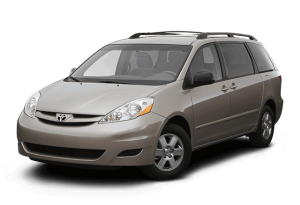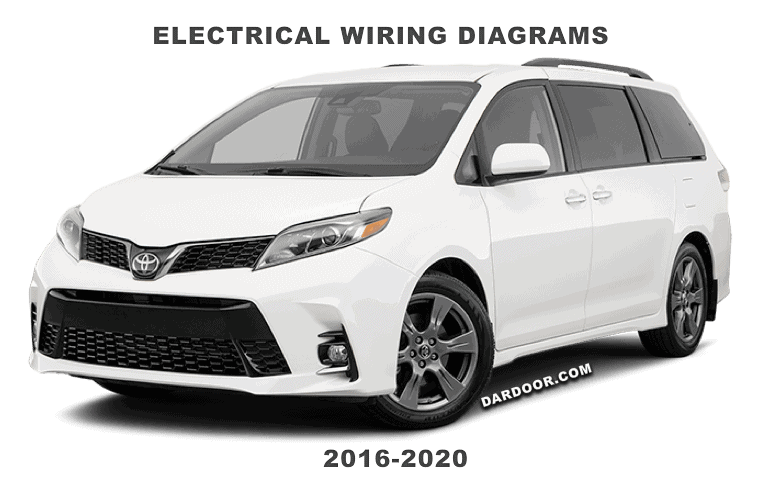
Get the official and complete electrical workshop manual for the 2016-2022 Toyota Sienna. This manual features detailed wiring diagrams and electrical schematics in an easy-to-use PDF format.
Overview 🧭
What changed across 2016–2022?
- 2016–2020: 3.5L V6; 8-speed automatic added for 2017MY along with the updated 3.5L (2GR-FKS) output around 296 hp.
- 2021–2022: New generation with 2.5L hybrid and e-CVT, widely listed at about 245 hp combined.
🧠 Pro tip:If you’re buying used: confirm sliding door operation (power + manual), verify any transaxle/ECM software updates on 2017–2018 V6 models, and check recall completion by VIN using Toyota/NHTSA tools.
Technical Specs & Performance ⚙️
Key Specs (by generation)
| Model Years | Engine | Output (typical) | Transmission | Drivetrain |
|---|---|---|---|---|
| 2016 | 3.5L V6 (pre-2017 update) | Varies by spec/market | 6-speed automatic | FWD / AWD (trim-dependent) |
| 2017–2020 | 3.5L V6 (2GR-FKS) | ~296 hp (commonly listed for Sienna 2017–2020) | 8-speed automatic (8AT) | FWD / AWD (trim-dependent) |
| 2021–2022 | 2.5L Hybrid (A25A-FXS) | ~245 hp combined (commonly listed) | e-CVT | FWD or AWD (Hybrid AWD via e-axle) |
🧠 Pro tip:Notes 📝: 2017MY introduced the 8-speed and updated V6 (2GR-FKS) with ~296 hp; the 2021+ generation is hybrid/e-CVT with ~245 hp commonly listed.
Top 10 Common Mechanical Issues 🧰
-
Power Sliding Door Won’t Latch / Abnormal Latching 🚪
- 👀 Symptoms: Door closes but won’t fully latch, reopens, or requires multiple attempts.
- 🔎 Root Cause: Corrosion/drag at latch lever pin causing front/rear latches not to latch simultaneously (noted in Toyota bulletin coverage for Sienna).
- ✅ Fix: Inspect latch operation; follow bulletin procedure (clean/repair/replace affected latch components as applicable).
- 💰 Cost to Fix: $150–$700 (service/parts) / $700–$1,600 (if latch assemblies + labor are required).
-
Power Sliding Door Cable Failure / Sticking / Not Moving Smoothly 🧵
- 👀 Symptoms: Door slows, stops mid-travel, grinds, or becomes heavy in manual mode.
- 🔎 Root Cause: Internal functional concerns of the power sliding door cable sub-assembly (Toyota CSP coverage exists for certain Sienna years).
- ✅ Fix: Inspect per procedure; replace cable assembly if confirmed.
- 💰 Cost to Fix: $450–$1,400 per door (parts + labor; varies by trim and shop rates).
-
Sliding Door Center Hinge Corrosion (Power Doors) 🧲
- 👀 Symptoms: Power door struggles, binds, stops, or sounds “dry/grindy.”
- 🔎 Root Cause: Center hinge corrosion affecting door travel (Toyota bulletin coverage includes Sienna 2011–2018).
- ✅ Fix: Inspect hinge condition; service/replace hinge components as needed.
- 💰 Cost to Fix: $250–$900 (service/parts) / $900–$1,800 (if major hinge hardware replacement is required).
-
2017–2018 8-Speed Transaxle Whine / Harsh Shift / Reduced Power 🔁
- 👀 Symptoms: Whine while driving, harsh shifts, MIL, or reduced power on some 8AT vehicles.
- 🔎 Root Cause: Condition documented in Toyota service bulletin for certain Highlander/Sienna 8AT applications.
- ✅ Fix: Diagnose per bulletin; may involve transaxle-related inspection/repair per OEM procedure.
- 💰 Cost to Fix: $250–$500 (diagnosis/software checks) / $1,500–$6,000+ (if internal transaxle repair/replacement is needed).
-
ECM/Transaxle Software Mismatch or Calibration Concerns (2017–2018) 🧠
- 👀 Symptoms: Strange shift behavior after transaxle work, MIL, drivability concerns.
- 🔎 Root Cause: Toyota notes ECM (PCM) software must match transaxle assembly hardware on certain Sienna vehicles.
- ✅ Fix: Confirm transaxle part/serial and verify correct ECM software per bulletin; reflash/update as required.
- 💰 Cost to Fix: $150–$350 (software verification/reflash) / higher if additional mechanical issues exist.
-
Engine Oil Leaks (Valve Covers/Timing Cover Areas on V6) 🛢️
- 👀 Symptoms: Burning oil smell, oil spots, wetness on engine, smoke near exhaust.
- 🔎 Root Cause: Seal/gasket aging and heat cycling; seepage increases with mileage.
- ✅ Fix: Clean and confirm source; replace leaking gasket/seal; verify PCV operation.
- 💰 Cost to Fix: $180–$900 (common gaskets) / $900–$2,200 (labor-heavy leak locations).
-
Water Pump / Coolant Seepage (High Mileage) 💧
- 👀 Symptoms: Coolant smell, low coolant, pink crust near pump, overheating in worst cases.
- 🔎 Root Cause: Seal wear over time; coolant maintenance and mileage influence.
- ✅ Fix: Pressure test; replace water pump and related seals; refill/bleed properly.
- 💰 Cost to Fix: $450–$1,200 (V6 varies by labor access).
-
Front Suspension Clunks (Sway Links / Struts / Bushings) 🛞
- 👀 Symptoms: Clunk over bumps, loose feel, uneven tire wear.
- 🔎 Root Cause: Worn stabilizer links/bushings or strut mounts (wear items).
- ✅ Fix: Inspect front end; replace worn components; align vehicle.
- 💰 Cost to Fix: $180–$1,400 depending on parts replaced.
-
Brake Vibration / Pulsation (Warped Rotors) 🛑
- 👀 Symptoms: Steering wheel shake or pedal pulsation during braking.
- 🔎 Root Cause: Rotor thickness variation from heat cycles, sticking caliper slide pins, or pad deposits.
- ✅ Fix: Measure runout/thickness; resurface/replace rotors; service caliper pins; bed pads properly.
- 💰 Cost to Fix: $250–$850 (axle pair) / $850–$1,400 (if calipers also needed).
-
Hybrid System Cooling / Maintenance Neglect (2021–2022) ❄️
- 👀 Symptoms: Warning lights, reduced hybrid performance, noisy fans (varies).
- 🔎 Root Cause: Blocked cooling paths (lint/debris), low coolant, or sensor/fan issues in extreme cases.
- ✅ Fix: Inspect hybrid cooling intake paths and fans; scan for codes; service coolant per OEM schedule.
- 💰 Cost to Fix: $120–$450 (cleaning/service) / $450–$1,800+ (fan/sensor repairs if needed).
Top 10 Common Electrical Issues 💡
-
Power Sliding Door Switch/Control Logic Issues (Intermittent) 🎛️
- 👀 Symptoms: Door won’t respond to button, stops mid-travel, works only sometimes.
- 🔎 Root Cause: System needs inspection steps (power ON/OFF operation checks) per Toyota guidance.
- ✅ Fix: Follow inspection flow; check power supply, switches, and door ECU inputs; correct confirmed fault.
- 💰 Cost to Fix: $120–$350 (diag/switch) / $350–$1,500 (module/harness repairs if needed).
-
Sliding Door Initialization / Setup (Especially After Battery Disconnect) 🔄
- 👀 Symptoms: Door acts “confused,” power function limited after service/shipping fuse removal.
- 🔎 Root Cause: Initialization procedure noted in Toyota PDS documentation for Sienna HV.
- ✅ Fix: Perform correct initialization steps; verify full open/close operation.
- 💰 Cost to Fix: $0–$120 (often procedure-only) / more if a hardware fault is found.
-
MIL ON With Transaxle-Related DTCs / Lock-Up Concerns (Hybrid-related bulletin reference) 🧩
- 👀 Symptoms: MIL on, drivability concern, lock-up related codes (where applicable).
- 🔎 Root Cause: Toyota bulletin references calibration confirmation for Highlander/Sienna in certain contexts.
- ✅ Fix: Confirm condition; verify calibration/software; proceed per OEM diagnostics.
- 💰 Cost to Fix: $180–$450 (diag/software) / $1,000–$6,000+ if mechanical transaxle issues exist.
-
Battery Drain / Weak 12V Battery 🔋
- 👀 Symptoms: Slow crank (V6), no-start, random warning lights, resets, dead battery overnight.
- 🔎 Root Cause: Aging 12V battery, parasitic draw, or charging system issues (V6 alternator / hybrid DC-DC).
- ✅ Fix: Battery + charging tests; parasitic draw test; repair root draw/circuit if found.
- 💰 Cost to Fix: $180–$380 (battery) / $250–$1,200+ (diagnosis + repair).
-
Infotainment / Bluetooth Dropouts / Freezing 📱
- 👀 Symptoms: Screen freezes, reboots, Bluetooth disconnects, audio cuts out.
- 🔎 Root Cause: Software instability, module (head unit) faults, weak battery voltage.
- ✅ Fix: Update software; reset; verify power/ground; replace head unit if confirmed.
- 💰 Cost to Fix: $0–$150 (update/reset) / $700–$2,000+ (module replacement).
-
Backup Camera Intermittent / Black Screen 🎥
- 👀 Symptoms: No image, delayed image, intermittent display in reverse.
- 🔎 Root Cause: Camera failure, connector corrosion, harness issues, or head unit faults.
- ✅ Fix: Inspect connectors; test camera feed; repair harness or replace camera.
- 💰 Cost to Fix: $220–$900.
-
TPMS Warning Light 🛞
- 👀 Symptoms: TPMS light stays on even after correcting tire pressure.
- 🔎 Root Cause: Sensor battery failure, damaged sensor, or relearn required.
- ✅ Fix: Scan sensor IDs; relearn; replace failed sensor(s).
- 💰 Cost to Fix: $60–$140 (relearn/diag) + $60–$120 per sensor (plus labor).
-
Keyless Entry / Push-Start “Key Not Detected” 🗝️
- 👀 Symptoms: Intermittent no-key warning, short range, starting issues.
- 🔎 Root Cause: Weak fob battery, antenna issues, low 12V voltage, or BCM-related faults.
- ✅ Fix: Replace fob battery; test 12V; scan body codes; repair antenna/module as needed.
- 💰 Cost to Fix: $5–$25 (battery) / $200–$1,200+ (module/antenna).
-
ABS/Traction Lights From Wheel Speed Sensor Faults 🚦
- 👀 Symptoms: ABS/VSC lights, traction control disabled message.
- 🔎 Root Cause: Sensor/hub bearing issues, wiring damage, debris at tone ring.
- ✅ Fix: Compare live wheel speeds; inspect harness; replace sensor or hub as confirmed.
- 💰 Cost to Fix: $180–$900.
-
Random CAN/U-Codes Due to Low Voltage or Ground Issues 📡
- 👀 Symptoms: Multiple warning lights, intermittent module dropouts, weird electrical behavior.
- 🔎 Root Cause: Weak 12V battery, poor grounds, water intrusion in connectors, harness damage.
- ✅ Fix: Test battery/charging; load-test grounds; inspect connector pins; isolate failing network node.
- 💰 Cost to Fix: $150–$1,500+ depending on root cause.
Pros & Cons
| Pros ✅ | Cons ❌ |
|---|---|
| Excellent family practicality and long-term reputation | Sliding door issues are common enough to deserve careful testing (2016–2018 coverage in bulletins) |
| 2017–2020 V6 is strong and refined (296 hp commonly listed) | Some 2017–2018 8AT transaxle concerns documented in service bulletins |
| 2021–2022 hybrid improves efficiency and daily comfort | Hybrid adds complexity (12V health + cooling/fans + sensors) |
| Good safety tech availability depending on year/trim | Always verify recall completion by VIN (Toyota/NHTSA) |
Maintenance Schedule 🗓️
| Interval | Service Items | Notes |
|---|---|---|
| Every 5,000–10,000 mi (8,000–16,000 km) / 6–12 months | Engine oil & filter 🛢️, tire rotation 🛞, brake inspection 🛑 | Short trips/towing = shorter intervals. |
| Every 15,000–30,000 mi (24,000–48,000 km) | Cabin air filter 🌬️, engine air filter 🧽, inspect suspension/steering | Dusty regions may need earlier air-filter changes. |
| Every 30,000–60,000 mi (48,000–96,000 km) | Brake fluid check/flush (as needed), transaxle fluid service (severe use) 🔁 | Use OEM fluid spec; follow OEM procedure. |
| Every 60,000–100,000 mi (96,000–160,000 km) | Coolant service 🧊, belt inspection, PCV checks | Hybrid models: follow OEM intervals for engine + hybrid system cooling. |
| As needed | Sliding door lubrication/inspection 🚪, battery tests 🔋, alignment ✅ | Door tracks/hinges benefit from clean + proper lube. |
🧠 Pro tip:Reminder 📝: Always follow the exact OEM maintenance schedule for your trim, engine, and region.
Top 5 Competitors 🏁
- Chrysler Pacifica — Dardoor OEM Repair Manual ↗
- Nissan Quest (2016) — Dardoor OEM Repair Manual ↗
- Honda Odyssey — Dardoor OEM Wiring Diagram ↗
- Kia Carnival — Dardoor Kia Manuals ↗
- Dodge Grand Caravan / Chrysler Town & Country — Dardoor OEM Repair Manual ↗
Recalls, Advisories & Safety/TSB Highlights 🧾
- Recall (Fuel Pump / Fuel Suction Tube related campaign) — Toyota recall documentation includes Sienna model years 2017–2020 in repair instructions for fuel pump-related recall work.
- Recall 21V889000 (2022 Sienna seat belt webbing guide) — Incorrect guide may have been installed on certain 2022 Sienna 8-passenger vehicles.
- TSB T-SB-0244-17 (Slide Door Abnormal Operation ↗) — Door latches may not latch simultaneously due to corrosion (bulletin coverage includes Sienna through 2018 revision).
- TSB T-SB-0141-18 (Power Sliding Door Cable Replacement) — Procedure and parts guidance for cable replacement.
- TSB T-SB-0067-19 (Power Slide Door Center Hinge Corrosion ↗) — Corrosion can cause door not to operate correctly.
- TSB T-SB-0069-19 (Slide Door Inspection ↗) — Inspection steps for diagnosing slide door issues (Techstream guidance).
- Customer Support Program Bulletin (Power Sliding Door Cable ↗) — Coverage for repairs related to internal functional concerns of the power sliding door cable sub-assembly.
- TSB T-SB-0160-18 Rev1 (Transaxle whine / harsh shift / MIL / reduced power) — Applies to certain 2017–2018 Sienna/Highlander with 8AT.
- TSB T-SB-0001-18 (Transaxle assembly & ECM software confirmation) — Confirms correct ECM (PCM) software based on transaxle hardware for certain Sienna vehicles.
- PDS Bulletin (2022 Sienna HV power sliding door initialization) — Notes initialization step after D/C cut fuse installation during pre-delivery service.
Note 📝: Recall/TSB applicability depends on production dates, trim, and VIN. Always validate by VIN ↗ before repairs.
DTC Trouble Code Tables 🧩
Engine Control Module (ECM / PCM) — 10 Common Codes 🧠
| DTC | Meaning (plain-English) | Common Direction |
|---|---|---|
| P0171 | System too lean | Vacuum leaks, MAF, fuel delivery |
| P0300 | Random/multiple misfire | Ignition, injector, compression, fuel quality |
| P0301 | Cylinder 1 misfire | Coil/plug/injector/compression |
| P0420 | Catalyst efficiency below threshold | Exhaust leaks, O2 sensors, catalyst condition |
| P0441 | EVAP incorrect purge flow | Purge valve, EVAP lines, leak test |
| P0455 | EVAP large leak | Gas cap, hoses, canister, leak test |
| P0500 | Vehicle speed sensor | ABS/wheel speed correlation, wiring |
| P219A | Air-fuel imbalance | Fuel trims, injector balance, air leaks |
| P0117 | ECT sensor low input | Sensor/wiring, coolant level |
| P0A80 | Replace hybrid battery pack (hybrid) | Hybrid battery health diagnosis (2021–2022) |
Transmission / Transaxle Control (TCM) — 10 Common Codes 🔁
| DTC | Meaning | Common Direction |
|---|---|---|
| P0700 | Transmission control system fault (request MIL) | Read sub-codes; do not guess parts |
| P0717 | Input/turbine speed sensor no signal | Sensor, wiring, connector |
| P0722 | Output speed sensor no signal | Sensor, harness, tone wheel |
| P0730 | Incorrect gear ratio | Slip, solenoids, internal wear |
| P0741 | TCC performance/stuck off | Fluid, valve body, converter (V6) |
| P2757 | Torque converter clutch pressure control | Solenoid/valve body checks |
| P0776 | Pressure control solenoid performance | Solenoid, fluid, valve body |
| P2714 | Pressure control solenoid “D” performance | Hydraulic control diagnosis |
| P0A92 | Hybrid drive motor performance (hybrid) | Inverter/motor diagnostics (2021–2022) |
| P0AA6 | Hybrid isolation fault | High-voltage isolation testing (hybrid) |
ABS / ESC (Brake System) — 10 Common Codes 🛑
| DTC | Meaning | Common Direction |
|---|---|---|
| C0035 | LF wheel speed sensor | Sensor/hub wiring, debris |
| C0040 | RF wheel speed sensor | Sensor/hub wiring |
| C0045 | LR wheel speed sensor | Sensor/hub wiring |
| C0050 | RR wheel speed sensor | Sensor/hub wiring |
| C1201 | Engine control system malfunction (ABS request) | Check ECM codes first |
| C1336 | Zero point calibration of yaw rate sensor undone | Calibration procedure |
| C1417 | Acceleration sensor circuit | Sensor/calibration |
| C1466 | Steering angle sensor | Calibration, sensor/clock spring |
| U0121 | Lost communication with ABS | CAN/voltage/grounds |
| C1241 | Low battery positive voltage | Battery/charging tests |
SRS Airbag System — 10 Common Codes 🛡️
| DTC | Meaning | Common Direction |
|---|---|---|
| B0100 | Driver airbag circuit | Clock spring, connectors |
| B0105 | Passenger airbag circuit | Connectors, harness |
| B0111 | Side airbag sensor circuit | Sensor wiring/connector |
| B0131 | Seat belt pretensioner (driver) | Pretensioner circuit inspection |
| B0136 | Seat belt pretensioner (passenger) | Pretensioner circuit inspection |
| B1150 | Occupant classification system | OCS calibration/seat sensor |
| B1660 | SRS warning lamp circuit | Cluster/ECU signal |
| B1795 | Passenger airbag ON/OFF indicator | Indicator wiring |
| U0151 | Lost comm with airbag ECU | CAN/voltage/grounds |
| B1000 | Airbag ECU internal fault | Confirm power/ground; ECU diag |
Body Control / CAN Communication — 10 Common Codes 📡
| DTC | Meaning | Common Direction |
|---|---|---|
| U0100 | Lost comm with ECM/PCM | Battery/grounds, CAN checks |
| U0101 | Lost comm with TCM | CAN wiring/module power |
| U0121 | Lost comm with ABS | Voltage stability/network |
| U0140 | Lost comm with body ECU/BCM | Fuses, grounds, connectors |
| U0155 | Lost comm with instrument cluster | Cluster power/CAN |
| B1241 | Low battery voltage | Battery/charging tests |
| B2312 | Door lock circuit | Actuator/switch/wiring |
| B2321 | Door ajar/door switch | Latch switch/harness |
| B2780 | Immobilizer communication | Key/antenna/BCM checks |
| U3000 | Control module fault (generic) | Power/ground, module diag |
Disclaimer 📝: Code meanings and subcodes vary by scan tool and ECU. Use freeze-frame/live data before replacing parts.
FAQ ❓
1) Which Sienna years are best in 2016–2022?
For V6 shoppers, many prefer 2017–2020 for the updated 3.5L + 8-speed. For efficiency, 2021–2022 hybrid is the big step-change.
2) What’s the #1 thing to test on a used Sienna?
Sliding doors. Test power open/close repeatedly on both sides, then test manual mode. Multiple Toyota bulletins exist for latch/cable/hinge concerns across earlier years.
3) I have a 2017–2018 V6 Sienna—what transmission items matter most?
Confirm any relevant transaxle bulletin work and verify the correct ECM/transaxle software alignment if major work was done.
4) How do I check recalls?
Use Toyota’s recall portal and NHTSA’s recall lookup, then confirm dealer completion by VIN.
5) Does the 2021–2022 hybrid require different maintenance?
Yes—still maintain the engine normally, but also treat the 12V battery health and hybrid cooling/diagnostics seriously. Follow the OEM schedule for hybrid-specific items.
6) If a sliding door acts up after a battery disconnect, is it always broken?
Not always. Some cases are initialization/procedure-related (Toyota PDS notes an initialization step for Sienna HV).
7) Is there a Dardoor manual for this generation?
Dardoor currently lists a 2010–2017 Sienna repair manual ↗ (useful for 2016–2017 models).
8) What’s a common “money pit” scenario?
Neglecting sliding door problems until cables/hinges/latches require major parts + labor can get expensive—address early symptoms quickly.
Final Verdict 🏁
Best for ✅ Families who want minivan practicality with Toyota’s long-term reputation—especially strong choices if you prioritize sliding-door condition, service history, and recall completion.
Watch-outs ⚠️ Sliding door systems deserve extra scrutiny (multiple bulletins exist), and 2017–2018 V6 models should be checked for any transaxle/ECM software-related service work or symptoms.
Bottom line ⭐ A well-maintained Sienna from 2016–2022 is typically a safe bet—just don’t skip the sliding door tests and always verify recalls by VIN.