

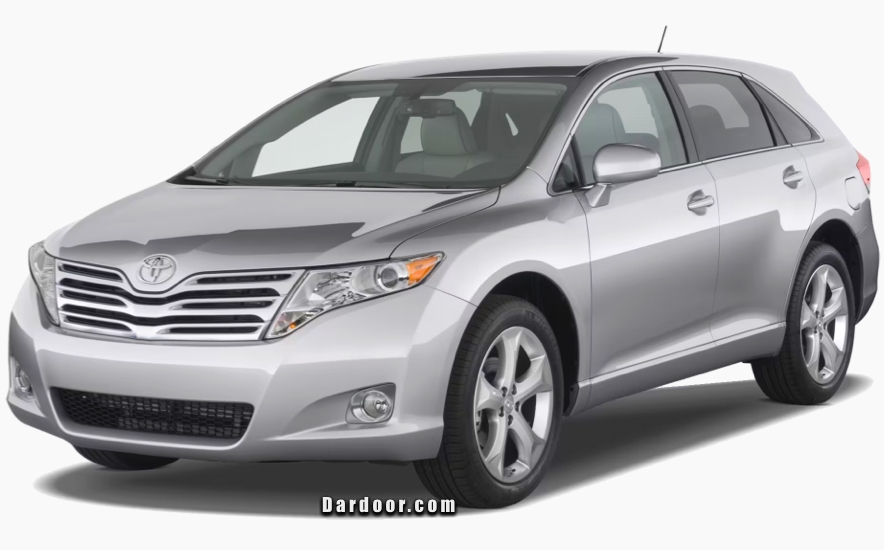
Get the OEM workshop document for the 2009-2011 Toyota Venza, including detailed repair manuals, wiring diagrams, and body repair manuals.
2009-2011 Toyota Venza Repair Manual
$19.90
Overview
This is the OEM workshop document for the 2009-2011 Toyota Venza, including detailed repair manuals, wiring diagrams, and body repair manuals. These comprehensive PDF files contain all the necessary information to repair, maintain, and service your Venza. Trusted by Toyota dealership technicians, this is your ultimate resource for factory-approved repair and maintenance procedures.
| File Format | |
| File Language | English |
| You’ll Get | 128.8 MB |
| Wiring Diagram | Included |
| Delivery Method | Instant Download |
Models and Engines Covered
-
Models:
- AGV-10
- GGV-10
-
Engines:
- 1AR-FE (2.7 L Inline-4)
- 2GR-FE (3.5 L V6)
What’s Included
The ZIP folder contains three separate PDF documents, each designed for a specific aspect of repair and maintenance:
1. Toyota Venza Service Manual (Pages Count: 5,044)
-
- Complete maintenance procedures.
- Engine repair and diagnostics for the 1AR-FE and 2GR-FE.
- Transmission servicing and repair.
- Suspension, brakes, and steering system procedures.
- Detailed troubleshooting and error code diagnostics.
2. Toyota Venza Wiring Manual (Pages Count: 479)
-
- Full electrical wiring diagrams for all systems.
- Harness routing and connector details.
- Diagnostics for electrical issues, including lighting, infotainment, and advanced safety systems.
3. Toyota Venza Body Repair Manual (Pages Count: 162)
-
- Structural repair and body panel replacement procedures.
- Detailed instructions for glass, doors, and exterior components.
- Specifications and techniques for welding, alignment, and finishing.
Key Features
- Factory-Approved Content: Get the same manuals used by Toyota-certified mechanics.
- Comprehensive Coverage: From routine maintenance to advanced diagnostics and bodywork.
- Accurate Wiring Diagrams: Color-coded schematics for easy interpretation.
- PDF Format: Accessible on any device for convenient use.
Why Choose This Manual?
- Comprehensive and Detailed: Covers every aspect of repair and maintenance.
- Cost-Effective: Perform repairs yourself and save money.
- Trusted by Experts: Factory-grade manuals trusted by Toyota-certified technicians.
Who Is It For?
- Toyota Venza owners looking to maintain or repair their vehicles.
- Professional mechanics servicing 2009-2011 Toyota Venza models.
- DIY enthusiasts passionate about keeping their vehicles in top condition.
Download Your Manual Today
Equip yourself with the ultimate resource for your 2009-2011 Toyota Venza.
This is the original OEM workshop document for the 2009-2011 Toyota Venza repair manual with the wiring diagram in PDF.
The ZIP folder contains 3 PDF files:-
- 2009 – 2011 Toyota Venza Service Manual, PDF, (Pages Count: 5,044)
- 2009 – 2011 Toyota Venza Wiring Manual, PDF, (Pages Count: 479)
- 2009 – 2011 Toyota Venza Body Repair Manual, PDF, (Pages Count: 162)
This manual provides detailed instructions for maintenance, disassembly, reassembly, component inspection, adjustment, and diagnostics—intended for use by experienced mechanics. Proper application of this guide will help ensure thorough repairs and maintain your vehicle in peak condition.
Important Note: Before purchasing this manual, please check whether your vehicle is subject to any active service recalls, as authorized dealerships may perform necessary repairs free of charge. When replacing parts, always use genuine OEM components to ensure safety, reliability, and long-term performance.
SAMPLE PAGES: 2009-2011 Toyota Venza Repair Manual
CAUTION: This OEM service and workshop repair manual provides detailed procedures for maintenance, disassembly, reassembly, inspection, adjustment, and diagnostics. It is intended as a comprehensive guide for experienced mechanics. To ensure thorough and accurate repairs that maintain your vehicle’s optimal performance, please read and follow this manual carefully. When replacing parts during any repair work, always use genuine Toyota parts to ensure quality, safety, and reliability.
2009–2011 Toyota Venza: Comprehensive Guide
Overview
The Toyota Venza is a mid-size crossover wagon that debuted in 2009 as a blend between a sedan and an SUV. Built on the Toyota Camry platform, it was designed to offer car-like handling with SUV versatility and styling. The first generation ran from 2009–2015, with the 2009–2011 models representing the initial years of production.
Technical Specifications
Engine Options
- Base: 2.7L 4-cylinder
- Horsepower: 182 hp @ 5,800 rpm
- Torque: 182 lb-ft @ 4,200 rpm
- Transmission: 6-speed automatic
- Fuel Economy: 21 city / 29 highway (FWD)
- Optional: 3.5L V6
- Horsepower: 268 hp @ 6,200 rpm
- Torque: 246 lb-ft @ 4,700 rpm
- Transmission: 6-speed automatic
- Fuel Economy: 18 city / 25 highway (FWD), 18/24 (AWD)
Dimensions & Capacity
- Length: 189.0 inches
- Width: 75.0 inches
- Height: 63.4 inches
- Wheelbase: 109.3 inches
- Cargo Volume: 34.4 cu ft (70.2 cu ft with rear seats folded)
- Seating: 5 passengers
- Curb Weight: 3,638–4,045 lbs (depending on configuration)
Drivetrain
- Front-wheel drive (FWD) standard
- All-wheel drive (AWD) optional on both engines
Safety Features
- Standard: ABS, stability control, traction control, front side airbags, side curtain airbags
- Optional: Blind spot monitoring (2010+), rear cross-traffic alert (2010+)
10 Top Mechanical and Electrical Issues
1. Excessive Oil Consumption (V6 Engine)
Symptoms: Low oil warning light, engine smoking, need to add oil between changes (1+ quart per 1,000 miles) Root Cause: Defective piston rings allow oil to enter combustion chamber Fix: Engine rebuild or piston ring replacementCost: $3,000–$6,000
2. Transmission Hesitation/Harsh Shifting
Symptoms: Delayed engagement, rough shifts between gears, especially 3rd-4th gear, slipping sensation Root Cause:Worn transmission fluid, faulty valve body, or software calibration issues Fix: Transmission fluid flush, valve body replacement, or ECM reprogramming Cost: $150–$2,500 (fluid flush to valve body replacement)
3. Steering Intermediate Shaft Clunking
Symptoms: Clunking or popping noise when turning steering wheel, especially in cold weather or at low speeds Root Cause: Worn or inadequately lubricated intermediate steering shaft Fix: Replace or lubricate intermediate steering shaft Cost: $200–$500
4. Water Pump Failure
Symptoms: Coolant leaks, engine overheating, whining noise from front of engine, steam from hood Root Cause:Bearing failure or seal deterioration in water pump Fix: Water pump replacement (timing belt should be replaced simultaneously) Cost: $500–$900
5. Brake Actuator Failure (AWD Models)
Symptoms: ABS light on, brake warning light, reduced braking power, brake pedal feels soft or goes to floor Root Cause: Internal seal failure in brake actuator assembly causing fluid leaks Fix: Brake actuator replacement Cost:$1,500–$2,500
6. Rear Differential Noise (AWD Models)
Symptoms: Whining, humming, or grinding noise from rear, especially during acceleration or turns Root Cause: Worn bearings or insufficient lubrication in rear differential Fix: Rear differential service or bearing replacement Cost: $400–$1,200
7. Fuel Gauge Reading Incorrectly
Symptoms: Fuel gauge stuck, reading empty when full, erratic movement, or inaccurate readings Root Cause: Faulty fuel level sending unit in gas tank Fix: Fuel pump/sending unit assembly replacement Cost: $400–$800
8. Power Steering Pump Whine/Failure
Symptoms: Whining noise when turning, especially when cold, stiff steering, fluid leaks under vehicle Root Cause:Worn power steering pump bearings or low fluid Fix: Power steering pump replacement and fluid flush Cost: $400–$700
9. Evaporative Emission System Leak
Symptoms: Check engine light, P0441 or P0456 code, failed emissions test, gas smell Root Cause: Faulty gas cap, cracked EVAP canister, or leaking hoses/valves Fix: Replace gas cap, EVAP canister, purge valve, or repair hosesCost: $50–$600 (depending on component)
10. Door Lock Actuator Failure
Symptoms: Doors won’t lock/unlock with remote or switch, clicking noise from door, intermittent operation Root Cause: Worn internal gears in door lock actuator Fix: Door lock actuator replacement Cost: $150–$350 per door
Top 5 Competitors (2009–2011)
- Nissan Murano – More upscale interior, stronger V6, but lower reliability
- Ford Edge – More powerful engines, more spacious, but less reliable
- Honda Accord Crosstour – Similar concept, Honda reliability, but polarizing styling
- Subaru Outback – Standard AWD, better off-road, but less refined on-road
- Chevrolet Traverse – More seating (7-8 passengers), larger, but worse fuel economy
Top 10 Recalls, Advisories & TSB Highlights
Official Recalls
- Floor Mat Interference (2009-2010) – Floor mats could trap accelerator pedal; remedy included mat retention clips
- Accelerator Pedal Friction (2009-2010) – Pedal mechanism could stick due to friction; pedal assembly replaced
- Spare Tire Carrier (2009-2011) – Carrier could corrode and tire could detach; carriers inspected and replaced if needed
Technical Service Bulletins (TSBs)
- Steering Clunk/Pop Noise (TSB-0016-10) – Intermediate shaft lubrication or replacement procedure
- Transmission Shift Quality (TSB-0031-10) – ECM reprogramming to improve shift feel
- Rear Differential Noise (TSB-0087-09) – AWD differential fluid change procedure and specifications
- Fuel Gauge Inaccuracy (TSB-0094-10) – Fuel sender unit diagnosis and replacement guidelines
- HVAC Blower Motor Noise – TSB addressing blower motor bearing noise; motor replacement
- Bluetooth Connectivity Issues – Software update for audio system to improve phone pairing
- Windshield Wiper Chattering – Revised wiper blade design and installation procedure
Maintenance Schedule
Every 5,000 Miles / 6 Months
- Engine oil and filter change
- Rotate tires
- Inspect brake pads and rotors
Every 10,000 Miles / 12 Months
- Inspect drive belts
- Inspect cooling system hoses
- Inspect suspension components
- Check exhaust system
Every 15,000 Miles / 18 Months
- Replace cabin air filter
- Inspect brake fluid (replace every 3 years)
Every 30,000 Miles / 36 Months
- Replace engine air filter
- Replace transmission fluid (AWD models)
- Inspect fuel lines and connections
- Inspect front differential fluid (AWD)
Every 60,000 Miles
- Replace spark plugs (4-cylinder)
- Replace transmission fluid (FWD models)
- Inspect rear differential fluid (AWD)
Every 90,000 Miles
- Replace timing belt and water pump (V6 only – 4-cylinder has timing chain)
- Replace spark plugs (V6)
- Replace coolant
- Replace rear differential fluid (AWD)
As Needed
- Battery (typically 3-5 years)
- Brake pads (25,000–70,000 miles depending on driving)
- Tires (40,000–60,000 miles)
- Wiper blades (annually)
10 FAQs for Buyers
Q1: Is the 4-cylinder or V6 engine better? A: The V6 offers better acceleration and towing (3,500 lbs vs 2,500 lbs), but has known oil consumption issues. The 4-cylinder is more reliable and fuel-efficient but feels underpowered for highway merging. If buying V6, verify oil consumption history.
Q2: Should I get FWD or AWD? A: AWD adds $1,350 originally and reduces MPG slightly. Get AWD if you need winter traction or off-pavement capability. FWD is sufficient for most buyers and has fewer maintenance costs (no rear differential service).
Q3: What’s the typical fuel economy in real-world driving? A: Owners report 22-24 mpg combined for V6 AWD, 24-26 for V6 FWD, and 25-27 for 4-cylinder models—slightly below EPA estimates.
Q4: How reliable is the Venza compared to other Toyotas? A: Generally reliable but not up to Camry/RAV4 standards. The V6 oil consumption and transmission issues are concerns. Overall reliability is average to above-average for the segment.
Q5: What mileage is too high for a used Venza? A: With proper maintenance, Venzas can exceed 200,000 miles. Look for examples under 120,000 miles for best value. Verify timing belt service on V6 models at 90,000 miles.
Q6: Are parts and repairs expensive? A: Parts are moderately priced (Toyota pricing). Labor costs are reasonable. Major repairs (transmission, engine work) are expensive but less frequent than domestic competitors.
Q7: Does the Venza have a third row? A: No, the Venza seats 5 passengers only. For three-row seating, consider the Toyota Highlander.
Q8: What trim level should I look for? A: Base trim is well-equipped. Look for models with leather, navigation, and panoramic sunroof for best resale value. Blind spot monitoring (2010+) is a valuable safety feature.
Q9: How does cargo space compare to competitors? A: Cargo space (34.4 cu ft) is good but less than Ford Edge (39.2) or Nissan Murano (31.6). The low load floor makes loading easier.
Q10: Are there any year-specific issues I should avoid? A: 2009 had the most recalls (floor mat, accelerator pedal). 2010-2011 models had fewer issues. All years share similar mechanical concerns. Focus on maintenance history over model year.
Final Buyer Recommendations
✅ Good Buy If:
- You find a well-maintained example with full service records
- You prefer the 4-cylinder engine for reliability
- V6 models have documented proof of no oil consumption issues
- Timing belt service completed on V6 models (90K miles)
- You want a comfortable, quiet crossover for highway driving
- Price is $6,000–$12,000 depending on mileage/condition
⚠️ Proceed With Caution If:
- V6 model lacks oil consumption documentation
- AWD model without rear differential service history
- High mileage (150K+) without major maintenance receipts
- Transmission shows hesitation or harsh shifting during test drive
- Clunking from steering or differential (repairs needed)
❌ Avoid If:
- V6 engine uses excessive oil (1+ quart per 1,000 miles)
- Transmission slips or has delayed engagement
- Evidence of neglected maintenance (dirty oil, worn tires, etc.)
- Rust on brake actuator or suspension components (especially AWD)
- Asking price exceeds $13,000 (better options available)
Best Configuration:
- 2010-2011 Venza with 4-cylinder engine, FWD, and upgraded features (leather, sunroof, navigation)
- This avoids V6 oil consumption and AWD differential issues while providing good fuel economy
Pre-Purchase Inspection Checklist:
- ✓ Check oil consumption (request oil change records)
- ✓ Test drive for transmission smoothness
- ✓ Listen for steering clunks while turning
- ✓ Verify V6 timing belt service at 90K miles
- ✓ Inspect for coolant leaks (water pump)
- ✓ Test all door locks and power features
- ✓ Check fuel gauge accuracy
- ✓ AWD models: listen for rear differential noise
- ✓ Scan for trouble codes (evaporative system common)
- ✓ Review all recall completion status
Our Final Verdict
The 2009–2011 Toyota Venza is a practical, comfortable crossover with good cargo space and reasonable reliability. The 4-cylinder FWD models offer the best reliability, while V6 models provide better performance but carry oil consumption risks. At current used prices ($8,000–$12,000), it’s a decent value if you find a well-maintained example. However, competitors like the Honda Accord Crosstour or Subaru Outback may offer better long-term reliability. Always get a pre-purchase inspection and verify maintenance history, especially for V6 and AWD models.
Recommended Alternative: If the specific Venza you’re considering has V6 oil consumption issues or AWD problems, consider a 2009–2011 Honda Accord Crosstour or Subaru Outback instead for similar utility with potentially better reliability.
Related products
-
Sale!
Free Download: Toyota Tacoma Wiring Diagram (2005-2006)
Original price was: $16.90.$0.00Current price is: $0.00. Add to cart -
2005-2006 Toyota Tacoma Repair Manual
$19.90 Add to cart -
2004-2007 Toyota Sienna Repair Manual
$19.90 Add to cart -

2011-2012 Toyota RAV4 Repair Manual
$16.90 Add to cart -
2005-2010 Toyota Scion tC Repair Manual
$19.90 Add to cart -
2008-2015 Toyota Tundra Repair Manual
$36.00 Add to cart -
2005-2008 Toyota Tacoma Repair Manual
$19.90 Add to cart -
2010-2015 Toyota Prius Repair Manual
$19.90 Add to cart