Nikola Corporation Files for Chapter 11 Bankruptcy
The Rise and Fall of an Electric Truck Pioneer

In a dramatic turn of events, Nikola Corporation, the once-promising electric and hydrogen fuel cell truck manufacturer, has filed for Chapter 11 bankruptcy. The announcement marks a significant fall from grace for a company that was once valued at over $30 billion and seen as a potential disruptor in the electric vehicle (EV) industry. Nikola’s bankruptcy filing highlights the challenges of scaling a capital-intensive business, the consequences of corporate scandals, and the harsh realities of the competitive EV market.
The company’s decision to file for bankruptcy comes months after it warned investors that it would exhaust its remaining cash reserves by the end of 2023. With just $47 million in cash on hand, Nikola is now seeking to auction off its assets in a last-ditch effort to salvage value for stakeholders. This article explores the factors that led to Nikola’s downfall, the implications of its bankruptcy, and what the future may hold for the company and the broader EV industry.
The Road to Bankruptcy
Nikola Corporation, founded in 2015 by Trevor Milton, aimed to revolutionize the trucking industry with its battery-electric and hydrogen fuel cell trucks. The company’s ambitious vision and bold claims attracted significant attention, culminating in a high-profile public listing in 2020 through a merger with a special-purpose acquisition company (SPAC). At its peak, Nikola’s market valuation exceeded $30 billion, despite having no revenue or commercially viable products.
However, the company’s rapid rise was followed by an equally dramatic fall. In 2020, short-seller Hindenburg Research published a damning report accusing Nikola of fraud and deception. The report alleged that the company had misled investors about the capabilities of its technology, including a video showing a Nikola One truck “in motion” that was later revealed to be rolling down a hill due to gravity, not its own power. The scandal led to the resignation of founder Trevor Milton and triggered investigations by the U.S. Securities and Exchange Commission (SEC) and the Department of Justice (DOJ).
Despite efforts to recover under new leadership, Nikola struggled to regain investor confidence and deliver on its promises. The company faced production delays, technical challenges, and a lack of infrastructure for hydrogen fueling stations. By 2023, Nikola was running out of cash and warned investors that it would need significant capital to continue operations. Unable to secure additional funding, the company ultimately filed for Chapter 11 bankruptcy.
The Bankruptcy Filing: What’s Next?
Nikola’s Chapter 11 bankruptcy filing allows the company to restructure its debts and operations while seeking to sell its assets. The company has requested court approval to initiate an auction and sale process, which would allow interested parties to submit binding offers for its assets. Nikola has stated that it intends to continue limited service and support operations for its active vehicles through March 2024, but additional partners will be required to support activities beyond that point.
The bankruptcy filing is a significant blow to Nikola’s stakeholders, including investors, employees, and customers. Shareholders are likely to see their investments wiped out, and the company’s workforce could face layoffs as part of the restructuring process. Nikola’s bankruptcy also raises questions about the future of its partnerships and projects, including its plans to build hydrogen fueling stations.
A Legacy of Scandal and Unmet Promises
Nikola’s downfall is inextricably linked to the actions of its founder, Trevor Milton. In 2022, Milton was sentenced to four years in prison for misleading investors about the company’s truck production capabilities. During his trial, prosecutors revealed that Milton had disguised a General Motors (GM) product as a Nikola truck by adding a Nikola logo and created doctored videos to deceive investors. The scandal not only damaged Nikola’s reputation but also eroded investor confidence and hindered the company’s ability to raise capital.
Despite the turmoil, Nikola made some progress under new leadership. The company’s trucks have collectively logged approximately 3.3 million fleet miles, demonstrating the potential of its technology. However, these achievements were not enough to offset the financial and reputational damage caused by the scandal and the company’s inability to scale production and generate revenue.
The Broader Implications for the EV Industry
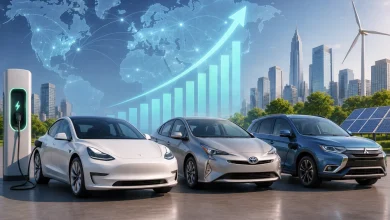
Nikola’s bankruptcy serves as a cautionary tale for the EV industry, which is filled with startups and established players vying for dominance. The company’s rise and fall highlight the challenges of scaling a capital-intensive business, the importance of transparency and accountability, and the risks of overpromising and underdelivering.
The EV industry is highly competitive, with companies like Tesla, Rivian, and traditional automakers investing heavily in electric and hydrogen-powered vehicles. Startups in this space must navigate significant technical, financial, and regulatory hurdles to succeed. Nikola’s inability to overcome these challenges underscores the importance of strong leadership, sound financial management, and a clear path to commercialization.
For the hydrogen fuel cell sector, Nikola’s bankruptcy is a setback but not a death knell. Hydrogen has the potential to play a key role in decarbonizing long-haul trucking and other hard-to-electrify sectors. However, the technology and infrastructure are still in their early stages, and companies pursuing hydrogen-powered vehicles must address these challenges to succeed.
What’s Next for Nikola?
As Nikola enters Chapter 11 bankruptcy, the focus will be on maximizing value for stakeholders through the sale of its assets. The company’s technology, intellectual property, and manufacturing facilities could attract interest from other players in the EV and hydrogen industries. However, the outcome of the auction process remains uncertain, and it is unclear whether Nikola will emerge as a going concern or be liquidated entirely.
For the broader EV industry, Nikola’s bankruptcy is a reminder of the risks and challenges inherent in this rapidly evolving sector. While the transition to clean energy transportation presents significant opportunities, success requires more than just bold claims and flashy presentations. Companies must deliver on their promises, manage their finances responsibly, and navigate the complexities of manufacturing and scaling production.
Conclusion
Nikola Corporation’s bankruptcy marks the end of a tumultuous chapter in the EV industry. The company’s rise and fall serve as a cautionary tale about the dangers of overpromising, the importance of transparency, and the challenges of scaling a capital-intensive business. While Nikola’s vision of a zero-emission future was compelling, its inability to execute on that vision ultimately led to its downfall.
As the EV industry continues to evolve, the lessons learned from Nikola’s journey will undoubtedly shape the future of electric and hydrogen-powered vehicles. For now, the focus will be on the auction and sale process, as stakeholders seek to salvage value from the remains of a once-promising company. The road ahead is uncertain, but the story of Nikola serves as a reminder of the risks and rewards inherent in the pursuit of innovation.