Mastering Brake System Repair & Maintenance: The Complete 2025 Guide
Everything drivers and technicians need to know about diagnosing, repairing, and maintaining modern automotive braking systems.
1. Why Brake System Maintenance Matters
The braking system is the most important safety system in any vehicle. Properly functioning brakes allow drivers to stop quickly, avoid collisions, and maintain control in emergency situations. Neglecting brake service can result in increased stopping distances, uneven braking, and catastrophic failure.
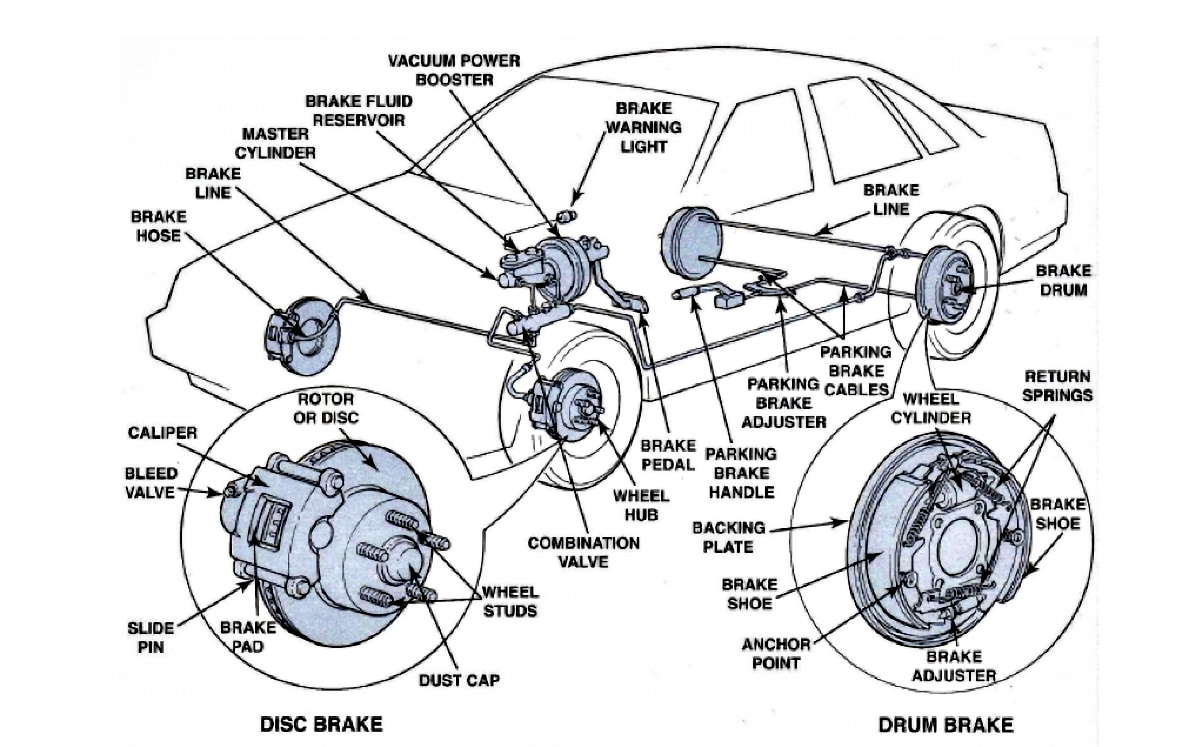
2. Key Components of Modern Brake Systems
- Brake Pads: Friction material pressed against rotors.
- Rotors/Discs: Metal discs clamped by pads to stop wheels.
- Calipers: Hydraulic clamps that squeeze pads against rotors.
- Brake Lines: Carry hydraulic fluid under pressure.
- Master Cylinder: Converts pedal pressure into hydraulic force.
- ABS Sensors & Module: Prevent wheel lock-up during braking.
3. Diagnosing Brake Issues
Drivers should watch for these warning signs:
- Squealing or grinding noises when braking.
- Pulsation in the brake pedal.
- Vehicle pulling to one side.
- Brake warning light or ABS light illuminated.
- Soft or spongy pedal feel.
Performing a road test and a visual inspection of pads, rotors, and fluid levels is the first step in proper diagnosis.
4. 10 Common Brake System Failures
- Worn pads: Reduce friction and damage rotors.
- Warped rotors: Cause vibration under braking.
- Sticking calipers: Lead to uneven pad wear.
- Leaking brake lines: Reduce hydraulic pressure.
- Contaminated brake fluid: Lowers boiling point, risking fade.
- ABS sensor failure: Triggers ABS/ESC warning lights.
- Seized slide pins: Prevent even pad movement.
- Overheating brakes: Fade during long descents.
- Glazed pads: Hardened surfaces reduce friction.
- Air in brake lines: Creates spongy pedal feel.
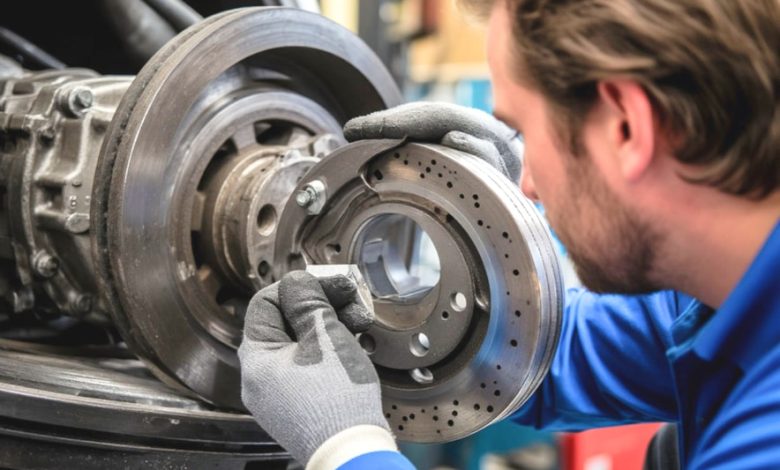
5. Brake Pad & Rotor Replacement
Replacing pads and rotors is the most common brake repair. A typical step-by-step process includes:
- Safely lift vehicle and remove wheel.
- Remove caliper bolts and slide caliper off.
- Replace old pads with new OEM or high-performance pads.
- Inspect rotor thickness—replace if below spec or warped.
- Torque bolts to manufacturer specs and reinstall wheel.
OEM brake diagrams are available from Dardoor’s parts catalog for accuracy (Brake System Diagram).
6. Brake Fluid Service & Bleeding
Brake fluid absorbs moisture over time, lowering its boiling point. Replace fluid every 2–3 years. Bleeding removes air and restores pedal firmness.
- Gravity bleeding: Simple but slow.
- Pressure bleeding: Efficient with specialized equipment.
- Manual two-person bleeding: Requires coordination.
Always use fluid type specified by OEM (DOT 3, DOT 4, DOT 5.1).
7. Understanding ABS & ESC Repairs
Modern vehicles feature Anti-Lock Braking Systems (ABS) and Electronic Stability Control (ESC). Common repairs include:
- Replacing faulty wheel speed sensors.
- Repairing damaged ABS rings.
- Replacing ABS pump or module.
OEM schematics for ABS components are available via Dardoor (ABS Module Diagram).
8. Routine Maintenance Schedule
| Mileage Interval | Service Task |
|---|---|
| Every 5,000 km | Inspect pads, rotors, and fluid levels |
| Every 20,000 km | Check caliper slide pins and hoses |
| Every 40,000 km | Replace pads and resurface or replace rotors as needed |
| Every 60,000 km | Flush and replace brake fluid |
| Every 100,000 km | Inspect master cylinder, ABS module, and all hydraulic lines |
9. Essential Tools & Equipment
- Torque wrench
- Brake piston compressor
- Brake bleeder kit
- Dial indicator for rotor runout
- OEM service manual (available at Dardoor Repair Guides)
10. OEM Diagrams & Dardoor Links
- Brake System Diagram
- Brake Fluid Specs
- ABS Module Diagram
- General Repair Guides
11. FAQs
How do I know if my rotors need replacing?
If rotors are below minimum thickness, warped, or heavily scored, replacement is necessary.
Can I mix different brake pad brands?
Not recommended. Always replace both sides with the same type and brand for balanced braking.
How often should I flush brake fluid?
Every 2–3 years or 60,000 km, whichever comes first.