
 390 km
 160 km/h
  4.4 Sec
  560 km/h
Charging Port Type CCS Type 2 (Charging Port type affects charging station compatibility.) 
Max AC Charging 22 KW Home Charging, 3-Phase support. On-board AC charger (inverter) Capacity affects AC charging speed. Max DC Charging 150 KW Maximum power the car can accept from a DC faster charger. Architecture 400 V Higher power train voltage means faster charging and better efficiency. Battery Capacity (Usable) 69.3 kWh Net battery capacity that is available for use. Tested Range (EU -WLTP)
383 km Estimated Distance of a Full Charge Tested Range (USA – EPA) No Data Estimated Distance of a Full Charge Motor / Power Performance Around 300 kW (402 hp) AWD (2 motors) Torque 537 Nm (396 lb-ft) Peak Toque of the car’s electric motor 0-100 km/h 4.4 Second acceleration time from standstill to 100 km/h Top Speed 160 km/h Maximum speed the car can reach Charging 10→ 80% 40 minutes Under Ideal Conditions Drive Type AWD (Dual Motor) PMSM front, PSMS rear
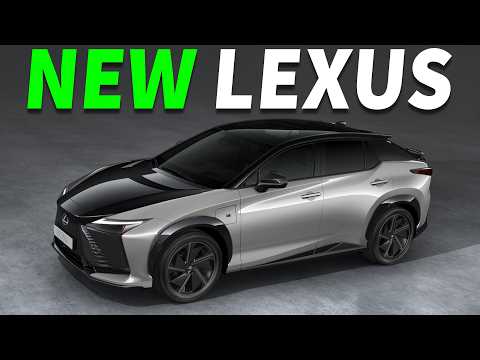
About Lexus RZ 550e F Sport (MY26)
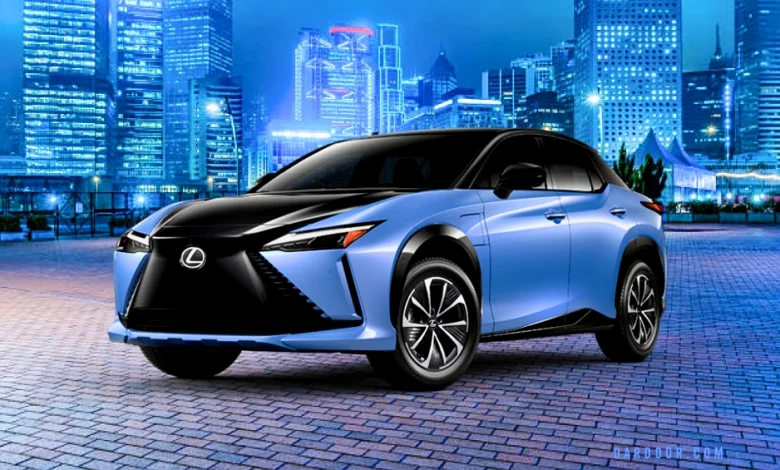
The 2025 Lexus RZ 550e F Sport injects high-energy performance into the premium electric SUV market. Positioned as the flagship variant of the RZ lineup, it blends dynamic driving with Lexus’s hallmark luxury and advanced technology. Aimed at style-conscious EV enthusiasts wanting an athletic yet sustainable choice, it’s set to command a premium price when it launches in Europe in 2025.
What’s New for 2025
The RZ 550e F Sport marks a major addition to the lineup for 2025. This isn’t a cosmetic refresh but a genuine performance upgrade, featuring:
- A dual-motor all-wheel-drive system producing 300 kW
- Quicker acceleration (0–100 km/h in 4.4 seconds)
- Enhanced suspension tuning for sharper handling
This model firmly positions the RZ as a true driver’s EV within the Lexus portfolio.
Design & Exterior
The RZ 550e F Sport amplifies Lexus’s spindle body
aesthetic with sportier intent:
- Aggressive front and rear bumpers
- Exclusive F Sport alloy wheels and subtle badging
- Dimensions: 4805 mm (L), 1895 mm (W), 1635 mm (H)
- Signature L-shaped DRLs and full-width rear light bar
The coupe-inspired profile creates a commanding yet sleek presence that distinguishes it from mainstream electric SUVs.
Interior, Tech & Cargo
Inside, the cabin features Lexus’s Tazuna
cockpit concept designed around driver focus:
- Bolstered F Sport seats and distinct trim materials
- Sportier steering wheel
- Large central touchscreen with Lexus Interface OS
- Wireless Apple CarPlay and Android Auto
Cargo capacity reaches 522 L (up to 1451 L with seats folded). There is no front trunk.
Performance & Driving Experience
The RZ 550e F Sport delivers instant torque and refined composure:
- Dual Permanent Magnet Synchronous Motors
- 300 kW total power output
- 0–100 km/h in 4.4 seconds
- Top speed: 160 km/h
- Expected F Sport-tuned chassis for responsive steering and cornering confidence
This combination ensures the RZ is not only quiet and smooth but genuinely rewarding to drive.
Range, Battery & Charging
Efficient yet quick-charging, the RZ 550e F Sport comes with:
- 69.3 kWh usable battery
- Real-world range: ~383 km (5.53 km/kWh efficiency)
- On-board AC charging: 22 kW (approx. 3–4 hours)
- DC fast charging: up to 150 kW, 10–80% in ~30 minutes
- Charging port: CCS Type 2 (400V platform)
Safety & Driver Assistance
The RZ 550e F Sport anticipates a 5-star Euro NCAP rating and includes Lexus’s latest Safety System +:
- Pre-collision system with pedestrian detection
- Dynamic radar cruise control
- Lane tracing assist
- Road sign assist
- Blind-spot monitor and rear cross-traffic alert
Together, these features ensure a thoroughly modern safety package.
Warranty & Maintenance Coverage
Expected European warranty coverage mirrors other Lexus EVs:
- Basic warranty: 3 years / 100,000 km
- Battery warranty: 8 years / 160,000 km (minimum 70% capacity guarantee)
- Powertrain coverage: typically extended to match EV standards
Lexus’s reliability reputation and efficient electric architecture promise low running costs and strong ownership value.
Why You'll Love It 😘
- Punchy F Sport acceleration with 300 kW dual-motor power
- Plush Lexus cabin featuring premium materials and ergonomic design
- Striking, modern exterior with distinctive F Sport styling
- Fast 22 kW AC charging for quick home or workplace top-ups
- Top-tier safety performance backed by Lexus Safety System + and expected 5‑star Euro NCAP rating
Why You Might Think Twice 🤔
- Average real-world range (~383 km) for its segment
- No front trunk (frunk) limits cargo flexibility
- Moderate 150 kW DC fast‑charging speed, below some rivals
- Premium pricing expected for F Sport trim
- Limited top speed of 160 km/h compared to performance benchmarks
Key Owners-Reported Issues
Owners of the Lexus RZ series—including the 2025 RZ 550e F Sport—have reported several recurring issues affecting reliability, comfort, and everyday practicality.
Common Owner-Reported Issues
- Real-world range complaints: Many drivers note that the actual usable range is lower than advertised, especially in colder weather and when using the HVAC system, sometimes dropping well below expected figures. Several owners have expressed frustration at the lack of preconditioning options and slow recalibration after software updates.
- HVAC system and climate control faults: Some have experienced slow cabin heating times (especially in winter), and in rare cases, AC compressor failures required early replacements under warranty. HVAC issues can also result in malfunctioning defrosters and decreased driver comfort.
- Charging speed concerns: While AC charging is fast, DC rapid charging is reportedly slower than rivals, sometimes not reaching peak advertised rates—even after updates. Some users find long charging times inconvenient.
- Driver monitoring alert sensitivity: The driver monitoring system intended for safety can be overly sensitive, frequently triggering warnings if the driver’s hand obstructs the camera—even during normal driving habits. This led to annoyance on longer journeys.
- Cabin tech usability: Complex touchscreen controls and features like simulated gear-shifting paddles and yoke steering (on specific European models) have received mixed feedback, with some owners and reviewers considering these features unnecessary or distracting.
- No front trunk (frunk): Multiple users miss having a front luggage space, which limits storage flexibility compared to competitors.
Reliability and Warranty
- Most mechanical issues (e.g., AC failures) have been covered promptly by Lexus’s warranty, helping to limit long-term inconvenience for owners.
- General reliability scores remain solid, but these recurring tech and range complaints continue to be a focus of owner discussions.
These owner-reported issues highlight a mix of strong mechanical reliability and some practical drawbacks related to technology, charging, and usable range.
| Combined Efficiency | 185 Wh/km |
|---|---|
| Total System Power | 300 kW (408 PS) |
| Total Torque | 537 Nm (396 lb-ft) |
| 0–100 km/h | 4.4 s |
| Top Speed | 160 km/h |
| Drivetrain | AWD (dual-motor) |
* Manufacturer’s 0–60 mph quoted with 1-ft rollout has been normalized to a comparable 0–100 km/h value.
Price & Regional Availability
Here are the most recent indicative prices for the 2025 Lexus RZ 550e F Sport in key markets, based on the latest official and reputable automotive sources:
| Country | Indicative Price (Local) | Indicative Price (USD equivalent) | Notes |
|---|---|---|---|
| 🇬🇧 United Kingdom | £67,795 – £69,995 | ~$83,000–$86,000 | F Sport and F Sport Takumi trims |
| 🇳🇱 Netherlands | €51,850–€56,000 | ~$54,500–$58,900 | Depending on trim |
| 🇩🇪 Germany | €56,000 – €70,000 | ~$58,900–$73,600 | Top trims; F Sport at upper end |
| 🇺🇸 United States | TBA (estimate $65k–$70k) | ~$65,000–$70,000 | Not yet officially priced, likely premium over RZ 450e |
| 🇨🇦 Canada | TBA | see notes | RZ 450e tops at $79,020 CAD; 550e F Sport will be higher, likely $85,000+ CAD |
| 🇲🇽 Mexico | TBA | Official pricing not yet released | |
| 🇨🇳 China | ¥366,000 | ~$50,000 | Listed price for F Sport |
| 🇨🇱 Chile | TBA | No official price information yet |
- UK ordering is open, and pricing is confirmed.
- Netherlands and Germany prices are based on current EV dealer listings and media.
- US/Canada pricing for this new F Sport trim is forthcoming; expect it to sit above the RZ 450e.
- China has official pricing listed.
- Mexico and Chile are not publicly listed yet.
All prices are for the fully equipped F Sport trim (sometimes called “Takumi” in some markets), and are before options and taxes.
Real-World Range Estimates
Between 280 -570 km
| Condition | City | Highway (110 km/h) | Combined |
|---|---|---|---|
| 🌤️ Mild Weather | 570 km | 360 km | 450 km |
| 🌦️ Average Weather | — | — | 390 km |
| ❄️ Cold Weather | 385 km | 280 km | 330 km |
Indication of real-world range in several situations.
- ❄️ Cold Weather: “worst-case” (−10 °C with heating).
- 🌤️ Mild Weather: “best-case” (23 °C without A/C).
- 🛣️ Highway assumes a constant 110 km/h.
- 🏎️ Actual range depends on speed, driving style, weather and route conditions.
Long Distance Suitability (1-Stop Range) ★★½☆☆
| First Stop Distance | 284 km | First Stop Duration | 2h 35min |
| Charging Stop | 0km | Charging Stop | 15 min |
| Second Stop Distance | 141 km | Second Stop Duration | 1h 17min |
| Total Distance | 425 km | Total Duration | 4h 7min |
| Weather | 1-Stop Range |
|---|---|
| 🌤️ Mild Weather | 485 km |
| 🌦️ Average Weather | 425 km → ★★½☆☆ |
| ❄️ Cold Weather | 378 km |


The “Long Distance Suitability” is a 5-star rating indicating how suitable a vehicle is for long trips. It’s based on the 1-Stop Range: total distance with one 15-minute DC fast-charging stop.
2025 thresholds:
- 0☆ <200 km;
- 1★ 200–325;
- 2★ 325–450;
- 3★ 450–575;
- 4★ 575–700;
- 5★ >700 km.
- Half-stars are assigned by linear interpolation.
Battery Details
| Nominal / Usable Capacity | 77.0 kWh / 72.0 kWh* |
|---|---|
| Type / Cathode | Lithium-ion • NCM |
| Architecture / Voltage | 400 V |
| Cell Count / Pack Config / Form | No data / No data / No data |
| Warranty | 8 years / 160,000 km |
* estimated where marked.
Charging Overview
| Category | Details |
|---|---|
| Home / Destination (AC) | Type 2 (front-left); onboard 22 kW; 0→full ≈ 4 h; ~100 km/h charge speed. |
| Fast DC (CCS) | CCS Combo 2 (front-left); peak 150 kW; ~110 kW avg (10→80%); 29 min; ~560 km/h. |
| Plug & Charge | Not supported. |
| Autocharge | Supported. |
| Battery Preconditioning | Supported; automatic when navigating to DC. |
Home & Destination Charging (0→100%)
| Charging Point | Max. Power | Power | Time | Rate |
|---|---|---|---|---|
| Wall Plug (230 V / 1×10 A) | 2.3 kW | 2.3 kW | 37 h | 11 km/h |
| 1-Phase 16 A (230 V) | 3.7 kW | 3.7 kW | 23 h | 17 km/h |
| 1-Phase 32 A (230 V) | 7.4 kW | 7.4 kW | 11 h 30 m | 34 km/h |
| 3-Phase 16 A (400 V) | 11 kW | 11 kW | 7 h 45 m | 50 km/h |
| 3-Phase 32 A (400 V) | 22 kW | 22 kW † | 4 h | 98 km/h |
Charging is possible at a regular wall plug or via a charging station. Public charging is always via a station. Charge speed depends on the EVSE and the vehicle’s onboard charger. Availability of 1-/3-phase options varies by country. † limited by onboard charger where shown.
Fast Charging (10→80%)
| Charging Point | Max. Power | Avg. Power | Time | Rate |
|---|---|---|---|---|
| CCS 50 kW | 50 kW | 50 kW | 64 min | 250 km/h |
| CCS 100 kW | 100 kW | 85 kW † | 37 min | 440 km/h |
| CCS 150 kW | 150 kW | 110 kW † | 29 min | 560 km/h |
| CCS 175 kW | 150 kW † | 110 kW † | 29 min | 560 km/h |
| CCS 350 kW | 150 kW † | 110 kW † | 29 min | 560 km/h |
† Limited by vehicle. Autocharge supported; Plug & Charge not supported (ISO 15118). Actual rates vary with temperature, SoC, site load, and driving style.
Claimed Charging Specs (Manufacturer)
- Max. Power: The maximum charging power reached during the session.
- Charge From: The starting battery state-of-charge (% SoC).
- Charge To: The target battery state-of-charge (% SoC).
- Time: Total time required for the charging session.
| Max. Power | Charge From | Charge To | Time |
|---|---|---|---|
| 150 kW | 10% | 80% | 30 min |
Manufacturer-provided values; real-world tests may differ.
Performance & Drivetrain
| Total Power / Torque | 300 kW (408 PS) / 537 Nm (396 lb-ft) |
|---|---|
| 0–100 km/h | 4.4 s |
| Top Speed | 160 km/h |
| Drive | AWD (DIRECT4) |
DIRECT4 AWD with performance tuning on the F SPORT model.
Energy Consumption & Efficiency
| Standard / Basis | Range | Rated Consumption | Vehicle Consumption | Fuel-eq. |
|---|---|---|---|---|
| Real Range | 390 km | — | 185 Wh/km | 2.1 L/100 km (veh.) |
| WLTP | 450 km | 184 Wh/km | 160 Wh/km | 2.1 / 1.8 L/100 km |
- TEL = Test Energy Low
- TEH = Test Energy High.
- Rated = official figures incl. charging losses.
- Vehicle = calculated battery energy used for propulsion and on-board systems.
Real Energy Consumption Estimation
Between 126 – 257 Wh/km
| Scenario | City | Highway | Combined |
|---|---|---|---|
| ❄️ Cold Weather | 187 Wh/km | 257 Wh/km | 218 Wh/km |
| 🌤️ Mild Weather | 126 Wh/km | 200 Wh/km | 160 Wh/km |
- ❄️ Cold Weather: “worst-case” (−10 °C with heating).
- 🌤️ Mild Weather: “best-case” (23 °C without A/C).
- 🛣️ Highway assumes a constant 110 km/h.
- 🏎️ Actual range use depends on speed, driving style, weather and route conditions.
Consumption Insights
- ❄️ Cold Weather increases energy usage significantly, especially at highway speeds due to battery heating and climate control.
- 🌤️ Mild Weather and city driving are most efficient, with lower consumption comparable to other premium electric SUVs in its class.
- Combined (average) values are ideal for trip planning but depend on route and temperature.
Here are the latest official and real-world energy consumption figures for the Lexus RZ 550e F SPORT, including range, efficiency, CO2 emissions, and fuel-equivalency metrics:
(Real-World) Data
- Range: 390 km
- Vehicle Consumption: 185 Wh/km
- CO₂ Emissions: 0 g/km
- Fuel Equivalent: 2.1 l/100 km
WLTP (Manufacturer Ratings)
- Range: 450 km
- Rated Consumption: 184 Wh/km (includes charging losses)
- Vehicle Consumption: 160 Wh/km (propulsion and on-board systems)
- CO₂ Emissions: 0 g/km
- Rated Fuel Equivalent: 2.1 l/100 km
- Vehicle Fuel Equivalent: 1.8 l/100 km
- Rated values are official figures from Lexus, including all charging losses.
- Vehicle consumption figures represent only battery energy used for driving and on-board systems, not energy lost during charging.
These figures help estimate cost per km and charging needs for various climates and driving environments. Always plan for higher consumption when using heating or driving at steady high speeds in winter.
Safety Rating ★★★★★
| Region | Program | Rating | Notes / Category Scores |
| Europe | Euro NCAP | ★★★★★
(5 stars) |
|
| North America | NHTSA | ★★★★★
(5 stars) |
|
| North America | IIHS | Good (all categories) |
|
| South America | Latin NCAP | Not Yet Rated | No official test or public result for Lexus RZ 550e F Sport as of October 2025 |
- Euro NCAP praised crash protection, advanced driver assistance, and Child Presence Detection tech—the RZ was the first EV to earn this specific safety commendation.
- No official Latin NCAP test or public result is available for the Lexus RZ 550e F Sport as of October 2025.
The Lexus RZ 550e F Sport demonstrates top-tier safety across Europe and North America with 5-star ratings and high scores in all critical crash and assistance categories, while South American results are pending or unavailable.
Dimensions & Weight
| L × W × H | 4805 × 1895 × 1635 mm (width with mirrors 2157 mm) |
|---|---|
| Wheelbase | 2850 mm |
| Weight (EU) / GVWR / Payload | 2135 / 2640 / 580 kg |
| Cargo Volume (up / max / frunk) | 522 L / 1451 L / — |
| Roof Load | — |
| Towing (unbraked / braked) | — / — |
| Turning Circle | 11.2 m |
| Platform | TMC e-TNGA • EV-dedicated |
| Body / Segment / Roof Rails | SUV • JD – Large • Yes |
| Heat Pump | Yes (standard) |
Bidirectional Charging (V2X / BPT)
| Capability | Status | Meaning |
|---|---|---|
| V2L (Vehicle-to-Load) | No | Power external devices from the vehicle |
| V2H (Vehicle-to-Home) | No | Home backup / whole-home power |
| V2G (Vehicle-to-Grid) | No | Export energy to the grid |
| BPT (Battery Power Transfer) | No | Umbrella term for bidirectional features |
Bidirectional features are not supported on this model.
Miscellaneous
| Seats / ISOFIX | 5 • ISOFIX ×2 |
|---|---|
| Other | Heat pump standard; roof rails present |
* = estimated values where indicated. Average energy consumption and range assume moderate drive style and climate. Real-life values may differ. Pricing may not reflect all regions. No rights can be derived from this information.
Preceding Model
| Metric | RZ 450e (MY23–25) | RZ 550e F SPORT (MY26) | Δ |
|---|---|---|---|
| Real Range (Combined) | ~400 km (mild combined) | 390 km | ≈ similar |
| 0–100 km/h | ~5.3–5.6 s | 4.4 s | Quicker |
| Max DC | 150 kW | 150 kW | — |
Previous Generation |
Next Generation |
|
There are no newer versions of this car |
There are no newer versions of this car |
1-Stop Range Definition ✋
For vehicles without fast-charging capability, only the distance of the first stop is considered.
🚗 Driving Profile
- Begin with a fully charged battery
- Stop 1: Drive until the battery reaches 10% state-of-charge (SoC)
- Perform a 15-minute fast charge
- Stop 2: Continue driving until the battery again reaches 10% SoC
📋 Assumptions
- Driving speed, climate, and environmental conditions are based on Real Range Highway data
- No additional time required to initiate or stop the charging session
- The charging station always delivers the maximum power requested by the vehicle
- The battery is assumed to be in optimal health and condition
⚠️ Important Note : In real-world driving, it is practically impossible to replicate these conditions exactly.
This benchmark should therefore be viewed as a comparative metric, designed to evaluate vehicles under standardized conditions rather than predict exact trip distances.
5-Star Rating Definition ★
- The 1-Stop Range rating in 2025 is a practical benchmark for EVs: it measures the distance a vehicle can travel after a single 15-minute charging session, under combined real-world weather conditions.
- This rating provides a clear, star-based measure of long-distance travel practicality—judged by how far a car can go after a single 15-minute DC fast charge.
- The rating puts instant, comparable context on each EV’s long-distance travel ability, helping buyers easily compare real-world charging performance between models.
- This value is translated into star ratings: In 2025, the system assigns stars as follows:
| Star Rating | 1-Stop Range (combined conditions) |
|---|---|
| ☆ | less than 200 km |
| ★ | 200 km to 325 km |
| ★★ | 325 km to 450 km |
| ★★★ | 450 km to 575 km |
| ★★★★ | 575 km to 700 km |
| ★★★★★ | more than 700 km |
- The 1-Stop Range is calculated using real-world benchmarks in three temperature scenarios to show suitability for road trips, regardless of weather.
- Half-star ratings interpolate between these whole-star bands, so a result of 490 km would earn 3½ stars.
- This system makes it easier for drivers to quickly assess and compare vehicles for long-distance suitability, regardless of ambient temperature or charging conditions.
Fast Charging (10 -> 80%) ⚡
- Max. Power: maximum power provided by charge point
- Avg. Power: average power provided by charge point over a session from 10% to 80%
- Time: time needed to charge from 10% to 80% Rate: average charging speed over a session from 10% to 80%
EV Charger Connector Types 🔌

This table provides a quick reference for which plug types are used for AC vs DC charging and their regional prevalence. Here’s a comparative table of major EV charger connector types, showing whether they are for AC or DC charging, their suitability, and the countries/regions where they are widely adopted:
| Connector Type | AC/DC | Suitability | Countries/Regions Adapted |
|---|---|---|---|
| Type 1 (SAE J1772) | AC | Standard US/Japan AC, slow–medium | USA, Canada, Japan |
| Type 2 (Mennekes) | AC | European AC standard, universal | Europe, UK, Australia, South Africa |
| Tesla (North America) | AC/DC | Tesla vehicles only, fast Supercharge | USA, Canada |
| CCS1 (Combo 1) | DC | US fast DC charge, some AC support | USA, Canada |
| CCS2 (Combo 2) | DC | Europe fast DC charge, AC support | Europe, UK, Australia, South Africa |
| CHAdeMO | DC | Nippon/Japanese, some global DC | Japan, parts of Europe, USA |
| GB/T (AC/DC) | AC/DC | China national standard, all speeds | China |
| Tesla (Europe) | DC | European Tesla fast charging (CCS2) | UK, Europe |
- Type 1 (J1772): Used for AC charging in North America and Japan; now fading in favor of CCS1 for DC.
- Type 2 (Mennekes): Universal AC connector across Europe; most wallboxes/public AC points use this.
- CCS (Combined Charging System): CCS1 for North America, CCS2 for Europe/Australia/South Africa. Enables both AC and high-power DC charging in one socket, now the global DC fast charge standard.
- CHAdeMO: Used mostly for rapid DC charging in Japan and some regions; declining outside Japan as CCS adoption grows.
- GB/T: Unique AC and DC connectors for China, incompatible with Western standards.
- Tesla: Proprietary plug in North America; now shifting to “NACS” standard which will be more widely adopted by Ford, GM, and others. In Europe, Tesla uses CCS Type 2, fully compatible with local standards.