420 km
 220 km/h
  4.6 Sec
  800 km/h
Charging Port Type CCS Type 2 (Charging Port type affects charging station compatibility.) 
Max AC Charging 11 KW Home Charging, 3-Phase support. On-board AC charger (inverter) Capacity affects AC charging speed. Max DC Charging 210 KW (97 KW at 400 V) Maximum power the car can accept from a DC faster charger. Architecture 800 V Higher power train voltage means faster charging and better efficiency. Battery Capacity (Usable) 96 kWh Net battery capacity that is available for use. Range (WLTP)
505 km Estimated distance on a full charge. Motor / Power Performance Around 373 kW (501 hp) AWD 2 motors (PMSM Front, PMSM Rear) Torque 739 Nm Peak Toque of the car’s electric motor 0-100 km/h 4.6 Second acceleration time from standstill to 100 km/h Top Speed 220 km/h Maximum speed the car can reach Charging 10→ 80% 24 minutes Under Ideal Conditions Drive Type AWD ( 2 motors) Motor Type PMSM (front), PMSM (rear)
About Kia EV9 GT AWD
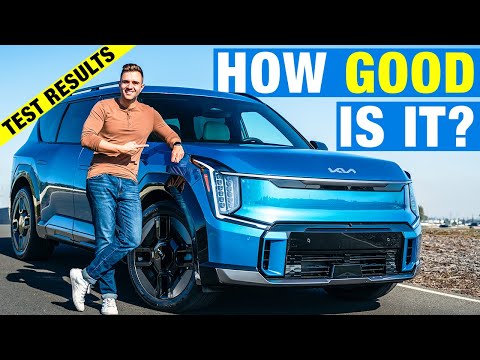
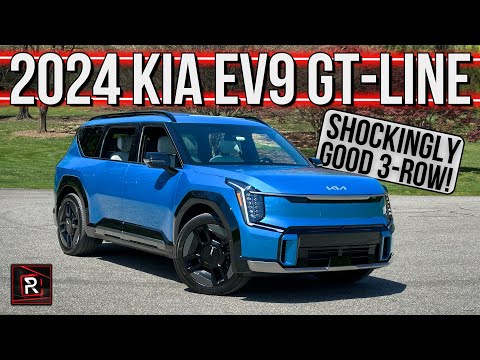
Get ready for a new benchmark in electric performance SUVs: the 2025 Kia EV9 GT is Kia’s most powerful production vehicle ever, redefining what a family hauler can be in the EV era. With truly wild acceleration, bold styling, and high-tech luxury, the EV9 GT blends practicality and excitement unlike anything else in its class, launching in Europe at €89,990.
Overview
The 2025 Kia EV9 GT is the flagship, high-performance addition to the EV9 lineup, propelling the brand into direct competition with European luxury giants. Its striking presence, huge interior, and electrifying powertrain transform it into a pace-setting, all-electric three-row SUV. Designed to show that practicality and driving fun aren’t mutually exclusive, it’s a rolling statement piece melding luxury, technology, and family-friendly flexibility with supercar-level thrills.
What’s New for 2025?
The GT badge debuts as the EV9’s performance flagship, building on the much-lauded regular model with:
- A bespoke, massively powerful dual-motor AWD powertrain
- Reinforced, electronically controlled, sport-tuned chassis and suspension for sharper handling
- Unique GT exterior styling: aggressive bumpers, neon green brake calipers, special alloys
- GT-specific interior elements, including exclusive trim and color schemes
These upgrades crank up excitement and visual drama, setting the EV9 GT well apart from its siblings and signaling its intent as a genuine performance SUV.
Design & Exterior
The EV9 GT delivers a futuristic “Digital Tiger Face” with a boxy silhouette that oozes presence on the road. At 5015 mm long and nearly 2 meters wide, it’s impossible to miss. The GT heightens the drama with:
- Distinctive neon accents and aggressive front/rear bumpers
- Large-diameter exclusive alloy wheels
- Neon green brake calipers for extra flair
- Sharp LED signature lighting and flush handles
Its blend of ruggedness and sleek sci-fi lines make it a true head-turner in any setting.
Interior, Tech & Cargo
Inside is a blend of minimalist luxury and family utility:
- Available as a six- or seven-seater with a flat floor for maximum space
- Premium materials and GT-unique colorways find harmony with sustainable design
- Striking panoramic dash with dual 12.3-inch screens and an extra 5-inch climate panel
- 333 liters of cargo with all seats up; 2393 liters with seats folded, plus a practical 52-liter frunk
- Loaded with Kia’s latest infotainment, Apple CarPlay, Android Auto, ambient lighting, and advanced comfort features.
Performance & Driving Experience
Where the GT soars is in performance:
- Dual permanent-magnet synchronous motors deliver 373–500+ kW (est. 507–580 hp) and 739 Nm (est. up to 742 lb-ft) torque.
- 0–100 km/h: as quick as 4.6 seconds, making it true sports car territory for a 3-row SUV
- Electronically controlled suspension and torque vectoring give sporty, poised handling without hurting comfort
- Top speed: up to 220 km/h
- Adaptive regenerative braking, including ‘i-Pedal’ for true one-pedal driving.
Range, Battery & Charging
- 96 kWh usable battery
- Real-world range: approximately 406 km (efficiency about 4.23 km/kWh)
- Ultra-fast 800V charging architecture (up to 210 kW DC): 10–80% top-up in under 25 minutes
- 10.5 kW onboard AC home charging
- Vehicle-to-Load (V2L) allows external device charging—for camping, tools, and more.
Safety & Driver Assistance
Flagship safety is standard:
- Euro NCAP 5-star rating
- Loaded with active safety (Highway Driving Assist 2, Forward Collision-Avoidance, Blind Spot Assist, 360° Monitor, and more)
- Semi-autonomous driving tech and integrated camera/sensor arrays give confidence in all conditions.
Warranty & Maintenance Coverage
- 7-year, 150,000 km comprehensive warranty covering vehicle, battery, and major components
- Battery guarantee to at least 70% original capacity
- Predictable maintenance requirements, with Kia’s strong reputation for reliability and a widespread support network in Europe.
The 2025 Kia EV9 GT brings supercar performance and advanced tech to the whole family, setting a new standard for what a big electric SUV can offer.
Why You'll Love It 😘
- Blistering SUV acceleration: Delivers sports car-level 0–100 km/h times; the dual-motor setup provides instant, thrilling torque for rapid overtakes and fast launches.
- Ultra-fast 800V charging: Supports high-power DC charging (up to 210 kW), enabling quick top-ups—10–80% in less than 25 minutes—ideal for road trips and reducing downtime.
- Hugely practical cabin: Genuinely spacious three-row seating, a flat floor, flexible seating configurations, and substantial cargo space make it family-friendly and versatile.
- Strong towing capacity: Can tow up to 2500 kg (braked), matching or surpassing many comparable gas-powered SUVs for utility.
Why You Might Think Twice 🤔
- Very high price: Premium EVs like this often start at or above €76,000 in Europe, with higher trims costing even more, putting them out of reach for many buyers.
- High energy consumption: Large, heavy electric SUVs have higher kWh-per-100km rates than smaller EVs, leading to increased running costs and potentially reduced range under heavy use.
- Challenging urban size: At about 5 meters long and 2 meters wide, these vehicles can be cumbersome to maneuver and park in tight city spaces.
- Potentially firm ride: Large wheels and a sportier suspension (often standard in performance-focused trims) can make the ride less compliant on rough or uneven roads.
Most Commonly Reported Issues By Owners
Owners of the Kia EV9 GT AWD (May 2025) have reported a variety of issues, including several recalled defects and some everyday complaints. While a number of owners are satisfied with the EV9’s comfort and driving experience, certain reliability concerns have emerged, especially in early ownership.
Recalls and Notable Reported Issues
-
Rear Gear Drive Unit Recall: A recall affected the rear gear drive unit (motor shaft) in AWD models due to improper welding during assembly. This could cause abnormal driveline noise, “Check AWD/4WD” warnings, and, in rare cases, a sudden loss of drive power. Kia’s remedy involves replacing the rear GDU at no cost to owners.
-
Seat Mounting Bolts: Some 2024-2025 EV9s, including GT AWD, were recalled due to missing mounting bolts for the second- and third-row seats. This presents a potential safety risk in a crash; the fix is a dealer inspection and bolt installation if missing.
-
Digital Instrument Cluster Failures: 2024-2025 EV9s were subject to a recall for intermittent blanking or failure of the digital instrument cluster due to a software error. Owners may experience brief periods where vital information is not displayed; a software update is available via dealer or over-the-air.
-
12V Battery Issues: A few owners have reported sudden failure of the 12V battery, rendering the car inoperable until serviced. Reports mention this as an early failure that can leave drivers stranded, possibly related to the complexities of EV management systems.
-
Charging Glitches: Several owners note problems with home and public charging, particularly incompatibility with some chargers and on-board charging system faults. Some issues required major repairs or module replacements and in a few cases, engineers from Kia to resolve persistent charging faults.
-
Steering Vibration: At least one consumer review flagged persistent steering vibration beginning around 70 mph, difficult for dealers to resolve, and remaining an annoyance in daily driving of a new, premium-priced vehicle.
-
Center Console Squeak: Long-term test reports find minor quality-control annoyances such as a squeaky or loose center console, which is not a safety defect but a nuisance for daily use.
-
Occasional Software Glitches: Some owners mention minor infotainment or control software bugs that require a simple system restart to resolve. Over-the-air updates help, but some persistent bugs may still crop up.youtube
Reliability and Satisfaction
-
While many owners praise the EV9 GT AWD for its ride quality, technology, and space, reliability is still average for a brand-new model, reflecting teething problems typical of new electric platforms.
-
Dealer and manufacturer responses to serious issues (like battery failures and drivetrain recalls) have been generally positive, but some fixes required lengthy service visits.
These issues should be weighed against the EV9 GT AWD’s strong set of features and early-adopter appeal, especially for those seeking a spacious, high-tech electric SUV.
Headline Snap
| Combined Efficiency | 229 Wh/km |
|---|---|
| Total System Power | 374 kW (508 PS) |
| Total Torque | 740 Nm |
| 0–100 km/h | 4.6 s |
| Top Speed | 220 km/h |
| Drivetrain | AWD (dual-motor) |
Price & Regional Availability (Price Only)
| Country/Region | Price |
|---|---|
| 🇬🇧 United Kingdom | £73,195–£77,000 |
| 🇳🇱 Netherlands | €77,995–€81,124 |
| 🇩🇪 Germany | €71,740–€72,640 |
| 🇺🇸 United States | $71,900–$76,000+ USD |
| 🇨🇦 Canada | $85,295–$89,000 CAD |
| 🇲🇽 Mexico | $73,620–$76,675 USD |
| 🇨🇳 China | Not currently offered |
| 🇨🇱 Chile | Not currently offered |
Prices shown are manufacturer’s recommended retail prices (MSRP/RRP) for the specified countries. They exclude indirect incentives and may vary by regional specifications and options. Values are subject to change without notice. All prices reflect late 2025–early 2026 market data; GT actual launch could bring premium pricing over GT-Line, where applicable.
United Kingdom 🇬🇧
- The Kia EV9 GT-Line AWD (the highest trim available, GT proper to follow) starts from £73,195–£76,195 OTR depending on specification and seating (6 or 7 seats).
- Top “GT-Line S” models reach just above £77,000 OTR.
- As of late 2025, the ultimate GT trim details are forthcoming; expect a substantial premium over these figures.
Netherlands 🇳🇱
- The Kia EV9 GT-Line AWD lists at €77,995–€81,124 depending on features and seats.
- Mid-2025 listings in the Netherlands consistently report sales prices for top AWD trims around €78,000–€81,000.
Germany 🇩🇪
- The Kia EV9 GT-Line AWD is priced around €71,740–€72,640.
- Some dealer and market listings for well-equipped AWD versions are close to or above €72,000, though GT-specific versions may be announced later.
United States 🇺🇸
- The 2026 Kia EV9 GT-Line AWD has an official starting MSRP of $71,900 USD.
- Most dealer listings for the fully loaded GT-Line AWD range from about $71,900 up to $76,000+ USD with options and destination.
Canada 🇨🇦
- The 2026 Kia EV9 GT AWD MSRP is $85,295 CAD.
- Actual transaction prices (with destination and fees) are in the range of $87,500–$89,000 CAD at Canadian dealers.
Mexico 🇲🇽
- The Kia EV9 GT-Line AWD is listed in US-based Mexican dealership databases with prices ranging from $73,620 to $76,675 USD (direct from US supply chains; local Kia Mexico availability may vary).
- Official Kia Mexico websites do not yet list an explicit GT/GT-Line AWD price but expect a similar bracket to the US.
China 🇨🇳
- The Kia EV9 GT or GT-Line AWD is not officially offered in the Chinese market as of late 2025, and pricing is not published.
- Local launch plans and pricing (if any) have not been disclosed.
Chile 🇨🇱
- There is currently no official pricing for the Kia EV9 GT or GT-Line AWD in Chile.
- Availability and local sales plans are unconfirmed.
Real-World Range Estimates
Between 305 – 605 km
| Condition | City | Highway (110 km/h) | Combined |
|---|---|---|---|
| 🌤️ Mild Weather | 605 km | 380 km | 475 km |
| 🌦️ Average Weather | — | — | 420 km |
| ❄️ Cold Weather | 425 km | 305 km | 360 km |
Indication of real-world range in several situations. ❄️ Cold Weather: “worst-case” at −10 °C with heating. 🌤️ Mild Weather “best-case” at 23 °C without A/C. Highway assumes a constant 110 km/h. Actual range depends on speed, driving style, climate and route conditions.
Long Distance Suitability (1-Stop Range) ★★★☆☆
| First Stop Distance | 304 km | First Stop Duration | 2h 46min |
| Charging Stop | 0km | Charging Stop | 15 min |
| Second Stop Distance | 164 km | Second Stop Duration | 1h 29min |
| Total Distance | 468 km | Total Duration | 4h 30min |
| Weather | 1-Stop Range |
|---|---|
| 🌤️ Mild Weather | 525 km |
| 🌦️ Average Weather | 468 km → ★★★☆☆ |
| ❄️ Cold Weather | 422 km |


The “long distance suitability” is a 5-star rating indicating how suitable a vehicle is for long trips. It’s based on the 1-Stop Range: total distance with one 15-minute DC fast-charging stop.
2025 thresholds:
- 0☆ <200 km;
- 1★ 200–325;
- 2★ 325–450;
- 3★ 450–575;
- 4★ 575–700;
- 5★ >700 km.
- Half-stars are assigned by linear interpolation.
Battery Details
| Nominal / Usable Capacity | 99.8 kWh / 96.0 kWh |
|---|---|
| Battery Type / Cathode | Lithium-ion • NCM |
| Architecture / Nominal Voltage | 800 V • 552 V nominal |
| Number of Cells / Pack Config | 456 • 152s3p |
| Form Factor / Name | Pouch • (not listed) |
| Warranty | 7 years / 150,000 km |
Charging Overview
| Category | Details |
|---|---|
| Home/Destination (AC) | Type 2 (rear-right); onboard 11 kW; 0→full ≈ 10 h 30 m; ≈ 41 km/h |
| Fast DC (CCS) | CCS (rear-right); peak 206 kW; avg ~194 kW (10→80%); 22 min; up to ~800 km/h |
| Plug & Charge | Supported (ISO 15118-2) |
| Autocharge | Supported |
| Battery Preconditioning | Supported; automatic via navigation to DC charger |
Home & Destination Charging (0→100%)
| Charging Point | Max. Power | Power | Time | Rate |
|---|---|---|---|---|
| Wall Plug (230V / 1×10A) | 2.3 kW | 2.3 kW | 49 h 15 m | 9 km/h |
| 1-Phase 16A (230V) | 3.7 kW | 3.7 kW | 30 h 45 m | 14 km/h |
| 1-Phase 32A (230V) | 7.4 kW | 7.4 kW | 15 h 15 m | 28 km/h |
| 3-Phase 16A (400V) | 11 kW | 11 kW | 10 h 30 m | 40 km/h |
| 3-Phase 32A (400V) | 22 kW | 11 kW † | 10 h 30 m | 40 km/h |
† limited by onboard charger. Charging is possible via wall plug or charging station. Public charging is always via a station. How fast the EV can charge depends on the EVSE used and the car’s onboard capacity. Some modes may not be widely available in all countries.
Fast Charging (10→80%)
Connector: Combined Charging System (CCS Combo 2). Rapid charging enables longer journeys by adding as much range as possible in the shortest time. Charging power drops markedly after ~80% SoC; typical rapid sessions end ≤80%.
| Charging Point | Max. Power | Avg. Power | Time | Rate |
|---|---|---|---|---|
| CCS 50 kW | 50 kW | 50 kW | 85 min | 200 km/h |
| CCS 100 kW | 100 kW | 100 kW | 42 min | 420 km/h |
| CCS 150 kW | 150 kW | 140 kW † | 30 min | 580 km/h |
| CCS 175 kW | 175 kW | 165 kW † | 26 min | 670 km/h |
| CCS 350 kW | 206 kW † | 194 kW † | 22 min | 800 km/h |
† Limited by vehicle charging capability. Autocharge supported. Plug & Charge supported (ISO 15118-2). Actual charging rates vary with temperature, battery state, station load, and driving style.
Claimed Charging Specs (Manufacturer)
Notes:
• Max. Power: The maximum charging power reached during the session.
• Charge From: The starting battery state-of-charge (% SoC).
• Charge To: The target battery state-of-charge (% SoC).
• Time: Total time required for the charging session.
| Max. Power | Charge From | Charge To | Time |
|---|---|---|---|
| 210 kW | 10% | 80% | 24 min |
Performance & Drivetrain
| Total Power / Torque | 374 kW (508 PS) • 740 Nm |
|---|---|
| 0–100 km/h | 4.6 s |
| Top Speed | 220 km/h |
| Drive | AWD |
Energy Consumption & Efficiency
| Standard / Basis | Range | Rated Consumption | Vehicle Consumption | Fuel-eq. |
|---|---|---|---|---|
| Real Range | 420 km | — | 229 Wh/km | 2.6 L/100 km (veh.) |
| WLTP | 505 km | 228 Wh/km | 190 Wh/km | 2.6 / 2.1 L/100 km |
- TEL = Test Energy Low
- TEH = Test Energy High.
- Rated = official figures incl. charging losses.
- Vehicle = calculated battery energy used for propulsion and on-board systems.
Real Energy Consumption Estimation
Between 159 – 315 km
| Scenario | City | Highway | Combined |
|---|---|---|---|
| ❄️ Cold Weather | 226 Wh/km | 315 Wh/km | 267 Wh/km |
| 🌤️ Mild Weather | 159 Wh/km | 253 Wh/km | 202 Wh/km |
Indication of real-world energy use in several situations. Cold: −10 °C with heating. Mild: 23 °C without A/C. Highway assumes 110 km/h. Energy use depends on speed, style, climate and route conditions.
Safety Rating ★★★★★
| Region | Rating |
|---|---|
| Europe (Euro NCAP) | Adult 84% • Child 88% • VRU 76% • Assist 83% (2023) |
| North America | NHTSA / IIHS not listed for this exact spec |
| South America | Latin NCAP not listed |
Regional safety ratings vary by year/configuration; check Euro NCAP, NHTSA, IIHS, and Latin NCAP for official results.
Dimensions & Weight
| L × W × H | 5015 × 1980 × 1755 mm (width w/ mirrors 2263 mm) |
|---|---|
| Wheelbase | 3100 mm |
| Weight (EU) / GVWR / Payload | 2648 kg / 3190 kg / 617 kg |
| Cargo (seats up / max / frunk) | 333 L / 2393 L / 52 L |
| Roof Load | 70 kg |
| Towing (unbraked / braked) / Hitch | 750 kg / 2500 kg • Hitch: Yes |
| Turning Circle | 12.4 m |
| Platform | HMG E-GMP (EV-dedicated) |
| Body / Segment / Roof Rails | SUV • JF – Luxury • Yes |
| Heat Pump | Yes (standard) |
Bidirectional Charging (V2X / BPT)
| Capability | Status | Meaning |
|---|---|---|
| V2L | Yes (3.6 kW AC) | Power external devices via interior socket or external adapter |
| V2H (AC) | Yes (11 kW) | Home backup / behind-the-meter power |
| V2G (AC) | Yes (11 kW) | Export to grid where permitted |
| V2H/V2G (DC) | No | DC bidirectional not supported |
| BPT | Supported (umbrella term) |
Miscellaneous
| Seats | 7 Seats |
|---|---|
| Isofix | 4 Seats |
| Car Body | SUV |
| Segment | JF – Luxury |
| Turning Radius | 12.4 m |
| Platform | HMG E-GMP |
| Ed Dedicated Platform | Yes |
| Roof Rails | Yes |
| Heat Pump | Yes |
| Heat Pump Standard Equipment | Yes |
* = estimated value. Average energy consumption and range assume moderate driving style and climate. Real-life values may differ significantly. Pricing information might not be actual for some regions. No rights can be derived from the information on this site.
Preceding Model Comparison
| Metric | EV9 99.8 kWh AWD (Land/GT-Line ref.) | EV9 99.8 kWh AWD GT (2025) | Δ |
|---|---|---|---|
| Real Range (Combined) | ~425–440 km (varies by trim) | 420 km | ≈ similar |
| 0–100 km/h | ~5.3 s (GT-Line) | 4.6 s | Faster |
| Vehicle Efficiency | ~210–220 Wh/km | 229 Wh/km | Higher consumption |
Comparison uses nearest prior AWD trims (e.g., GT-Line) as EV9 GT predecessor reference where the exact prior GT did not exist.
Previous Generation |
Next Generation |
|
Kia EV9 99.8 kWh AWD (Land/GT-Line ref.) |
There are no newer versions of this car |
1-Stop Range Definition 🔋
For vehicles without fast-charging capability, only the distance of the first stop is considered.
🚗 Driving Profile
- Begin with a fully charged battery
- Stop 1: Drive until the battery reaches 10% state-of-charge (SoC)
- Perform a 15-minute fast charge
- Stop 2: Continue driving until the battery again reaches 10% SoC
📋 Assumptions
- Driving speed, climate, and environmental conditions are based on Real Range Highway data
- No additional time required to initiate or stop the charging session
- The charging station always delivers the maximum power requested by the vehicle
- The battery is assumed to be in optimal health and condition
⚠️ Important Note : In real-world driving, it is practically impossible to replicate these conditions exactly.
This benchmark should therefore be viewed as a comparative metric, designed to evaluate vehicles under standardized conditions rather than predict exact trip distances.
5-Star Rating Definition ★
Assignment of Stars in 2025
- ☆ 0 less than 200 km
- ★ from 200 km to 325 km
- ★★ from 325 km to 450 km
- ★★★ from 450 km to 575 km
- ★★★★ from 575 km to 700 km
- ★★★★★ more than 700 km
Based on 2025 thresholds: 3 stars awarded for 490 km average. Half-stars interpolated. Vehicles with a rating between these values receive a rating based on a linear scale.
Fast Charging (10 -> 80%) ⚡
- Max. Power: maximum power provided by charge point
- Avg. Power: average power provided by charge point over a session from 10% to 80%
- Time: time needed to charge from 10% to 80% Rate: average charging speed over a session from 10% to 80%
EV Charger Connector Types