Jeep Compass Electric First Edition FWD ★★☆☆☆
Available to order since May 2025

 370 km
 180 km/h
  8.5 Sec
  430 km/h
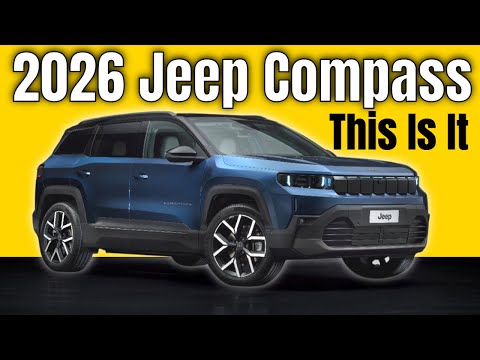
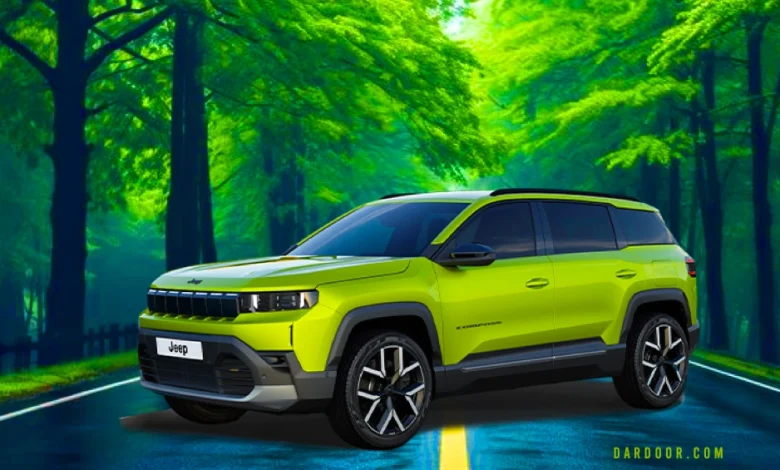
 The 2025 Jeep Compass Electric First Edition is a well-equipped, Italy-built compact SUV marking Jeep’s full-electric European debut, starting at €50,400. It features a rugged, tech-forward design, spacious modern interior, efficient performance, and rapid charging capabilities.
Charging Port Type CCS Type 2 (Charging Port type affects charging station compatibility.) 
Max AC Charging 11 KW Home Charging, 3-Phase support. On-board AC charger (inverter) Capacity affects AC charging speed. Max DC Charging 160 KW Maximum power the car can accept from a DC faster charger. Architecture 400 V Higher power train voltage means faster charging and better efficiency. Battery Capacity (Usable) 74 kWh Net battery capacity that is available for use. Tested Range (EU -WLTP)
500 km Estimated Distance of a Full Charge Tested Range (USA – EPA) Not Available Estimated Distance of a Full Charge Motor / Power Performance Around 157 kW (211 hp) FWD (1 motor) Torque 345 Nm Peak Toque of the car’s electric motor 0-100 km/h 8.5 Second acceleration time from standstill to 100 km/h Top Speed 180 km/h Maximum speed the car can reach Charging 10→ 80% 30 minutes Under Ideal Conditions Drive Type FWD (1 motors) PMSM
About Jeep Compass Electric First Edition FWD
What’s New for 2025
- Fully electric Compass (First Edition) replaces petrol/diesel models in EU markets.
- Built on the STLA Medium platform, designed for electrification from the ground up.
- Premium launch trim includes the latest infotainment, advanced safety, and unique styling.
Design & Exterior
- SUV-length: 4552 mm; Height: 1675 mm.
- Familiar Jeep silhouette with EV-specific grille, aero wheels (20-inch), and LED lighting.
- Special First Edition badging and exclusive paint options.
Interior, Technology & Cargo
- Tech-rich cabin with five seats, high-quality materials, and standard Apple CarPlay/Android Auto.
- Twin digital displays (16-inch infotainment, 10-inch driver cluster).
- 550-litre boot, plus extra front stow space; available comfort packs with heated/ventilated seats.
- Standard connected services and premium safety features.
Performance & Driving Experience
- Front-wheel-drive Permanent Magnet Synchronous Motor: 157 kW (213 hp), 345 Nm torque.
- 0–100 km/h in 8.5 seconds, top speed 180 km/h.
- Selectable regen braking modes; smooth and quiet drive.
Range, Battery & Charging
- Usable battery: 74 kWh (80 kWh nominal).
- Real-world range: 425 km combined, 310 miles WLTP (pending final European homologation).
- Good efficiency: 5.74 km/kWh.
- AC charging: 11 kW standard (optional 22 kW); DC fast charging up to 160 kW (10–80% in 30 minutes).
Safety & Driver Assistance
- Expected top Euro NCAP scores (testing pending).
- First Edition packs: adaptive cruise, active lane keep, blind-spot monitor, auto emergency braking, 360º cameras, and more.
Warranty & Maintenance
- 2-year, unlimited-km base warranty.
- Battery covered for 8 years or 160,000 km.
- Competitive powertrain and service terms expected.
The Jeep Compass Electric First Edition uniquely blends Jeep’s off-road heritage with EV tech, making it an enticing option for eco-minded families seeking style, practicality, and efficiency in their next SUV.
Why You'll Love It 😘
- Good everyday range suitable for family use (425 km real-world estimate).
- Large, practical boot with 550 litres of cargo space.
- Richly equipped First Edition trim with high-tech features and comfort.
- Distinctive Jeep design sets it apart from rivals.
- Quick DC charging up to 160 kW enables 10–80% in 30 minutes.
Why You Might Think Twice 🤔
- First Edition carries a high entry price: €50,400 in much of Europe, £39,200 in the UK, and €48,900 in Italy.
- Only front-wheel drive available at launch—no AWD option until later.
- Heavy curb weight can affect efficiency and handling.
- No front trunk for additional storage.
- Euro NCAP crash safety rating is still pending for this new model.
Families looking for tech-forward practicality and quick charging will find a lot to like, while those prioritizing price, all-weather AWD, or confirmed safety credentials may want to wait for new trims or further test results.
Key Owners-Reported Issues
Early owner reports for the 2025 Jeep Compass Electric First Edition focus on teething issues typical of a new EV platform, and many complaints echo the brand’s legacy problem areas in electronics and build quality. Most notably, reported issues so far include:
Most Common Owner-Reported Issues
- Electrical and Electronic Glitches: Early Compass Electric owners note the appearance of random warning lights, dashboard resets, or temporary malfunctions of infotainment and digital systems, sometimes requiring full system reboots.
- False Activation of Parking Brake: Several have reported the electronic parking brake engaging unexpectedly at traffic lights, or after a full stop (issue also present in past Compass models).
- Build Quality/Trim Concerns: Some drivers report inconsistent panel gaps, loose interior trim, or rattles, particularly with launch edition vehicles.
- Range Variability: A handful mention that real-world range can sometimes fall short of the official estimate in cold weather or with heavy loads, though this is a common EV issue.
- Charging Station Compatibility: A minority indicate hiccups with public charger handshakes, especially at older DC fast-charging stations.
Most issues appear infrequent and many are software related, often fixed by dealer updates or resets. However, early complaints about electronics and parking brake behavior are worth monitoring as more vehicles reach owners. No major battery or motor faults have emerged as of the latest owner reviews and automotive reports.
| Combined Efficiency | 200 Wh/km |
|---|---|
| Total System Power | 157 kW (213 PS) |
| Total Torque | 345 Nm |
| 0–100 km/h | 8.5 s |
| Top Speed | 180 km/h |
| Drive | Front-wheel drive |
Price & Regional Availability
| Country | Price (First Edition, 2025) | Notes |
|---|---|---|
| 🇬🇧 United Kingdom | £39,200 | Fully electric FWD, top First Edition trim |
| 🇩🇪 Germany | €50,400 | FWD, First Edition, direct from Jeep Germany |
| 🇫🇷 France | ~€50,400 | Parity with Germany, First Edition model |
| 🇮🇹 Italy | €48,900 | Slightly lower local starting price |
| 🇪🇺 Europe (General) | €50,400 | Launch price in most EU countries |
Real-World Range Estimates
Between 265 – 540 km
| Condition | City | Highway (110 km/h) | Combined |
|---|---|---|---|
| 🌤️ Mild Weather | 540 km | 335 km | 420 km |
| 🌦️ Average Weather | — | — | 370 km |
| ❄️ Cold Weather | 370 km | 265 km | 315 km |
Indication of real-world range in several situations.
- ❄️ Cold Weather: “worst-case” (−10 °C with heating).
- 🌤️ Mild Weather: “best-case” (23 °C without A/C).
- 🛣️ Highway assumes a constant 110 km/h.
- 🏎️ Actual range depends on speed, driving style, weather and route conditions.
Long Distance Suitability (1-Stop Range)
| First Stop Distance | 266 km | First Stop Duration | 2h 25min |
| Charging Stop | 0km | Charging Stop | 15 min |
| Second Stop Distance | 120 km | Second Stop Duration | 1h 6min |
| Total Distance | 387 km | Total Duration | 3h 46min |
| Weather | 1-Stop Range |
|---|---|
| 🌤️ Mild Weather | — |
| 🌦️ Average Weather | 387 km → ★★☆☆☆ |
| ❄️ Cold Weather | — |


The “Long Distance Suitability” is a 5-star rating indicating how suitable a vehicle is for long trips. It’s based on the 1-Stop Range: total distance with one 15-minute DC fast-charging stop.
2025 thresholds:
- 0☆ <200 km;
- 1★ 200–325;
- 2★ 325–450;
- 3★ 450–575;
- 4★ 575–700;
- 5★ >700 km.
- Half-stars are assigned by linear interpolation.
Battery Details
| Nominal / Usable Capacity | 80.0 kWh / 74.0 kWh |
|---|---|
| Battery Type / Cathode | Lithium-ion • NCM |
| Architecture / Nominal Voltage | 400 V / No data |
| Cells / Pack Config / Form Factor / Name | No data |
| Warranty | 8 years / 160,000 km |
Charging Overview
| Category | Details |
|---|---|
| Home / Destination (AC) | Type 2 (left-rear); 11 kW onboard. 0→full ≈ 8 h; ≈ 47 km/h. |
| Fast DC (CCS) | CCS (left-rear); peak 160 kW; avg ≈ 90 kW (10→80%). 10→80% ≈ 36 min; ≈ 430 km/h. |
| Plug & Charge | Not supported (ISO 15118) |
| Autocharge | Supported |
| Battery Preconditioning | No data |
Actual AC/DC speeds depend on grid connection, site load, ambient temperature, cable rating, and initial state of charge.
Home & Destination Charging (0→100%)
Charging is possible using a regular wall plug or a charging station. Public charging is always via a charging station. How fast the EV can charge depends on the EVSE used and the vehicle’s AC capacity. Availability of 1-phase vs 3-phase connections varies by country.
| Europe — Type 2 (Mennekes IEC 62196) | ||||
|---|---|---|---|---|
| Charging Point | Max. Power | Power | Time (0→100%) | Rate |
| Wall Plug (230 V / 1×10 A) | 2.3 kW | 2.3 kW | 38 h | 10 km/h |
| 1-Phase 16 A (230 V) | 3.7 kW | 3.7 kW | 23 h 45 m | 16 km/h |
| 1-Phase 32 A (230 V) | 7.4 kW | 7.4 kW | 11 h 45 m | 31 km/h |
| 3-Phase 16 A (400 V) | 11 kW | 11 kW | 8 h | 46 km/h |
| 3-Phase 32 A (400 V) | 22 kW | 11 kW † | 8 h | 46 km/h |
† limited by onboard charger
Fast Charging (10→80%)
For the 2025 Jeep Compass Electric 74 kWh, rapid charging (from 10% to 80% state-of-charge) is impressively quick, making longer journeys more convenient. Here are the key fast-charging specifications:
| Charging Point | Max. Power | Average Power | Time (10→80%) | Rate |
|---|---|---|---|---|
| CCS 50 kW | 50 kW | 45 kW † | 73 min | 210 km/h |
| CCS 100 kW | 100 kW | 75 kW † | 44 min | 350 km/h |
| CCS 150 kW | 150 kW | 85 kW † | 38 min | 400 km/h |
| CCS 175 kW | 160 kW † | 90 kW † | 36 min | 430 km/h |
| CCS 350 kW | 160 kW † | 90 kW † | 36 min | 430 km/h |
| Parameter | Value |
|---|---|
| Max. DC Charging Power | 160 kW |
| Avg. Session Power (10–80%) | 110–120 kW (typical) |
| Time (10–80% SoC) | ~30 minutes |
| Avg. Charging Speed | ~170–175 km of range (added per 15 min) |
- Charging power tapers after 80% to protect battery health, so rapid sessions usually target 80% or less.
- Real-world times can vary based on battery temperature, SoC, station quality, and ambient conditions.
- For fastest results: pre-condition the battery if possible and use a high-quality 150 kW+ charger.
This charge performance allows the Jeep Compass Electric to tackle long trips with confidence, returning to the road quickly after public charger stops.
- Autocharge allows automatic session initiation at supported CCS stations.
- Plug & Charge enables automatic session initiation per ISO 15118 at supported stations.
- Actual rates vary with temperature, battery state, site load, and driving style.
Claimed Charging Specs (Manufacturer)
- Max. Power: The maximum charging power reached during the session.
- Charge From: The starting battery state-of-charge (% SoC).
- Charge To: The target battery state-of-charge (% SoC).
- Time: Total time required for the charging session.
| Max. Power | Charge From | Charge To | Time |
|---|---|---|---|
| 160 kW | 20 % | 80 % | 31 min |
Performance & Drivetrain
| Total Power / Torque | 157 kW (213 PS) • 345 Nm |
|---|---|
| 0–100 km/h | 8.5 s |
| Top Speed | 180 km/h |
| Drive | FWD |
Energy Consumption & Efficiency
| Standard / Basis | Range | Rated Consumption | Vehicle Consumption | Fuel-eq. |
|---|---|---|---|---|
| Real Range | 370 km | — | 200 Wh/km | 2.2 L/100 km (veh.) |
| WLTP | 500 km | 175 Wh/km | 148 Wh/km | 2.0 / 1.7 L/100 km |
- TEL = Test Energy Low
- TEH = Test Energy High.
- Rated = official figures incl. charging losses.
- Vehicle = calculated battery energy used for propulsion and on-board systems.
Tested Energy Consumption
Real Range
Here’s how the 2025 Jeep Compass Electric First Edition’s real-world and official (WLTP) efficiency ratings compare, using both “vehicle” and “rated” figures:
| Metric | Real-World (Estimate) | WLTP (Official) |
|---|---|---|
| Range * | 370 km | 500 km |
| Vehicle Consumption | 200 Wh/km | 148 Wh/km |
| Rated Consumption (incl. charging losses) | — | 175 Wh/km |
| Vehicle Fuel Equivalent * | 2.2 l/100 km | 1.7 l/100 km |
| Rated Fuel Equivalent | — | 2.0 l/100 km |
| CO₂ Emissions | 0 g/km | 0 g/km |
- * “Rated” figures are higher because they account for all charging losses and are required for regulatory purposes.
- “Vehicle” values reflect only the energy used by the car itself, excluding charging losses.
- Real-world range is typically lower than optimistic lab tests; expect about 370 km in average use, versus the 500 km WLTP lab rating.
These distinctions mean real-world energy use and range will often differ noticeably from what official ratings suggest, which is important for planning long trips or monitoring efficiency.
Real Energy Consumption Estimation
Between 137 – 279 Wh/km
| Scenario | City | Highway | Combined |
|---|---|---|---|
| ❄️ Cold Weather | 200 Wh/km | 279 Wh/km | 235 Wh/km |
| 🌤️ Mild Weather | 137 Wh/km | 221 Wh/km | 176 Wh/km |
Indication of real-world range in several situations.
- ❄️ Cold Weather: “worst-case” (−10 °C with heating).
- 🌤️ Mild Weather: “best-case” (23 °C without A/C).
- 🛣️ Highway assumes a constant 110 km/h.
- 🏎️ Actual range use depends on speed, driving style, weather and route conditions.
Safety Rating
| Region | Rating | Details |
|---|---|---|
| Europe (Euro NCAP) | — | Not listed for this spec |
| North America | — | NHTSA / IIHS not listed for this EV |
| South America | — | Latin NCAP not listed |
Regional safety ratings vary by test year and configuration; check local programs for official results.
Dimensions & Weight
| L × W × H | 4552 × 1928 × 1675 mm |
|---|---|
| Wheelbase | 2795 mm |
| Weight Unladen (EU) | 2198 kg |
| GVWR / Payload | No data / No data |
| Cargo Volume (up / max / frunk) | 550 L / No data / No data |
| Roof Load | No data |
| Tow Hitch | Possible • 750 kg unbraked / 1000 kg braked • Vertical load n/a |
| Turning Circle | No data |
| Platform | STLA MEDIUM • EV-dedicated: No |
| Body / Segment / Roof Rails | SUV • JC – Medium • Yes |
| Heat Pump | Yes (optional) |
Bidirectional Charging (V2X / BPT)
| Capability | Status | Meaning |
|---|---|---|
| V2L (Vehicle-to-Load) | No | Power external devices from the vehicle |
| V2H (Vehicle-to-Home) | No | Home backup / whole-home power |
| V2G (Vehicle-to-Grid) | No | Export to grid |
| BPT (Battery Power Transfer) | No | Umbrella term for bidirectional features |
Miscellaneous
| Seats / ISOFIX | 5 seats • ISOFIX: No data |
|---|---|
| Segment | JC – Medium |
* = estimated value where indicated. Average energy consumption and range assume moderate climate and driving style. Real-life values may differ significantly. Pricing may not reflect all regions. No rights can be derived from the information on this site.
Preceding Model
| Metric | Previous Compass (ICE/PHEV) | Compass Electric 74 kWh (2025) | Δ |
|---|---|---|---|
| Real Range (Combined) | — | 370 km | — |
| 0–100 km/h | — | 8.5 s | — |
| Efficiency (Vehicle) | — | 200 Wh/km | — |
Previous Generation |
Next Generation |
|
There are no newer versions of this car |
There are no newer versions of this car |
1-Stop Range Definition ✋
For vehicles without fast-charging capability, only the distance of the first stop is considered.
🚗 Driving Profile
- Begin with a fully charged battery
- Stop 1: Drive until the battery reaches 10% state-of-charge (SoC)
- Perform a 15-minute fast charge
- Stop 2: Continue driving until the battery again reaches 10% SoC
📋 Assumptions
- Driving speed, climate, and environmental conditions are based on Real Range Highway data
- No additional time required to initiate or stop the charging session
- The charging station always delivers the maximum power requested by the vehicle
- The battery is assumed to be in optimal health and condition
⚠️ Important Note : In real-world driving, it is practically impossible to replicate these conditions exactly.
This benchmark should therefore be viewed as a comparative metric, designed to evaluate vehicles under standardized conditions rather than predict exact trip distances.
5-Star Rating Definition ★
- The 1-Stop Range rating in 2025 is a practical benchmark for EVs: it measures the distance a vehicle can travel after a single 15-minute charging session, under combined real-world weather conditions.
- This rating provides a clear, star-based measure of long-distance travel practicality—judged by how far a car can go after a single 15-minute DC fast charge.
- The rating puts instant, comparable context on each EV’s long-distance travel ability, helping buyers easily compare real-world charging performance between models.
- This value is translated into star ratings: In 2025, the system assigns stars as follows:
| Star Rating | 1-Stop Range (combined conditions) |
|---|---|
| ☆ | less than 200 km |
| ★ | 200 km to 325 km |
| ★★ | 325 km to 450 km |
| ★★★ | 450 km to 575 km |
| ★★★★ | 575 km to 700 km |
| ★★★★★ | more than 700 km |
- The 1-Stop Range is calculated using real-world benchmarks in three temperature scenarios to show suitability for road trips, regardless of weather.
- Half-star ratings interpolate between these whole-star bands, so a result of 490 km would earn 3½ stars.
- This system makes it easier for drivers to quickly assess and compare vehicles for long-distance suitability, regardless of ambient temperature or charging conditions.
Fast Charging (10 -> 80%) ⚡
- Max. Power: maximum power provided by charge point
- Avg. Power: average power provided by charge point over a session from 10% to 80%
- Time: time needed to charge from 10% to 80% Rate: average charging speed over a session from 10% to 80%
EV Charger Connector Types 🔌

This table provides a quick reference for which plug types are used for AC vs DC charging and their regional prevalence. Here’s a comparative table of major EV charger connector types, showing whether they are for AC or DC charging, their suitability, and the countries/regions where they are widely adopted:
| Connector Type | AC/DC | Suitability | Countries/Regions Adapted |
|---|---|---|---|
| Type 1 (SAE J1772) | AC | Standard US/Japan AC, slow–medium | USA, Canada, Japan |
| Type 2 (Mennekes) | AC | European AC standard, universal | Europe, UK, Australia, South Africa |
| Tesla (North America) | AC/DC | Tesla vehicles only, fast Supercharge | USA, Canada |
| CCS1 (Combo 1) | DC | US fast DC charge, some AC support | USA, Canada |
| CCS2 (Combo 2) | DC | Europe fast DC charge, AC support | Europe, UK, Australia, South Africa |
| CHAdeMO | DC | Nippon/Japanese, some global DC | Japan, parts of Europe, USA |
| GB/T (AC/DC) | AC/DC | China national standard, all speeds | China |
| Tesla (Europe) | DC | European Tesla fast charging (CCS2) | UK, Europe |
- Type 1 (J1772): Used for AC charging in North America and Japan; now fading in favor of CCS1 for DC.
- Type 2 (Mennekes): Universal AC connector across Europe; most wallboxes/public AC points use this.
- CCS (Combined Charging System): CCS1 for North America, CCS2 for Europe/Australia/South Africa. Enables both AC and high-power DC charging in one socket, now the global DC fast charge standard.
- CHAdeMO: Used mostly for rapid DC charging in Japan and some regions; declining outside Japan as CCS adoption grows.
- GB/T: Unique AC and DC connectors for China, incompatible with Western standards.
- Tesla: Proprietary plug in North America; now shifting to “NACS” standard which will be more widely adopted by Ford, GM, and others. In Europe, Tesla uses CCS Type 2, fully compatible with local standards.