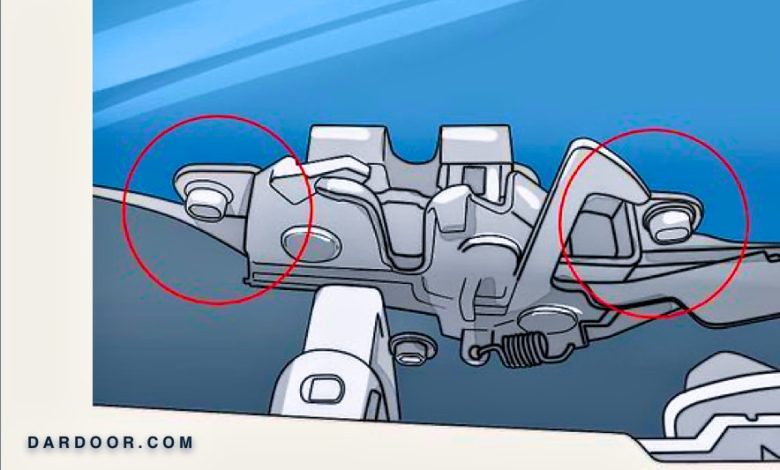
The hood latch is one of those vehicle components you rarely think about—until it fails. It is the gateway to your engine bay, where all essential maintenance and inspections begin. Whether you’re checking engine oil, replacing a battery, refilling washer fluid, or inspecting belts and hoses, you need reliable access through the hood. A faulty latch or release cable can make even the simplest maintenance task impossible.
⚙️ How the Hood Latch System Works
Most modern vehicles use a two-stage hood latch system for safety:
- Primary latch: Operated by a release lever inside the cabin, typically near the driver’s footwell or dashboard. Pulling the lever pulls a cable that releases the main latch holding the hood closed.
- Secondary latch (safety latch): A secondary hook under the hood that prevents it from flying open if the primary latch accidentally releases. To fully open the hood, you must manually move this latch, usually with your fingers.
The latch assembly includes a spring-loaded mechanism mounted to the front of the car, a release cable that runs into the cabin, and sometimes an electronic release motor (on luxury or electric vehicles). Problems can occur anywhere in this system—from the handle to the cable to the latch itself.
🚦 Symptoms of Hood Latch Problems
- The hood release lever feels loose or has no resistance when pulled.
- The hood pops up slightly but won’t fully unlatch.
- The hood won’t stay shut and pops up while driving.
- The release cable feels stiff, sticky, or stuck.
- Rust, dirt, or visible damage around the latch assembly.
- On some vehicles, a dashboard warning light may indicate the hood is ajar.
If you notice any of these symptoms, it’s important to address the problem immediately to avoid being locked out of your engine bay—or worse, having the hood fly open on the highway.
🧰 Tools and Materials Needed
- Socket wrench set (common sizes: 8mm, 10mm, 12mm)
- Flathead and Phillips screwdrivers
- Needle-nose pliers
- Plastic trim removal tools
- Lubricant spray (white lithium grease recommended)
- Rust penetrant (WD-40 or PB Blaster)
- Replacement latch or cable (OEM preferred)
- Work gloves and safety glasses
- Flashlight or inspection light
- Magnet pickup tool (for dropped screws or bolts)
📋 How to Open a Stuck Hood
If your hood won’t open using the release lever, follow these steps:
- Check the release lever: Pull the lever and listen. If there’s no resistance, the cable may be broken or disconnected.
- Apply pressure: Have a helper press down on the hood while you pull the lever. This can relieve tension and allow the latch to release.
- Manual release through the grille: Insert a long screwdriver or hook tool through the grille to push or pull the latch directly.
- Remove panels if necessary: Some cars allow access by removing the front grille or underbody panels.
- Final option: From underneath the vehicle, reach up with a long tool to trip the latch (use caution and ensure the car is safely supported).
🔧 Hood Latch Repair and Adjustment
1. Cleaning and Lubrication
Over time, dirt, grime, and rust can build up inside the latch mechanism. This causes sticking or incomplete release.
- Spray rust penetrant into the latch and let it sit for 5–10 minutes.
- Scrub the latch with a wire brush or toothbrush.
- Rinse with cleaner and dry thoroughly.
- Apply a generous coat of white lithium grease to all moving parts.
2. Cable Inspection and Replacement
The hood release cable runs from the lever in the cabin to the latch. If frayed, stiff, or broken, it must be replaced:
- Remove trim panels around the interior release lever.
- Disconnect the cable from the lever.
- Trace the cable through the firewall and into the engine bay.
- Disconnect the cable from the latch assembly.
- Install the new cable, routing it the same way as the old one.
- Lubricate the cable before final installation.
3. Latch Replacement
- Remove bolts securing the latch to the radiator support.
- Disconnect the release cable and electrical connector (if applicable).
- Install the new latch, ensuring proper alignment with the striker.
- Tighten bolts evenly and test fit before closing the hood fully.
4. Adjusting Hood Latch Alignment
If the hood does not close evenly or requires excessive force to shut, adjustment is necessary:
- Loosen latch mounting bolts slightly.
- Move latch up, down, left, or right to align with the hood striker.
- Tighten bolts securely once alignment is correct.
- Check that the hood closes firmly without slamming.
🔍 Troubleshooting Hood Latch Issues
| Problem | Cause | Repair |
|---|---|---|
| Hood won’t open at all | Broken cable or seized latch | Manually release latch, replace cable or latch |
| Hood won’t stay shut | Weak spring or misaligned latch | Replace spring or adjust latch alignment |
| Hood release lever stuck | Dry or rusted cable | Lubricate or replace cable |
| Hood pops up while driving | Secondary latch not engaging | Inspect safety latch, replace if damaged |
| Hood rattles when driving | Loose striker bolts or worn latch | Tighten bolts, replace latch if worn |
❓ Frequently Asked Questions
Q: Can I drive with a faulty hood latch?
A: Absolutely not. If the hood flies open while driving, it can block visibility and cause a serious accident.
Q: How much does it cost to repair a hood latch?
A: DIY parts: $20–$60 for a latch or cable. Professional repair: $150–$300 including labor.
Q: How often should I service my hood latch?
A: At least once a year—clean and lubricate it during oil changes or seasonal inspections.
Q: Can cold weather cause hood latch problems?
A: Yes. Ice and snow can freeze the latch. Use de-icer spray or warm water (never boiling) to thaw it safely.
🛡️ Maintenance & Prevention
- Lubricate latch assembly annually or during every major service.
- Inspect cable routing for sharp bends or rubbing points.
- Replace worn or frayed cables immediately.
- Check secondary safety latch function every time you service the hood.
- Wash away dirt and road salt from latch area regularly in winter.
✅ Conclusion
The hood latch is a small but vital component of your vehicle. When it fails, it can lock you out of your engine bay or create serious safety risks on the road. Fortunately, most hood latch issues—whether caused by rust, dirt, cable failure, or misalignment—are relatively straightforward to fix with the right tools and patience. By following this detailed repair guide, you’ll be able to safely open a stuck hood, diagnose problems, and restore smooth operation to your hood latch system.
Regular cleaning, lubrication, and inspection ensure long-term reliability and prevent unexpected failures. With these steps, you can confidently tackle hood latch repairs yourself and maintain both convenience and safety.