Complete Guide to Automotive Suspension System Maintenance and Repair
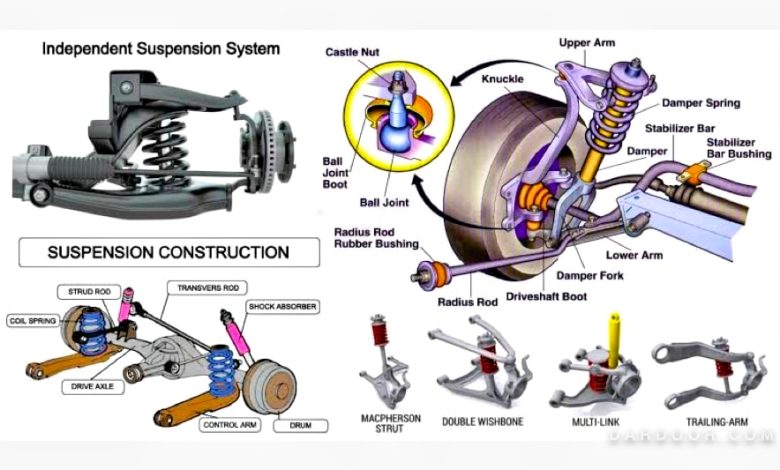
1. Suspension System Overview
The suspension system’s primary functions include:
- Absorbing shocks from road irregularities
- Maintaining optimal tire contact with the road surface
- Ensuring stability during acceleration, braking, and cornering
- Enhancing ride comfort and reducing driver fatigue
Modern systems integrate mechanical, hydraulic, and electronic components, working together for optimal performance. You can view detailed schematics on Dardoor’s Suspension System Diagram.

2. Major Components of the Suspension System
- Shock Absorbers (Dampers): Control suspension movement and prevent excessive bounce.
- Springs: Coil, leaf, or air springs support vehicle weight and absorb impacts.
- Control Arms: Connect suspension to frame, allowing controlled wheel movement.
- Bushings: Rubber or polyurethane mounts reducing vibration and noise.
- Sway Bars (Stabilizer Bars): Reduce body roll during cornering.
- Struts: Combine shock absorber and coil spring into one unit.
3. Different Types of Suspension Systems
Automotive suspension systems vary by design and application:
- Independent Suspension: Each wheel moves independently—common in modern vehicles.
- Solid Axle Suspension: Wheels on the same axle are connected—common in trucks and off-road vehicles.
- MacPherson Strut: Compact design integrating shock absorber and spring—used in most front suspensions.
- Multi-Link Suspension: Multiple control arms for better handling—common in high-performance cars.
- Air Suspension: Uses air springs for adjustable ride height and comfort.
4. Inspection and Maintenance Intervals
Routine inspections should be performed every 12,000 miles (20,000 km) or annually. More frequent checks are required for off-road or heavy-duty use. OEM schedules are available at OEM Maintenance Schedules.
During inspections, check for:
- Leaking shock absorbers
- Cracked or sagging springs
- Loose or damaged control arm bushings
- Excessive sway bar play
- Uneven tire wear
5. Symptoms of Suspension Problems
- Excessive bouncing after hitting a bump
- Pulling to one side while driving
- Clunking or knocking noises over bumps
- Uneven or rapid tire wear
- Vehicle nose-diving during braking
- Body roll during cornering
6. Diagnostic Procedures
Basic diagnostic steps include:
- Visual inspection of shocks, struts, and springs.
- Bounce test—push down on each corner and check for excessive oscillations.
- Check ride height against OEM specifications.
- Listen for noises while driving over bumps.
- Inspect tire wear patterns for alignment issues.
Detailed procedures are outlined in Dardoor’s Suspension Diagnostic Guide.
7. Common Suspension Repairs
Shock Absorber Replacement
Remove the wheel, unbolt the shock absorber, install the new unit, and torque bolts to OEM specs.
Spring Replacement
Support the control arm, compress the spring using a spring compressor, remove, and replace with the correct OEM-rated spring.
Bushing Replacement
Press out old bushings, lubricate, and install new ones—ensure proper orientation.
Sway Bar Link Replacement
Remove retaining nuts, swap the link, and torque to specifications.
8. Performance and Comfort Upgrades
- Adjustable coilovers for tunable ride height and damping
- Upgraded sway bars for reduced body roll
- Polyurethane bushings for sharper handling
- Air suspension kits for adjustable comfort
Upgrade parts can be found in Dardoor’s Suspension Parts Catalog.
9. Preventive Maintenance Tips
- Rotate tires regularly to prevent uneven suspension loading.
- Keep wheel alignment within OEM specifications.
- Clean undercarriage to prevent corrosion on suspension parts.
- Address small suspension noises promptly to avoid major repairs.
- Replace shocks and struts in pairs for balanced handling.
10. OEM References and Further Reading
- Suspension System Diagram
- OEM Maintenance Schedules
- Suspension Diagnostic Guide
- Suspension Parts Catalog
By following the correct inspection intervals, using OEM parts, and addressing issues early, you can ensure your vehicle’s suspension system remains safe, responsive, and comfortable for years to come.