Brake Pad & Rotor Specifications: A Complete Technical Reference 🚗🛠️
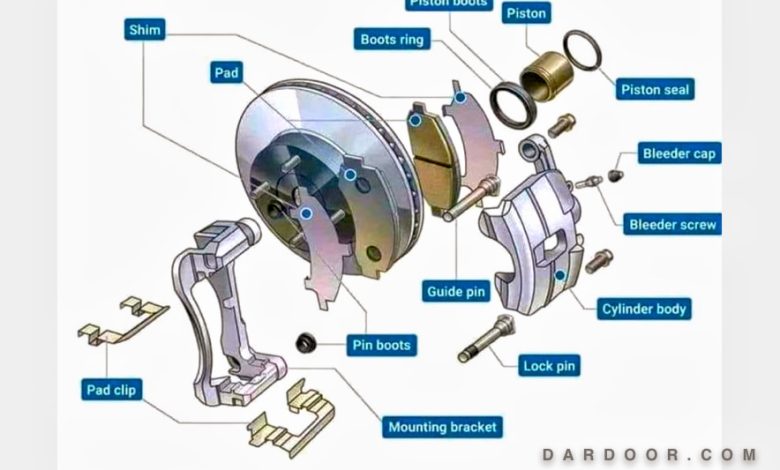
Choosing the right brake pads and rotors is critical for safety, performance, and longevity. This technical guide covers every specification you need—from pad friction coefficients and rotor thickness to run‑out tolerances and thermal capacity. OEM references from Dardoor.com ensure you have accurate part numbers, diagrams, and torque specs at your fingertips.
1. Why Specifications Matter
Brake systems convert kinetic energy into heat via friction. Precise specifications ensure:
-
- Safety: Adequate stopping power under all conditions.
- Consistency: Predictable pedal feel and modulation.
- Durability: Resistance to fade, wear, and thermal cracking.
- Compatibility: Correct fit and function with calipers, wheels, and ABS sensors.
Deviating from OEM‑specified pad compounds, rotor thickness, or hardware can lead to premature wear, noise, vibration, or even catastrophic failure.
Refer to the Brake Pad & Rotor Specifications page on Dardoor for exact OEM part numbers and performance data.
2. Brake Pad Materials & Performance Ratings
Brake pads come in several formulations, each with unique friction characteristics, temperature ranges, and wear rates:
-
- Organic (NAO): Non‑asbestos organic compounds; quiet but moderate fade resistance (~250 °C).
- Semi‑Metallic: 30–60% metal content (steel, copper); improved heat dissipation, moderate noise, fade resistance to ~400 °C.
- Low‑Metallic NAO: Similar to organic but with added metal fibers; better initial bite, slight noise increase.
- Ceramic: Ceramic fibers with filler; quiet, low dust, excellent durability, fade resistance up to ~600 °C.
- Carbon‑Ceramic (Track): Ultra‑high performance; fade resistance >1,000 °C, minimal weight but very high cost.
Each pad material is rated by:
-
- Coefficient of Friction (μ): Static vs. dynamic μ values determine bite and modulation.
- UL 228 Safety Standard: SAE J661 friction classification (e.g., “P1” to “P7”).
- Fade Index: Percentage drop in μ after repeated high‑energy stops.
- Wear Rate: Measured in mm per 1,000 km under standardized tests.
For side‑by‑side OEM and aftermarket pad comparisons, visit the Brake Pad Material Comparison page at Dardoor.
3. Pad Dimensions & Fitment
Correct pad size ensures full contact area and prevents uneven wear. Key dimensions include:
-
- Overall Length & Width: Matches caliper housing and pistons.
- Thickness: New pad thickness (typically 10–20 mm) vs. minimum service thickness (3–4 mm).
- Backing Plate Geometry: Contours and chamfers for correct seating and noise reduction.
- Chamfer & Slot Patterns: Designed to minimize noise and gases under heavy load.
- Shims & Anti‑Squeal Coatings: Integrated layers to damp vibrations.
Digital caliper measurements and OEM diagrams (e.g., Brake System Diagram) verify exact fitment for your vehicle make, model, and trim.
4. Rotor Types & Geometries
Rotors (discs) vary in material and design to match performance needs:
-
- Solid Rotors: Single‑piece; cost‑effective for most street vehicles.
- Vented Rotors: Two‑piece with internal vanes; improved heat dissipation for performance and heavy vehicles.
- Slotted Rotors: Surface slots to expel gases, dust, and heat, enhancing wet performance.
- Cross‑Drilled Rotors: Holes for venting; risk of crack propagation under extreme use.
- Coated Rotors: Anti‑rust coating on non‑friction surfaces to prolong life.
Choose rotor geometry based on driving conditions—daily commuting, towing, performance track, or off‑road use.
5. Critical Rotor Specifications
Key rotor specs to verify before purchase:
-
- Nominal Thickness: OEM new thickness, typically 10–32 mm depending on rotor diameter.
- Minimum Service Thickness: Defined by OEM—rotors must be replaced when worn to this dimension.
- Diameter: Outer friction diameter; larger rotors offer more leverage and heat capacity.
- Run‑Out Tolerance: Maximum lateral wobble (<0.05 mm) to prevent pulsation.
- Radial Thickness Variation (RTV): Variation in thickness around the circumference; must be <0.02 mm to avoid vibration.
- Ventilation Width: Distance between vanes in vented rotors; wider vents improve airflow.
- Material Grade: Grey iron (ASTM designation), two‑piece iron/aluminum, or carbon‑ceramic composites.
Always compare rotor labels and OEM datasheets on Dardoor’s Brake Rotor Hardware resource to confirm exact numeric values for your application.
6. Pad–Rotor Compatibility & Matching
Optimal braking performance requires proper pairing of pad compound and rotor type:
-
- Compound Heat Range: Pads must match rotor’s thermal capacity to avoid glazing or cracking.
- Surface Finish: New rotors require initial break‑in to condition the pad surface.
- Rotor Mass: Heavier rotors absorb more heat but increase unsprung weight.
- Wear Rate Matching: Pair pads and rotors with similar wear characteristics to prevent uneven grooves.
- ABS & Sensor Integration: Some brake pads include wear sensors that must align with caliper and rotor sensor ports.
Consult the OEM compatibility charts on Dardoor to ensure correct pad–rotor combinations for your vehicle and driving style.
7. Testing & Quality Standards
Brake components must pass rigorous tests:
-
- SAE J2522: Friction material characterization at various temperatures.
- FMVSS 135 (DOT 5): U.S. Federal performance standard for passenger cars.
- ECE R90: European homologation requiring <±15%> performance compared to OEM.
- NVH Testing: Noise, Vibration, and Harshness protocols to minimize squeal.
- Corrosion & Salt Spray: Evaluates coating durability.
Only purchase pads and rotors from suppliers with clear testing certifications. Dardoor lists approved OEM parts that meet or exceed these standards.
8. Installation & Torque Requirements
Correct installation preserves specification integrity:
-
- Clean mating surfaces and apply anti‑seize where specified.
- Align rotor centering ring (if used) to eliminate run‑out.
- Torque caliper bracket bolts and lug nuts per OEM spec (see Brake System Diagram).
- Bed‑in new pads and rotors with a controlled series of stops to transfer pad material evenly.
Improper torque or failure to bed‑in can lead to early failures, noise, or reduced friction performance.
9. Service Intervals & Maintenance Tips
Extend pad and rotor life with routine checks:
-
- Inspect pad thickness at every oil change (~10,000 km).
- Measure rotor thickness and run‑out at 20,000 km or during tire rotations.
- Clean caliper slides and lubricate with high‑temperature grease.
- Flush brake fluid as per OEM interval (typically every 2 years).
- Use high‑quality DOT‑rated fluid to maintain hydraulic performance.
Track service data and replace components before reaching minimum specifications to ensure safety.
10. Frequently Asked Questions
Q1: How do I know when my rotors need machining vs. replacement?
If rotor thickness is above minimum spec and run‑out <0.05 mm, machining (turning) is possible. Below minimum or with thermal cracks, replacement is mandatory.
Q2: Are ceramic pads always better than semi‑metallic?
Ceramic pads offer quiet operation and low dust but may provide less cold‑bite than semi‑metallic. Choose based on driving conditions and pedal feel preference.
Q3: What causes rotor warping?
Excessive heat from heavy braking without cooling, uneven torque on lug nuts, or failure to bed‑in properly can lead to warping.
Q4: Where can I find exact OEM torque specs?
Consult the Brake System Diagram and part sheet on Dardoor for your vehicle’s model year and trim.
11. Conclusion & Further Resources
Understanding and adhering to brake pad and rotor specifications is essential for safe, reliable braking performance. From material selection and dimensional accuracy to compatibility and installation torque, every parameter plays a role in system effectiveness. Use the Dardoor OEM references to verify exact part numbers, dimensions, and performance data.
🔗 Explore more technical guides and OEM documentation at:
- Brake Pad & Rotor Specifications
- Brake System Diagram
- Brake Pad Material Comparison
- Brake Rotor Hardware
Stay informed, maintain precise records, and replace components before they reach their specified limits. Safe driving starts with well‑specified brakes!