Automotive A/C System Diagnosis, Repair & Maintenance
A practical, shop-tested guide to diagnosing and repairing vehicle air-conditioning systems
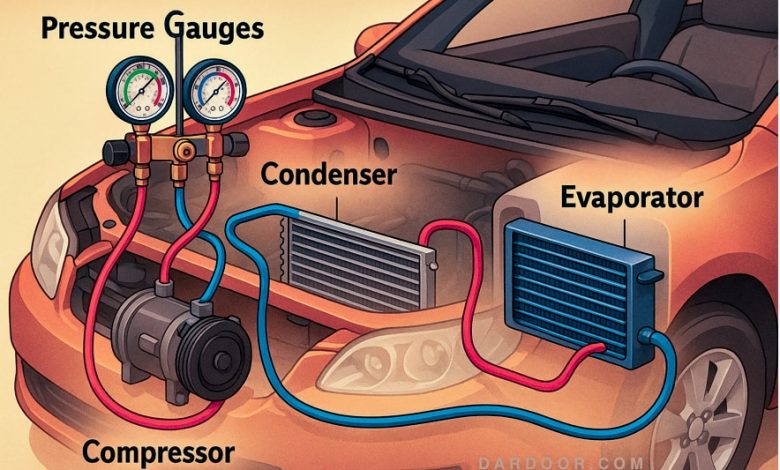
A practical, shop-tested guide to finding leaks, testing components, replacing compressors and evaporators, and restoring cold, odor-free cabin air.
1. Overview — why the A/C system matters
Automotive air conditioning does more than keep passengers comfortable: it improves windshield defogging, reduces driver fatigue, and—when working efficiently—can improve cabin air quality. Modern A/C systems are closed, pressurized refrigeration circuits that must be tight, clean, and serviced with the correct refrigerant and lubricant to perform correctly. Routine diagnosis and maintenance prevent expensive compressor replacements and nasty cabin odors.
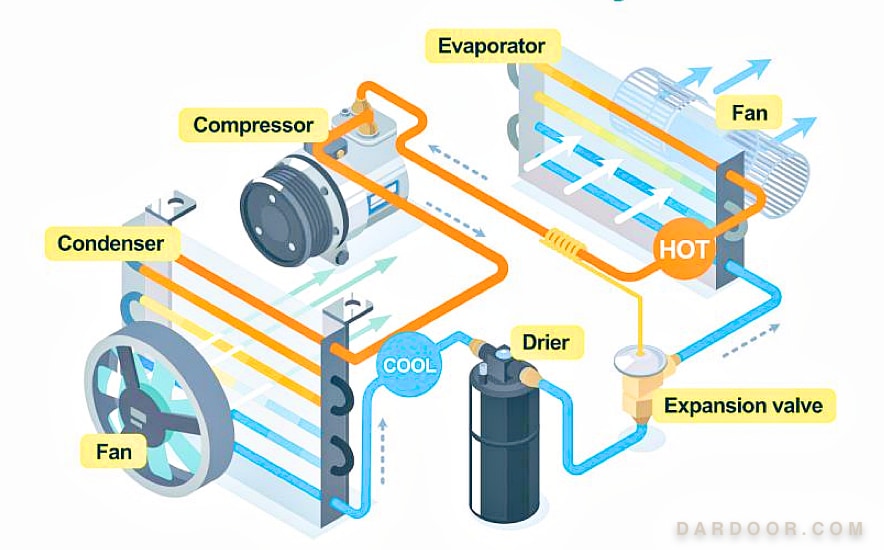
2. Major components & how they work
Understanding component function helps you interpret symptoms quickly. The major parts are:
- Compressor: The pump of the system — compresses low-pressure refrigerant vapor into high-pressure, high-temperature vapor.
- Condenser: Mounted in front of the radiator — dissipates heat; vapor condenses to a high-pressure liquid.
- Receiver/drier or accumulator: Stores liquid refrigerant and removes moisture via desiccant; protects system from moisture and contaminants.
- Expansion device (TXV or orifice tube): Metering device that creates a pressure & temperature drop so refrigerant flashes into cold vapor.
- Evaporator: Inside the HVAC box — cold refrigerant absorbs heat from cabin air and converts to vapor; condensate drains outside the vehicle.
- Sensors & controls: Pressure switches, evaporator temperature sensor, ambient temperature sensors, and HVAC control module manage system operation and safety.
3. Common symptoms and quick checks
Before testing pressures, do these rapid checks:
- No cold air at vents: could be low refrigerant, failed compressor clutch, or blocked condenser/evaporator.
- Reduced cooling after highway driving: often poor air flow (blocked condenser) or undercharged system.
- Compressor clutch not engaging: verify voltage to clutch coil, check pressure cut-out switch and fuse/relay.
- Hissing or bubbling noises: possible leak at service ports, hose, or fittings.
- Bad smells from vents: mold or standing water in HVAC box or a contaminated evaporator — see cabin odor section.
4. Essential tools & safety
Proper tools reduce guesswork and keep you legal and safe:
- Manifold gauge set (R134a or R1234yf compatible) with accurate low and high side gauges
- Digital thermometer or infrared gun to read vent, evaporator, and condenser temps
- Electronic leak detector (sniffer) plus UV dye and UV lamp as backup
- Vacuum pump with micron gauge for evacuation
- Refrigerant recovery/recharge station (certified) or access to certified shop equipment
- Multimeter, clamp ammeter (to check compressor current), and wiring tools
- PPE: safety glasses, gloves, and appropriate ventilation
5. Step-by-step diagnosis (pressures, temps, sensors)
A systematic test sequence narrows down the issue quickly. Follow this order:
Step 1 — Visual & electrical checks
- With engine off, inspect belts, compressor mounting, visible hoses, and condenser fins for damage or obstructions.
- Check fuses & relays and test voltage to the compressor clutch coil while calling for A/C from the HVAC controls.
Step 2 — Static pressure check
Attach manifold gauges to the low and high service ports. With the engine off and system at ambient temperature, observe static pressure — it should be roughly equal on both sides and consistent with ambient temperature (saturation pressure). A very low static pressure usually indicates a leak or undercharge.
Step 3 — Running pressure & temperature checks
- Start the engine and set A/C to max cool with blower on medium. Watch low/high pressures and compare to typical values for the refrigerant (manufacturer charts vary by ambient temperature).
- Measure vent air temperature and evaporator outlet temperature. A satisfied system typically produces vent temps of 35–45°F (2–7°C) depending on ambient.
- Check compressor current draw with a clamp ammeter — a mechanically dragging compressor will show abnormally high current. Use this to determine whether to bench test or replace the unit.
Step 4 — Sensor & control verification
Read evaporator temperature sensor values with a scan tool or multimeter and compare against expected ranges. Faulty sensors can cause the system to unnecessarily cycle off to prevent evaporator freeze or to inhibit compressor engagement. Dardoor has a guide on evaporator sensor replacement and testing that is useful for specific models.
6. Finding and fixing refrigerant leaks
Leak detection is typically the most time-consuming part of A/C repair. Use a layered approach:
Electronic sniffer
A calibrated electronic leak detector will find active leaks at hoses, O-ring joints, schrader valves, and condenser seams. Move the probe slowly and systematically around fittings and along hose runs.
UV dye & lamp
If the system already contains dye (or you add a small amount per manufacturer guidance), operate the system and use a UV lamp in the dark to inspect joints. Dye accumulates at leak points and is a fast visual method for small leaks.
Soap solution & bubble test
For visible fittings or service ports, a soapy water spray will produce bubbles at leak points while the system is pressurized. This is inexpensive and effective for obvious leaks.
Repair tactics
- Replace leaking O-rings and lubricate with correct PAG oil or OEM-specified lube during reassembly.
- Replace damaged hose assemblies or crimped lines rather than trying to patch them in most cases.
- Condenser replacement is common in impacts; small punctures can sometimes be repaired, but replacement is more reliable.
7. Compressor failure: tests & replacement
Compressors fail from wear, contamination, or inadequate lubrication. Symptoms include no engagement, grinding noises, seized rotor, or poor cooling despite full charge.
Tests to confirm compressor health
- Verify clutch coil receives correct voltage when A/C commanded. If voltage is present but clutch doesn’t engage, check clutch air gap and clutch plate condition.
- With engine running and clutch engaged, measure compressor current. Excessive current indicates internal drag or bearing failure; very low might indicate slipping or internal electrical faults.
- Listen for abnormal noises (rattle, knock) from front of compressor under operation.
- If you suspect internal damage after contamination (metalic particles), inspect the oil for metal shavings and consider system flush and replacement of the compressor, receiver/drier, and expansion device. Many OEM manuals note compressor failure as a common A/C fault requiring replacement.
Replacement best practices
- Always replace the receiver/drier or accumulator when replacing a compressor — the desiccant captures moisture and becomes saturated during failure events.
- Use the correct oil type and volume — consult OEM or Dardoor parts references for part numbers and lubricant specs.
- Inspect system for contamination; if metallic debris is present, flush lines thoroughly and replace contaminated components.
- Torque mounting bolts and fittings to specification and replace O-rings with new, lubricated parts to ensure leak-free joints.
8. Evaporator, condenser & receiver/drier service
Evaporator access: The evaporator core sits inside the HVAC plenum and is often the hardest part to replace because it requires dash or HVAC box removal. If the evaporator is leaking internally, replacement is usually required. Dardoor’s vehicle manuals show step-by-step evaporator replacements for many models.
Condenser service: The condenser is front-mounted and more accessible; replacement is straightforward after removing refrigerant into a certified recovery machine. Check for bent fins and clean gently with a fin comb; however, punctured condensers require replacement.
Receiver/drier or accumulator: This component must be replaced on any open system service (when the system is exposed to air) because the desiccant becomes saturated and loses effectiveness. Never reuse an old drier after opening the system.
9. Recharge procedures & refrigerant notes
Recharging an A/C system is a precise task — both the amount and type of refrigerant matter. General guidance:
- Recover existing refrigerant into a certified recovery machine unless the system is known empty after a proper leak repair. Never vent refrigerant to atmosphere.
- Evacuate system to at least 500 microns (0.5 torr) and perform a vacuum hold to verify integrity.
- Charge with the manufacturer-specified refrigerant type and measured mass (grams/ounces) using a scale for accuracy. Ambient temperature and specified superheat/subcooling targets are used to fine-tune final charge.
- Use proper PAG oil or OEM oil type and quantity when replacing the compressor or after a major repair.
R1234yf offers a much lower GWP while providing similar cooling performance, it is the newer, climate-friendlier refrigerant used in modern vehicle air-conditioning systems. It was adopted to reduce greenhouse impact compared with older HFCs such as R134a.
10. Cabin odors, mold, and HVAC hygiene
Bad smells typically come from microbial growth on the evaporator or in the HVAC plenum. Symptoms include musty, mildew, or sour odors when A/C runs. Effective remedies:
- Inspect and replace cabin air filter—often the simplest fix.
- Clean evaporator drain and plenum to remove standing water and debris. Ensure drain is open and water flows freely under the vehicle.
- Use A/C foams and evaporator cleaners per product instructions to kill microbes in the evaporator and ductwork. Dardoor has a guide on curing mold and mildew odors in cabin HVAC systems with step-by-step tips.
- For persistent issues, remove the evaporator box and perform a deep clean or replace the evaporator core.
11. Preventive maintenance & seasonal checklist
Keep an A/C system healthy with a simple seasonal routine:
- Run the A/C briefly during cold months to keep seals lubricated and prevent desiccant saturation.
- Inspect belts, condenser fins, and cabin filter every 12 months or 12,000 miles.
- Perform a pressure/visual check for leaks yearly; top up refrigerant only if you confirm system integrity first.
- Replace receiver/drier or accumulator after any open system repair.
- Record part numbers, oil type, and refrigerant mass after service—this makes future work precise and predictable.
12. Common causes of refrigerant loss
- Corrosion: Road salt and weather corrode condensers and aluminium pipework, causing leaks.
- Mechanical damage: Vibration, crashes or impact can rupture lines or fittings.
- Age & wear: Seals, O-rings and service ports degrade over time.
13. Regulatory & environmental considerations
Refrigerants are regulated due to environmental impact. Technicians must be certified to handle, recover, and recharge refrigerants; fines and penalties apply for improper handling. Use approved recovery machines and follow disposal regulations for recovered refrigerant and contaminated oil.
14. OEM resources & further reading
Model-specific wiring diagrams, compressor part numbers, and step-by-step procedures make complex A/C repairs much simpler. Dardoor hosts vehicle repair manuals and targeted guides covering evaporator sensor replacement, compressor failures, and A/C system troubleshooting—use those resources for exact torque specs and disassembly steps. :contentReference[oaicite:8]{index=8}
- Dardoor Repair Guides (A/C & HVAC section)
- Evaporator temperature sensor replacement guide.
- See vehicle-specific manuals on Dardoor for compressor and condenser replacement steps (example model manuals often list A/C compressor failure and replacement procedures).