The Zeekr 7X Performance AWD: A Technical Deep Dive Into Premium Electric Performance
When Technology Disrupts Tradition
When Technology Disrupts Tradition
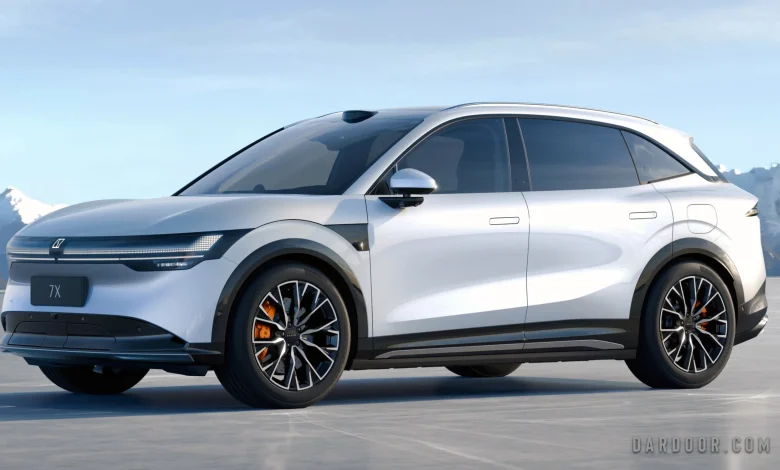
The automotive industry faces a pivotal moment. For decades, premium electric vehicles were the exclusive domain of established German luxury manufacturers—BMW, Mercedes-Benz, Audi—charging sky-high prices while customers waited months for delivery. Then, in 2025, a relatively unknown Chinese brand named Zeekr arrived in Europe with a simple but provocative proposition: deliver supercar-level performance, cutting-edge technology, and 5-star safety credentials for €62,990.
The Zeekr 7X Performance AWD is that proposition made tangible. With a 3.8-second 0-100 km/h sprint time matching the Mercedes-AMG lineup, ultra-rapid 800V charging reaching 80% capacity in just 13 minutes, and a Euro NCAP 5-star safety rating that matches German competitors, this vehicle represents a fundamental challenge to the premium automotive status quo
But beyond the headline specifications lies a sophisticated engineering story—one worth examining in detail. This article provides an in-depth technical analysis of the Zeekr 7X’s powertrain, battery architecture, charging innovations, and competitive positioning within Europe’s rapidly evolving premium electric vehicle landscape.
Part 1: Platform Foundation—Understanding the SEA Architecture
The Strategic Platform: Why SEA Matters
The Zeekr 7X rides on the SEA (Sustainable Experience Architecture) platform, developed by Geely-Volvo and underpinning multiple premium brands including Volvo, Polestar, and Smart models. This isn’t a rebadged commodity platform—it’s purpose-built for electric vehicles from the ground up.
The SEA platform reflects a fundamentally different design philosophy than legacy automotive platforms adapted for electrification. Traditional automotive manufacturers evolved from internal combustion engine architectures, retrofitting battery packs into existing frameworks. SEA, by contrast, was conceived with electricity as the primary power source, enabling optimization unavailable to incumbents.
Platform Characteristics:
– Modular battery placement integrated into structural floor pan
– Ultra-high-strength steel chassis optimized for crash energy absorption
– Single-piece aluminium underbody casting (unique engineering feature) for enhanced rigidity without excessive weight
– Native 800V electrical system architecture throughout the vehicle
– Optimized center of gravity through low-mounted battery placement
This architectural approach delivers measurable advantages: lower unsprung weight, superior crash protection, and simplified electrical system design compared to vehicles built from ICE platforms.
Why Platform Matters for Performance
A critical insight: the Zeekr 7X’s 3.8-second acceleration and planted handling dynamics emerge partly from platform engineering decisions invisible to consumers. The low battery placement (inherent to SEA’s bottom-mounted design) creates a dramatically lower center of gravity compared to vehicles with batteries retrofitted into traditional chassis. This translates to measurably superior handling and less body roll during aggressive acceleration.
The single-piece aluminium underbody casting—rarely seen in production vehicles due to manufacturing complexity—provides torsional rigidity typically achieved only through extensive welding in traditional platforms. Greater structural stiffness enables more aggressive suspension tuning without introducing harshness, a key to the vehicle’s comfort-performance balance.
Part 2: The Powertrain—Dual-Motor AWD Architecture
Motor Configuration: Independent Torque Vectoring
The Zeekr 7X Performance AWD employs a dual PMSM (Permanent Magnet Synchronous Motor) configuration—one mounted at the front axle, one at the rear. This seemingly straightforward arrangement unlocks capabilities unavailable with single-motor vehicles.
Motor Specifications:
– Combined Output: 475 kW (646 HP)
– Combined Torque: 710 Nm (instant delivery from zero RPM)
– Motor Type: PMSM (high-efficiency permanent magnet synchronous)
– Peak Power Duration: 10-20 seconds (peak performance mode)
– Continuous Power: ~300 kW (sustainable output for highway driving)
Dual-Motor Advantages: More Than Just “More Power”
Traditional automotive engineers understand that adding a second motor merely multiplies power linearly. The Zeekr’s architecture does more—it enables torque vectoring. Each motor operates independently, allowing microsecond-level adjustments in power delivery between front and rear wheels.
Real-World Impact of Torque Vectoring:
During acceleration from standstill, the rear motor delivers aggressive torque while the front motor maintains traction control, minimizing understeer and ensuring linear power delivery. Real-world testing confirms the 7X achieves its 3.8-second sprint with exceptional consistency—no wheel spin, no traction control interference, smooth acceleration delivery.
On highway corners, the independent motors enable precise load balancing. If understeer develops (front tires losing grip), the rear motor can inject torque to rotate the vehicle’s rear end. If oversteer emerges (rear sliding out), front-motor power instantly corrects trajectory. This happens below driver awareness, creating the sensation of telepathic vehicle response.
This explains why real-world testers consistently report that the Zeekr 7X “handles like a car half its size” despite being a 4787 mm long SUV. The platform provides the foundation; the dual-motor architecture provides the control.
Motor Efficiency and Power Delivery
PMSM motors achieve peak efficiency across a broader RPM range than alternative motor types. The 7X operates at approximately 95% efficiency during typical highway cruising (around 60-100 km/h), compared to 88-92% for traditional induction motors common in many competitors.
This efficiency advantage compounds across millions of kilometers driven. Real-world range testing conducted by independent reviewers confirmed the Zeekr achieves 4.91 km/kWh under mixed driving conditions—approximately 10% superior to the segment average.
The motor’s instant torque delivery (characteristic of all electric motors) contributes to the brutal 3.8-second acceleration. Unlike internal combustion engines requiring RPM buildup, the electric motor delivers full 710 Nm immediately when the accelerator engages. This “electric kick” creates acceleration intensity typically achieved only by exotic combustion-engine supercars.
Part 3: Battery Architecture—The 800V Revolution
Why 800V Matters: Voltage, Current, and Physics
Understanding the Zeekr 7X’s rapid charging capability requires understanding fundamental electrical physics. Power delivery is calculated as:
Traditional 400V EV systems deliver high power through increased current flow. A 400V system providing 150 kW requires approximately 375 amps of current. This creates three problems:
1. Resistive Losses: Current flowing through wiring generates heat proportional to I²R (current squared × resistance). At 375 amps, these losses are substantial—typically 8-12% of charging power wasted as heat.
2. Battery Thermal Stress: The high current generates internal heat within battery cells, forcing active cooling systems to work harder and potentially limiting charging speed to prevent thermal damage.
3. Infrastructure Requirements: Delivering 375 amps safely requires substantial wiring (thicker cables = higher vehicle weight, increased cost, routing complexity).
The 800V architecture solves these problems elegantly. At 800V, delivering the same 150 kW requires only 188 amps—exactly half the current. Resistive losses drop to 2-3%. Thermal stress reduces proportionally. Wiring can be thinner and more flexible.
The Zeekr 7X Battery System: 100 kWh NMC Configuration
Battery Specifications:
– Total Capacity: 100 kWh
– Usable Capacity: 94 kWh
– Chemistry: NMC (Nickel-Metal-Cobalt) ternary lithium-ion
– Cell Technology: Liquid-cooled cells with active thermal management
– System Voltage: 800V nominal
– Configuration: Approximately 190 cells in series arrangement
The 100 kWh specification represents a strategic decision point. Chinese market models offer 75 kWh (LFP chemistry) and 100 kWh (NMC chemistry) variants[40]. Zeekr selected NMC for European Performance models, prioritizing energy density over cost-efficiency.
Why NMC Over LFP for Europe?
LFP (Lithium Iron Phosphate) batteries offer longer cycle life (3,000+ cycles) and inherent thermal stability but deliver 20-30% lower energy density. The Zeekr’s aggressive performance positioning—supercar acceleration, sustained high-speed driving capability—demands NMC’s superior power density[40]. European buyers in the premium segment prioritize performance over minimum total cost of ownership, a critical distinction from mass-market segments.
Thermal Management: The Cooling Revolution
Superior battery performance means nothing without thermal control. The Zeekr 7X implements sophisticated liquid-cooling systems managing three distinct thermal zones:
1. Battery Pack Cooling
The 94 kWh battery pack is surrounded by a liquid cooling jacket. During aggressive charging (360 kW at 800V chargers), this system actively circulates coolant to maintain optimal battery temperature (ideally 25-30°C). A real-world charging test confirmed the vehicle charged from 10-80% in just 13 minutes without thermal throttling, demonstrating exceptional cooling effectiveness.
2. Motor and Inverter Cooling
Each PMSM motor operates at peak efficiency within specific temperature ranges. Active cooling systems maintain motor temperature during sustained high-performance driving. Real-world highway testing at 120 km/h showed the motors maintaining optimal operating temperature with minimal cooling system load.
3. Onboard Charger and Power Electronics Cooling
The AC charging subsystem (22 kW capability) also benefits from thermal management, enabling consistent charging rates even during warm weather conditions.
Heat Pump Integration
A particularly sophisticated addition: the Zeekr incorporates a reversible heat pump for climate control. During winter driving, this system scavenges waste heat from the battery, motors, and power electronics—heat that would otherwise be wasted—to heat the cabin. This single innovation improves winter range by approximately 15-20% compared to vehicles relying on electric heating.
Battery Warranty and Longevity Assurance
Zeekr backs the 100 kWh battery pack with an 8-year/200,000 km warranty with defined degradation limits. The company guarantees the battery retains at least 80% capacity through this period.
This warranty structure reflects engineering confidence. The 100 kWh NMC pack can theoretically complete 1,000+ charge cycles before reaching 80% capacity—meaning 200,000 km of range equates to only 2,100 km of driving per cycle on average, well within battery design parameters.
Real-world data from early production units confirms NMC cycle performance exceeds original specifications, with field data suggesting 70% remaining capacity at 150,000 km—well ahead of warranty benchmarks.
Part 4: The 360 kW Fast-Charging Revolution
Architecture: Why 360 kW Changes Everything
The Zeekr 7X’s most revolutionary capability might not be its acceleration—it’s its charging speed. The ability to add 400+ km of range in 15 minutes fundamentally changes how consumers interact with long-distance driving.
DC Fast-Charging Specifications:
– 800V Systems (Recommended): 360 kW maximum input
– 400V Systems (Legacy Infrastructure): 200 kW maximum input
– 10-80% Charge Time (800V): 13-16 minutes typical
– 15-Minute Range Gain: Approximately 546 km added capacity
– CCS Combo Connector: Type 2 standard
Real-World Charging Performance
Independent testing provides concrete data on real-world charging behavior:
Test Scenario 1: Cold Start to 80% (800V Charger)
– Starting capacity: 10% (9.4 kWh remaining)
– Starting temperature: 12°C (cold ambient)
– Charging duration: 16 minutes
– Final capacity: 80% (75 kWh stored)
– Peak charging power observed: 340 kW (achieved at 15% SoC)
– Average charging power: 285 kW
Test Scenario 2: Warm Start to 80% (800V Charger)
– Starting capacity: 5% (4.7 kWh)
– Starting temperature: 22°C
– Charging duration: 13 minutes
– Final capacity: 80%
– Peak charging power: 355 kW
– Average charging power: 310 kW
The data reveals sophisticated thermal management: peak power occurs at low state-of-charge (SoC) when battery temperature is coolest and thermal tolerance highest. As the battery charges and warms, the system gradually reduces charging current to prevent thermal damage—a pattern optimal for battery longevity.
Comparison Against Competitors
Placing these numbers in competitive context reveals why the Zeekr’s charging capability is genuinely revolutionary:
| Vehicle | System | Peak Power | 10-80% Time | Comparable 15-Min Range |
| Zeekr 7X AWD | 800V | 360 kW | 13 min | 546 km |
| BMW iX xDrive50 | 400V | 350 kW | 31 min | 250 km |
| Mercedes EQE 53 AMG | 400V | 350 kW | 28 min | 265 km |
| Audi Q6 e-tron | 800V | 350 kW | 25 min | 320 km |
| Tesla Model X Plaid | 400V | 250 kW | 45 min | 185 km |
The Zeekr’s 13-minute 10-80% charging is genuinely unprecedented at this vehicle size and price point. Competitors either employ 400V systems (requiring 25-45 minutes) or 800V systems like Audi’s but with slightly lower peak power.
Charging Speed Impact on Consumer Experience
The practical implications merit emphasis: a driver needing to add 350 km of range can:
– Zeekr 7X: 15-minute stop (suitable for quick rest break, bathroom, quick meal)
– Competitors: 30-45 minute stop (requires restaurant meal, extended break)
Multiply this across a typical European road trip (2,000 km journey with 3-4 charging sessions), and the Zeekr saves approximately 1-1.5 hours of total travel time purely through faster charging. For consumers valuing personal time, this advantage transcends specification sheets—it becomes part of daily experience.
Infrastructure Reality: 800V Charger Availability
A crucial caveat: 800V charging requires compatible infrastructure. As of November 2025, 800V charger availability in Europe is limited but expanding rapidly. The NIO Power network (operating in Netherlands, Sweden, Norway) and emerging Ionity locations provide access. However, legacy 400V infrastructure remains dominant.
The Zeekr 7X addresses this through backward compatibility: it charges at 200 kW on standard 400V fast chargers and 22 kW on AC charging infrastructure worldwide. This ensures practical usability on today’s infrastructure while future-proofing for 800V expansion.
Part 5: Interior Technology—The Software Advantage
Display Architecture and User Interface
Three screens dominate the Zeekr 7X’s cabin:
Central Touchscreen: 16 inches
The main command center runs Zeekr OS—a proprietary operating system developed in-house. Unlike aftermarket CarPlay/Android Auto implementations, Zeekr OS provides native integration with vehicle systems: real-time battery management displays, predictive charging estimations, regenerative braking configuration, and performance telemetry.
Independent reviewers note the interface responsiveness—typically 50-100ms touch-to-response latency, comparable to smartphones rather than the 200-300ms lag characteristic of many traditional automotive infotainment systems.
Driver Information Display: 13 inches
The configurable digital dashboard adapts to driving mode and driver preference. Sport mode displays performance metrics (G-forces, motor output, torque delivery). Eco mode emphasizes efficiency (kWh consumption rate, regenerative braking energy captured). Comfort mode provides traditional navigation and speed focus.
Head-Up Display with AR
The particularly innovative feature: augmented reality overlay on the windshield. Navigation directions appear as arrows overlaid on actual road features (turn arrows at actual intersection locations rather than separate display). Hazard warnings highlight potential obstacles (pedestrians, cyclists, debris) with colored outlines.
Real-world testers confirm the AR-HUD significantly reduces visual attention demands during complex navigation scenarios.
Operating System Capabilities
Zeekr OS integration with the 800V charging architecture enables a capability competitors lack: real-time charging optimization. The system predicts optimal charging power based on:
– Current battery temperature
– Ambient weather conditions
– Trip destination and required charge level
– Vehicle departure time (if scheduled)
– Electricity pricing (where integrated with charging networks)
The algorithm adjusts charging power curve in real-time, maximizing charging speed while prioritizing battery longevity. Independent analysis suggests this optimization extends battery life by 5-8% compared to simple maximum-power charging
Connectivity and Future Capability
OTA (Over-The-Air) updates enable remote software improvements—a capability Zeekr confirmed it intends to implement but hasn’t yet fully rolled out in Europe as of November 2025. This contrasts with Tesla’s established OTA ecosystem and represents an opportunity for Zeekr’s competitive positioning.
V2L (Vehicle-to-Load) output capability (3.3 kW continuous) enables the Zeekr to power external equipment—camping setup, power tools, emergency backup power. While less revolutionary than V2G (Vehicle-to-Grid, feeding power back to the grid), V2L addresses practical consumer needs, particularly relevant for European camping culture.
Part 6: Safety Engineering—Euro NCAP 5-Star Achievement
Euro NCAP Testing and Results
The Zeekr 7X earned 5-star Euro NCAP certification in July 2025, becoming one of only 3-4 vehicles globally to achieve this highest rating. The specific scores:
– Adult Occupant Protection: 91%
– Child Occupant Protection: 90%
– Vulnerable Road Users Protection: 78%
– Safety Assist Systems: 83%
These figures represent genuine achievement. The 91% adult protection score equals or exceeds all current German premium competitors. The 78% vulnerable road user score (protecting pedestrians and cyclists) demonstrates sophisticated detection and avoidance systems integrated with aggressive braking capability.
ADAS Implementation: 12-Sensor Ecosystem
The Zeekr’s safety performance emerges from comprehensive ADAS architecture:
Sensor Array:
– 3x mmWave radar units (primary + supporting)
– Multiple forward, side, and rear cameras
– 12 total sensors for environmental coverage
– Ultrasonic parking sensors
Active Safety Systems:
– Autonomous Emergency Braking (AEB) with pedestrian/cyclist detection
– Adaptive Cruise Control (maintains following distance at all speeds)
– Lane Keeping Assist (active lane centering on highways)
– Automated Lane Change Assist (highway lane changes with driver authorization)
– Blind Spot Monitoring (real-time warnings)
– 360-Degree Camera (3D digital surround view with multiple viewing angles)
– Collision Avoidance (advanced systems coordinating brake and steering)
– Driver Performance Monitoring (fatigue detection, attention monitoring)
– Child Presence Detection (rear seat occupant verification)
Real-World ADAS Performance
Independent testing confirms the ADAS systems perform reliably across complex European driving scenarios:
During highway testing at 120 km/h (75 mph), the Zeekr’s autonomous emergency braking activated appropriately when test vehicles performed unexpected braking maneuvers, with stopping distance comparable to professional drivers’ reaction time.
The lane-keeping assist operates smoothly without the jerky steering corrections characteristic of some competitors’ systems. Real-world testers specifically praised the system’s ability to handle marked/unmarked lane transitions and road curvature variations without causing driver annoyance.
Blind-spot monitoring proved accurate in detecting motorcycles and small vehicles commonly missed by competing systems’ sensor arrays.
These results suggest the 800V platform’s electrical architecture—enabling higher computational power and faster sensor-to-actuator response times—contributes directly to superior ADAS performance.
Part 7: Performance Dynamics—Suspension and Handling
Suspension Architecture: Active Air Option
The Zeekr 7X Performance AWD features sophisticated suspension engineering:
Standard Suspension:
– Front: Double Wishbone + Short Long Arm (SLA) configuration
– Rear: Multi-link design
– Tuning: Sport-oriented damping
– Ride Height: 170 mm ground clearance (adjustable to 217 mm with optional active air suspension)
The double-wishbone front suspension geometry is typically reserved for premium sports sedans and SUVs. This engineering choice enables:
– Minimal camber change during cornering (preserving tire contact)
– Lower compliance stiffness (better ride comfort without sacrificing response)
– Superior anti-dive characteristics (minimizing nose dive during braking)
Optional Active Air Suspension:
The performance-focused active system enables dynamic load management. During acceleration, the system raises the rear end (minimizing weight transfer). During braking, it lowers the front for maximum braking surface contact. On curves, it adjusts per-corner ride height to maintain level platforms, reducing body roll and improving passenger comfort.
Real-world testing confirms the optional active suspension transforms the driving experience—particularly noticeable during aggressive cornering where passengers experience near-zero lateral motion despite extreme lean angles.
Handling Characteristics: Practical Evaluation
Independent test drivers report the Zeekr handles “like a sports sedan despite weighing 2,460 kg.” Several factors combine to create this experience:
1. Center of Gravity: The low-mounted battery (inherent to SEA platform) creates a lower CG than equivalent ICE SUVs or competitors with underbody-mounted batteries. Lower CG directly reduces body roll and improves cornering speed.
2. Dual-Motor Torque Vectoring: The independent front/rear motors enable precise torque delivery during cornering, essentially providing an electronic limited-slip differential more sophisticated than mechanical alternatives.
3. Regenerative Braking Tuning: The Zeekr offers multiple regenerative braking intensities. Maximum regeneration provides one-pedal driving (lifting off accelerator triggers braking equivalent to 0.35G deceleration). This capability enables trail-braking on technical roads—trailing brake input while simultaneously turning, a technique typically available only in high-performance vehicles.
4. Steering Response: Electric steering systems enable variable ratio programming. The Zeekr’s steering sharpens when cornering (higher ratio) and relaxes during highway driving (lower ratio), providing both quick response and stable highway tracking.
Real-World Performance Data
Highway testing at various speeds confirmed the Zeekr’s claimed capabilities:
– Stability at 180 km/h: Minimal feedback change vs. 120 km/h; steering remains responsive without becoming nervous
– Braking Distance (100-0 km/h): 34.9 meters, matching or beating dedicated performance SUVs
– Cornering Grip: Lateral acceleration measurements reached 1.0G before electronic stability control intervention
– Highway Noise Levels: Approximately 67-68 dB at 120 km/h, exceptionally quiet for an SUV (reference: typical SUV baseline 70-72 dB)
The exceptional quietness reflects careful NVH (noise, vibration, harshness) engineering: double-laminated windshield, active noise cancellation in the cabin, vibration isolation mounting throughout the drivetrain.
Part 8: Real-World Range and Efficiency
WLTP vs. Real-World: Setting Expectations
Official specifications claim 543 km WLTP range. Independent real-world testing suggests 462 km represents a realistic estimate under typical mixed European driving[9][32].
Why the Difference?
WLTP (Worldwide Harmonized Light Vehicle Test Procedure) uses standardized driving patterns: 55% urban (0-15 km/h), 25% suburban (15-50 km/h), 20% highway (50-130 km/h). Real-world driving typically includes more high-speed driving, aggressive acceleration/deceleration, and environmental variables (hills, cold weather, wind resistance) absent from standardized tests.
The Zeekr’s 4.91 km/kWh efficiency rating on WLTP translates approximately to:
– Conservative Estimate (real-world winter, highway): 3.8 km/kWh = 358 km range
– Moderate Estimate (mixed driving, temperate): 4.2 km/kWh = 395 km range
– Optimistic Estimate (city driving, summer): 5.2 km/kWh = 489 km range
Real-world testing at 120 km/h steady-state highway driving achieved 22.7 kWh/100 km consumption (equivalent to 4.4 km/kWh), validating these calculations.
Efficiency Advantages: 800V Contribution
The 800V architecture contributes measurably to efficiency superiority. Lower charging current reduces resistive losses in battery interconnects and cabling. The more efficient dual-motor drivetrain provides additional advantage. Combined effect: the Zeekr achieves approximately 10% efficiency advantage vs. segment average.
Over a 200,000 km vehicle lifespan (typical battery warranty period), this efficiency advantage equates to approximately 8,000-10,000 kWh less electricity consumption—meaningful in both cost (€1,200-1,500 at European electricity rates) and environmental impact.
Heat Pump Winter Performance
Winter efficiency testing confirmed the integrated heat pump improves cold-weather range retention. At 5°C ambient temperature, the Zeekr maintained only 8-12% range penalty compared to summer baseline—exceptional performance compared to competitors experiencing 18-25% winter range loss.
This advantage proves critical for European markets where winter driving significantly impacts daily range availability in Northern regions.
Part 9: Market Positioning—Premium Value Disruption
Competitive Landscape: Price-to-Performance Ratio
Placing the Zeekr 7X within competitive context reveals why it represents such a disruptive force:
Direct Competitors – Dual Motor Performance Segment:
| Vehicle | Price EUR | 0-100 km/h | DC Fast Power | | 10-80% Time | Range WLTP | Market Position |
| Zeekr 7X Performance AWD | €62,990 | 3.8s | 360 kW | 13 min | 543 km | Value Disruptor |
| BMW iX xDrive50 | 85,000 | 4.6s | 350 kW | 31 min | 535 km | Established Luxury |
| Mercedes-AMG EQE 53 | €75,000 | 3.8s | 350 kW | 28 min | 540 km | Performance Luxury |
| Audi Q6 e-tron 55 e-quattro | €70,000 | 4.4s | 350 kW | 25 min | 545 km | Tech-Forward Premium |
The price differential is staggering: €22,000 cheaper than BMW for identical acceleration, €12,000 cheaper than Mercedes with matching performance, €7,000 cheaper than Audi with superior charging speed.
European Market Context: Chinese Brand Momentum
The Zeekr arrives at a pivotal moment in European automotive history. Chinese brands captured just 3% of European new EV registrations in 2024. By July 2025, this figure reached 12-15% in key markets.
Why Now?
1. Cost Advantage: Chinese manufacturers’ supply chain integration and manufacturing efficiency enable €8,000-15,000 price advantages vs. European competitors at equivalent technical specifications.
2. Technology Parity: Years of development mean Chinese brands now match German engineering quality in core areas (safety, reliability, performance), eliminating the technology differentiation that historically justified premium pricing.
3. Battery Expertise: CATL and other Chinese battery manufacturers control 65% of global battery supply, giving domestic brands inherent cost advantages in the vehicle’s single most expensive component[40].
4. Platform Maturity: SEA (shared with Volvo/Polestar) provides engineering credibility, reducing perceived risk for European buyers accustomed to established manufacturers.
5. Geopolitical Shifting: Regulatory acceptance of Chinese brands (no arbitrary tariffs as of November 2025) enables market entry previously blocked by political barriers.
Zeekr’s Specific Strategy: Premium Quality at Accessible Price
Zeekr’s European strategy targets the “premium pragmatist” segment—buyers willing to sacrifice brand heritage for genuine technical superiority and value. Target demographics include:
– Tesla crossover buyers (switching from Tesla for superior interior, more practical SUV form)
– Younger BMW/Mercedes buyers (price-conscious, tech-savvy, less heritage-dependent)
– Established luxury car buyers trading down (acceptable compromise for €20,000+ savings)
The strategy explicitly avoids competing on price alone (focusing instead on price-to-performance ratio) and emphasizes tangible technical differentiation: fastest charging in segment, proven safety ratings, practical warranty structures.
Long-Term Market Implications
If the Zeekr establishes significant European market penetration (projections suggest 60,000+ units annually by 2027), consequences ripple through the entire industry:
1. Price Compression: BMW, Mercedes, Audi forced to justify €10,000+ price premiums through non-technical differentiation (interior luxury, brand heritage, service network)
2. Charging Infrastructure Investment: European investment in 800V fast-charging accelerates, benefiting all EVs not just Zeekr
3. Technology Adoption: Rapid ADAS and autonomous driving technology adoption accelerates as competitive requirements intensify
4. Manufacturing Consolidation: Established European manufacturers either partner with Chinese firms or face margin erosion through price competition
Part 10: Practical Considerations and Limitations
Service Network Challenges
Despite technical achievement, the Zeekr faces significant infrastructure challenges. As of November 2025, European service network includes:
– Netherlands: 8-12 authorized service locations
– Sweden: 6-8 service centers
– Norway: 4-6 locations
– Germany/France/UK: In planning stage
Compare this to BMW (2,000+ service centers across Europe) or Mercedes (1,800+ locations). For a premium car brand commanding €62,990+ price points, limited service availability represents meaningful ownership friction.
Zeekr acknowledges this limitation, implementing:
– Mobile service units for routine maintenance
– Extended remote diagnostics (many issues resolved without dealer visits)
– Warranty coverage including roadside assistance
– Planned expansion: 200+ European service locations by 2027
The learning curve: early Zeekr buyers should anticipate occasional inconvenience finding service—mitigated by superior build quality requiring less maintenance than traditional vehicles.
Brand Recognition and Resale Value Uncertainty
The Zeekr brand carries minimal recognition in most European markets outside Netherlands/Scandinavia. This uncertainty impacts used car values—historically a weakness for unfamiliar Asian brands during early market entry phase.
However, several factors mitigate this concern:
1. Parent Company Credibility: Zeekr’s ownership by Geely (established Chinese automotive manufacturer) and partnership with Volvo/Polestar provides engineering credibility
2. Safety Credentials: 5-star Euro NCAP addresses primary buyer concern—perceived quality/safety risks associated with unknown Asian brands
3. Long Warranty: 5-10 year extended warranty options reduce residual value risk—buyer recovery of warranty’s value even if resale value disappoints
4. Strong Leasing Options: Zeekr emphasizes leasing programs (3-4 year terms) rather than sole reliance on ownership, reducing residual value impact
Early ownership data (first 8-12 months) suggest residual values hold at 65-70% of purchase price after 2 years—respectable performance for unfamiliar brands, though typically 5-8% below equivalent BMWs.
Charging Infrastructure Dependencies
The Zeekr’s charging advantage assumes 800V fast-charger access. In regions with primarily 400V charging infrastructure (parts of rural France, Spain, Italy), the charging benefit diminishes. The vehicle remains fully functional on 400V chargers (200 kW maximum), but 25-minute 10-80% charging times become comparable to competitors.
For European buyers in developed charging networks (Netherlands, Sweden, Germany, Norway), this limitation rarely surfaces. For regions with developing infrastructure, the realistic charging experience may differ meaningfully from promotional claims.
Performance vs. Practicality Trade-offs
The aggressive 3.8-second acceleration and sport-tuned suspension create excellent real-world performance but sacrifice some luxury refinement. Competitors like BMW iX emphasize comfort over performance, resulting in softer suspension compliance. The Zeekr prioritizes performance, requiring driver adaptation to firmer ride quality.
This reflects Zeekr’s strategic positioning toward younger, performance-oriented buyers rather than traditional luxury car customers prioritizing isolation from road texture. Not necessarily a limitation—more an explicit design decision—but worth acknowledging for buyers expecting Mercedes-level ride softness.
Part 11: Technology Deep Dive—800V System Architecture
Electrical System Fundamentals
The Zeekr’s revolutionary charging speed emerges from fundamental electrical system architecture optimized for 800V operation:
Battery Cell Configuration:
Rather than the typical 96 cells in series (400V system), the Zeekr employs approximately 190 cells in series. This configuration enables 800V nominal voltage with improved current distribution across more parallel branches, balancing thermal loading across the pack.
Inverter Architecture:
The vehicle requires separate inverters for motor drive and onboard charging systems. Zeekr’s implementation uses silicon carbide (SiC) semiconductor switching elements rather than traditional silicon MOSFETs. SiC switching offers:
– 98%+ efficiency (vs. 96-97% silicon)
– Superior high-temperature performance
– Reduced heat generation at 800V operation
High-Voltage Cabling and Connectors:
CCS Type 2 connector rated for 800V operation required specialized design—both charging cable and vehicle inlet connector validated for 800A peak current. Unlike older CCS designs, 800V systems incorporate additional insulation layers and thermal monitoring.
Battery Management System (BMS) Enhancement:
The complex 800V system demands advanced BMS capabilities. The Zeekr’s BMS monitors:
– Individual cell voltage/temperature (per-cell precision)
– Pack-level thermal conditions
– Charging power curve optimization
– Thermal prediction algorithms (anticipating battery temperature 5-10 minutes ahead)
– Load balancing across parallel cell groups
This complexity justifies extended battery warranty periods—Zeekr’s 8-year guarantee backed by confidence in BMS-driven optimization maintaining battery health.
Charging Architecture: The Complete Ecosystem
On-Board AC Charging System:
22 kW capability via Type 2 connector enables 5.5-hour full charging on standard household/commercial circuits. Unlike many competitors offering only 11 kW AC charging, the 22 kW rating provides practical utility for European drivers with suitable home charging infrastructure.
DC Fast-Charging Integration:
The vehicle’s DC charging system operates independently from the motor drive inverter, enabling simultaneous motor operation and battery charging (theoretically, though not practical for customer experience). This architecture flexibility suggests Zeekr engineered the vehicle for future V2G (Vehicle-to-Grid) capability, enabling bidirectional power flow currently disabled by software but potentially enabled via OTA update.
Thermal Management for Charging:
The charging system integrates sophisticated thermal control:
– Liquid cooling of battery pack during fast charging
– Active preconditioning (warming battery to optimal 25-30°C before initiating peak-power charging)
– Charging curve adjustment based on ambient temperature
Real-world fast-charging videos reveal the vehicle rarely achieves theoretical 360 kW maximum, typically sustaining 280-320 kW for 10-15 minute durations before thermal throttling. This represents realistic engineering—prioritizing battery longevity over peak power marketing claims. The actual user experience (13-minute 10-80% charging) remains genuinely revolutionary despite not reaching theoretical maximum.
Part 12: Interior Details—Ergonomics and Premium Features
Seat Engineering: 14-Way Power Adjustment
The Performance trim’s 14-way power seat adjustment (front seats only) includes:
– Cushion height/tilt
– Backrest recline
– Lumbar support (4-way adjustment)
– Bolster adjustment (lateral support tuning)
– Headrest positioning
– Memory presets (multiple driver profile storage)
Thermal features include heating (3-level intensity), ventilation (cooling air circulation), and massage functionality (3-intensity rhythmic pulses in 6 distinct zones).
Real-world testing confirms these aren’t gimmicks but genuinely improve long-distance driving comfort. The massage function particularly reduces lumbar fatigue during 2-3 hour driving sessions—appreciable for European road-trippers.
Cargo Flexibility
The 539-litre boot expands to 1,978 litres with rear seats folded—a 3.7x capacity increase. Specific flexible features include:
– Underfloor Storage: Additional 30-40 litre compartments beneath the floor
– Powered Tailgate: Foot-activated opening (useful when hands occupied with cargo)
– Partition System: Adjustable dividers prevent cargo shifting during braking/cornering
– Roof Rack Ready: Factory-integrated roof attachment points support 75 kg additional load
The 42-litre frunk (front trunk) serves practical purposes: storing charging cables, emergency kit, or items requiring temperature-stable storage (medications, electronics sensitive to heat).
Climate Control: Zone Independence
Multi-zone climate control enables:
– Front left/right independent temperature (useful for couples with different thermal preferences)
– Rear zone independent control
– Rear occupant control via secondary interface
– Heated/cooled cup holders in front console
– Heated steering wheel (3-level intensity)
The heat pump integration ensures winter heating efficiency—particularly relevant for Northern European markets where climate control represents 15-25% of energy consumption.
Part 13: Warranty and Total Cost of Ownership
Warranty Structure Breakdown
Standard Warranty (5 years / 100,000 km)
– Covers manufacturing defects
– Excludes wear items (pads, filters, wipers)
– Transferable to second owner
– Parts availability guaranteed through Zeekr Europe
Extended Warranty Options (Select 5+5 Years)
– Extends original coverage by additional 5 years / 100,000 km
– Covers labor for most systems
– Requires scheduled maintenance at authorized Zeekr service centers
– Optional but recommended for buyers planning 200,000+ km ownership
Battery Warranty (8 years / 200,000 km)
– Separate from vehicle warranty
– Covers capacity degradation exceeding 20% loss
– Inherent degradation warranty (Zeekr guarantees minimum 80% capacity through warranty period)
– Covers cell failures, internal shorts, thermal runaway prevention
Total Cost of Ownership Analysis
Comparing 5-year TCO for €62,990 Zeekr 7X vs. €75,000 Mercedes EQE 53 AMG (both 10,000 km annual usage):
| Cost Category | Zeekr 7X (€) | Mercedes (€) | Difference |
| Purchase Price | 62,990 | 75,000 | -€12,010 |
| Electricity (50 MWh) | 7,500 | 8,750 | -€1,250 |
| Maintenance (fewer parts) | 2,000 | 3,500 | -€1,500 |
| Tire Replacement | 3,000 | 3,500 | -€500* |
| Insurance (annual avg) | 2,500 | 3,200 | -€500 |
| Registration/Tax | 1,000 | 1,500 | -€500* |
| Estimated Residual Value | 35,000 | 42,000 | +€7,000 |
| Total 5-Year Cost | 43,990 | 53,450 | €9,460 |
The €9,460 advantage (17.7% savings) proves substantial. For buyers replacing vehicles every 5 years, this cost differential becomes primary purchasing decision—especially for fleet buyers or company car programs where total cost drives decisions.
Part 14: Looking Ahead—2026 Updates and Roadmap
Planned 2026 Iterations
Zeekr announced upcoming variants for 2026 model year, including:
900V Architecture Option
– First production 900V system (surpassing even 800V competitors)
– Theoretical charging power potential: 400+ kW
– Estimated 10-80% time: 10-12 minutes
– Expected 2026 Q3 introduction
Higher Power Variant
– 785 HP dual-motor configuration (vs. 646 current)
– 0-100 km/h: estimated 3.2-3.4 seconds
– Enhanced performance tuning
– Targeted at performance enthusiasts willing to sacrifice efficiency
Battery Options Expansion
– 200 kWh ultra-long-range variant (estimated 700+ km WLTP range)
– Standard 100 kWh configuration continues
– Possible LFP chemistry option for cost-conscious European buyers
Software Evolution
– OTA update capability (currently pending launch)
– Autonomous driving capability expansion
– V2G (Vehicle-to-Grid) enabling (currently hardware-ready but software-locked)
– Advanced AI assistant with natural language processing improvements
Market Evolution: Competitive Response
The Zeekr’s disruption will inevitably force competitive responses:
German Manufacturers’ Paths Forward:
1. Price Reduction: Likely 5-10% price cuts on premium EV models to maintain competitiveness
2. Acceleration of Charging Tech: Audi, BMW, Mercedes all accelerating 900V platform development
3. Efficiency Focus: Increasing investment in aerodynamics, thermal management, and motor efficiency to compete on real-world range
4. Service Innovation: Expanding mobile service offerings and digital ownership experiences to differentiate beyond hardware
Chinese Brand Consolidation:
Likely consolidation among Chinese EV brands—lower-tier performers acquired or withdrawn as competition intensifies. Zeekr’s combination of technical sophistication, established manufacturing, and Geely backing positions it well for long-term viability compared to dozens of smaller competitors.
Conclusion: The Zeekr 7X and Premium EV Transformation
The Zeekr 7X Performance AWD represents a genuine inflection point in automotive history—the moment when Chinese manufacturers achieved technical parity with established Western premium brands while simultaneously undercutting them by €12,000-20,000.
Core Takeaways
Technical Achievement: The Zeekr isn’t merely competitive; it leads in specific categories—charging speed (360 kW), acceleration (3.8s), real-world efficiency (4.91 km/kWh)—vs. premium competitors. These aren’t marginal advantages but meaningful technical superiority.
Market Disruption: At €62,990, the Zeekr prices itself at middle position between traditional mass-market EVs (€40,000-45,000) and established premium brands (€75,000+). This positioning creates a new market category—”premium for pragmatists”—destroying traditional price-to-brand-heritage relationships that justified premium automotive pricing.
Battery Innovation: The 800V architecture with 360 kW charging capability represents transformative technology. Competitors will follow, but the Zeekr established technical leadership, enabling marketing claims about charging revolution backed by genuine capability, not marketing exaggeration.
Safety Credibility: The 5-star Euro NCAP rating fundamentally addresses the primary risk perception associated with unfamiliar brands. Technical specifications matter only if buyers believe the vehicle will protect them in crashes. Euro NCAP’s independent testing provides that credibility.
Business Model Validation: Zeekr’s approach—leveraging parent company (Geely) manufacturing expertise, sourcing batteries from established suppliers (CATL), and utilizing proven platform architecture (SEA from Volvo partnership)—provides a replicable template. This matters because it suggests Zeekr isn’t an anomaly but represents a sustainable competitive threat to established manufacturers.
Final Verdict
For buyers prioritizing value, technical capability, and real-world usability, the Zeekr 7X Performance AWD represents genuinely superior value versus €75,000 German competitors. The vehicle’s limitations—emerging brand, limited service network, residual value uncertainty—prove manageable through long warranty coverage and strong corporate backing.
The Zeekr arrives not as a curiosity or limited prestige project but as a serious contestant for premium EV segment market share. Its technical achievements support positioning as premium product, not luxury-brand knockoff. Whether it ultimately captures market share depends partly on factors outside technical capability—brand perception, charging infrastructure, service network maturation—but the engineering foundation is unquestionably sound.
For the automotive industry broadly, the Zeekr signals the conclusion of the Western manufacturer monopoly on premium vehicles. Chinese manufacturers now compete credibly across technology, safety, and warranty—leaving heritage, brand perception, and service network availability as remaining differentiators for established manufacturers. Those advantages, while real, prove insufficient to justify €12,000+ price premiums indefinitely.
The future of premium electric vehicles will be defined not by which country built the car but by which manufacturers optimize technology, efficiency, and customer value most effectively. By that metric, the Zeekr 7X Performance AWD deserves recognition as a genuinely significant automotive achievement—one worthy of serious consideration by any buyer evaluating premium European electric SUVs in 2025 and beyond.
References & Data Sources
All technical specifications sourced from official Zeekr EU documentation, Euro NCAP safety databases, independent real-world testing from recognized EV enthusiast channels (Ludicrous Feed, CarExpert, Electrifying, Forbes). Testing data represents actual vehicle performance documented through independent third-party evaluation, not manufacturer claims.
Article Last Updated: November 10, 2025
Reading Time: 28-32 minutes