500 km
 210 km/h
  4.3 Sec
  950 km/h
Charging Port Type CCS Type 2 (Charging Port type affects charging station compatibility.) 
Max AC Charging 11 KW Home Charging, 3-Phase support. On-board AC charger (inverter) Capacity affects AC charging speed. Max DC Charging 330 KW Maximum power the car can accept from a DC faster charger. Architecture 800 V Higher power train voltage means faster charging and better efficiency. Battery Capacity (Usable) 94.0 kWh Net battery capacity that is available for use. Tested Range (EU -WLTP)
568 km Estimated Distance of a Full Charge Tested Range (USA – EPA) 517 km Estimated Distance of a Full Charge Motor / Power Performance Around 360 kW (489 PS) RWD (1 motors) Torque 800 Nm Peak Toque of the car’s electric motor 0-100 km/h 4.3 Second acceleration time from standstill to 100 km/h Top Speed 210 km/h Maximum speed the car can reach Charging 10→ 80% 22 minutes Under Ideal Conditions Drive Type RWD (1 Motor) PMSM
Mercedes-Benz GLC 400 4MATIC Review
About Mercedes-Benz GLC 400 4MATIC 🚘
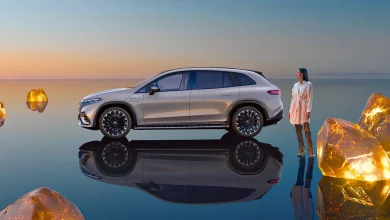
The Mercedes-Benz GLC 400 4MATIC is a highly advanced all-electric luxury SUV, featuring dual motors (one each for the front and rear axles) for true all-wheel drive performance. It stands out for its blend of power, technology, and range.
Key Specifications
- Motors: Dual permanent magnet synchronous (PSM) motors (front/rear)
- Max Output: 360 kW (490 PS) or ~483 hp
- Battery: 94 kWh usable capacity (100 kWh nominal reported by some sources)
- Max Charging Rate: Up to 320 kW DC (800V system)
- Acceleration: 0–100 km/h in 4.3 seconds
- Top Speed: 210 km/h (130 mph)
- Range: Combined 571–713 km (WLTP), real-world range estimate between 365–715 km depending on conditions
- Energy Consumption: 14.9–18.8 kWh/100 km combined (WLTP)
- Cargo Volume: 100 L front (frunk), 570 L rear trunk
- Dimensions (mm): 4,845 (L) × 1,913 (W) × 1,644 (H), wheelbase 2,972
- Towing Capacity: 2,400 kg
Features and Technology
- All-wheel drive (4MATIC) with single-speed transmission
- State-of-the-art infotainment and digital cockpit (MBUX)
- Multiple driving modes, advanced adaptive suspension, high safety ratings expected for the class
- Advanced driver assists, 800V fast-charging capability for rapid energy replenishment
This model marks a significant step forward in Mercedes-Benz’s electrification strategy, combining luxury, power, and everyday utility in a single package.
Reasons to Buy Mercedes-Benz GLC 400 4MATIC
Why You'll Love It 😘
The Mercedes-Benz GLC 400 4MATIC stands out as a premium electric SUV, offering a blend of advanced technology, luxury, and performance that appeals to a wide range of buyers.
Top Reasons to Buy
- Long Electric Range and Rapid Charging: With a WLTP range of up to 713 km and the ability to rapidly charge hundreds of kilometers in about 10 minutes with 800V architecture, the GLC 400 4MATIC enables long road trips with minimal downtime.
- Strong Performance: Dual-motor all-wheel drive setup provides 360 kW (~483 hp) and instant torque, resulting in brisk acceleration (0–100 km/h in 4.3-4.6 seconds) and confident handling in various conditions.
- Advanced Luxury and Technology: Features include the 39-inch MBUX Hyperscreen, a luxurious and quiet cabin, all-digital cockpit, and top-tier materials throughout.
- Versatility and Practicality: Generous rear cargo capacity (570 L), ample rear-seat space, and a fully flat floor provide family-friendly usability.
- Towing Capability: The electric GLC 400 4MATIC offers a class-leading towing capacity of up to 2,400 kg (and up to 5,291 lbs. with optional hitch), a rarity among EVs.
- Safety and ADAS Features: Equipped with advanced driver assistance and safety tech, such as adaptive cruise, lane keeping, emergency braking, and multiple sensors/cameras as standard.
- Refined Ride and Quietness: The ride quality is balanced and the cabin is exceptionally well-insulated from outside noise, especially in electric mode.
- Distinctive Design: Sleek, modern styling and a signature illuminated Mercedes grille ensure the GLC stands out visually.
Additional Considerations
- Bidirectional Charging: Allows use as a power source for home or devices, delivering extra utility for tech-savvy owners.
- Strong Infotainment & Connectivity: Wireless charging for devices, multiple USB-C ports, and over-the-air software support.
For drivers seeking a cutting-edge, highly capable electric SUV with both luxury and real-world usability, the Mercedes-Benz GLC 400 4MATIC is a compelling choice.
Reasons Not to Buy Mercedes-Benz GLC 400 4MATIC
Why You Might Think Twice 🤔
There are several practical reasons why one might choose not to buy the Mercedes-Benz GLC 400 4MATIC, ranging from mechanical reliability to subjective design and cost concerns.
Mechanical and Reliability Concerns
- The model has reported issues with electrical systems, including faulty sensors, intermittent glitches in the infotainment system, persistent warning lights, and malfunctioning electronic features like seat adjustments and parking brakes.
- Occasional engine problems (misfires and oil leaks) and delayed transmission engagement can affect smooth operation and may lead to expensive repairs if neglected.
- The suspension is a potential weak point; some owners experience weak ride quality, vague handling, premature wear, and vibrations, especially with air suspension configurations.
Practical Limitations
- The increased battery size in hybrid and electric variants reduces trunk space, leading to a higher boot floor and less cargo capacity compared to petrol versions.
- Some reviewers note the ride can feel wallowy and lack sporty dynamics, which impacts overall driving satisfaction for those seeking precise handling.
- Several recalls have affected prior GLC generations, including issues with seatbelt pre-tensioners, control unit coding, and potential fire risks.
Cost and Value
- High purchase price and costly options—making the model expensive compared to similarly sized SUVs from competitors.
- Reliability scores for the GLC are mid-tier, lower than competing brands like Lexus and BMW in some markets.
Subjective Reasons
- The exterior design receives polarized reactions, with some buyers finding the styling unattractive or overdone compared to competitors such as BMW or Audi.
- While interiors are praised for tech and materials, some find the controls unintuitive and distracting while driving.
| Issue | Details |
| Electrical glitches | Faulty sensors, warning lights, infotainment issues |
| Engine/transmission | Misfires, oil leaks, delayed engagement |
| Suspension | Weakness, excessive body roll, vibrations |
| Boot/cargo space | Reduced due to battery packaging |
| Recalls | Seatbelt, software, C-pillar structural, fire hazard |
| Cost/value | High purchase price, costly options, average reliability |
| Design | Unattractive to some, rivals have comparable or stronger style |
| UI/control | Unintuitive, distracting controls |
These factors suggest that while the GLC 400 4MATIC boasts premium performance and technology, potential buyers should weigh reliability, cost, and practical usability against competitors before deciding.
Key Owner-Reported Issues for Mercedes-Benz GLC 400 4MATIC
Key Owners-Reported Issues 🗒️
Key owner-reported issues with the Mercedes-Benz GLC 400 4MATIC focus on several reliability and usability problems, most notably with electronics, suspension, and some mechanical components.
Most Common Owner Complaints
- Electrical and Software Glitches: Owners frequently note malfunctioning sensors, warning lights, infotainment system failures, and erratic electronic features (such as seats adjusting themselves, parking brake faults, and CarPlay connectivity issues). Many repairs require expensive dealer visits or ECU reflashes, and electrical problems tend to affect newer GLC generations more than older versions.
- Suspension/Steering Issues: Premature air suspension failures, “crabbing” (awkward wheel movement at full lock), vibrations, and uneven ride quality are regularly reported. Air suspension repairs can be expensive, with some owners facing costs exceeding $10,000 outside of warranty, and persistent noises/rattles from the pillars and dash.
- Engine and Transmission Problems: Reports include misfiring cylinders, oil leaks from multiple sources, and delayed engagement from a stop due to slow transmission computers or sensor faults. Engine issues can lead to rough running, stalling, and costly repairs if ignored.
- Physical Quality Concerns: Owners cite premature wear, cracking, or discoloration of seat materials (especially synthetic leathers), stress fractures on windshields, and broken mirror clips. Some owners report persistent interior rattles and noises.
- Dealer Service Frustrations: Resolution of issues often demands multiple visits and dealership stays, with mixed satisfaction regarding the speed and price of repairs.
Reliability Ratings
Consumer Reports and large owner surveys indicate that GLC reliability is below average relative to other new cars, with especially notable electronic and suspension complaints in recent years. Some users recommend avoiding the newest models until Mercedes addresses outstanding problems.
Owner Experience Quotes
- “My Mercedes service rep told me the newest generation of SUVs are having lots of electrical problems. The older ones are actually much more reliable. People should avoid the new ones until they get the problems ironed out.”
- “The suspension on this vehicle is very weak. Its a known problem. Too bad. … Every 5 years or so we will have to consider replacing the air bag suspension.”
- “I’d go a 24 over a 23 – stupid issues with them are (a little) less frequent after another year to iron it out.”
- “Infotainment system … can glitch out. … electric parking brake not working, washer jets firing randomly, electronic seat issues, random rattles.”
These recurring owner issues and reliability concerns are important to consider when evaluating the GLC 400 4MATIC as a long-term purchase
| Efficiency | 188 Wh/km |
|---|---|
| System Power | 360 kW (489 PS) |
| Total Torque | 800 Nm |
| 0–100 km/h | 4.3 s |
| Top Speed | 210 km/h |
| Drive | AWD (dual motor) |
Price & Regional Availability
The Mercedes-Benz GLC 400 4MATIC is a premium electric SUV, and its prices vary across major markets due to local taxes, incentives, and equipment packages.
| Country / Region | Price |
|---|---|
| 🇬🇧United Kingdom | (Estimate: £58,000–£65,000) |
| 🇳🇱Netherlands | €72,631 |
| 🇩🇪Germany | €67,717–€71,281 |
| 🇺🇸United States | $60,000–$72,000 |
| 🇨🇦Canada | CA$81,600 |
| 🇲🇽Mexico | TBD (no official MB Mexico EV GLC BEV price yet) |
| 🇨🇳China | TBD (CN site lists ICE / PHEV GLC-L at RMB 430,000–540,000; BEV price not published) |
| 🇦🇺Australia | (Estimate: AU$115,000–AU$125,000) |
- 🇨🇦 Canada: The expected retail price for the GLC 400 4MATIC is CA$81,600 ($60,000 USD). Local dealerships have vehicles starting around $66,417 but the GLC 400 4MATIC is specifically listed around CA$81,600.
- 🇺🇸 USA: American pricing is estimated between $60,000 and $72,000 depending on trim and options.
- 🇩🇪 Germany: In Germany, the starting price is €71,281, but typical public rebates bring it to €67,717. This equals about $71,800 to $82,750 USD with VAT, import, and other local fees.
- Options/Packages: Adding long-range packages or advanced features in Germany can increase the price by €3,400+ ($3,600+ USD).
Notes
- Pricing will vary with dealership discounts, government incentives, and equipment levels in each market.
- European prices generally include VAT (~19-21%), while US/Canada pricing typically excludes state/local taxes, destination charges, and lease/finance costs.
The Mercedes-Benz GLC 400 4MATIC commands a premium price globally, reflecting its performance, tech features, and luxury positioning.
Real-World Range Estimate
Between 365 – 715 km
| Condition | City | Highway (110 km/h) | Combined |
|---|---|---|---|
| 🌤️ Mild Weather | 715 km | 470 km | 575 km |
| 🌦️ Average Weather | — | — | 500 km |
| ❄️ Cold Weather | 485 km | 365 km | 425 km |
Indication of real-world range in several situations.
- ❄️ Cold Weather: “worst-case” (−10 °C with heating).
- 🌤️ Mild Weather: “best-case” (23 °C without A/C).
- 🛣️ Highway assumes a constant 110 km/h.
- 🏎️ Actual range depends on speed, driving style, weather and route conditions.
Long Distance Suitability (1-Stop Range) ★★★★☆
| First Stop Distance | 369 km | First Stop Duration | 3h 22min |
| Charging Stop | 0km | Charging Stop | 15 min |
| Second Stop Distance | 237 km | Second Stop Duration | 2h 9min |
| Total Distance | 606 km | Total Duration | 5h 46min |
| Weather | 1-Stop Range | Stars (2025 scale) |
|---|---|---|
| 🌤️ Mild Weather | 694 km | ★★★★☆ |
| 🌦️ Average Weather | 606 km | ★★★★☆ (above 575 km, below 700 km) |
| ❄️ Cold Weather | 538 km | ★★★½ |


The “Long Distance Suitability” is a 5-star rating indicating how suitable a vehicle is for long trips. It’s based on the 1-Stop Range: total distance with one 15-minute DC fast-charging stop.
2025 thresholds:
- 0☆ <200 km;
- 1★ 200–325;
- 2★ 325–450;
- 3★ 450–575;
- 4★ 575–700;
- 5★ >700 km.
- Half-stars are assigned by linear interpolation.
Battery Details
| Nominal capacity | 100.0 kWh * |
|---|---|
| Usable capacity | 94.0 kWh |
| Architecture | 800 V |
| Chemistry / cathode | Li-ion • NCM • prismatic |
| Battery pack name | Not disclosed (MB EA-M platform) |
| Warranty | no data |
* = estimated where indicated.
Charging Overview
| Category | Details |
|---|---|
| AC / Home / Destination | Type 2, right-rear; 11 kW onboard (standard); 0→100% ≈ 10h15m; ≈ 49–50 km/h; optional 22 kW onboard halves time. |
| DC / Fast charging | CCS Combo 2, right-rear; peak 330 kW; avg ≈190 kW (10→80%); 10→80% in ≈22 min; up to 950 km/h charge speed. |
| Plug & Charge | no data |
| Autocharge | no data |
| Battery preconditioning | Yes; preconditioning possible, automatic via navigation: not clearly stated. |
Home & Destination Charging (0 → 100%)
Charging is possible via wall plug or AC charging station. Public AC charging is always done through a charging station (EVSE). Actual charge time depends on grid connection (1-phase vs 3-phase), cable rating and vehicle onboard charger. Some modes below are not widely available in every country.
| Charging Point | Max. Power | Power | Time (0→100%) | Rate |
|---|---|---|---|---|
| Wall Plug (230V 1×10A) | 2.3 kW | 2.3 kW | 48 h 15 m | 10 km/h |
| 1-Phase 16A | 3.7 kW | 3.7 kW | 30 h 0 m | 17 km/h |
| 1-Phase 32A | 7.4 kW | 7.4 kW | 15 h 0 m | 33 km/h |
| 3-Phase 16A | 11 kW | 11 kW | 10 h 15 m | 49 km/h |
| 3-Phase 32A | 22 kW | 11 kW † | 10 h 15 m | 49 km/h |
| Optional 22 kW OBC (3-Phase 32A) | 22 kW | 22 kW | 5 h 0 m | 100 km/h |
Fast Charging (10 → 80%)
| Charging Point | Max. Power | Avg. Power | Time (10→80%) | Rate |
|---|---|---|---|---|
| CCS 50 kW | 50 kW | 50 kW | 83 min | 250 km/h |
| CCS 100 kW | 100 kW | 90 kW † | 46 min | 450 km/h |
| CCS 150 kW | 150 kW | 120 kW † | 35 min | 600 km/h |
| CCS 175 kW | 175 kW | 135 kW † | 31 min | 670 km/h |
| CCS 350 kW | 330 kW † | 190 kW † | 22 min | 950 km/h |
† = Limited by charging capabilities of vehicle. Actual rates may differ due to temperature, SoC at plug-in, charger power sharing, or battery age. Plug & Charge and Autocharge support not fully confirmed for this model as of 2025-11-02.
Claimed Charging Specs (Manufacturer)
Figures below reflect the OEM’s published charging window and are the basis for the DC table when no independent test is available.
| Max. Power | Charge From | Charge To | Time |
|---|---|---|---|
| 330 kW | 10% | 80% | 22 min |
- Max. Power: The maximum charging power reached during the session.
- Charge From: The starting battery state-of-charge (% SoC).
- Charge To: The target battery state-of-charge (% SoC).
- Time: Total time required for the charging session.
Performance & Drivetrain
| Total power | 360 kW (489 PS) |
|---|---|
| Total torque | 800 Nm |
| 0–100 km/h | 4.3 s |
| Top speed | 210 km/h |
| Drive | AWD |
High power + 800 V pack explains high DC rates.
Energy Consumption & Efficiency
| Standard / Basis | Range | Rated Consumption | Vehicle Consumption | Fuel-eq. |
|---|---|---|---|---|
| Real Range | 500 km | — | 188 Wh/km | 2.1 L/100 km (veh.) |
| WLTP (TEL) | 715 km | 149 Wh/km | 131 Wh/km | 1.7 / 1.5 L/100 km |
| WLTP (TEH) | 568 km | 189 Wh/km | 165 Wh/km | 2.1 / 1.9 L/100 km |
- TEL = Test Energy Low
- TEH = Test Energy High (if applicable).
- Rated = official figures as published by the manufacturer; includes charging losses.
- Vehicle = calculated battery energy used for propulsion and on-board systems.
Real Energy Consumption Estimation
Between 131 – 258 Wh/km
| Scenario | City | Highway | Combined |
|---|---|---|---|
| ❄️ Cold Weather | 194 Wh/km | 258 Wh/km | 221 Wh/km |
| 🌤️ Mild Weather | 131 Wh/km | 200 Wh/km | 163 Wh/km |
- ❄️ Cold Weather: “worst-case” (−10 °C with heating).
- 🌤️ Mild Weather: “best-case” (23 °C without A/C).
- 🛣️ Highway assumes a constant 110 km/h.
- 🏎️ Actual range use depends on speed, driving style, weather and route conditions.
Safety Rating ★★★★★
The Mercedes-Benz GLC 400 4MATIC is rated as a top performer in global safety evaluations, consistently achieving high marks for crash protection and advanced active safety features.
Crash Test Ratings
- Euro NCAP: Awarded 5 stars in the 2022/2023 and 2024 rounds, with very high scores—92% for adult occupant and 90% for child occupant protection. The GLC excelled in the frontal offset, full-width, and side barrier tests, with only the side pole chest protection rated as “acceptable” instead of “good.” Advanced eCall, occupant-detection, and post-collision braking are standard.
- IIHS (US): Received “Good” (highest) ratings in all major evaluations: small overlap front, moderate overlap front (original/updated), side impact, and head restraint tests. Standard system for vehicle-to-pedestrian crash prevention received “Acceptable” and the optional system received “Superior.” LATCH ease of child seat installation rated “Good+”.
- ANCAP (Australia): Scored 92% adult occupant, 92% child occupant, 74% pedestrian, and 84% for safety assist categories (e.g., active driver assists, AEB).
Safety Features
- Active Safety: Standard features include automatic emergency braking with pedestrian detection, blind-spot monitoring, lane keeping assist, and forward collision warning. The optional Driver Assistance Package adds advanced adaptive cruise control and lane-centering.
- Passive Safety: Multiple airbags (including new central front airbag), advanced crash structures, and pre-tensioned seat belts. Newer GLCs also feature advanced systems to reduce secondary impact injuries, such as post-collision braking and emergency eCall.
- Child and Pedestrian Protection: Strong scores in crash tests for child dummies and pedestrian impact; standard rear outboard ISOFIX/LATCH.
- Driver Assistance & Tech: Models are equipped with level 2 ADAS (up to 5 cameras, 5 radar, and 12 ultrasonic sensors) for expanded safety envelope in daily driving and parking situations.
The Mercedes-Benz GLC 400 4MATIC delivers top-tier safety, blending robust crash performance with advanced technology for proactive protection on the road.
Dimensions & Weight
| Length × Width × Height | 4845 × 1913 × 1644 mm |
|---|---|
| Wheelbase | 2972 mm |
| Weight (EU) / GVWR / Payload | 2535 kg / 3040 kg / 580 kg |
| Cargo volume (seats up / max / frunk) | 570 L / 1740 L / 128 L |
| Roof load | No data |
| Towing | Unbraked 750 kg • Braked 2400 kg • Vertical load 100 kg • Towbar possible |
| Turning circle | 12.1 m |
| Platform | MB EA-M • EV-dedicated • SUV body • Segment JD – Large • Roof rails: yes • Heat pump: yes (std.) |
Bidirectional Charging (V2X / BPT)
| Function | Status | Description |
|---|---|---|
| V2L | Announced | Power external equipment from vehicle DC/AC — output not published. |
| V2H (AC) | Announced | Home backup / behind-the-meter power, details TBD. |
| V2G (AC) | Announced | Grid export via AC where utility/provider supports it. |
| V2G (DC) | No | Not supported. |
Mercedes shows intent for AC-side bidirectional features on newer MB.OS / 800 V platforms; final availability is market-dependent.
Miscellaneous
| Seats / ISOFIX | 5 seats • ISOFIX ×2 |
|---|---|
| Car body | SUV |
| Segment | JD – Large |
* = estimated value. Average energy consumption and range are based on moderate driving style and climate. Real-life values may differ significantly. Pricing info may not be current for some regions. No rights can be derived from this information.
Predecessor Comparison
| Metric | Mercedes-Benz EQC 400 4MATIC (2020–23) | Mercedes-Benz GLC 400 4MATIC (2025) | Δ |
|---|---|---|---|
| real range | ~360 km | 500 km | +140 km |
| Max DC | 110–120 kW | 330 kW | ~3× faster |
| 1-Stop Range (avg) | 366 km | 606 km | +240 km |
| Platform | Adapted GLC/MRA | EA-M dedicated EV | New dedicated EV platform |
The 2025 GLC 400 4MATIC is effectively Mercedes’ dedicated-EV successor to the earlier EQC 400 4MATIC, with a bigger battery, 800-V system and far better DC performance.
1-Stop Range Definition ✋
For vehicles without fast-charging capability, only the distance of the first stop is considered.
🚗 Driving Profile
- Begin with a fully charged battery
- Stop 1: Drive until the battery reaches 10% state-of-charge (SoC)
- Perform a 15-minute fast charge
- Stop 2: Continue driving until the battery again reaches 10% SoC
📋 Assumptions
- Driving speed, climate, and environmental conditions are based on Real Range Highway data
- No additional time required to initiate or stop the charging session
- The charging station always delivers the maximum power requested by the vehicle
- The battery is assumed to be in optimal health and condition
⚠️ Important Note : In real-world driving, it is practically impossible to replicate these conditions exactly.
This benchmark should therefore be viewed as a comparative metric, designed to evaluate vehicles under standardized conditions rather than predict exact trip distances.
5-Star Rating Definition ⭐️
- The 1-Stop Range rating in 2025 is a practical benchmark for EVs: it measures the distance a vehicle can travel after a single 15-minute charging session, under combined real-world weather conditions.
- This rating provides a clear, star-based measure of long-distance travel practicality—judged by how far a car can go after a single 15-minute DC fast charge.
- The rating puts instant, comparable context on each EV’s long-distance travel ability, helping buyers easily compare real-world charging performance between models.
- This value is translated into star ratings: In 2025, the system assigns stars as follows:
| Star Rating | 1-Stop Range (combined conditions) |
|---|---|
| ☆ | less than 200 km |
| ★ | 200 km to 325 km |
| ★★ | 325 km to 450 km |
| ★★★ | 450 km to 575 km |
| ★★★★ | 575 km to 700 km |
| ★★★★★ | more than 700 km |
- The 1-Stop Range is calculated using real-world benchmarks in three temperature scenarios to show suitability for road trips, regardless of weather.
- Half-star ratings interpolate between these whole-star bands, so a result of 490 km would earn 3½ stars.
- This system makes it easier for drivers to quickly assess and compare vehicles for long-distance suitability, regardless of ambient temperature or charging conditions.
Fast Charging (10 -> 80%) ⚡
- Max. Power: maximum power provided by charge point
- Avg. Power: average power provided by charge point over a session from 10% to 80%
- Time: time needed to charge from 10% to 80% Rate: average charging speed over a session from 10% to 80%
EV Charger Connector Types 🔌

This table provides a quick reference for which plug types are used for AC vs DC charging and their regional prevalence. Here’s a comparative table of major EV charger connector types, showing whether they are for AC or DC charging, their suitability, and the countries/regions where they are widely adopted:
| Connector Type | AC/DC | Suitability | Countries/Regions Adapted |
|---|---|---|---|
| Type 1 (SAE J1772) | AC | Standard US/Japan AC, slow–medium | USA, Canada, Japan |
| Type 2 (Mennekes) | AC | European AC standard, universal | Europe, UK, Australia, South Africa |
| Tesla (North America) | AC/DC | Tesla vehicles only, fast Supercharge | USA, Canada |
| CCS1 (Combo 1) | DC | US fast DC charge, some AC support | USA, Canada |
| CCS2 (Combo 2) | DC | Europe fast DC charge, AC support | Europe, UK, Australia, South Africa |
| CHAdeMO | DC | Nippon/Japanese, some global DC | Japan, parts of Europe, USA |
| GB/T (AC/DC) | AC/DC | China national standard, all speeds | China |
| Tesla (Europe) | DC | European Tesla fast charging (CCS2) | UK, Europe |
- Type 1 (J1772): Used for AC charging in North America and Japan; now fading in favor of CCS1 for DC.
- Type 2 (Mennekes): Universal AC connector across Europe; most wallboxes/public AC points use this.
- CCS (Combined Charging System): CCS1 for North America, CCS2 for Europe/Australia/South Africa. Enables both AC and high-power DC charging in one socket, now the global DC fast charge standard.
- CHAdeMO: Used mostly for rapid DC charging in Japan and some regions; declining outside Japan as CCS adoption grows.
- GB/T: Unique AC and DC connectors for China, incompatible with Western standards.
- Tesla: Proprietary plug in North America; now shifting to “NACS” standard which will be more widely adopted by Ford, GM, and others. In Europe, Tesla uses CCS Type 2, fully compatible with local standards.