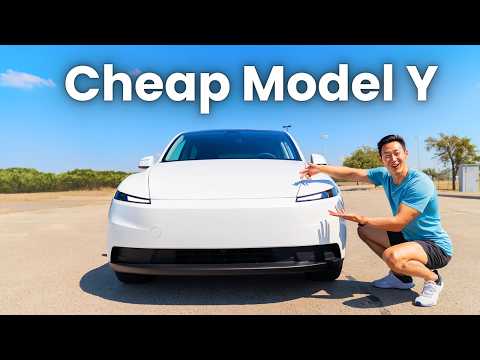
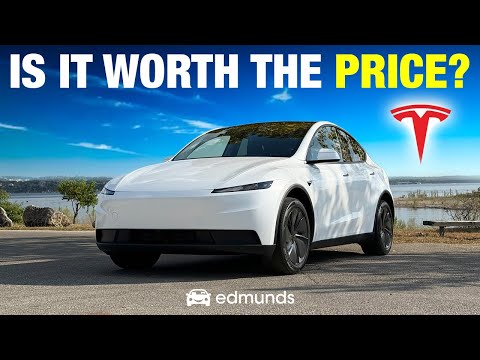
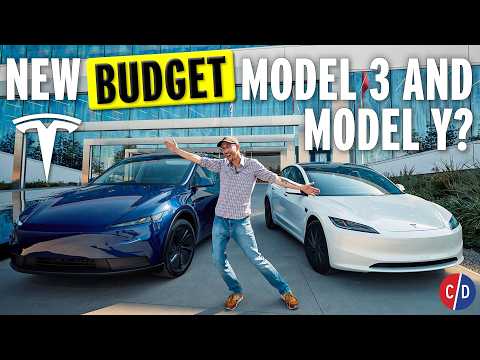
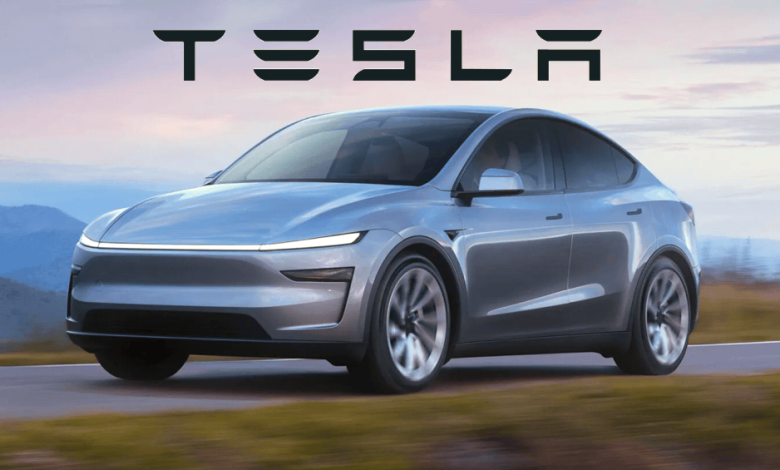
2025 Tesla Model Y Standard Juniper RWD ★★½☆☆
Available to order since October 2025

 380 km
 201 km/h
  7.2Sec
  660 km/h
Charging Port Type CCS Type 2 (Charging Port type affects charging station compatibility.) 
Max AC Charging 11 KW Home Charging, 3-Phase support. On-board AC charger (inverter) Capacity affects AC charging speed. Max DC Charging 225 KW Maximum power the car can accept from a DC faster charger. Architecture 400 V Higher power train voltage means faster charging and better efficiency. Battery Capacity (Usable) 69.5 kWh Net battery capacity that is available for use. Tested Range (EU -WLTP)
534 km Estimated Distance of a Full Charge Tested Range (USA – EPA) 517 km Estimated Distance of a Full Charge Motor / Power Performance Around 220 kW (295 hp) RWD (1 motors) Torque 420 Nm Peak Toque of the car’s electric motor 0-100 km/h 7.2 Second acceleration time from standstill to 100 km/h Top Speed 201 km/h Maximum speed the car can reach Charging 10→ 80% 24 minutes Under Ideal Conditions Drive Type RWD (1 Motor) PMSM
2025 Tesla Model Y Standard Juniper RWD Review
About Tesla Model Y Standard Juniper RWD 🚘
The 2025 Tesla Model Y Standard Juniper RWD remains one of the electric segment’s most practical and appealing SUVs. Starting from around €40,970 in Europe, this rear-wheel-drive entry model delivers exceptional everyday usability, impressive range, and a spacious interior wrapped in high-tech minimalism. It’s ideal for families transitioning to electric power, offering the full Tesla experience without the premium price of all-wheel-drive variants.
What’s New for 2025
The headline update is the long-awaited “Juniper” refresh. Expect refined exterior styling with slimmer headlights and a smoother front bumper, alongside an interior upgrade incorporating ambient lighting, improved materials, and possibly an enhanced suspension for better ride comfort. These refinements align the Model Y more closely with the latest Model 3 design, ensuring it stays competitive against new electric SUV arrivals.
Design & Exterior
The Model Y’s clean, aerodynamic silhouette is instantly recognizable. Measuring 4797 mm long, 1982 mm wide, and 1621 mm high, it strikes a balanced stance—substantial yet easy to maneuver. Typical Juniper design highlights include frameless windows, aero-optimized wheels, and a sweeping glass roof that enhances both aesthetics and efficiency. The result is a stylish crossover that looks sophisticated in every setting.
Interior, Tech & Cargo
Inside, simplicity rules. The minimalist dashboard centers around a large touchscreen managing nearly all vehicle functions. The five-seat layout and panoramic roof create an open, airy atmosphere. Storage is unmatched, offering 854 litres in the main boot and an enormous 2118 litres with rear seats folded. A 74-litre front trunk adds bonus practicality. It’s a showcase of Tesla’s ergonomic ingenuity and tech-forward design philosophy.
Performance & Driving Experience
Power comes from a single Permanent Magnet Synchronous Motor producing 220 kW and 420 Nm of torque. This setup propels the car from 0–100 km/h in just 7.1 seconds. The rear-wheel-drive dynamics give the Model Y an engaging, agile feel, while its low center of gravity enhances stability. Regenerative braking supports relaxed one-pedal driving, ideal for both city use and longer trips.
Range, Battery & Charging
Equipped with a 69.5 kWh usable battery, the Model Y achieves a real-world range of 473 km, according to Green Cars Compare. With a strong efficiency rating of 6.81 km/kWh, it keeps running costs minimal. Charging is equally convenient: 11 kW AC charging handles overnight top-ups, while rapid 225 kW DC charging replenishes hundreds of kilometres of range in under half an hour. The standard CCS Type 2 port ensures wide compatibility across public networks.
Safety & Driver Assistance
Tesla’s active safety technology and structural strength secure its five-star Euro NCAP rating. Standard Autopilot integrates adaptive cruise control and lane-keeping, while autonomous emergency braking and blind-spot monitoring reinforce safety confidence. Buyers can upgrade to Enhanced Autopilot for conveniences such as automatic lane changes and remote Summon functions, elevating the driver-assistance experience.
Warranty & Maintenance Coverage
Tesla’s warranty package inspires confidence: 4 years or 80,000 km for the vehicle, and 8 years or 160,000 km for the battery and drive unit, with guaranteed 70% capacity retention. The maintenance model is flexible, with no fixed servicing intervals—costs remain low thanks to the absence of engine oil, belts, or exhaust components.
Reasons to Buy
Why You'll Love It 😘
- Excellent real-world range
The Juniper offers superior range for its segment and efficiency, allowing for longer trips with fewer stops—highlighted across owner and professional reviews. - Unmatched cargo capacity
There’s best-in-class storage with a massive boot and frunk, plus flexible folding seat arrangements, making it extremely practical for families or hauling gear. - Superior charging network
Access to the Tesla Supercharger network gives far quicker and more reliable charging than most rivals, a recurring highlight in comparisons. - Strong value proposition
Despite premium features, advanced tech, and performance, the Model Y’s pricing and cost to own compare very favorably against other electric SUVs. Owners cite strong savings on running and maintenance costs.
Reasons Not to Buy
Why You Might Think Twice 🤔
- Firm ride comfort
Although the new suspension is improved, the Model Y is still firmer than some competitors—particularly with larger wheels. Some owners and reviewers still find it less comfortable on rough roads. - No dedicated driver display
All vital driving info is confined to the center touchscreen—there’s no separate gauge cluster or head-up display, which many find less intuitive and sometimes distracting. - Inconsistent build quality
While fit and finish has improved, there are still some owner-reported issues with panel alignment and minor quality inconsistencies compared to top European or Japanese brands. - Slower than AWD versions
The rear-wheel drive Juniper is brisk but notably slower than the AWD variants, which offer much quicker acceleration—important for those who want the fastest Model Y.
Key Owner-Reported Issues for 2025 Tesla Model Y Juniper RWD
Key Owners-Reported Issues 🗒️
Suspension & Ride Comfort
While the Juniper’s revised suspension is a welcome improvement, it still generates mixed reviews. The upgraded setup reduces constant jostling from road imperfections, but many owners report it remains firmer than comparable rivals like the Kia Sportage. Some describe persistent “head toss” and note that smoother-riding competitors still have an advantage on uneven surfaces. The trade-off between firmness and comfort remains a point of contention.
Interior Quality & Design Choices
The redesigned seats, while better sculpted, are noticeably less soft and cosseting than previous models. Some owners find the new seat ventilation doesn’t justify the increased firmness. The forward-facing camera, newly added, produces too much distortion to be reliably useful. The turn signal stalk feels cheap in operation. Despite claims of improved interior refinement, build quality issues persist: owners report quality rattles buried deep in dashboards, screechy front drive unit noises, and poorly aligned doors. Fundamentally, the cabin retains the same sparse, minimalist aesthetic rather than feeling materially more premium.
Build Quality & Panel Alignment
Multiple owners confirm that build quality inconsistencies remain unchanged from prior models. Vehicles come from the same factories with the same suppliers, and quality control issues—including misaligned doors, panel gaps, and interior squeaks—continue to appear on new deliveries. Some owners require warranty repairs immediately after taking delivery.
Software & Infotainment
Several owners report occasional software glitches, touchscreen lag, and minor infotainment bugs, typically resolved through over-the-air updates. However, the reliance on the central screen for all vehicle functions (no dedicated gauge cluster) remains a usability concern for some.
Service Center Delays
A recurring complaint is slow appointment availability at Tesla service centers, leading to extended wait times for warranty repairs and minor service issues. This is particularly frustrating when addressing quality issues discovered at delivery.
Paint & Fit Finish
Some owners report inconsistent paint finishes and panel alignment problems requiring warranty corrections. These issues suggest ongoing manufacturing inconsistencies despite Tesla’s quality improvements.
These issues reflect genuine owner experiences and highlight areas where the Juniper refresh has improved but not fully resolved longstanding Model Y concerns.
| Combined Efficiency | 158 Wh/km |
|---|---|
| Total System Power | 200 kW (272 PS) |
| Total Torque | No data |
| 0–100 km/h | 7.2 s |
| Top Speed | 201 km/h |
| Drive | Rear-wheel drive |
Price & Regional Availability
| Country/Region | Price |
|---|---|
| 🇬🇧 United Kingdom | £48,990 |
| 🇳🇱 The Netherlands | €39,990 |
| 🇩🇪 Germany | €40,970 |
| 🇺🇸 United States | $39,990 |
| 🇳🇴 Norway | NOK 421,996 |
| 🇦🇺 Australia | AUD $58,900 |
| 🇨🇳 China | ¥271,500 CNY |
| 🇸🇪 Sweden | SEK 499,990 |
Global Pricing for 2025 Tesla Model Y Standard Juniper RWD (October 2025)
The 2025 Tesla Model Y Standard RWD debuted globally in October 2025 with significant regional pricing variations reflecting local taxes, import duties, and market positioning. Here’s the comprehensive breakdown:
North America
🇺🇸 United States: The Model Y Standard RWD launched at $39,990 USD, representing an 11% reduction from the Premium RWD variant ($44,990). This price point became more significant after the federal $7,500 EV tax credit expired at the end of September 2025, effectively raising real consumer costs.
🇨🇦 Canada: Tesla has not yet announced the Standard RWD for Canada as of October 2025. The Long Range AWD is currently priced at CAD $64,990 (approximately $48,200 USD), having been reduced from CAD $84,990 after Tesla shifted to importing Model Ys from Giga Berlin instead of US factories to avoid tariffs.
🇪🇺 Europe
Europe received the Standard trim with more aggressive pricing—approximately 20% cheaper than the Premium RWD variant, making it a stronger value proposition than in the US.
🇩🇪 Germany, 🇳🇱 Netherlands, 🇫🇷 France: All three markets launched at €39,990 (approximately $43,300 USD), around €10,000 less than the €49,990 Premium RWD. Germany and the Netherlands offer deliveries starting November 2025, while France promotes monthly leasing from €299.
🇬🇧 United Kingdom: The Standard RWD is priced at £48,990 (approximately $61,200 USD). The UK market carries higher pricing due to VAT and import duties. Deliveries began in May 2025.
🇳🇴 Norway: Priced at NOK 421,996 (approximately $38,700 USD), with deliveries scheduled for November-December 2025. Norway remains one of Tesla’s strongest European markets due to generous EV incentives.
🇸🇪 Sweden: The Standard trim costs SEK 499,990 (approximately $52,500 USD), reflecting Sweden’s higher taxation structure. Deliveries also begin November-December 2025.
Asia-Pacific
🇦🇺 Australia: The Model Y RWD Standard is priced at AUD $58,900 (approximately $38,600 USD) before on-road costs, representing a $3,000 increase over the 2024 model but $4,500 cheaper than the limited Launch Series. Deliveries commenced in May-June 2025.
🇨🇳 China: China offers the most competitive global pricing at ¥271,500 CNY (approximately $37,800 USD), making it the most affordable market for the Model Y Standard globally. Production from Gigafactory Shanghai enables aggressive pricing to compete with domestic Chinese EV manufacturers like BYD.
Regional Pricing Strategy
Tesla’s pricing reflects strategic positioning: China and Norway offer the most affordable entry points in USD-equivalent terms, while the UK and Sweden carry premium pricing due to taxation. The European Standard trim represents better value (20% discount) compared to the US market (11% discount), likely in response to intensifying competition from Chinese EV manufacturers.
Important Notes:
- Right-hand-drive markets (UK, Ireland, Australia) have limited or delayed Standard trim availability
- Mexico and Chile pricing has not been officially announced as of October 2025
- All prices exclude destination fees, registration, and local incentives unless otherwise noted
Real-World Range Estimates
Between 270 – 555 km
| Condition | City | Highway (110 km/h) | Combined |
|---|---|---|---|
| 🌤️ Mild Weather | 555 km | 355 km | 440 km |
| 🌦️ Average Weather | — | — | 380 km |
| ❄️ Cold Weather | 360 km | 270 km | 315 km |
Indication of real-world range in several situations.
- ❄️ Cold Weather: “worst-case” (−10 °C with heating).
- 🌤️ Mild Weather: “best-case” (23 °C without A/C).
- 🛣️ Highway assumes a constant 110 km/h.
- 🏎️ Actual range depends on speed, driving style, weather and route conditions.
Long Distance Suitability (1-Stop Range)★★½☆☆
| First Stop Distance | 276 km | First Stop Duration | 2h 31min |
| Charging Stop | 0km | Charging Stop | 15 min |
| Second Stop Distance | 164 km | Second Stop Duration | 1h 30min |
| Total Distance | 440 km | Total Duration | 4h 16min |
| Weather | 1-Stop Range |
|---|---|
| 🌤️ Mild Weather | 509 km |
| 🌦️ Average Weather | 440 km → ★★½☆☆ |
| ❄️ Cold Weather | 388 km |


The “Long Distance Suitability” is a 5-star rating indicating how suitable a vehicle is for long trips. It’s based on the 1-Stop Range: total distance with one 15-minute DC fast-charging stop.
2025 thresholds:
- 0☆ <200 km;
- 1★ 200–325;
- 2★ 325–450;
- 3★ 450–575;
- 4★ 575–700;
- 5★ >700 km.
- Half-stars are assigned by linear interpolation.
Battery Details
| Nominal / Usable Capacity | 64.0 kWh / 60.0 kWh* |
|---|---|
| Battery Type / Cathode | Lithium-ion • LFP |
| Architecture / Nominal Voltage | 400 V |
| Cells / Pack Config / Form Factor | No data / — / Prismatic |
| Warranty | 8 years / 160,000 km |
Charging Overview
| Category | Details |
|---|---|
| Home / Destination (AC) | Type 2 (left-rear); onboard charger 11 kW AC; 0→380 km ≈ 6 h 30 m; ~59 km/h. |
| Fast DC (CCS) | CCS (left-rear); peak 175 kW; average ~110 kW (10→80%); 38→304 km in ~24 min; ~660 km/h session rate. |
| Plug & Charge | No |
| Autocharge | Yes |
| Battery Preconditioning | Yes |
- Autocharge supported.
- Plug & Charge not supported.
- Actual charging rates vary with temperature, battery state, site load, and driving style.
Home & Destination Charging (0 → 100%)
Charging is possible by using a regular wall plug or a charging station. Public charging is always done through a charging station. How fast the EV can charge depends on the charging station (EVSE) and the maximum capacity of the EV. The table shows all possible options for charging the Model Y Standard RWD. Each option shows how fast the battery can be charged from empty to full. Charging availability may vary by country.
| Charging Point | Max. Power | Power | Time (0→100%) | Rate |
|---|---|---|---|---|
| Wall Plug (230 V / 1×10 A) | 2.3 kW | 2.3 kW | 30 h 45 m | 12 km/h |
| 1-Phase 16 A (230 V) | 3.7 kW | 3.7 kW | 19 h 15 m | 20 km/h |
| 1-Phase 32 A (230 V) | 7.4 kW | 7.4 kW | 9 h 45 m | 39 km/h |
| 3-Phase 16 A (400 V) | 11 kW | 11 kW | 6 h 30 m | 58 km/h |
| 3-Phase 32 A (400 V) | 22 kW | 11 kW † | 6 h 30 m | 58 km/h |
Fast Charging (10 → 80%)
| Charging Point | Max. Power | Avg. Power | Time | Rate |
| CCS (50 kW DC) | 50 kW | 45 kW † | 59 min | 270 km/h |
| Supercharger v2 Shared (75 kW DC) | 75 kW | 65 kW † | 41 min | 380 km/h |
| Supercharger v2 (150 kW DC) | 150 kW | 100 kW † | 27 min | 590 km/h |
| CCS (175 kW DC) | 175 kW | 110 kW † | 24 min | 660 km/h |
| Supercharger v3 (250 kW DC) | 175 kW † | 110 kW † | 24 min | 660 km/h |
| CCS (350 kW DC) | 175 kW † | 110 kW † | 24 min | 660 km/h |
- Autocharge supported.
- Plug & Charge not supported.
- Actual charging rates vary with temperature, battery state, site load, and driving style.
Claimed Charging Specs (Manufacturer)
- Max. Power: The maximum charging power reached during the session.
- Charge From: The starting battery state-of-charge (% SoC).
- Charge To: The target battery state-of-charge (% SoC).
- Time: Total time required for the charging session.
| Max. Power | Charge From | Charge To | Time |
|---|---|---|---|
| 175 kW | 10 % | 80 % | 24 min |
Performance & Drivetrain
| Total Power / Torque | 200 kW (272 PS) • No data |
|---|---|
| 0–100 km/h | 7.2 s |
| Top Speed | 201 km/h |
| Drive | Rear-wheel drive |
Energy Consumption & Efficiency
| Standard / Basis | Range | Rated Consumption | Vehicle Consumption | Fuel-eq. |
|---|---|---|---|---|
| Real Range | 380 km | — | 158 Wh/km | 1.8 L/100 km |
| WLTP | 534 km | 131 Wh/km | 112 Wh/km | 1.5 / 1.3 L/100 km |
- TEL = Test Energy Low
- TEH = Test Energy High (if applicable).
- Rated = official figures as published by the manufacturer; includes charging losses.
- Vehicle = calculated battery energy used for propulsion and on-board systems.
Real Energy Consumption Estimation
Between 108 – 222 Wh/km
| Scenario | City | Highway | Combined |
|---|---|---|---|
| ❄️ Cold Weather | 167 Wh/km | 222 Wh/km | 190 Wh/km |
| 🌤️ Mild Weather | 108 Wh/km | 169 Wh/km | 136 Wh/km |
- ❄️ Cold Weather: “worst-case” (−10 °C with heating).
- 🌤️ Mild Weather: “best-case” (23 °C without A/C).
- 🛣️ Highway assumes a constant 110 km/h.
- 🏎️ Actual range use depends on speed, driving style, weather and route conditions.
Consumption Insights
- ❄️ Cold Weather increases energy usage significantly, especially at highway speeds due to battery heating and climate control.
- 🌤️ Mild Weather and city driving are most efficient, with lower consumption comparable to other premium electric SUVs in its class.
- Combined (average) values are ideal for trip planning but depend on route and temperature.
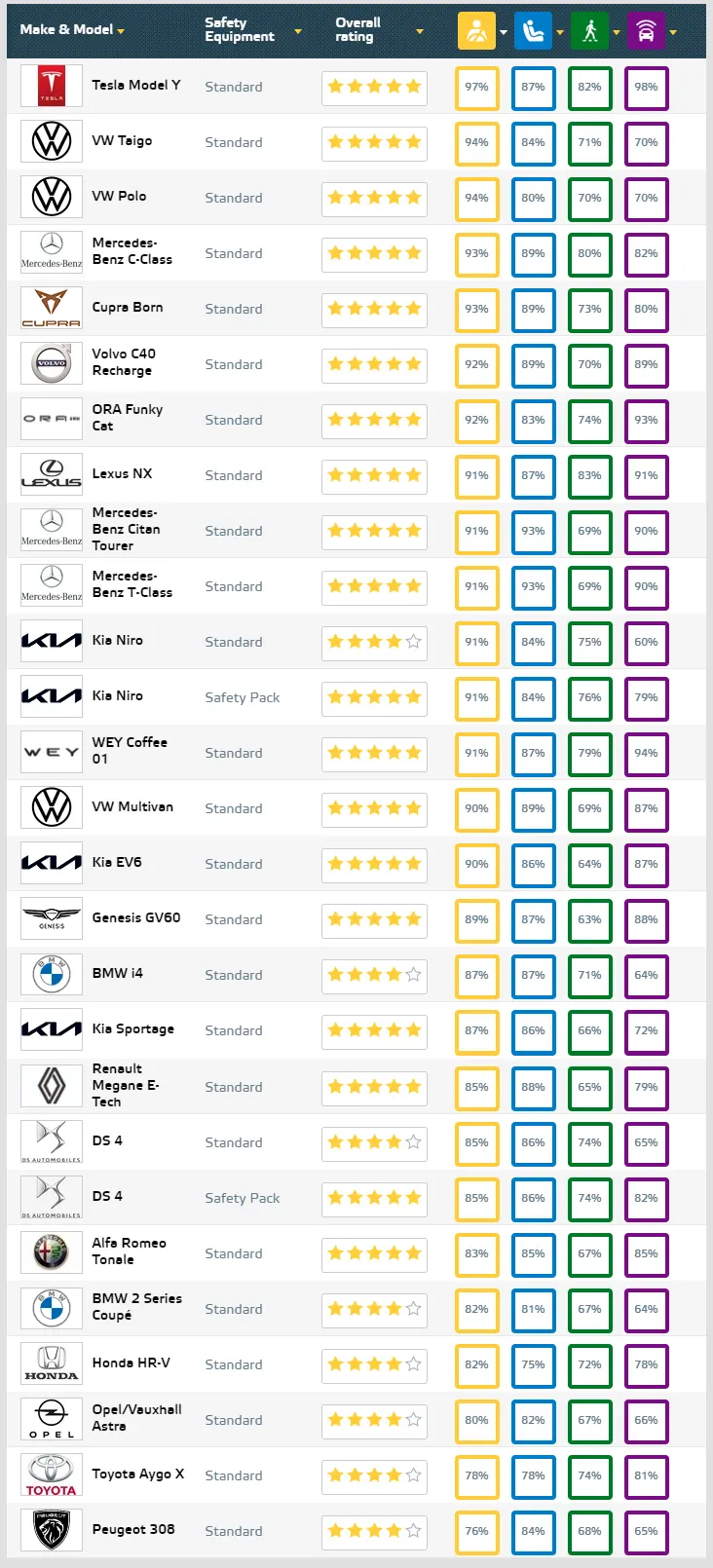
Safety Rating

| Active Safety Assist | 98% | Evaluates the presence and effectiveness of active safety technologies fitted to the vehicle which assist the driver in preventing or reducing the effects of a crash. |
| Adult Occupant Protection | 97% | Evaluates the level of protection offered by the vehicle to adult occupants seated in the front and second row in the most common types of serious injury crashes. |
| Child Occupant Protection | 89% | Evaluates the level of protection the vehicle offers to child occupants seated in appropriate child restraints in the rear seats. The ability to accommodate a range of child restraints is also assessed. |
| Vulnerable Road User Protection | 82% | Assesses whether the design of the front of the vehicle will reduce injury risk to a pedestrian when struck. Vehicles are also assessed for their ability to avoid or reduce impacts with pedestrians and cyclists. |
| Recommended Safety Features | 10/10 | These safety features improve the safety of a vehicle, the more of these features a vehicle has, the safer the vehicle is. |
| P-Plater Restriction | Under Review |
 ★★★★★
★★★★★
- 5-star overall Euro NCAP rating
The Model Y scored nearly perfect marks for adult occupant (97%) and safety assist (98%), among the highest of any vehicle ever tested under the latest Euro NCAP protocols. - Crashworthiness: The car excelled in frontal, side, and whiplash tests, with strong results for both adult and child safety. The structure features a rear underbody casting, advanced battery shield, far-side airbag, and multi-collision braking.

★★★★★
5-star NHTSA rating in every category
The Model Y achieved the maximum score from the National Highway Traffic Safety Administration in frontal, side, and rollover tests. Its recorded rollover risk is just 7.9%, among the lowest for any SUV tested.
IIHS (Insurance Institute for Highway Safety)
- 2025 IIHS Top Safety Pick+ winner
The Model Y Juniper achieved “Good” ratings in all crashworthiness tests (small and moderate overlap, side impact), excellent crash-avoidance/pedestrian-prevention scores, and effective headlight and restraint performance.
Summary of New Safety Features (Juniper)
- Upgraded Autopilot with better camera coverage and faster AI
- Enhanced crash structure and battery shield
- Added rear-seat airbags and improved pretensioners
- Faster, more reliable emergency braking and advanced blind-spot monitoring
Across global crash-testing agencies, the 2025 Tesla Model Y continues to lead its segment for both passive and active safety systems.
Complaints
SEAT BELTS
- NHTSA ID Number: 11695157
- Incident Date: March 4, 2025
- Consumer Location: PFLUGERVILLE, TX
- Vehicle Identification Number: 7SAXCBE50SF******
Summary of Complaint
Vehicle
| MAKE | MODEL | YEAR |
|---|---|---|
| TESLA | MODEL X | 2025 |
EXTERIOR LIGHTING - AUGUST 25, 2025
- NHTSA ID Number: 11682752
- Incident Date: August 23, 2025
- Consumer Location: PALO ALTO, CA
- Vehicle Identification Number: 7SAXCAE50SF******
Summary of Complaint
Vehicle
| MAKE | MODEL | YEAR |
|---|---|---|
| TESLA | MODEL X | 2025 |
ELECTRICAL SYSTEM - AUGUST 25, 2025
- NHTSA ID Number: 11682920
- Incident Date: July 26, 2025
- Consumer Location: LOS ALTOS, CA
- Vehicle Identification Number: 7SAXCDE56SF******
Summary of Complaint
Vehicle
| MAKE | MODEL | YEAR |
|---|---|---|
| TESLA | MODEL X | 2025 |
AIR BAGS, SEAT BELTS, UNKNOWN OR OTHER - AUGUST 18, 2025
- NHTSA ID Number: 11681216
- Incident Date: August 16, 2025
- Consumer Location: FALLBROOK, CA
- Vehicle Identification Number: 7SAXCAE52SF******
Summary of Complaint
Vehicle
| MAKE | MODEL | YEAR |
|---|---|---|
| TESLA | MODEL X | 2025 |
UNKNOWN OR OTHER - AUGUST 2, 2025
- NHTSA ID Number: 11677976
- Incident Date: July 31, 2025
- Consumer Location: EAST GRAND RAPIDS, MI
- Vehicle Identification Number: 7SAXCBE59SF******
Summary of Complaint
Vehicle
| MAKE | MODEL | YEAR |
|---|---|---|
| TESLA | MODEL X | 2025 |
STEERING - JULY 16, 2025
- NHTSA ID Number: 11674090
- Incident Date: July 10, 2025
- Consumer Location: AUSTIN, TX
- Vehicle Identification Number: 7SAXCDE55SF******
Summary of Complaint
Vehicle
| MAKE | MODEL | YEAR |
|---|---|---|
| TESLA | MODEL X | 2025 |
SERVICE BRAKES
- NHTSA ID Number: 11639128
- Incident Date: January 27, 2025
- Consumer Location: PARK CITY, UT
- Vehicle Identification Number: 7SAXCBE63SF******
Summary of Complaint
Vehicle
| MAKE | MODEL | YEAR |
|---|---|---|
| TESLA | MODEL X | 2025 |
Dimensions & Weight
| Length × Width × Height | 4797 × 1982 × 1621 mm (width with mirrors 2129 mm) |
|---|---|
| Wheelbase | 2890 mm |
| Unladen Weight | 1981 kg |
| Cargo Volume (seats up / max / frunk) | 835 L / 2118 L / 117 L |
| Roof Load | 0 kg |
| Tow Hitch | 750 kg (unbraked) / 1600 kg (braked) • Vertical load 72 kg |
| Turning Circle | 12.1 m |
| Platform | Tesla 3/Y • EV-dedicated |
| Body / Segment / Roof Rails | SUV • JD – Large • No |
| Heat Pump | Yes (standard) |
Bidirectional Charging (V2X / BPT)
| Capability | Status | Meaning |
|---|---|---|
| V2L | No | Power external devices from vehicle |
| V2H | No | Home backup |
| V2G | No | Export to grid |
| BPT | No | Umbrella term for bidirectional features |
Miscellaneous
| Seats / ISOFIX | 5 seats • ISOFIX ×2 |
|---|---|
| Platform | Tesla 3/Y |
| Segment | JD – Large |
* estimated values. Average energy consumption and range assume moderate drive style and climate. Real-life values may differ significantly. No rights can be derived from the information.
Preceding Model Comparison
| Metric | Previous Model Y RWD (Juniper) | Model Y Standard RWD (2025) | Δ (New – Prev) |
|---|---|---|---|
| Real Range (Combined) | ~370 km | 380 km | +10 km |
| 0–100 km/h | ~6.9 s | 7.2 s | –0.3 s |
| Efficiency (Vehicle) | ~165 Wh/km | 158 Wh/km | ≈ 4% better |
1-Stop Range Definition ✋
For vehicles without fast-charging capability, only the distance of the first stop is considered.
🚗 Driving Profile
- Begin with a fully charged battery
- Stop 1: Drive until the battery reaches 10% state-of-charge (SoC)
- Perform a 15-minute fast charge
- Stop 2: Continue driving until the battery again reaches 10% SoC
📋 Assumptions
- Driving speed, climate, and environmental conditions are based on Real Range Highway data
- No additional time required to initiate or stop the charging session
- The charging station always delivers the maximum power requested by the vehicle
- The battery is assumed to be in optimal health and condition
⚠️ Important Note : In real-world driving, it is practically impossible to replicate these conditions exactly.
This benchmark should therefore be viewed as a comparative metric, designed to evaluate vehicles under standardized conditions rather than predict exact trip distances.
5-Star Rating Definition ⭐️
- The 1-Stop Range rating in 2025 is a practical benchmark for EVs: it measures the distance a vehicle can travel after a single 15-minute charging session, under combined real-world weather conditions.
- This rating provides a clear, star-based measure of long-distance travel practicality—judged by how far a car can go after a single 15-minute DC fast charge.
- The rating puts instant, comparable context on each EV’s long-distance travel ability, helping buyers easily compare real-world charging performance between models.
- This value is translated into star ratings: In 2025, the system assigns stars as follows:
| Star Rating | 1-Stop Range (combined conditions) |
|---|---|
| ☆ | less than 200 km |
| ★ | 200 km to 325 km |
| ★★ | 325 km to 450 km |
| ★★★ | 450 km to 575 km |
| ★★★★ | 575 km to 700 km |
| ★★★★★ | more than 700 km |
- The 1-Stop Range is calculated using real-world benchmarks in three temperature scenarios to show suitability for road trips, regardless of weather.
- Half-star ratings interpolate between these whole-star bands, so a result of 490 km would earn 3½ stars.
- This system makes it easier for drivers to quickly assess and compare vehicles for long-distance suitability, regardless of ambient temperature or charging conditions.
Fast Charging (10 -> 80%) ⚡
- Max. Power: maximum power provided by charge point
- Avg. Power: average power provided by charge point over a session from 10% to 80%
- Time: time needed to charge from 10% to 80% Rate: average charging speed over a session from 10% to 80%
EV Charger Connector Types 🔌

This table provides a quick reference for which plug types are used for AC vs DC charging and their regional prevalence. Here’s a comparative table of major EV charger connector types, showing whether they are for AC or DC charging, their suitability, and the countries/regions where they are widely adopted:
| Connector Type | AC/DC | Suitability | Countries/Regions Adapted |
|---|---|---|---|
| Type 1 (SAE J1772) | AC | Standard US/Japan AC, slow–medium | USA, Canada, Japan |
| Type 2 (Mennekes) | AC | European AC standard, universal | Europe, UK, Australia, South Africa |
| Tesla (North America) | AC/DC | Tesla vehicles only, fast Supercharge | USA, Canada |
| CCS1 (Combo 1) | DC | US fast DC charge, some AC support | USA, Canada |
| CCS2 (Combo 2) | DC | Europe fast DC charge, AC support | Europe, UK, Australia, South Africa |
| CHAdeMO | DC | Nippon/Japanese, some global DC | Japan, parts of Europe, USA |
| GB/T (AC/DC) | AC/DC | China national standard, all speeds | China |
| Tesla (Europe) | DC | European Tesla fast charging (CCS2) | UK, Europe |
- Type 1 (J1772): Used for AC charging in North America and Japan; now fading in favor of CCS1 for DC.
- Type 2 (Mennekes): Universal AC connector across Europe; most wallboxes/public AC points use this.
- CCS (Combined Charging System): CCS1 for North America, CCS2 for Europe/Australia/South Africa. Enables both AC and high-power DC charging in one socket, now the global DC fast charge standard.
- CHAdeMO: Used mostly for rapid DC charging in Japan and some regions; declining outside Japan as CCS adoption grows.
- GB/T: Unique AC and DC connectors for China, incompatible with Western standards.
- Tesla: Proprietary plug in North America; now shifting to “NACS” standard which will be more widely adopted by Ford, GM, and others. In Europe, Tesla uses CCS Type 2, fully compatible with local standards.