
 505 km
 200 km/h
  7.2 Sec
  100 km/h
Charging Port Type CCS Type 2 (Charging Port type affects charging station compatibility.) 
Max AC Charging 22 KW Home Charging, 3-Phase support. On-board AC charger (inverter) Capacity affects AC charging speed. Max DC Charging 200 KW Maximum power the car can accept from a DC faster charger. Architecture 400 V Higher power train voltage means faster charging and better efficiency. Battery Capacity (Usable) 94 kWh Net battery capacity that is available for use. Tested Range (EU -WLTP)
620 km Estimated Distance of a Full Charge Tested Range (USA – EPA) No Data Estimated Distance of a Full Charge Motor / Power Performance Around 200 kW (268 hp) RWD (1 motors) Torque 343 Nm Peak Toque of the car’s electric motor 0-100 km/h 7.2 Second acceleration time from standstill to 100 km/h Top Speed 200 km/h Maximum speed the car can reach Charging 10→ 80% 33 minutes Under Ideal Conditions Drive Type rWD (1 Motor) PMSM
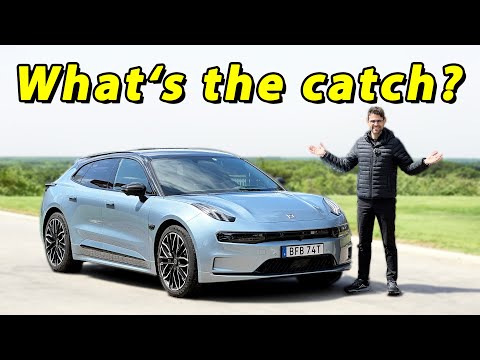
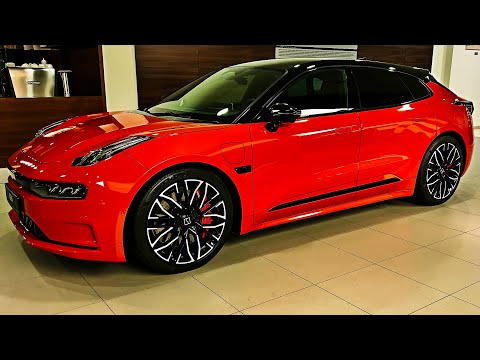
About Zeekr 001 Long Range RWD 🚘
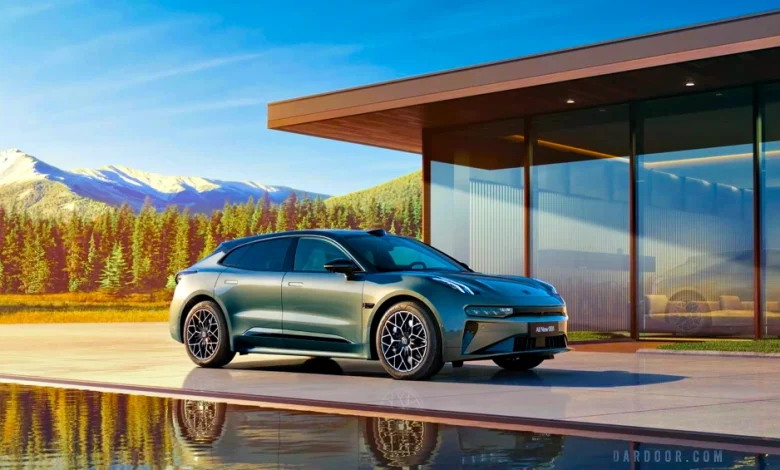
The Zeekr 001 Long Range RWD combines premium design, long-distance capability, and advanced technology in a distinctive shooting brake form. Priced around €60,970 in Europe, it targets buyers seeking luxury, practicality, and style without the complexity of all-wheel drive.
What’s New for 2025
- Upgraded infotainment system with a faster processor and smoother UI.
- Improved driver assistance software for enhanced highway comfort.
- Ongoing over-the-air updates keep systems current.
- Refined cabin materials and new optional wheel designs.
Design & Exterior
- Shooting brake body merges sleek aerodynamics with subtle SUV stance.
- Dimensions: 4955 mm (L) × 1999 mm (W) × 1560 mm (H).
- Features flush door handles, panoramic glass roof, and distinctive LED light signatures.
Interior, Tech & Cargo
- Scandinavian-inspired cabin design using sustainable materials.
- Five-seat configuration with generous legroom and minimalist dashboard.
- Cargo capacity: 539 L (rear) expandable to ~2144 L with seats folded, plus 80 L frunk.
- Large touchscreen running Zeekr OS, digital driver display, and full smartphone connectivity.
Performance & Driving Experience
- Rear-wheel-drive setup powered by a 200 kW PMSM with 343 Nm torque.
- Acceleration: 0–100 km/h in 7.2 seconds, top speed 200 km/h.
- Comfort-oriented handling with multiple regenerative braking modes and smooth power delivery.
Range, Battery & Charging
- Usable battery: 94 kWh.
- Real-world range: 527 km (estimated), efficiency 5.61 km/kWh.
- Charging: 22 kW AC (~5 hours full charge) and 200 kW DC fast charging.
- Includes Vehicle-to-Load (V2L) functionality.
Safety & Assistance Systems
- 5-star Euro NCAP safety rating.
- Standard ADAS includes adaptive cruise control, lane-keeping assist, blind-spot detection, and emergency braking.
- Optional/premium driver-assist features via subscription in some regions.
Warranty & Maintenance
- Basic warranty: 5 years / 100,000 km, with extension options.
- Battery warranty: 8 years / 200,000 km against degradation.
- Powertrain covered under main vehicle warranty.
- Maintenance programs variable by market, emphasizing long-term reliability.
Why You'll Love It 😘
- Excellent real-world range: Delivers an estimated 527 km of usable range thanks to a 94 kWh battery, outperforming most rivals in comfort-focused touring.
- Spacious, premium interior: Features a large, high-quality cabin with Scandi-luxury touches, supporting comfortable travel for up to five adults with excellent material finishes.
- Ample cargo space: Offers 539 litres in the boot, expandable to approximately 2144 litres with folded seats, plus an 80-litre frunk for extra utility.
- Fast AC charging: Equipped with a rare 22 kW onboard charger, enabling full charging from a three-phase AC source in about five hours—quicker than most competing EVs.
- High safety rating: Awarded a full 5-star Euro NCAP rating and fitted with a comprehensive set of advanced safety and driver assistance features as standard.
Why You Might Think Twice 🤔
- Emerging EU brand: Zeekr is relatively new to the European market, so long-term reliability, resale values, and dealer/service networks are less established compared to legacy brands.
- Heavy vehicle weight: The generous battery and large dimensions result in a heavier vehicle, impacting efficiency, agility, and perhaps affecting nimble urban handling.
- Not overtly sporty: Prioritizes comfort and stability over dynamic, sporty driving; acceleration and handling are less exciting versus performance-focused rivals.
- Some ADAS features optional: While core safety tech is standard, a few advanced driver assistance systems may be behind subscription or trim paywalls in some markets, affecting value.
Key Owners-Reported Issues
- Infotainment & Controls: The infotainment system is sometimes described as laggy or unintuitive. Owners have complained about delays, system crashes, and difficulty navigating menus, with some physical controls (such as seat or speed adjustment) registering taps inconsistently.
- ADAS Glitches: Adaptive cruise control and lane centering have been reported to behave erratically, especially at lower speeds and in busy traffic. Speed adjustments may not respond quickly, and occasional unpredictable braking has occurred.
- Software Bugs: Over-the-air updates can resolve some issues but also introduce new ones, such as settings not being saved (limit charging level, lane change assist) and having to reset preferences after restarting the car.
- Interior Quality Concerns: A minority of owners report premature wear on some interior trim pieces, especially decorative metallic or gold parts, which is disappointing for a premium-branded vehicle.
- Fiddly Controls: Many of the cabin controls, including touchscreen functions and haptic buttons, are noted to be “hair-pullingly fiddly,” causing frustration in daily operation and detracting from the otherwise upscale interior feel.
- Communication & Service: In rare cases, particularly for warranty repairs, some Zeekr owners have experienced slow responses, repair delays, and unclear communication from service centers. However, most feedback focuses more on user experience than mechanical reliability.
Zeekr 001 Long Range RWD 🆚 Tesla Model 3 Long Range AWD
Here’s a direct, feature-by-feature comparison between the 2025 Zeekr 001 Long Range RWD and the 2025 Tesla Model 3 Long Range AWD (check full specs)↗.
for Europe:
| Feature | Zeekr 1 Long Range RWD | Tesla Model 3 Long Range AWD |
|---|---|---|
| Price (Europe) | ~€60,970 | ~€51,990 |
| Drive Type | RWD (single motor) | AWD (dual motor) |
| Power Output | 200 kW / 343 Nm | ~259 kW (AWD, est.), 0–100: 4.4s |
| Battery (usable) | 94 kWh | ~79 kWh |
| Real-World Range | 527 km | 555-629 km (WLTP), ~555 km real world |
| Efficiency | 5.61 km/kWh | ~5.6–6.1 km/kWh |
| Charging (AC) | 22 kW (5 hrs, 0–100%) | 11 kW (8 hrs, 0–100%) |
| Charging (DC Fast) | 200 kW | 250 kW |
| 0–100 km/h | 7.2 s | 4.4 s |
| Top Speed | 200 km/h | 201 km/h |
| Length × Width × Height | 4955 × 1999 × 1560 mm | 4720 × 1848 × 1442 mm |
| Boot Space (Seats Up/Down) | 539L / approx. 2144L + 80L frunk | 682L total (front + rear, seats up) |
| Infotainment | Large central touchscreen, Zeekr OS, very fast | 15” touchscreen, new UI, Tesla OS |
| Warranty | 5y/100,000km (vehicle), 8y/200,000km (battery) | 4y/80,000km (vehicle), 8y/192,000km (battery, EU typical) |
| Safety | 5-star Euro NCAP; full ADAS suite | 5-star Euro NCAP; full ADAS suite |
Highlights
- The Zeekr 001 is larger, more practical, and boasts a bigger battery, but costs more and is slower than the Tesla.
- Tesla Model 3 AWD is much quicker, has slightly better real-world range, faster DC charging, but is less practical for cargo and rear-seat space.
- Both offer cutting-edge infotainment and comprehensive active safety features, but Zeekr emphasizes luxury and comfort, while Tesla leans into tech, performance, and a wider Supercharger network.
| Combined Efficiency | 186 Wh/km |
|---|---|
| Total System Power | 200 kW (272 PS) |
| Total Torque | 343 Nm |
| 0–100 km/h | 7.2 s |
| Top Speed | 200 km/h |
| Drive | Rear-wheel drive |
Price & Regional Availability
Here are the latest indicative starting prices for the 2025 Zeekr 1 Long Range RWD in each of your requested markets, based on currently available sources:
Zeekr 1 Long Range RWD Prices by Country
| Country | Local Price (approx, base) | Reference [local equivalent] |
|---|---|---|
| 🇬🇧 United Kingdom | £46,600 – £47,000 | |
| 🇳🇱 Netherlands | €54,990 – €59,490 | |
| 🇩🇪 Germany | €59,990 – €63,770 | |
| 🇺🇸 United States | ~$55,000 – Not officially sold* | – US launch not confirmed as of Oct 2025 |
| 🇨🇦 Canada | – | No official pricing/listings as of Oct 2025 |
| 🇲🇽 Mexico | 988,000 MXN (~$54,850 USD) | |
| 🇨🇳 China | 259,000–273,000 RMB (~$36,000–$38,500 USD) | |
| 🇨🇱 Chile | – | No official pricing/listings as of Oct 2025 |
Notes:
- Pricing in the 🇺🇸 United States and 🇨🇦 Canada is either unconfirmed or the model is not yet officially launched as of late 2025.
- Chinese prices are significantly lower due to local subsidies, lower taxes, and domestic manufacturing.
- European prices differ mostly due to VAT/BPM and local market adjustments.
Real-World Range Estimates
Between 365 – 725 km
| Condition | City | Highway (110 km/h) | Combined |
|---|---|---|---|
| 🌤️ Mild Weather | 725 km | 465 km | 575 km |
| 🌦️ Average Weather | — | — | 505 km |
| ❄️ Cold Weather | 490 km | 365 km | 425 km |
Indication of real-world range in several situations.
- ❄️ Cold Weather: “worst-case” (−10 °C with heating).
- 🌤️ Mild Weather: “best-case” (23 °C without A/C).
- 🛣️ Highway assumes a constant 110 km/h.
- 🏎️ Actual range depends on speed, driving style, weather and route conditions.
Long Distance Suitability (1-Stop Range) ★★★½☆
| First Stop Distance | 368 km | First Stop Duration | 3h 21min |
| Charging Stop | 0km | Charging Stop | 15 min |
| Second Stop Distance | 179 km | Second Stop Duration | 1h 38min |
| Total Distance | 547 km | Total Duration | 5h 14min |
| Weather | 1-Stop Range |
|---|---|
| 🌤️ Mild Weather | 622 km |
| 🌦️ Average Weather | 547 km → ★★★½☆ |
| ❄️ Cold Weather | 487 km |


The “Long Distance Suitability” is a 5-star rating indicating how suitable a vehicle is for long trips. It’s based on the 1-Stop Range: total distance with one 15-minute DC fast-charging stop.
2025 thresholds:
- 0☆ <200 km;
- 1★ 200–325;
- 2★ 325–450;
- 3★ 450–575;
- 4★ 575–700;
- 5★ >700 km.
- Half-stars are assigned by linear interpolation.
Battery Details
| Nominal / Usable Capacity | 100.0 kWh / 94.0 kWh |
|---|---|
| Battery Type / Cathode | Lithium-ion • NCM811 |
| Architecture / Nominal Voltage | 400 V • (n/a) |
| Cells / Pack Configuration | 110 cells • 110s1p |
| Form Factor / Name | Prismatic • CATL QILIN |
| Warranty | 8 years / 200,000 km |
Charging Overview
| Category | Details |
|---|---|
| Home/Destination (AC) | Type 2 (left-rear). Onboard charger up to 22 kW AC. 0→full ≈ 5 h 15 m @22 kW (~100 km/h). |
| Fast DC (CCS) | CCS (left-rear). Peak 200 kW; ~135 kW avg (10→80%). 50→404 km in ~31 min; ~680 km/h session rate. |
| Plug & Charge | Not supported (ISO 15118). |
| Autocharge | Supported. |
| Battery Preconditioning | Supported; automatic when navigating to DC fast charger. |
Home & Destination Charging (0→100%)
Charging is possible by using a regular wall plug or a charging station. Public charging is always via a charging station. Charging speed depends on the EVSE and the vehicle’s AC capacity. Availability of 1-phase/3-phase connections varies by country.
| Charging Point | Max. Power | Power | Time (0→100%) | Rate |
|---|---|---|---|---|
| Wall Plug (230 V / 1×10 A) | 2.3 kW | 2.3 kW | 48 h 15 m | 10 km/h |
| 1-Phase 16 A (230 V) | 3.7 kW | 3.7 kW | 30 h | 17 km/h |
| 1-Phase 32 A (230 V) | 7.4 kW | 7.4 kW | 15 h | 34 km/h |
| 3-Phase 16 A (400 V) | 11 kW | 11 kW | 10 h 15 m | 49 km/h |
| 3-Phase 32 A (400 V) | 22 kW | 22 kW † | 5 h | 100 km/h |
† limited by onboard charger where applicable.
Fast Charging (10→80%)
| Charging Point | Max. Power | Average Power | Time (10→80%) | Rate |
|---|---|---|---|---|
| CCS 50 kW | 50 kW | 50 kW | 83 min | 250 km/h |
| CCS 100 kW | 100 kW | 85 kW † | 49 min | 430 km/h |
| CCS 150 kW | 150 kW | 110 kW † | 38 min | 550 km/h |
| CCS 175 kW | 175 kW | 125 kW † | 33 min | 640 km/h |
| CCS 350 kW | 200 kW † | 135 kW † | 31 min | 680 km/h |
† Limited by vehicle. Autocharge supported; Plug & Charge not supported (ISO 15118). Actual rates vary with temperature, SoC, site load, and driving style.
Claimed Charging Specs (Manufacturer)
- Max. Power: The maximum charging power reached during the session.
- Charge From: The starting battery state-of-charge (% SoC).
- Charge To: The target battery state-of-charge (% SoC).
- Time: Total time required for the charging session.
| Max. Power | Charge From | Charge To | Time |
|---|---|---|---|
| 200 kW | 10% | 80% | 30 min |
Performance & Drivetrain
| Total Power / Torque | 200 kW (272 PS) • 343 Nm |
|---|---|
| 0–100 km/h | 7.2 s |
| Top Speed | 200 km/h |
| Drive | RWD |
Energy Consumption & Efficiency
| Basis | Range | Rated Consumption | Vehicle Consumption | Fuel-eq. |
|---|---|---|---|---|
| Real Range | 505 km | — | 186 Wh/km | 2.1 L/100 km (veh.) |
| WLTP | 620 km | 182 Wh/km | 152 Wh/km | 2.0 / 1.7 L/100 km |
TEL = Test Energy Low | TEH = Test Energy High (when provided). Rated = official figures incl. charging losses. Vehicle = calculated battery energy used for propulsion and on-board systems.
Real Energy Consumption Estimation
Between 130 – 258 Wh/km
| Scenario | City | Highway | Combined |
|---|---|---|---|
| ❄️ Cold Weather | 192 Wh/km | 258 Wh/km | 221 Wh/km |
| 🌤️ Mild Weather | 130 Wh/km | 202 Wh/km | 163 Wh/km |
- ❄️ Cold Weather: “worst-case” (−10 °C with heating).
- 🌤️ Mild Weather: “best-case” (23 °C without A/C).
- 🛣️ Highway assumes a constant 110 km/h.
- 🏎️ Actual range use depends on speed, driving style, weather and route conditions.
Consumption Insights
- ❄️ Cold Weather increases energy usage significantly, especially at highway speeds due to battery heating and climate control.
- 🌤️ Mild Weather and city driving are most efficient, with lower consumption comparable to other premium electric SUVs in its class.
- Combined (average) values are ideal for trip planning but depend on route and temperature.
Safety Rating ★★★★★
| Region | Rating | Details |
|---|---|---|
| Europe (Euro NCAP) | — (2024) | Adult 89% • Child 88% • VRU 84% • Assist 83% |
| North America | — | NHTSA / IIHS not listed for this spec |
| South America | — | Latin NCAP not listed |
- The 2025 Zeekr 001 Long Range RWD has achieved a full 5-star Euro NCAP safety rating, which is the highest possible score for vehicle safety in the European market. This rating reflects outstanding performance in critical safety assessments, including adult and child occupant protection, vulnerable road user safety, and safety assistance technologies.
- The model comes equipped with a comprehensive suite of advanced driver-assistance systems (ADAS) such as adaptive cruise control, lane-keeping assist, blind-spot monitoring, and autonomous emergency braking as standard. Some high-level assistance features may be optional or require a subscription depending on the market, but the core safety tech that secured the top NCAP rating is included on all trims.
Dimensions & Weight
| L × W × H | 4955 × 1999 × 1560 mm (width with mirrors 2225 mm) |
|---|---|
| Wheelbase | 2999 mm |
| Weight (EU/GVWR/Payload) | 2275 / 2710 / 510 kg |
| Cargo Volume (up / max / frunk) | 539 L / 2144 L / — |
| Roof Load | — |
| Towing (unbraked / braked) / Vertical | 750 kg / 1500 kg • 100 kg |
| Turning Circle | 11.8 m |
| Platform | GEELY SEA1 (EV-dedicated) |
| Body / Segment / Roof Rails | Liftback sedan • E – Executive • No |
| Heat Pump | Yes (standard) |
Bidirectional Charging (V2X / BPT)
| Capability | Status | Meaning |
|---|---|---|
| V2L (Vehicle-to-Load) | Yes • up to 3.3 kW (AC) | Power external devices via adapter |
| V2H (Vehicle-to-Home) | No | Whole-home backup via AC |
| V2G (Vehicle-to-Grid) | No | Export to grid |
| BPT (Battery Power Transfer) | — | Umbrella term for bidirectional features |
Autocharge: automatic session initiation at supported CCS stations. Plug & Charge: automatic session initiation per ISO 15118 where supported by vehicle and network.
Miscellaneous
| Seats / ISOFIX | 5 • ISOFIX ×2 |
|---|---|
| Platform | GEELY SEA1 |
| Segment | E – Executive |
* = estimated where marked. Average energy consumption and range assume moderate drive style and climate. Real-life values may differ significantly. Pricing info might not be actual for some regions. No rights can be derived from this information.
Preceding Model
| Metric | Previous 001 (context) | Current 001 Long Range RWD | Δ |
|---|---|---|---|
| Real Range (Combined) | — | 505 km | — |
| 0–100 km/h | — | 7.2 s | — |
| Efficiency (Vehicle) | — | 186 Wh/km | — |
If a directly comparable prior EU-spec trim is provided, we’ll populate historical values and deltas.
Previous Generation |
Next Generation |
|
There are no newer versions of this car |
There are no newer versions of this car |
1-Stop Range Definition ✋
For vehicles without fast-charging capability, only the distance of the first stop is considered.
🚗 Driving Profile
- Begin with a fully charged battery
- Stop 1: Drive until the battery reaches 10% state-of-charge (SoC)
- Perform a 15-minute fast charge
- Stop 2: Continue driving until the battery again reaches 10% SoC
📋 Assumptions
- Driving speed, climate, and environmental conditions are based on Real Range Highway data
- No additional time required to initiate or stop the charging session
- The charging station always delivers the maximum power requested by the vehicle
- The battery is assumed to be in optimal health and condition
⚠️ Important Note : In real-world driving, it is practically impossible to replicate these conditions exactly.
This benchmark should therefore be viewed as a comparative metric, designed to evaluate vehicles under standardized conditions rather than predict exact trip distances.
5-Star Rating Definition ★
- The 1-Stop Range rating in 2025 is a practical benchmark for EVs: it measures the distance a vehicle can travel after a single 15-minute charging session, under combined real-world weather conditions.
- This rating provides a clear, star-based measure of long-distance travel practicality—judged by how far a car can go after a single 15-minute DC fast charge.
- The rating puts instant, comparable context on each EV’s long-distance travel ability, helping buyers easily compare real-world charging performance between models.
- This value is translated into star ratings: In 2025, the system assigns stars as follows:
| Star Rating | 1-Stop Range (combined conditions) |
|---|---|
| ☆ | less than 200 km |
| ★ | 200 km to 325 km |
| ★★ | 325 km to 450 km |
| ★★★ | 450 km to 575 km |
| ★★★★ | 575 km to 700 km |
| ★★★★★ | more than 700 km |
- The 1-Stop Range is calculated using real-world benchmarks in three temperature scenarios to show suitability for road trips, regardless of weather.
- Half-star ratings interpolate between these whole-star bands, so a result of 490 km would earn 3½ stars.
- This system makes it easier for drivers to quickly assess and compare vehicles for long-distance suitability, regardless of ambient temperature or charging conditions.
Fast Charging (10 -> 80%) ⚡
- Max. Power: maximum power provided by charge point
- Avg. Power: average power provided by charge point over a session from 10% to 80%
- Time: time needed to charge from 10% to 80% Rate: average charging speed over a session from 10% to 80%
EV Charger Connector Types 🔌

This table provides a quick reference for which plug types are used for AC vs DC charging and their regional prevalence. Here’s a comparative table of major EV charger connector types, showing whether they are for AC or DC charging, their suitability, and the countries/regions where they are widely adopted:
| Connector Type | AC/DC | Suitability | Countries/Regions Adapted |
|---|---|---|---|
| Type 1 (SAE J1772) | AC | Standard US/Japan AC, slow–medium | USA, Canada, Japan |
| Type 2 (Mennekes) | AC | European AC standard, universal | Europe, UK, Australia, South Africa |
| Tesla (North America) | AC/DC | Tesla vehicles only, fast Supercharge | USA, Canada |
| CCS1 (Combo 1) | DC | US fast DC charge, some AC support | USA, Canada |
| CCS2 (Combo 2) | DC | Europe fast DC charge, AC support | Europe, UK, Australia, South Africa |
| CHAdeMO | DC | Nippon/Japanese, some global DC | Japan, parts of Europe, USA |
| GB/T (AC/DC) | AC/DC | China national standard, all speeds | China |
| Tesla (Europe) | DC | European Tesla fast charging (CCS2) | UK, Europe |
- Type 1 (J1772): Used for AC charging in North America and Japan; now fading in favor of CCS1 for DC.
- Type 2 (Mennekes): Universal AC connector across Europe; most wallboxes/public AC points use this.
- CCS (Combined Charging System): CCS1 for North America, CCS2 for Europe/Australia/South Africa. Enables both AC and high-power DC charging in one socket, now the global DC fast charge standard.
- CHAdeMO: Used mostly for rapid DC charging in Japan and some regions; declining outside Japan as CCS adoption grows.
- GB/T: Unique AC and DC connectors for China, incompatible with Western standards.
- Tesla: Proprietary plug in North America; now shifting to “NACS” standard which will be more widely adopted by Ford, GM, and others. In Europe, Tesla uses CCS Type 2, fully compatible with local standards.