
 485 km
 200 km/h
  5.2 Sec
  840 km/h
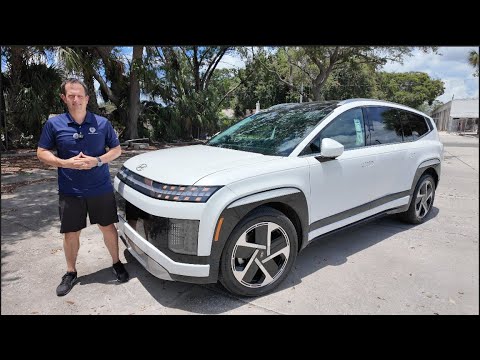
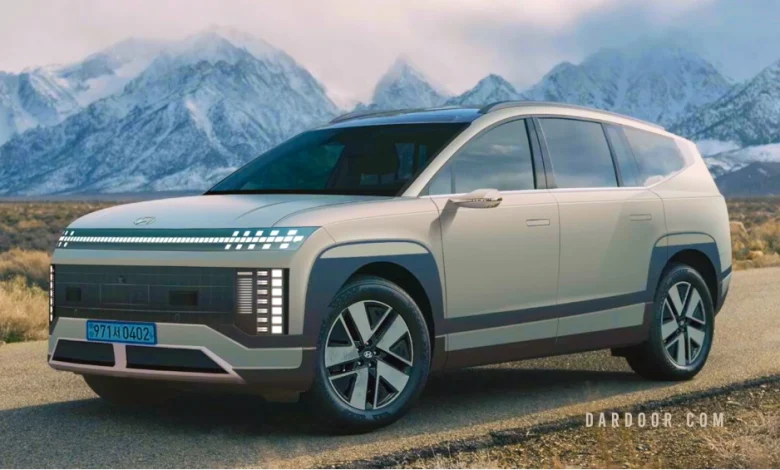
 Get ready for Hyundai’s new king of the road—the Ioniq 9 Performance AWD. This flagship electric SUV is purpose-built for big families who want to embrace electric mobility without compromise, standing tall in practicality, technology, and comfort.
Charging Port Type CCS Type 2 (Charging Port type affects charging station compatibility.) 
Max AC Charging 11 KW Home Charging, 3-Phase support. On-board AC charger (inverter) Capacity affects AC charging speed. Max DC Charging 350 KW (175 KW at 400 V) Maximum power the car can accept from a DC faster charger. Architecture 800 V Higher power train voltage means faster charging and better efficiency. Battery Capacity (Usable) 106 kWh Net battery capacity that is available for use. Tested Range (EU -WLTP)
600 km Estimated Distance of a Full Charge Tested Range (USA – EPA) 501 km Estimated Distance of a Full Charge Motor / Power Performance Around 315 kW (422 hp) AWD (2 motors) Torque 700 Nm Peak Toque of the car’s electric motor 0-100 km/h 5.2 Second acceleration time from standstill to 100 km/h Top Speed 200 km/h Maximum speed the car can reach Charging 10→ 80% 24 minutes Under Ideal Conditions Drive Type AWD (2 motors) PMSM front, PMSM rear
About Hyundai IONIQ 9 Performance AWD
The 2025 Hyundai Ioniq 9 Performance AWD is Hyundai’s largest, most advanced EV to date, combining seven-seat practicality, strong acceleration, ultra-fast charging, and a luxury-tech cabin. It’s an all-new model designed to take on premium full-size electric SUVs.
What’s New for 2025
- Brand-new nameplate: Hyundai’s first full-size electric SUV.
- Built on the E-GMP platform with 800V ultra-fast charging capability.
- Design inspired by the ‘Seven’ concept car with Parametric Pixel lights.
- Flagship positioning within Hyundai’s EV lineup.
Design & Exterior
- Dimensions: 5060 mm (L), 1980 mm (W), 1790 mm (H), wheelbase 3130 mm.
- Sleek, monolithic styling with aerodynamic surfaces.
- Unique large aero-style wheels on Performance AWD trim.
- Subtle sporty accents for a commanding presence.
Interior, Technology & Cargo
- Seven-seat layout with flat floor for maximum space.
- Panoramic driver and infotainment display.
- Wireless Apple CarPlay & Android Auto.
- Cargo: 338 L behind third row, 2435 L with seats down, 52 L frunk.
Performance & Driving Experience
- Dual-motor AWD system: 315 kW (422 hp), 700 Nm torque.
- 0–100 km/h in 5.2 seconds.
- Permanent Magnet Synchronous Motors on each axle.
- Adjustable regenerative braking with one-pedal mode.
- Smooth, quiet ride with confident handling.
Range, Battery & Charging
- Usable battery: 106 kWh.
- Estimated real-world range: 493 km (4.65 km/kWh).
- 800V DC fast charging at 350 kW (10–80% in ~20 min).
- 11 kW AC home charging.
- Standard Vehicle-to-Load (V2L) capability.
Safety & Driver Assistance
- Expected 5-star Euro NCAP rating.
- ‘Highway Driving Assist 2’: adaptive cruise, lane centering, semi-automated lane changes.
- Blind-Spot View Monitor with collision avoidance.
Warranty & Maintenance
- 5-year/unlimited km vehicle warranty.
- 8-year/160,000 km battery warranty (70% capacity retention).
- Low maintenance due to EV architecture.
Would you like me to create a side-by-side comparison table of the Ioniq 9 Performance AWD versus its closest rivals like the Kia EV9 GT-Line and BMW iX xDrive50?
Why You'll Love It 😘
- Ultra-fast 350kW DC charging drastically reduces downtime for long trips.
- Spacious three-row seating comfortably accommodates families and passengers.
- Potent dual-motor system delivers brisk acceleration for confident driving.
- Strong 2500kg towing capacity makes it practical for trailers and caravans.
Why You Might Think Twice 🤔
- Extremely heavy curb weight may impact performance and efficiency.
- Large size makes maneuvering in tight urban spaces challenging.
- High premium price tag puts it at the upper end of the segment.
- Mediocre energy efficiency means higher running costs over time.
Key Owners-Reported Issues
-
Inverter Charge Control Unit (ICCU) failures, sometimes resulting in melted wiring or sudden loss of drive, with some cars stranded and waiting on parts for weeks.
-
Electrical system and main computer faults, including failure to shift out of park or non-functioning infotainment after only a few days of ownership.
-
Persistent bugs with keeping drive modes (e.g., Sport Mode) and regenerative braking settings; owners must reset these after each drive or parking event.
-
Latch points for car seats in third row are awkward to access and some power seat controls are easily triggered by children, complicating third-row use.
-
Inconsistent WiFi and connectivity for over-the-air updates, and complaints that music/pause controls are unintuitive.
-
Satellite radio reception issues due to the hidden antenna design; reports of frequent signal dropouts.
-
Occasional over-sensitivity of driver monitoring systems and lack of haptic feedback on touch controls, sometimes causing unintentional distractions
While some owners enjoy the overall driving experience and technology, the above reliability and usability concerns have emerged as standout problems in early ownership for the Hyundai Ioniq 9.
| Combined Efficiency | 219 Wh/km |
|---|---|
| Total System Power | 315 kW (428 PS) |
| Total Torque | 700 Nm |
| 0–100 km/h | 5.2 s |
| Top Speed | 200 km/h |
| Drive | AWD |
Price & Regional Availability
| Country/Region | Price |
|---|---|
| 🇬🇧 United Kingdom | £77,595 |
| 🇳🇱 Netherlands | €81,495 |
| 🇩🇪 Germany | €86,750 |
| 🇺🇸 United States | $76,590 |
| 🇨🇦 Canada | — |
| 🇲🇽 Mexico | — |
| 🇨🇳 China | — |
| 🇨🇱 Chile | — |
Prices shown are manufacturer or market MSRP where available and exclude indirect incentives; specifications and included options vary by region. Values are subject to change without notice.
Real-World Range Estimates
Between 350 – 690 km
| Condition | City | Highway (110 km/h) | Combined |
|---|---|---|---|
| 🌤️ Mild Weather | 690 km | 440 km | 545 km |
| 🌦️ Average Weather | — | — | 485 km |
| ❄️ Cold Weather | 485 km | 350 km | 415 km |
Indication of real-world range in several situations.
- ❄️ Cold Weather: “worst-case” (−10 °C with heating).
- 🌤️ Mild Weather: “best-case” (23 °C without A/C).
- 🛣️ Highway assumes a constant 110 km/h.
- 🏎️ Actual range depends on speed, driving style, weather and route conditions.
Long Distance Suitability (1-Stop Range) ★★★½☆
| First Stop Distance | 351 km | First Stop Duration | 3h 11min |
| Charging Stop | 0km | Charging Stop | 15 min |
| Second Stop Distance | 199 km | Second Stop Duration | 1h 48min |
| Total Distance | 550 km | Total Duration | 5h 14min |
| Weather | 1-Stop Range |
|---|---|
| 🌤️ Mild Weather | — |
| 🌦️ Average Weather | 550 km → ★★★½☆ |
| ❄️ Cold Weather | — |


The “Long Distance Suitability” is a 5-star rating indicating how suitable a vehicle is for long trips. It’s based on the 1-Stop Range: total distance with one 15-minute DC fast-charging stop.
2025 thresholds:
- 0☆ <200 km;
- 1★ 200–325;
- 2★ 325–450;
- 3★ 450–575;
- 4★ 575–700;
- 5★ >700 km.
- Half-stars are assigned by linear interpolation.
Battery Details
| Nominal / Usable Capacity | 110.3 kWh / 106.0 kWh |
|---|---|
| Battery Type / Cathode | Lithium-ion • NCM |
| Architecture | 800 V |
| Cells / Pack Config / Nominal Voltage | No data / No data / No data |
| Form Factor / Name | Pouch / — |
| Warranty | 8 years / 160,000 km |
Charging Overview
| Category | Details |
|---|---|
| Home/Destination (AC) | Type 2 (rear-right); 11 kW onboard; 0→full ~11 h 30 m; ~43 km/h |
| Fast DC (CCS) | CCS (rear-right); peak 250 kW; ~195 kW average (10→80%); 24 min; ~840 km/h |
| Plug & Charge | No data |
| Autocharge | Supported |
| Battery Preconditioning | Supported; automatic when navigating to a DC charger |
Actual AC/DC speeds depend on site power, ambient temperature, cable rating, and state of charge.
Home & Destination Charging (0→100%)
Charging is possible via wall plug or charging station (public charging is always through a station). Speed depends on EVSE capability and the vehicle’s onboard charger. Availability of 1-phase vs 3-phase connections varies by country.
| Europe — Type 2 (IEC 62196) | ||||
|---|---|---|---|---|
| Charging Point | Max. Power | Power | Time | Rate |
| Wall Plug (230 V / 1×10 A) | 2.3 kW | 2.3 kW | 54 h 15 m | 9 km/h |
| 1-Phase 16 A (230 V) | 3.7 kW | 3.7 kW | 33 h 45 m | 14 km/h |
| 1-Phase 32 A (230 V) | 7.4 kW | 7.4 kW | 17 h | 29 km/h |
| 3-Phase 16 A (400 V) | 11 kW | 11 kW | 11 h 30 m | 42 km/h |
| 3-Phase 32 A (400 V) | 22 kW | 11 kW† | 11 h 30 m | 42 km/h |
† limited by onboard charger
Fast Charging (10→80%)
Connector: CCS Combo 2. Rapid charging enables longer trips by adding as much range as possible in the shortest time. Charge power tapers near ~80% SoC; typical sessions end at or before 80%.
- Autocharge allows automatic session initiation at supported CCS stations.
- Plug & Charge enables automatic session initiation per ISO 15118 at supported stations.
- Actual rates vary with temperature, battery state, site load, and driving style.
| Charging Point | Max. Power | Avg. Power | Time | Rate |
|---|---|---|---|---|
| CCS 50 kW | 50 kW | 50 kW | 94 min | 210 km/h |
| CCS 100 kW | 100 kW | 95 kW† | 49 min | 410 km/h |
| CCS 150 kW | 150 kW | 130 kW† | 36 min | 560 km/h |
| CCS 175 kW | 175 kW | 145 kW† | 32 min | 630 km/h |
| CCS 350 kW | 250 kW† | 195 kW† | 24 min | 840 km/h |
† Limited by vehicle capability. Autocharge supported. Actual charging rates vary with temperature, battery state, site load, and driving style.
Claimed Charging Specs (Manufacturer)
- Max. Power: The maximum charging power reached during the session.
- Charge From: The starting battery state-of-charge (% SoC).
- Charge To: The target battery state-of-charge (% SoC).
- Time: Total time required for the charging session.
| Max. Power | Charge From | Charge To | Time | Rate |
|---|---|---|---|---|
| 250 kW | 10% | 80% | 24 min | ~840 km/h |
Performance & Drivetrain
| Total Power / Torque | 315 kW • 700 Nm |
|---|---|
| 0–100 km/h | 5.2 s |
| Top Speed | 200 km/h |
| Drive | AWD |
Energy Consumption & Efficiency
| Standard / Basis | Range | Rated Consumption | Vehicle Consumption | Fuel-eq. |
|---|---|---|---|---|
| Real Range | 485 km | — | 219 Wh/km | 2.5 L/100 km (veh.) |
| WLTP | 600 km | 206 Wh/km | 177 Wh/km | 2.3 / 2.0 L/100 km |
- TEL = Test Energy Low
- TEH = Test Energy High.
- Rated = official figures incl. charging losses.
- Vehicle = calculated battery energy used for propulsion and on-board systems.
Real Energy Consumption Estimation
| Scenario | City | Highway | Combined |
|---|---|---|---|
| ❄️ Cold Weather | 219 Wh/km | 303 Wh/km | 255 Wh/km |
| 🌤️ Mild Weather | 154 Wh/km | 241 Wh/km | 194 Wh/km |
Indication of real-world range in several situations.
- ❄️ Cold Weather: “worst-case” (−10 °C with heating).
- 🌤️ Mild Weather: “best-case” (23 °C without A/C).
- 🛣️ Highway assumes a constant 110 km/h.
- 🏎️ Actual range use depends on speed, driving style, weather and route conditions.
Safety Rating ★★★★★
| Region | Rating | Details |
|---|---|---|
| Europe (Euro NCAP) | — | Adult 84% • Child 87% • VRU 77% • Assist 83% (2025) |
| North America | — | NHTSA / IIHS not listed for this spec |
| South America | — | Latin NCAP not listed |
Regional safety ratings vary by market and model year; refer to Euro NCAP, NHTSA, IIHS, or Latin NCAP for official results.
Dimensions & Weight
| L × W × H | 5060 × 1980 × 1790 mm |
|---|---|
| Wheelbase | 3130 mm |
| Weight Unladen (EU) / GVWR / Payload | 2689 kg / 3320 kg / 706 kg |
| Cargo Volume (seats up / max / frunk) | 338 L / 2419 L / 52 L |
| Roof Load | No data |
| Tow Hitch / Towing | Possible • 750 kg unbraked / 2500 kg braked |
| Turning Circle | No data |
| Platform | HMG E-GMP • EV-dedicated |
| Body / Segment / Roof Rails | SUV • JF – Luxury • — |
| Heat Pump | Yes (standard) |
Bidirectional Charging (V2X / BPT)
| Capability | Status | Meaning |
|---|---|---|
| V2L (Vehicle-to-Load) | Yes • up to 3.6 kW AC | Power external devices; ext. Type 2 adapter & interior socket |
| V2H (Vehicle-to-Home) | Via AC: Announced • Via DC: No | Home backup / whole-home power (AC pathway announced) |
| V2G (Vehicle-to-Grid) | Via AC: Announced • Via DC: No | Export to grid where regulations permit |
| BPT (Battery Power Transfer) | Supported (per above capabilities) | Umbrella term for bidirectional functions |
Miscellaneous
| Seats | 7 seats |
|---|---|
| Isofix | 4 seats |
| Car Body | SUV |
| Segment | JF – Luxury |
| Platform | HMG E-GMP |
| EV Dedicated Platform | Yes |
| Heat Pump | Yes |
* = estimated where indicated. Average energy consumption and range assume moderate climate and driving style. Real-life values may differ significantly. Pricing may not reflect all regions. No rights can be derived from the information on this site.
Preceding Model
| Metric | Predecessor | IONIQ 9 Performance AWD (2025) | Δ |
|---|---|---|---|
| Real Range (Combined) | — | 485 km | — |
| 0–100 km/h | — | 5.2 s | — |
| Efficiency (Vehicle) | — | 219 Wh/km | — |
Previous Generation |
Next Generation |
|
There are no newer versions of this car |
There are no newer versions of this car |
1-Stop Range Definition 🔋
For vehicles without fast-charging capability, only the distance of the first stop is considered.
🚗 Driving Profile
- Begin with a fully charged battery
- Stop 1: Drive until the battery reaches 10% state-of-charge (SoC)
- Perform a 15-minute fast charge
- Stop 2: Continue driving until the battery again reaches 10% SoC
📋 Assumptions
- Driving speed, climate, and environmental conditions are based on Real Range Highway data
- No additional time required to initiate or stop the charging session
- The charging station always delivers the maximum power requested by the vehicle
- The battery is assumed to be in optimal health and condition
⚠️ Important Note : In real-world driving, it is practically impossible to replicate these conditions exactly.
This benchmark should therefore be viewed as a comparative metric, designed to evaluate vehicles under standardized conditions rather than predict exact trip distances.
5-Star Rating Definition ★
Assignment of Stars in 2025
- ☆ 0 less than 200 km
- ★ from 200 km to 325 km
- ★★ from 325 km to 450 km
- ★★★ from 450 km to 575 km
- ★★★★ from 575 km to 700 km
- ★★★★★ more than 700 km
Based on 2025 thresholds: 3 stars awarded for 490 km average. Half-stars interpolated. Vehicles with a rating between these values receive a rating based on a linear scale.
Fast Charging (10 -> 80%) ⚡
- Max. Power: maximum power provided by charge point
- Avg. Power: average power provided by charge point over a session from 10% to 80%
- Time: time needed to charge from 10% to 80% Rate: average charging speed over a session from 10% to 80%
EV Charger Connector Types