CUPRA Born 150 kW – 58 kWh ★★☆☆☆
Discontinued (October 2021 - July 2024)
CUPRA Born 150 kW – 58 kWh
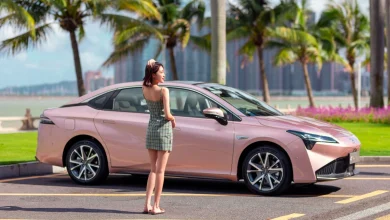
The CUPRA Born is a battery-electric compact hatchback produced by SEAT under its performance-oriented CUPRA brand. It’s built on the Volkswagen Group MEB platform in Zwickau, Germany. The 150 kW (204 PS) version with a 58 kWh usable battery was available between 2021 and 2024, it’s discontinued now.
| Combined Efficiency | 166 Wh/km |
|---|---|
| Total System Power | 150 kW (204 PS) ≈ 201 hp |
| 0–100 km/h | 7.3 s |
| Top Speed | 160 km/h |
| Drivetrain | RWD (single-motor) |
Price & Regional Availability
| Country/Region | MSRP | Order Window | Status / Notes |
|---|---|---|---|
| United Kingdom | £34,125 | Apr 2022 – Jul 2024 | Discontinued (no new model available) |
| The Netherlands | €36,939 | Nov 2021 – Jun 2024 | Discontinued |
| Germany | €39,370 | Oct 2021 – Jun 2024 | Discontinued |
| North America | — | TBD | Not listed for this variant |
| South America | — | TBD | Not listed |
Prices shown are recommended retail prices for the specified countries and do not include indirect incentives. Pricing and included options differ by region. Dates shown are order dates. Click a country on EV-Database for more details.
Real-World Range Estimates
| Condition | City | Highway (110 km/h) | Combined |
|---|---|---|---|
| Mild Weather (23 °C, no A/C) | 515 km | 320 km | 400 km |
| Combined | — | — | 350 km |
| Cold Weather (−10 °C, heating) | 340 km | 250 km | 295 km |
Indication of real-world range in several situations. Cold weather: worst-case (−10 °C with heating). Mild weather: best-case (23 °C without A/C). “Highway” assumes a constant 110 km/h. Actual range depends on speed, driving style, weather, and route conditions.
Long Distance Suitability (1-Stop Range)
| First Stop Distance | 253 km | First Stop Duration | 2h 18min |
| Charging Stop | 0km | Charging Stop | 15 min |
| Second Stop Distance | 122 km | Second stop Duration | 1h 7min |
| Total Distance | 375 km | Total Duration | 3h 40min |
| Weather | 1-Stop Range |
|---|---|
| Mild | 428 km |
| Average | 375 km → ★★☆☆☆ |
| Cold | 334 km |
The “long distance suitability” is a 5-star rating indicating road-trip readiness, based on the 1-Stop Range: total distance with one 15-minute DC charge. 2025 thresholds: 0★ <200 km; 1★ 200–325; 2★ 325–450; 3★ 450–575; 4★ 575–700; 5★ >700 km. Half-stars interpolate between thresholds.
Battery Details
| Nominal / Usable Capacity | 62.0 kWh / 58.0 kWh |
|---|---|
| Battery Type | Lithium-ion |
| Architecture / Nominal Voltage | 400 V • 397 V nominal |
| Number of Cells / Pack Config | 216 cells • 108s2p |
| Chemistry / Form Factor / Name | No data • — • — |
| Thermal Management | — |
| Warranty | 8 years / 160,000 km |
Where the data source showed “no data”, fields are left blank.
Charging Overview
| Category | Details |
|---|---|
| Home / Destination (AC) | Type 2 port (right-rear); onboard charger 11 kW AC. 0→100% in ~6 h 15 m at 11 kW; ~56 km/h. |
| Fast DC (CCS) | CCS (right-rear); peak 124 kW; average ~82 kW (10→80%). 10→80% ~31 min; up to ~470 km/h. |
| Plug & Charge | Supported (ISO 15118-2). Autocharge: not supported. |
| Battery Preconditioning | Preconditioning not supported; no automatic preconditioning via navigation. |
Home & Destination Charging (0 → 100%)
Charging is possible by using a regular wall plug or a charging station. Public AC charging is always via a charging station. How fast the EV can charge depends on the EVSE and the vehicle’s maximum AC capacity. Availability of 1-phase/3-phase connections varies by country.
| Europe — Type 2 (Mennekes IEC 62196) | ||||
|---|---|---|---|---|
| Charging Point | Max. Power | Power | Time (0→100%) | Rate |
| Wall Plug (230 V / 1×10 A) | 2.3 kW | 2.3 kW | 29 h 45 m | 12 km/h |
| 1-Phase 16 A (230 V) | 3.7 kW | 3.7 kW | 18 h 30 m | 19 km/h |
| 1-Phase 32 A (230 V) | 7.4 kW | 7.4 kW | 9 h 15 m | 38 km/h |
| 3-Phase 16 A (400 V) | 11 kW | 11 kW | 6 h 15 m | 56 km/h |
| 3-Phase 32 A (400 V) | 22 kW | 11 kW † | 6 h 15 m | 56 km/h |
† limited by onboard charger
Fast Charging (10 → 80%)
Connector: Combined Charging System (CCS Combo 2). Rapid charging enables longer trips by adding as much range as possible in the shortest time. Charge power tapers significantly beyond ~80% SoC; most rapid sessions stop at or before 80%. Real-world rates depend on charger capability, the vehicle’s charge curve, temperature, and initial SoC.
| Charging Point | Max. Power | Average Power | Time (10→80%) | Rate |
|---|---|---|---|---|
| CCS 50 kW | 50 kW | 50 kW | 51 min | 280 km/h |
| CCS 150 kW | 124 kW † | 82 kW † | 31 min | 470 km/h |
† Limited by charging capabilities of vehicle.
Autocharge: automatic session initiation at supported CCS sites (not supported on this model).
Plug & Charge: automatic session initiation per ISO 15118 at compatible CCS stations (supported).
Actual charging rates may differ due to outside temperature, battery state and driving style.
Claimed Charging Specs (Manufacturer)
Definitions: Max. Power = peak charge power; Charge From/To = session SoC window; Time = session duration.
| Max. Power | Charge From | Charge To | Time |
|---|---|---|---|
| 120 kW | 5 % | 80 % | 35 min |
Performance & Drivetrain
| Total Power / Torque | 150 kW (204 PS) • 310 Nm |
|---|---|
| 0–100 km/h | 7.3 s |
| Top Speed | 160 km/h |
| Drive | RWD (single-motor) |
Energy Consumption & Efficiency
| Standard / Basis | Range | Rated Consumption | Vehicle Consumption | Fuel-eq. |
|---|---|---|---|---|
| Real Range | 350 km | — | 166 Wh/km | 1.9 L/100 km (veh.) |
| WLTP (TEL) | 427 km | 155 Wh/km | 136 Wh/km | 1.7 / 1.5 L/100 km |
| WLTP (TEH) | 358 km | 180 Wh/km | 162 Wh/km | 2.0 / 1.8 L/100 km |
TEL = Test Energy Low | TEH = Test Energy High. Rated = official figures incl. charging losses. Vehicle = calculated battery energy used for propulsion and on-board systems.
Real Energy Consumption Estimation
| Scenario | City | Highway | Combined |
|---|---|---|---|
| Cold Weather | 171 Wh/km | 232 Wh/km | 197 Wh/km |
| Mild Weather | 113 Wh/km | 181 Wh/km | 145 Wh/km |
Indication of real-world energy use in several situations. Cold weather: worst-case (−10 °C with heating). Mild weather: best-case (23 °C without A/C). Highway assumes 110 km/h. Energy use depends on speed, style, climate, and route conditions.
Safety Rating ★★★★★
| Region | Rating | Details |
|---|---|---|
| Europe (Euro NCAP, 2022) | — | Adult 93% • Child 89% • VRU 73% • Assist 80% |
| North America | — | NHTSA / IIHS ratings not listed for this variant |
| South America | — | Not listed |
Regional safety ratings vary by model year and configuration. Refer to local authorities (Euro NCAP / NHTSA / IIHS / Latin NCAP) for official results.
Dimensions & Weight
| L × W × H | 4322 × 1809 × 1540 mm (width with mirrors 2070 mm) |
|---|---|
| Wheelbase | 2766 mm |
| Weight Unladen (EU) / GVWR / Payload | 1811 kg / 2260 kg / 524 kg |
| Cargo Volume (seats up / max / frunk) | 385 L / 1267 L / 0 L |
| Roof Load | 0 kg |
| Tow Hitch / Towing | Not supported • 0 kg unbraked / 0 kg braked • 0 kg vertical |
| Turning Circle | 10.2 m |
| Platform | VW MEB • EV-dedicated |
Miscellaneous
| Seats / ISOFIX | 5 • ISOFIX (3 seats) |
|---|---|
| Body / Segment | Hatchback • C – Medium |
| Roof Rails | No |
| Heat Pump | Optional (varies by country) |
* = estimated values where indicated by the data source. Average energy consumption and range assume moderate climate and driving. Real-life values may differ significantly. Pricing info may not reflect all regions. No rights can be derived from the information on this site.
Successor & Competitors
| Metric | Born 150 kW – 58 kWh (this) | Born 150 kW – 59 kWh (2025) |
|---|---|---|
| Usable Battery | 58.0 kWh | 59 kWh |
| Real Range (combined) | 350 km | ≈ 360 km (practical) |
| 0–100 km/h | 7.3 s | 7.7 s |
| Max DC | 124 kW | — |
Successor specs reference EV-Database 59 kWh page; real-world values depend on market configuration.
1-Stop Range Definition ⚡
For vehicles without fast-charging capability, only the distance of the first stop is considered.
🚗 Driving Profile
- Begin with a fully charged battery
- Stop 1: Drive until the battery reaches 10% state-of-charge (SoC)
- Perform a 15-minute fast charge
- Stop 2: Continue driving until the battery again reaches 10% SoC
📋 Assumptions
- Driving speed, climate, and environmental conditions are based on Real Range Highway data
- No additional time required to initiate or stop the charging session
- The charging station always delivers the maximum power requested by the vehicle
- The battery is assumed to be in optimal health and condition
⚠️ Important Note : In real-world driving, it is practically impossible to replicate these conditions exactly.
This benchmark should therefore be viewed as a comparative metric, designed to evaluate vehicles under standardized conditions rather than predict exact trip distances.
5-Star Rating Definition
Assignment of Stars in 2025
- ☆ 0 less than 200 km
- ★ from 200 km to 325 km
- ★★ from 325 km to 450 km
- ★★★ from 450 km to 575 km
- ★★★★ from 575 km to 700 km
- ★★★★★ more than 700 km
Based on 2025 thresholds: 3 stars awarded for 490 km average. Half-stars interpolated. Vehicles with a rating between these values receive a rating based on a linear scale.
Fast Charging (10 -> 80%)
- Max. Power: maximum power provided by charge point
- Avg. Power: average power provided by charge point over a session from 10% to 80%
- Time: time needed to charge from 10% to 80% Rate: average charging speed over a session from 10% to 80%
© 2025 Dardoor.com • Data for guidance only.