Bleed and Flush ABS Brake System
Complete step-by-step guide to bleeding and flushing ABS brake systems
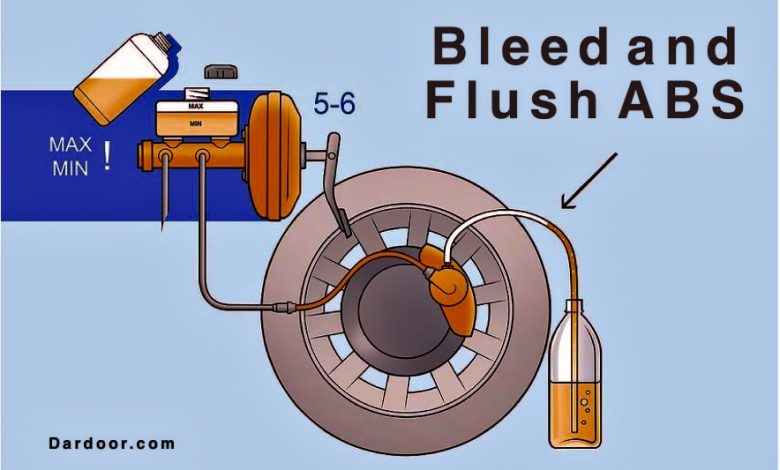
🛑 Introduction
📌 When to Bleed and Flush ABS
- Brake fluid appears dark or contaminated (every 2–3 years).
- After replacing brake lines, ABS module, or hydraulic components.
- Air bubbles felt in the brake pedal.
- ABS or brake warning light illuminated due to fluid issues.
- Soft or spongy brake pedal.
🧰 Tools and Materials Needed
- DOT 3, DOT 4, or DOT 5.1 brake fluid (check owner’s manual)
- Wrench set (usually 8mm, 10mm, 11mm for bleeder screws)
- Clear plastic tubing
- Catch bottle for old fluid
- Brake bleeder kit (manual, vacuum, or pressure type)
- OBD-II scan tool (for ABS bleed function on modern vehicles)
- Gloves and safety glasses
📋 Methods for Bleeding ABS Systems
1. Manual Two-Person Method
- One person pumps brake pedal, the other opens bleeder screw.
- Attach clear tube to bleeder, place in catch bottle.
- Press pedal, open bleeder, fluid/air escapes, close screw, release pedal.
- Repeat until no bubbles remain.
- Follow correct sequence: RR → LR → RF → LF (unless manufacturer specifies otherwise).
2. Gravity Bleeding
Open bleeder screw and allow gravity to pull fluid through system. Simple but slow.
3. Vacuum Bleeding
Attach vacuum pump to bleeder screw → Pull fluid/air out. Faster than manual method.
4. Pressure Bleeding
Attach pressure bleeder to master cylinder reservoir → Force new fluid through lines under pressure. Professional and efficient.
5. Scan Tool-Assisted ABS Bleeding
Modern ABS modules can trap air inside solenoids and valves. Many vehicles require a scan tool to activate ABS bleed mode:
- Connect scan tool and select ABS bleed function.
- Tool cycles ABS pump and solenoids to purge trapped air.
- Complete bleeding with manual or pressure method.
🛠️ Step-by-Step ABS Bleed and Flush Procedure
1. Preparation
- Park on level ground and secure vehicle.
- Remove old brake fluid from master cylinder reservoir with turkey baster or syringe.
- Refill with fresh fluid.
2. Bleeding Sequence
- Follow manufacturer’s recommended sequence (often RR → LR → RF → LF).
- Open bleeder screw while helper presses pedal (manual method) or use bleeder tool.
- Continue until clean, bubble-free fluid exits.
3. ABS Module Bleeding (if required)
- Use scan tool to run ABS bleed cycle.
- Repeat wheel cylinder bleeding after ABS cycle.
4. Final Steps
- Check fluid level and top off.
- Clean spilled fluid immediately (it damages paint).
- Test pedal feel – should be firm, not spongy.
- Perform test drive to confirm ABS function.
⚠️ Troubleshooting After Bleeding
| Problem | Cause | Solution |
|---|---|---|
| Pedal still spongy | Air trapped in ABS module | Use scan tool ABS bleed function |
| Brake fluid leaks | Loose bleeder screws or fittings | Tighten connections, replace washers |
| ABS light on after bleeding | Air remains in hydraulic unit or sensor fault | Re-bleed, scan for ABS codes |
| Fluid turns dark quickly | Corrosion inside ABS module or lines | Flush system again, replace corroded parts |
💲 Cost of Bleeding and Flushing ABS
- DIY brake fluid: $10–$30 per bottle (usually 2–3 bottles needed).
- DIY tools: $30–$150 depending on bleeder type.
- Professional brake flush: $100–$200.
- With ABS scan tool service: $150–$300.
❓ Frequently Asked Questions
Q: Can I bleed ABS brakes without a scan tool?
A: On some older vehicles, yes. On modern cars, a scan tool is often required to purge air from ABS valves.
Q: How often should I flush brake fluid?
A: Every 2–3 years, or more frequently in humid climates.
Q: What happens if I never flush brake fluid?
A: Fluid absorbs moisture, corrodes ABS pump and valves, and increases risk of brake failure.
Q: Is DOT 5 fluid compatible with ABS?
A: No. DOT 5 (silicone-based) is not compatible with ABS. Use DOT 3, 4, or 5.1.
🛡️ Maintenance & Prevention Tips
- Flush brake fluid regularly every 2–3 years.
- Use only recommended fluid type.
- Keep fluid reservoir sealed to avoid moisture contamination.
- Check for leaks during brake service.
- Inspect ABS hydraulic unit for corrosion during maintenance.
✅ Conclusion
Bleeding and flushing the ABS system is an essential maintenance procedure that ensures reliable braking performance and safe ABS operation. Whether using manual, pressure, vacuum, or scan-tool-assisted methods, removing air and replacing old fluid restores proper hydraulic function. With proper tools, clean fluid, and adherence to the right procedure, you can maintain a firm pedal, effective braking, and long-lasting ABS system health.