Exhaust System & Emissions Control — Complete Repair, Diagnosis & Maintenance Guide

Featured Dardoor resources used in this guide: Dardoor Repair Guides (exhaust section), Catalytic Converter Replacement, and DPF / regeneration notes in Dardoor vehicle manuals.
1. System overview & components
The exhaust system does three broad jobs: (1) route exhaust gases safely away from the engine and cabin, (2) reduce noise, and (3) remove or convert toxic pollutants using emission-control hardware.
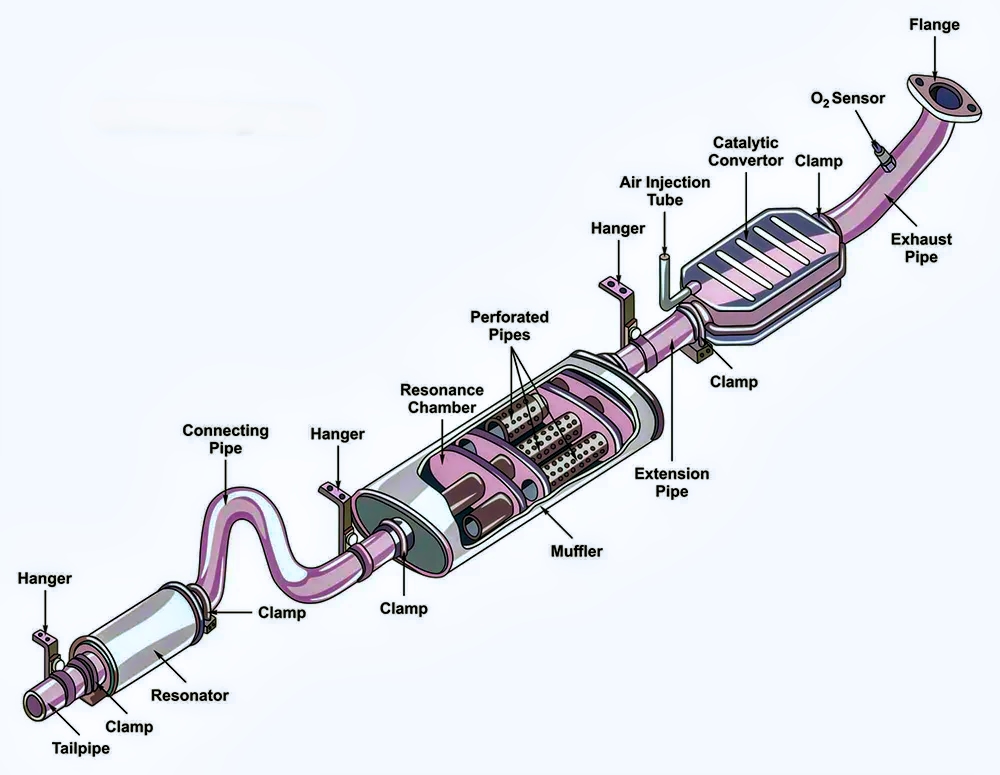
- Exhaust manifold / header: collects gases from cylinders and directs them into the exhaust pipe.
- Oxygen sensors (O₂ / lambda sensors): upstream (pre‑cat) and downstream (post‑cat) sensors feed the PCM information used for fuel control and catalyst monitoring.
- Catalytic converter (cat): a honeycomb substrate coated with precious metals (Pt/Pd/Rh) that chemically converts CO, HC and NOx into less harmful gases.
- Diesel Particulate Filter (DPF): on modern diesels, traps soot; requires periodic regeneration (active/passive) to clear soot load.
- Muffler & resonator: reduce exhaust noise and tune tone.
- Heat shields, gaskets, hangers, and flex joints: small parts that prevent noise, leaks, and stress failures.
2. How the exhaust & emissions-control system works
Modern gasoline engines use a three-way catalytic converter and O₂ sensors in a closed‑loop feedback system. The upstream sensor helps the ECU regulate the air–fuel ratio; the downstream sensor monitors cat efficiency. Diesel engines use oxidation catalysts, DPFs, and selective catalytic reduction (SCR) or DEF systems on newer models.
When the cat heats to operating temperature (often 400°C / ~750°F), chemical reactions convert pollutants — but only if the upstream mixture is within a narrow stoichiometric band. A failed oxygen sensor, a misfire, or contaminated cat will degrade conversion efficiency and typically trigger diagnostic trouble codes.
3. Common symptoms & fault codes
Top symptoms to watch for: persistent Check Engine Light (CEL), reduced power / limp mode, rough idle, poor fuel economy, rotten-egg (sulfur) smell, rattling from undercarriage (broken cat internals), excessive smoke on diesels, or a strong exhaust leak smell in cabin.
Important OBD-II codes
- P0420 / P0430 — Catalyst System Efficiency Below Threshold (Bank 1 / Bank 2). These usually mean the PCM detects the cat isn’t reducing emissions as expected; causes include degraded cat, fouled O₂ sensors, exhaust leaks, or persistent engine misfires.
- O2 sensor heater/failure codes (P0030, P0031, P0130, etc.) — slow or no sensor response will upset fuel trim and catalyst operation. See DTC reference tables for vehicle-specific codes.
- DPF warning or regeneration required — on diesels: loss of power, higher fuel consumption, MIL for DPF. Many OEM manuals explain forced regen procedures.
4. Diagnostic workflow — from quick checks to advanced tests
Step A — Safety & quick visual checks
- Park on level ground, cool the exhaust if possible, use proper PPE and jack stands if lifting the vehicle.
- Inspect for visible leaks, heat shield rattles, or missing hangers.
- Check for obvious soot, holes, corrosion, or crushed pipes.
Step B — Scan for codes & freeze-frame data
Use a good OBD-II scanner to pull active and pending codes. Note freeze‑frame engine load, coolant temp and RPM when the code set. Clear codes after recording and perform a road‑test to see what returns.
Step C — Live data & sensor graphs
Watch upstream vs downstream O₂ voltages: a healthy system shows a fast-switching upstream sensor and a slower, low‑amplitude downstream reading. If both sensors read the same, the PCM will often set P0420. If the upstream is sluggish or stuck, suspect the sensor first. If upstream shows normal switching but downstream mirrors it, suspect the cat. Use a scope or an advanced scan tool for best results.
Step D — Back-pressure & temperature testing
Measure exhaust back‑pressure upstream of the cat (or DPF) and measure catalyst/DPP surface temps with an IR gun. A plugged converter or DPF raises back‑pressure and engine load, often accompanied by overheating. OEM manuals sometimes list force‑regeneration speeds and durations for DPF cleaning; consult the model-specific manual when available.
5. Repair: Oxygen sensor replacement (practical walk-through)
O₂ sensors wear out; heated sensors commonly last 60k–100k miles depending on harshness of conditions and fuel quality. Symptoms: slow switching, poor fuel economy, CEL codes for bank/sensor positions.
Tools & parts
- O₂ sensor socket or open‑end wrench
- Penetrating oil (PB blaster), anti‑seize compound (sensor-specific, avoid cross‑contamination), torque wrench
- Replacement O₂ sensor (match OEM or aftermarket spec; heated vs unheated)
Step‑by‑step
- Confirm the failing sensor (live data) and note location (bank & sensor number).
- Raise vehicle if needed, disconnect the sensor electrical connector.
- Apply penetrating oil to the threads; allow soak time if rusted.
- Remove using an O₂ socket. Inspect wiring and connector for corrosion—repair harness if damaged.
- Apply manufacturer-specified anti-seize to the new sensor threads (if required), install and torque to spec.
- Reconnect, clear codes, and test drive while monitoring live data.
6. Repair: Catalytic converter replacement & tests
When to replace: physical damage (holes, rattling internals), irreversibly reduced conversion efficiency (persisting P0420 after fixing fuel/sensor/exhaust leaks), or irreversible contamination (lead or engine coolant ingestion). Some converters can be cleaned for partial restoration, but replacement is usually the long-term fix. Dardoor provides step guides on cat replacement for many vehicles.
Pre‑replacement checklist
- Confirm engine is healthy (no misfires, good compression, correct fuel trims).
- Replace or test O₂ sensors first — cheaper and often fixes the P0420 symptom.
- Check for exhaust leaks upstream of the cat; even a small leak will upset sensor readings.
- Choose OEM cat vs high‑flow aftermarket carefully — emissions tests and legality matter.
Replacement procedure (summary)
- Support vehicle safely and relieve any residual pressure. Disconnect the battery.
- Unplug O₂ sensors and unbolt the sections attaching the cat to the mid‑pipe/manifold. Use penetrating oil and heat if flange bolts are seized; cutting and welding may be required on heavily corroded systems.
- Install the new cat; torque flanges and sensor threads to spec. Reinstall sensors and wiring harnesses.
- Clear codes, road-test. Some vehicles require an adaptation/learn procedure for the PCM — consult OEM manual or Dardoor model guide.
7. Repair: Exhaust leaks, muffler, hangers & heat shields
Exhaust leaks are both safety and performance issues (CO into cabin + false O₂ sensor readings). Common leak locations: manifold flange, gasket surfaces, downpipe flex section, catalytic flange, resonator seams, and at rusted pipe sections.
Quick fixes vs permanent repairs
- Tape / putty / muffler patch — temporary only, useful for roadside fix to get home.
- Clamp‑in patch or welded patch — better, but welded replacement of the affected pipe section is preferred.
- Replace corroded sections — permanent and recommended in most rust-prone climates.
Basic leak-finding tips
- With the engine cold, run the vehicle briefly and have an assistant by the exhaust (careful — hot surfaces). Use a rag on a stick to feel for leaks at suspected joints or use soapy water to find small leaks (bubbles at low pressure sites when engine revved).
- Use a smoke machine to detect hard-to-find leaks safely.
- After repair, verify with OBD live data that fuel trims and O₂ behaviour normalized.
8. Diesel systems: DPF behavior, regeneration & forced cleaning
Diesel particulate filters trap soot and must periodically regenerate — converting accumulated soot to ash at elevated temperatures. Regular short trips at low load prevent passive regeneration and increase the chance of blockage. OEM manuals and Dardoor vehicle guides commonly recommend occasional highway runs or forced regeneration procedures; many Dardoor manuals mention forced/active DPF regen procedures and recommended RPM/speed windows to initiate regeneration.
Regeneration strategies
- Passive regeneration: occurs during prolonged high-temperature operation (e.g., highway cruising).
- Active regeneration: the ECU increases fuel injection to raise exhaust temp and burn soot off the filter; this is automatic under the right conditions.
- Forced regeneration (service mode): sometimes required at the dealer or with a scan tool if active attempts have failed. OEM manuals describe the exact procedure and warnings—follow them closely.
When to clean or replace the DPF
If forced regens fail repeatedly, the DPF may need professional cleaning (centrifugal or thermal cleaning) or replacement. Symptoms of a badly clogged DPF include repeated MIL, limp mode, excessive smoke, and loss of power. Consult the vehicle manual and consider cleaning services before replacement, as replacement can be costly.
9. Tools, parts sourcing and safety checklist
Essential tools
- OBD-II scan tool with live data & graphing
- O₂ sensor socket, torque wrench, penetrating oil, heat gun
- IR thermometer, back‑pressure tester, exhaust leak detector (smoke machine)
- Cutoff wheel, MIG/TIG welder or replacement clamps/flare couplers
Parts & diagrams
For correct parts and OEM torque/spec data consult model-specific repair manuals and diagrams. Dardoor’s collection includes exhaust repair guides and vehicle workshop manuals that contain wiring diagrams, O₂ sensor locations, and step‑by‑step replacement instructions. Use the correct cat or DPF that matches emissions spec for your region.
Safety reminders
- Always work on a cooled exhaust system when possible — exhaust parts get extremely hot.
- Support the vehicle securely on stands; never rely only on a jack for under‑vehicle work.
- Wear eye protection, gloves, and a respirator when cutting or grinding to avoid inhaling particulates.
- Be aware that catalytic converters contain precious metals and can be targeted by thieves — take security precautions if parking in high-risk areas.
10. Preventive maintenance & best practices
Protect your exhaust and emission systems with regular maintenance:
- Keep the engine properly tuned — misfires and rich running foul cats and DPFs faster.
- Use the correct fuel and avoid contaminated fuel that can poison catalysts.
- On diesels driven mainly in town, schedule periodic longer highway runs to encourage passive DPF regeneration; OEM manuals and many Dardoor manuals recommend highway driving windows (e.g., sustained driving at ~2,500+ RPM for 15–30 minutes) to aid regeneration.
- Inspect hangers, heat shields and gaskets during routine service intervals; small issues grow quickly under the car.
- When replacing parts, prefer OEM or proven aftermarket components that meet emissions standards — tampering or illegal deletes can cause regulatory and safety problems (see legal section).
11. Environmental & legal considerations
Emissions-control systems are regulated. Removing, altering, or bypassing catalytic converters, DPFs, or related emissions devices is illegal in many jurisdictions and can result in heavy fines, failed inspections, and warranty/insurance issues. Moreover, ECU reflashing to defeat emissions is illegal in many countries and can create safety and environmental hazards. Dardoor’s technical articles also remind technicians about the legal obligations and the consequences of deleting emissions controls. :contentReference[oaicite:16]{index=16}
12. Checklists & printable quick procedures
Quick exhaust trouble checklist (10 items)
- Scan for codes and note freeze‑frame data.
- Visually inspect exhaust for holes, loose heat shields, and hanging parts.
- Check upstream O₂ sensor switching (fast) and downstream response (slow/steady).
- Listen for rattles at idle and under acceleration (cat internals or heat shield).
- Check for smell of unburned fuel / sulfur (rotten egg smell = cat or fuel issues).
- Measure exhaust temps upstream and downstream of the cat/DPF.
- Perform a back‑pressure test if high‑restriction is suspected.
- Replace failing sensors and re‑test before replacing cat/DPF.
- If replacing cat/DPF, confirm correct fitment and torque values from OEM manual.
- Clear codes and road‑test while monitoring live data to confirm repair.