Complete Guide to Differential Fluid Service & Maintenance
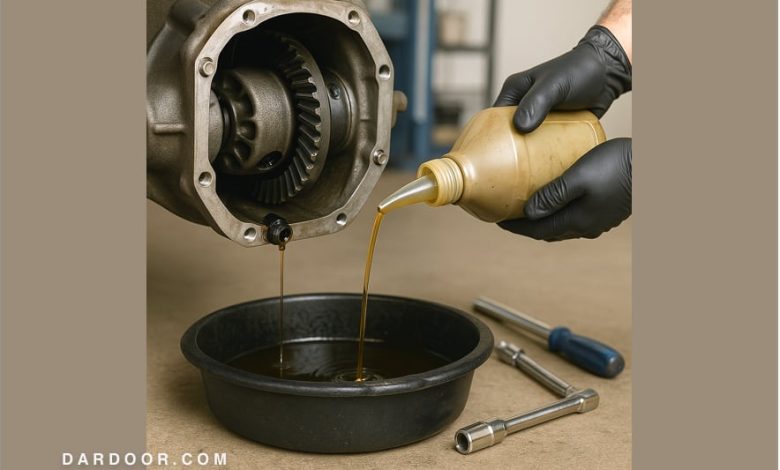
Explore OEM diagrams and part references via Dardoor’s Drive Axle Diagram and Drive Axle Parts Catalog.
1. Role and Purpose of Differential Fluid
The differential distributes engine torque to the wheels while allowing them to rotate at different speeds during turns. Differential fluid—typically heavier than engine oil—provides lubrication, reduces friction, protects against wear, and helps dissipate heat generated by the gear mesh and bearings :contentReference[oaicite:0]{index=0}.
2. Differential Fluid Types & Additives
- Conventional Gear Oil (e.g., 75W-90, 80W-90): Basic mineral oil for standard service.
- Synthetic Gear Oil: Enhanced performance in extreme temperatures and load.
- Limited-Slip Differential (LSD) Formulations: Contain special additives to reduce chatter and maintain clutch engagement.
Always verify your make’s specification. OEM fluid types and OEM part numbers can be found on Dardoor’s Drive Axle Parts Catalog.
3. Service Intervals: What Owners Say vs. OEM Guidance
Owner forums commonly cite differential fluid changes every 30,000 to 50,000 miles as routine preventive maintenance :contentReference[oaicite:1]{index=1}. Some even report intervals up to 60,000 miles with no issues :contentReference[oaicite:2]{index=2}. First-time service can occur much earlier—often at 8,000 to 15,000 miles—to remove factory break-in oil :contentReference[oaicite:3]{index=3}.
OEM schedules may list differential flush only under severe conditions like towing or off‑road driving :contentReference[oaicite:4]{index=4}.
4. Warning Signs on the Road
- Whining or howling noise at speed—often accelerated in corners
- Clunking when shifting in/out of gear or during acceleration
- Visible leaks or drops of gear oil beneath rear axle
- Excessive heat buildup under heavy load or towing
- Warning lights—some modern vehicles monitor differential temperatures or slip
5. Inspection & Drain Techniques
Start with these checks:
- Check fluid levels via fill plug—gear should sit at edge.
- Remove fill plug first before draining to ensure you can refill.
- Shallower drains may leave spent oil and particles behind; consider lower cover removal for full clean.
- Inspect for metal particles using a magnet or visual examination—heavy presence suggests internal wear :contentReference[oaicite:5]{index=5}.
6. DIY Drain-and-Refill Procedure
- Park vehicle on level ground, secure with wheel chocks.
- Gather tools—socket/wrench set, drain pan, gear oil, gasket/sealant, clean rags.
- Remove differential fill plug first, then the drain plug or loosen rear cover.
- Let old fluid drain completely. Clean cover and magnet thoroughly.
- Replace gasket or apply sealer as needed. Reinstall cover or tighten drain plug.
- Refill with clean gear oil through the fill hole until fluid begins to seep out.
- Reinstall fill plug and torque to OEM spec. Lower vehicle and test drive.
7. Full Differential Service: Beyond Fluid
For thorough maintenance:
- Remove differential cover — clean internal gear housing, magnet, and inspect bearings.
- Examine ring and pinion gearsets for pitting, wear patterns, or shavings.
- Replace seals and bearings if leakage or play is found.
- Refill with fluid and break in if bearings or seals were replaced—inspect for smooth operation.
8. Severe Duty and Extended Use Practices
Under harsh conditions—towing, water crossings, or heavy payloads—change intervals should shorten:
- Flush or change differential fluid every 30,000 miles or annually in severe use :contentReference[oaicite:6]{index=6}.
- Off-roaders report needing to change more frequently after water exposure to avoid contamination and bearing damage :contentReference[oaicite:7]{index=7}.
9. Preventive Maintenance & Tips
- Use correct fluid grade and volume specified by OEM, available via Dardoor’s Parts Catalog.
- Inspect differential breather placement and ensure it’s above waterline.
- Apply seal protector or RTV as necessary during reassembly.
- Capture new fluid samples during first flush to examine color and contamination level.
- Set a recurring schedule—change fluid alongside oil and transmission service every 50,000 miles can simplify maintenance.
10. OEM Resources & Final Thoughts
Regular differential fluid service protects gears and bearings, improves drivability, and avoids costly repairs. Maintaining proper intervals, especially under severe service, keeps your drivetrain healthy for the long haul.
- Drive Axle Diagram
- Drive Axle Parts Catalog
- OEM Maintenance Schedules