A well-maintained cooling system keeps your engine running at optimal temperature, prevents overheating, and protects against internal corrosion. This in-depth guide delivers everything you need—from symptoms of coolant breakdown to full DIY flush procedures, OEM maintenance intervals, troubleshooting strategies, and preventive care best practices. Dardoor OEM repair guides are linked throughout for accuracy and reliability.
1. Why Flushing Your Cooling System Matters
Coolant loses its corrosion inhibitors over time, becoming acidic and leading to rust, scale buildup, and hygienic deterioration inside the radiator, engine passages, and heater core :contentReference[oaicite:0]{index=0}. Left unchecked, these deposits restrict coolant flow, diminish heat transfer and can cause chronic overheating or catastrophic failure.
Regular flushing removes debris, maintains thermal efficiency, and preserves lifespan of water pumps, hoses, and aluminum radiators.
2. OEM Maintenance Intervals & Recommendations
Dardoor’s OEM-maintenance schedules for popular vehicles consistently advise coolant replacement every 100,000 miles (160,000 km) or every 5 to 10 years, depending on vehicle make and coolant type. For instance:
- The Ford Explorer manual specifies a coolant flush at 160,000 km / 100,000 mi.
- The Honda Civic scheduled maintenance demands coolant flush and replacement every 100,000 mi (~160,000 km) or 10 years.
- The Jeep Grand Cherokee manual also recommends flush every 5 years or 100,000 miles to prevent overheating.
Even if your coolant appears fine, OEM recommendations should prevail—especially on high-mileage or aging vehicles.
3. Warning Signs of Coolant Degradation
Keep an eye out for these telltale symptoms:
- Discolored coolant: Sludgy, rust-colored, or muddy fluid instead of clear green, red, or orange indicates breakdown and contamination :contentReference[oaicite:4]{index=4}.
- Raised engine temperature or overheating: Corrosion or clogging prevents proper heat transfer.
- Visible rust or scale in radiator or reservoirs.
- Frequent coolant top-offs: Hidden leaks or evaporative losses from failed seals.
4. Tools & Materials Required
- OEM- or manufacturer-specified coolant (see Dardoor repair guides for correct type).
- Distilled water for rinsing.
- Optional commercial flush additive to dissolve scale and rust.
- Drain pan, funnels, gloves, and eye protection.
- Hose or garden sprayer for rinsing.
- Clean cloths and possibly a coolant filter tool for heater core flushing.
5. Step‑by‑Step Flush Procedure
5.1 Safety precautions
- Ensure the engine is fully cool before opening the radiator or reservoir — hot coolant can spray dangerously.
- Park on level surface; use wheel chocks; wear gloves and eye protection.
5.2 Drain Old Coolant
- Open radiator cap and drain valve or petcock; collect old coolant in pan.
- Open the engine block drain (if available) to fully empty system—for example on heavy-duty trucks and some passenger vehicles.
5.3 Flush with Additive (Optional)
- Add flush chemical per manufacturer directions; ideally mix with distilled water.
- Run engine with heater on high for 10–15 minutes to circulate additive.
- Cool down, then drain completely.
5.4 Rinse System with Distilled Water
- Refill with distilled water and run until thermostat opens (~10–15 minutes).
- Drain water; repeat until it runs clear—typically 2–3 cycles.
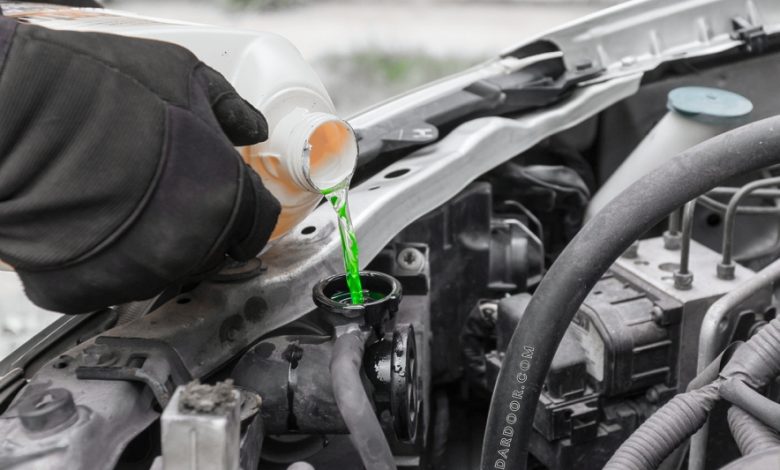
5.5 Refill with Proper Coolant Mix
- Mix coolant concentrate with distilled water as specified (commonly 50/50)—freeze protection down to –34 °F and boil protection up to ~265 °F.
- Slowly fill reservoir and radiator until full.
- Start engine and run with the cap off to allow air bubbles to escape; top off as needed.
5.6 Bleed Air from System
Keep engine running and heater on high; once bubbling stops and coolant level stabilizes, reinstall cap.
5.7 Final Test & Leak Inspection
- Allow engine to reach operating temperature; monitor gauge.
- Check hoses, clamps, heater core, and radiator connections for leaks.
- Top off coolant after driving and cooling again.
6. Pro Tips & Common Pitfalls
- If rust is heavy, remove the thermostat during flush to improve flow.
- Flush heater core explicitly by running heater on during rinse cycles.
- Avoid mixing coolant types; OAT and conventional glycol systems are incompatible and can shorten inhibitor life.
- Replace aging hoses and radiator cap proactively—they’re inexpensive and often the cause of leaks.
7. Diagnosing Cooling System Issues
- Persistent overheating: Might indicate blockage, trapped air, or failing water pump.
- Coolant loss without visible leak: Possibly a blown head gasket or internal combustion.
- Heater core not heating cabin: Could indicate clogged core or airlock.
- Rust-colored coolant after flush: Signs of internal corrosion—consider system pressure test.
Refer to Dardoor repair guides for engine cooling diagnostics including radiator replacement and leak repair procedures.
8. Routine Maintenance & Inspection Tips
- Visually inspect coolant level, color, and reservoir condition every oil change (~10,000 km/6,000 mi).
- Replace coolant hoses every 5 years or if signs of swelling or cracking appear.
- Test radiator cap pressure regularly; weak cap leads to boiling and air ingress.
- Inspect belts, cooling fans, and thermostat during flush service.
9. Frequently Asked Questions
Q: Can I use tap water instead of distilled?
No—tap water contains minerals that accelerate corrosion and reduce inhibitor performance. Always use distilled water during flush and mix stages.
Q: How often should I flush if using a waterless coolant?
Waterless glycol-based coolants may last the life of the engine without replacement, but rely on OEM approval before switching.
Q: Is Chemical flush necessary every time?
If your coolant appears clean and the system performs well, a simple drain-and-fill schedule is sufficient. For heavy rust or scale, use a flush additive for deeper cleansing.
10. Conclusion & Dardoor Resources
Performing a proper coolant flush and maintenance is one of the most cost-effective ways to protect your engine from overheating, corrosion, and premature wear. Follow OEM intervals and use recommended coolant and distilled water. Bleed the system completely and inspect all components for wear or leaks.
🔗 For exact OEM maintenance procedures, system diagrams, leak diagnostics, and component replacement instructions, refer to Dardoor’s repair guides:
- Engine Cooling Repair Guides
- 2022–2024 Honda Civic Repair Manual (coolant section)
- 2022–2024 Ford Explorer Repair Manual (coolant service)
By maintaining your cooling system regularly, you ensure engine reliability, avoid costly breakdowns, and extend component lifespan. Stay cool, and safe driving! 🧊🚗