Brake Pad Material Comparison: Pros, Cons & Performance Guide 🛠️
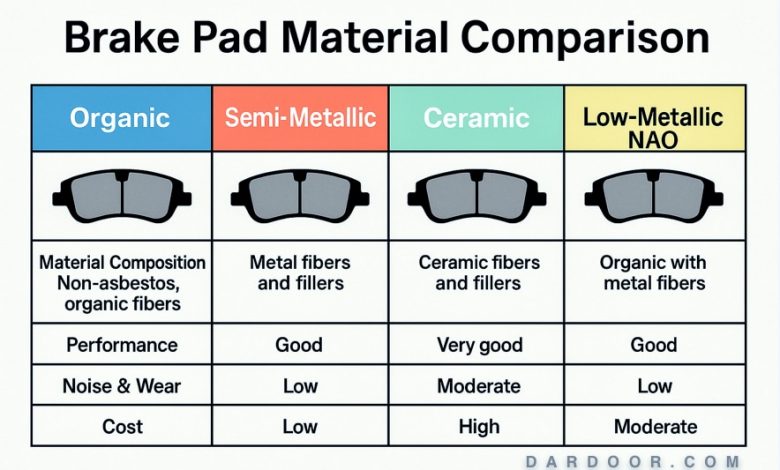
Choosing the right brake pad compound is essential for safety, performance, and longevity. This guide compares the most common materials—organic (NAO), semi‑metallic, low‑metallic NAO, ceramic, and carbon‑ceramic—highlighting temperature ranges, friction characteristics, dust generation, noise, and best applications.
A- Overview of Brake Pad Materials
Brake pads convert kinetic energy into heat through friction. The material composition determines performance characteristics such as coefficient of friction, temperature tolerance, wear rate, noise level, and dust output. Understanding each compound’s strengths and trade‑offs helps you select the best pad for your driving style and vehicle.
1. Organic (NAO) Pads
Composition: Non‑asbestos organic fibers, resins, rubber, and filler materials.
Pros
- Quiet operation—low noise and vibration.
- Gentle on rotors—minimal wear.
- Low cost—economical option for light vehicles.
Cons
- Limited fade resistance—suitable up to ~250 °C.
- Higher wear rate under heavy use.
- Moderate dust generation.
Best For
Daily commuting, compact cars, and light‑duty use with moderate braking demands.
2. Semi‑Metallic Pads
Composition: 30–60% metal fibers (steel, copper), friction modifiers, and binding resins.
Pros
- Excellent heat dissipation and fade resistance up to ~400 °C.
- Strong initial bite—good for spirited driving.
- Durable under high loads.
Cons
- Noisier—tone can be metallic squeal under light braking.
- Increased rotor wear due to abrasive metals.
- Moderate to high dust output.
Best For
Performance sedans, trucks, towing, and vehicles with moderate to heavy braking requirements.
3. Low‑Metallic NAO Pads
Composition: Organic base with small percentage of metallic fibers.
Pros
- Improved initial bite compared to organic pads.
- Moderate fade resistance (~300–350 °C).
- Relatively low noise and dust.
Cons
- Slightly more rotor wear than pure organic.
- Potential for noise under certain temperatures.
Best For
Balanced performance for daily drivers who occasionally tow or drive in hilly terrain.
4. Ceramic Pads
Composition: Ceramic fibers, bonding agents, and minimal metallic content.
Pros
- Quiet operation—minimal squeal.
- Low dust—keeps wheels cleaner.
- Stable friction across a wide temperature range (100–600 °C).
Cons
- Higher cost than organic or semi‑metallic.
- Can feel less aggressive on cold rotors.
- Not ideal for extreme track use beyond 600 °C.
Best For
Luxury sedans, daily drivers seeking comfort and cleanliness, and vehicles with moderate performance needs.
5. Carbon‑Ceramic Pads
Composition: Carbon fiber and ceramic composites akin to track‑grade materials.
Pros
- Exceptional fade resistance (>1,000 °C).
- Extremely light—reduces unsprung mass.
- Long service life in high‑stress environments.
Cons
- Very high cost—premium performance segment.
- Requires correct bedding and rotor pairing.
- Suboptimal performance under cold braking.
Best For
High‑performance sports cars, track use, and supercars where weight savings and extreme fading control are paramount.
B- Material Comparison Table
| Property | Organic | Semi‑Metallic | Low‑Metallic | Ceramic | Carbon‑Ceramic |
|---|---|---|---|---|---|
| Friction Range (°C) | 100–250 | 200–400 | 200–350 | 100–600 | 200–1,200+ |
| Noise Level | Low | Medium‑High | Medium | Low | Medium |
| Dust Output | Medium | High | Medium | Low | Low |
| Rotor Wear | Low | High | Medium | Low | Low‑Medium |
| Typical Cost | $ | $$ | $$ | $$$ | $$$$ |
| Ideal Application | Commuting | Performance/Towing | Balanced Use | Comfort/Luxury | Track/Supercar |
C- How to Choose the Right Material
- Assess driving conditions: city, highway, hill, tow load.
- Determine performance vs. comfort priorities.
- Verify compatibility with your vehicle’s rotor type.
- Consult OEM recommendations on Dardoor: Brake Pad & Rotor Specifications: A Complete Technical Reference 🚗🛠️
- Consider budget and long‑term maintenance costs.
D- FAQs
Q1: Can I mix pad materials on front and rear?
Generally, match materials front and rear for predictable pedal feel and balanced braking. If mixing, ensure friction profiles are similar.
Q2: Are ceramic pads safe for performance driving?
Ceramic pads handle moderate performance but may fade under sustained track use; consider semi‑metallic or carbon‑ceramic for extreme conditions.
Q3: How do I bed in new pads?
Perform progressive stops from 30 mph with light to moderate braking, allowing cooling between stops to transfer a uniform pad layer.
E- Conclusion & Resources
Your brake pad choice impacts safety, comfort, and performance. Use this comparison to match material properties to your driving needs. For OEM part details and installation guides, explore Dardoor’s resources:
- Ultimate DIY Guide to Replacing Brake Pads & Rotors
- Brake System Diagram
- Brake Pad & Rotor Specifications
Stay safe on the road and happy braking!