Renault Zoe ZE50 R135 ★1/2☆☆☆
Discontinued (November 2019 - May 2024)
data-width=”768”>
data-height=”432″>
data-transition=”slide”>
data-clicktransition=”crossfade”>
data-thumbwidth=”114″>
data-thumbheight=”64″>
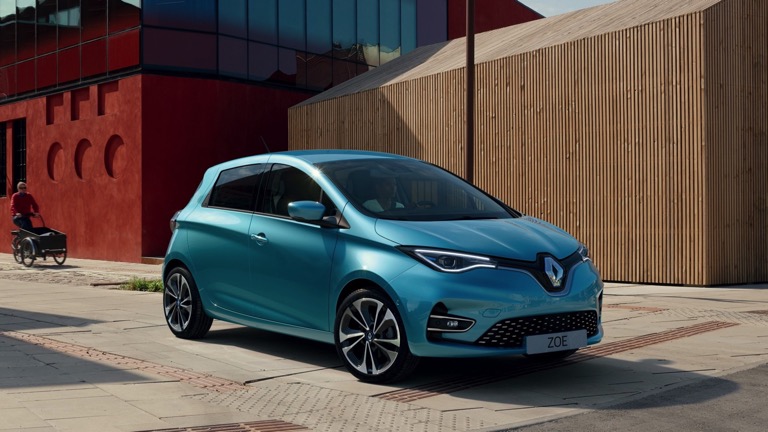
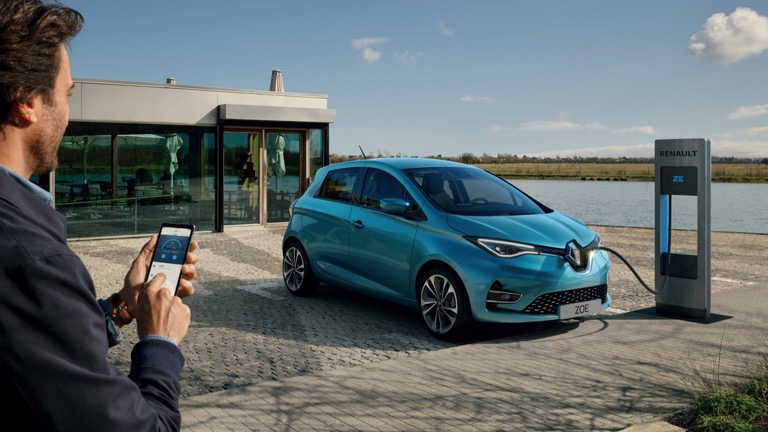
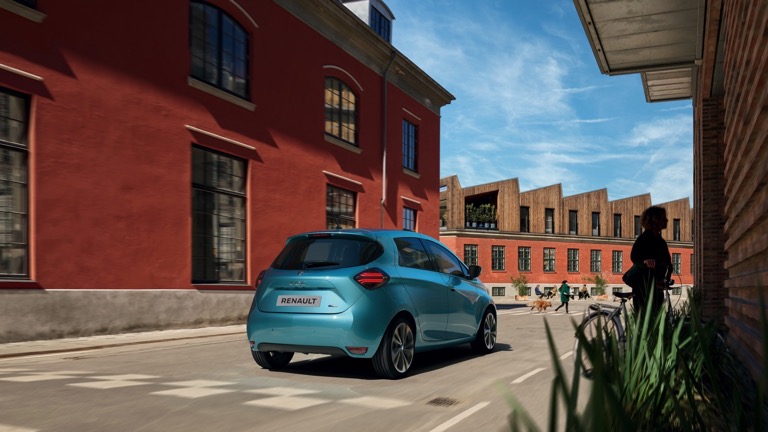
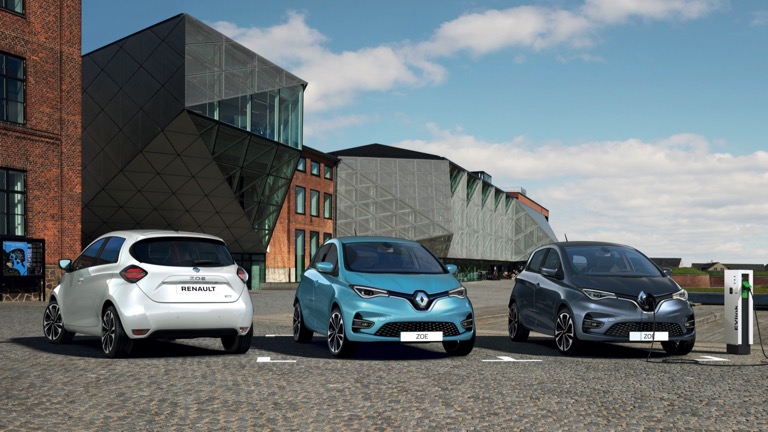
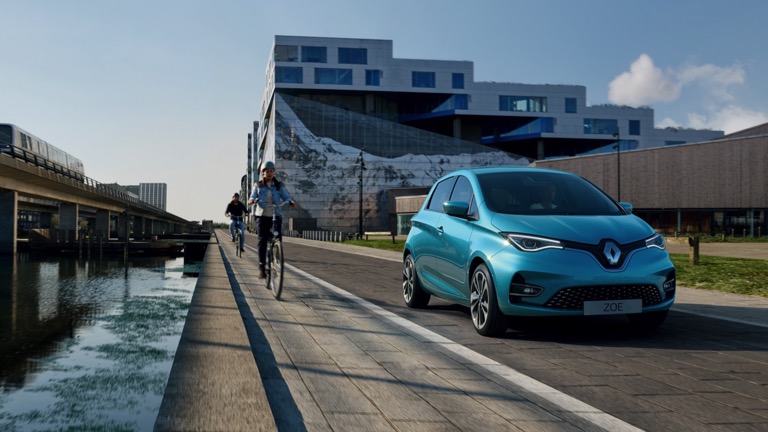

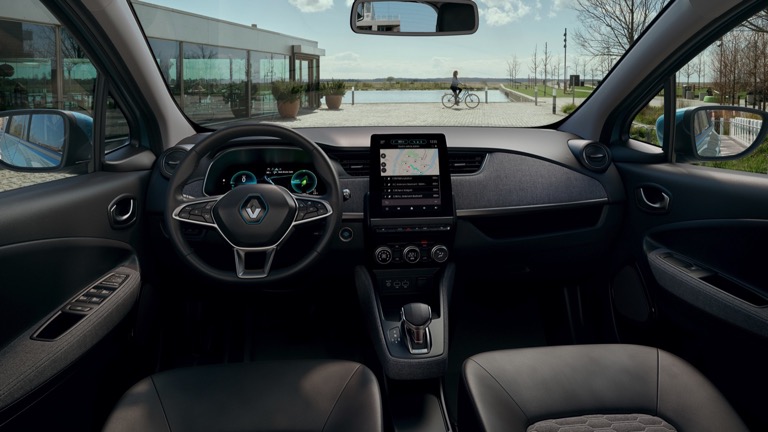
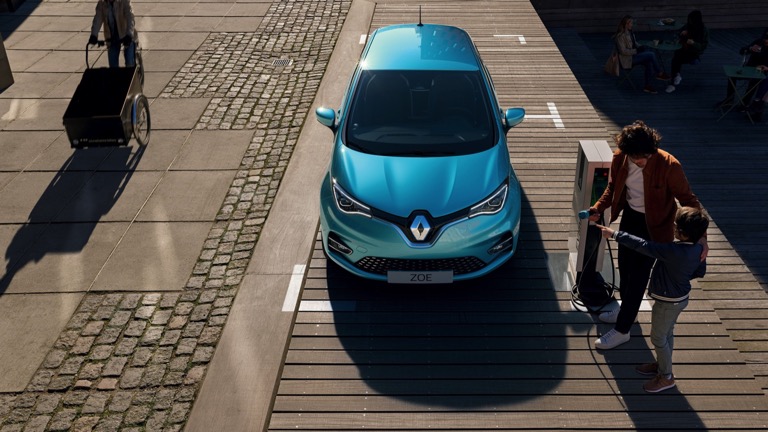
 52 kWh*
  305
305  168 Wh/km
  140 km/h
  9.5 Sec
  230 km/h
 Price
| United Kingdom | £29,995 |
| The Netherlands | €36,195 |
| Germany | €37,840 |
Available to Order
| United Kingdom | Since January 2020 |
| The Netherlands | Since November 2019 |
| Germany | Since November 2019 |
Real Range
Between 220 – 465 km
| City – Cold Weather | 305 km |
| Highway – Cold Weather | 220 km |
| Combined – Cold Weather | 260 km |
| City – Mild Weather | 465 km |
| Highway – Mild Weather | 280 km |
| Combined – Mild Weather | 355 km |
Performance
| Acceleration 0 – 100 km/h | 9.5 sec |
| Top Speed | 140 km/h |
| Electric Range | 310 km |
| Total Power | 100 kW (136 PS) |
| Total Torque | 245 Nm |
| Drive | Front |


Battery
| Nominal Capacity * | 54.7 kWh |
| Battery Type | Lithium-ion |
| Number of Cells | 192 |
| Architecture | 400 V |
| Useable Capacity | 52.0 kWh |
| Cathode Material | NCM712 |
| Pack Configuration | 96s2p |
| Nominal Voltage | 350 V |
Charging
Home / Destination
| Charge Port | Type 2 |
| Port Location | Front Side – Middle |
| Charge Power | 22 kW AC |
| Charge Time (0->310 km) | 3 hours |
| Charge Speed | 110 km/h |
Fast Charging
| Fastcharge Port | CCS |
| FC Port Location | Front Side – Middle |
| Fastcharge Power (max) | 46 kW DC |
| Fastcharge Time (31->248 km) | 56 min |
| Fastcharge Speed | 230 km/h |
Bidirectional Charging (V2X)
Vehicle-to-Load (V2L)
| V2L Capability | Not Available |
| Max. Output Power | Not Available |
| Exterior Outlet(s) | Not Available |
| Interior Outlet(s) | Not Available |
Vehicle-to-Home (V2H)
| V2H Capability AC | Not Available |
| Max. Output Power | Not Available |
| V2H Capability DC | Not Available |
| Max. Output Power | Not Available |
Vehicle-to-Grid (V2G)
| V2G Capability AC | Not Available |
| Max. Output Power | Not Available |
| V2G Capability DC | Not Available |
| Max. Output Power | Not Available |
Energy Consumption
EVDB Real Range
| Range | 310 km |
| Vehicle Consumption | 168 Wh/km |
| CO2 Emissions | 0 g/km |
| Vehicle Fuel Equivalent | 1.9 l/100km |
WLTP Ratings
| Range | 385 km |
| Rated Consumption | 177 Wh/km |
| Vehicle Consumption | 135 Wh/km |
| CO2 Emissions | 0 g/km |
| Rated Fuel Equivalent | 2.0 l/100km |
| Vehicle Fuel Equivalent | 1.5 l/100km |
Vehicle = calculated battery energy consumption used by the vehicle for propulsion and on-board systems.
Real Energy Consumption
between 112 – 236 Wh/km
| City – Cold Weather | 170 Wh/km |
| Highway – Cold Weather | 236 Wh/km |
| Combined – Cold Weather | 200 Wh/km |
| City – Mild Weather | 112 Wh/km |
| Highway – Mild Weather | 186 Wh/km |
| Combined – Mild Weather | 146 Wh/km |
Safety (Euro NCAP)
| Safety Rating | |
| Adult Occupant | 43% |
| Child Occupant | 52% |
| Rating Year | 2021 |
| Vulnerable Road Users | 41% |
| Safety Assist | 14% |
Dimensions and Weight
| Length | 4087 mm |
| Width | 1787 mm |
| Width with mirrors | 1945 mm |
| Height | 1562 mm |
| Wheelbase | 2588 mm |
| Weight Unladen (EU) | 1577 kg |
| Gross Vehicle Weight (GVWR) | 1988 kg |
| Max. Payload | 486 kg |
| Cargo Volume | 338 L |
| Cargo Volume Max | 1225 L |
| Cargo Volume Frunk | 0 L |
| Roof Load | 0 kg |
| Tow Hitch Possible | No Data |
| Towing Weight Unbraked | 0 kg |
| Towing Weight Braked | 0 kg |
| Vertical Load Max | No Data |
Miscellaneous
| Seats | 5 people |
| Isofix | Yes, 3 seats |
| Turning Circle | 10.6 m |
| Platform | No Data |
| Car Body | Hatchback |
| Segment | B – Small |
| Roof Rails | No |
| EV Dedicated Platform | No Data |
Similar electric vehicles

Home and Destination Charging (0 -> 100%)
Charging is possible by using a regular wall plug or a charging station. Public charging is always done through a charging station. How fast the EV can charge depends on the charging station (EVSE) used and the maximum charging capacity of the EV. The table below shows all possible options for charging the Renault Zoe ZE50 R135. Each option shows how fast the battery can be charged from empty to full.
Europe
Charging an EV in Europe differs by country. Some European countries primarily use 1-phase connections to the grid, while other countries are almost exclusively using a 3-phase connection. The table below shows all possible ways the Renault Zoe ZE50 R135 can be charged, but some modes of charging might not be widely available in certain countries.
Type 2 (Mennekes – IEC 62196)

| Charging Point | Max. Power | Power | Time | Rate |
|---|---|---|---|---|
| Wall Plug (2.3 kW) | 230V / 1x10A | 2.3 kW | 26h45m | 12 km/h |
| 1-phase 16A (3.7 kW) | 230V / 1x16A | 3.7 kW | 16h45m | 19 km/h |
| 1-phase 32A (7.4 kW) | 230V / 1x32A | 7.4 kW | 8h30m | 36 km/h |
| 3-phase 16A (11 kW) | 400V / 3x16A | 11 kW | 5h45m | 54 km/h |
| 3-phase 32A (22 kW) | 400V / 3x32A | 22 kW † | 3 hours | 100 km/h |
† = Limited by on-board charger, vehicle cannot charge faster.
Fast Charging (10 -> 80%)
Rapid charging enables longer journeys by adding as much range as possible in the shortest amount of time. Charging power will decrease significantly after 80% state-of-charge has been reached. A typical rapid charge therefore rarely exceeds 80% SoC. The rapid charge rate of an EV depends on the charger used and the maximum charging power the EV can handle. The table below shows all details for rapid charging the Renault Zoe ZE50 R135.
- Max. Power: maximum power provided by charge point
- Avg. Power: average power provided by charge point over a session from 10% to 80%
- Time: time needed to charge from 10% to 80%
- Rate: average charging speed over a session from 10% to 80%
Europe
Combined Charging System (CCS Combo 2) *

| Charging Point | Max. Power | Avg. Power | Time | Rate |
|---|---|---|---|---|
| CCS (50 kW DC) | 46 kW † | 41 kW † | 56 min | 230 km/h |
| CCS (175 kW DC) | 46 kW † | 41 kW † | 56 min | 230 km/h |
Charge Curve
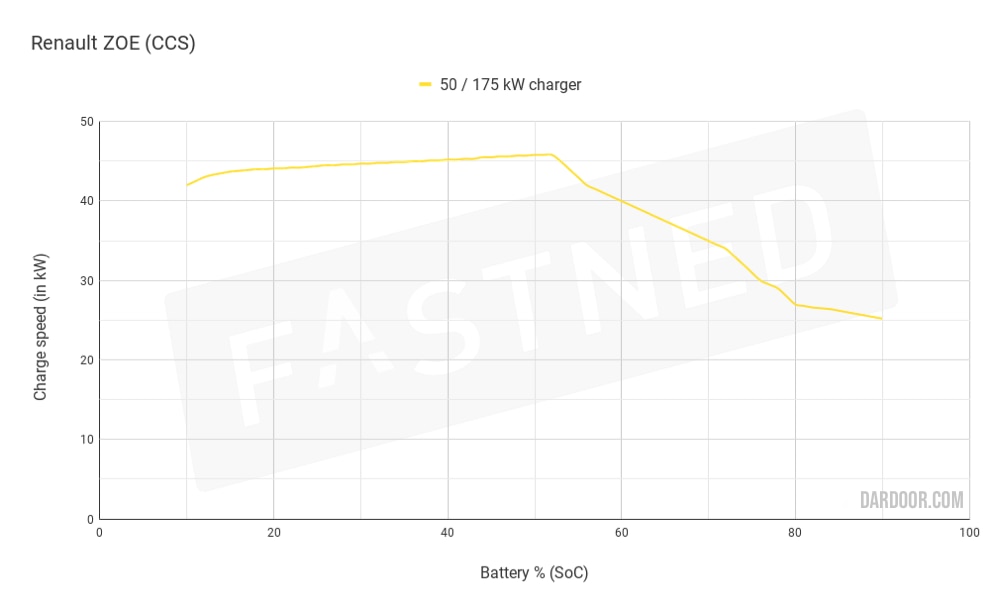
| This vehicle supports Autocharge |
|---|
- † = Limited by charging capabilities of the vehicle
- Auto charge: allows for a vehicle to initiate charging automatically on supported CCS charge points.
- Actual charging rates may differ from the data shown due to factors like outside temperature, state of the battery and driving style.
- * = Optional in some countries
Preceding model
The model shown on this page is the successor of the Renault Zoe R110, which was available to order from March 2018 until December 2019. The previous model had 60 km less range, 20% slower acceleration and was similar in energy consumption.
1-Stop Range Definition ⚡
For vehicles without fast-charging capability, only the distance of the first leg is considered.
🚗 Driving Profile
- Begin with a fully charged battery
- Leg 1: Drive until the battery reaches 10% state-of-charge (SoC)
- Perform a 15-minute fast charge
- Leg 2: Continue driving until the battery again reaches 10% SoC
📋 Assumptions
- Driving speed, climate, and environmental conditions are based on Real Range Highway data
- No additional time required to initiate or stop the charging session
- The charging station always delivers the maximum power requested by the vehicle
- The battery is assumed to be in optimal health and condition
⚠️ Important Note : In real-world driving, it is practically impossible to replicate these conditions exactly.
This benchmark should therefore be viewed as a comparative metric, designed to evaluate vehicles under standardized conditions rather than predict exact trip distances.
5-Star Rating Definition
Assignment of Stars in 2025
- ☆ 0 less than 200 km
- ★ from 200 km to 325 km
- ★★ from 325 km to 450 km
- ★★★ from 450 km to 575 km
- ★★★★ from 575 km to 700 km
- ★★★★★ more than 700 km
Based on 2025 thresholds: 3 stars awarded for 490 km average. Half-stars interpolated. Vehicles with a rating between these values receive a rating based on a linear scale.
Fast Charging (10 -> 80%)
- Max. Power: maximum power provided by charge point
- Avg. Power: average power provided by charge point over a session from 10% to 80%
- Time: time needed to charge from 10% to 80% Rate: average charging speed over a session from 10% to 80%