Drinking and Driving: When Is It Actually Safe to Get Behind the Wheel?
Still Drunk? How to Know When Alcohol Has Worn Off Enough to Drive
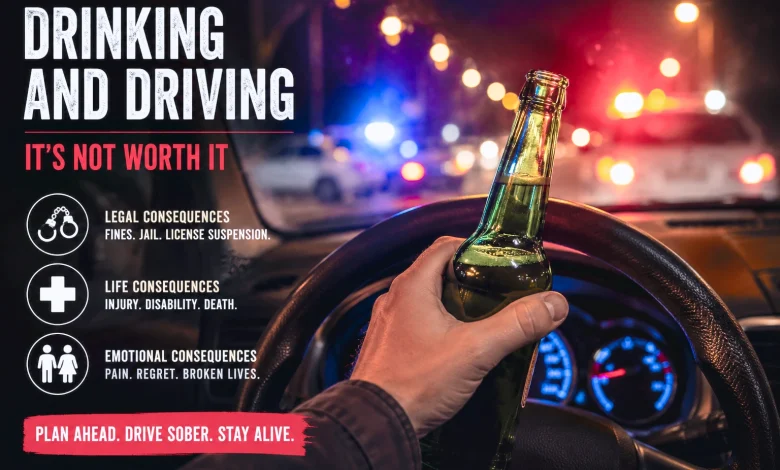
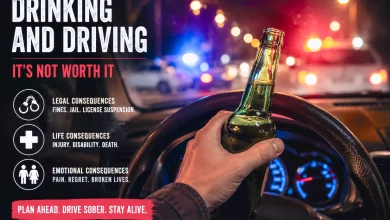
Being intoxicated reduces a driver’s attention and concentration, impairing coordination and cognitive abilities — all of which are crucial for safe driving. In this article, we explain when it’s safe to get behind the wheel after drinking alcohol, and how to make sure you’re always driving sober.
How Alcohol Enters Your Bloodstream
After you drink alcohol, it’s absorbed into the bloodstream through the gastrointestinal tract. Alcohol also penetrates the body readily through mucous membranes — meaning that, in theory, simply inhaling alcohol vapor or holding an alcoholic drink in your mouth without swallowing can result in a measurable blood alcohol reading on a breathalyzer after a short time.
What Is Per Mille?
Per mille (‰) is the unit of measurement used to express blood alcohol concentration (BAC), measured in mg/L (milligrams per liter). One per mille equals 1,000 milligrams (or 1 gram) of pure alcohol per liter of blood.
In North America, BAC is more commonly expressed as a percentage: 0.08% (equivalent to 80 mg of alcohol per 100 mL of blood) is the federal criminal threshold for adult drivers in both the United States and Canada — the point at which driving becomes a legal offence regardless of how impaired someone appears. We cover the specific laws in detail further below.
Degrees of Intoxication
People respond to alcohol very differently depending on their physiology. That said, blood alcohol levels are generally associated with the following stages of intoxication:
- 0.1–0.5‰ — Very mild intoxication. Practically unnoticeable to the driver or those around them.
- 0.5–1.5‰ — Mild intoxication. Characterized by relaxation, mild euphoria, and decreased attention.
- 1.5–2.0‰ — Moderate intoxication. Accompanied by impaired coordination, lethargy, and slurred speech.
- 2.0–3.0‰ — Severe intoxication. Loss of bodily control, aggression, nausea, and disorientation.
- 3.0–5.0‰ — Severe alcohol poisoning. Risk of coma and life-threatening complications.
Estimating Blood Alcohol Concentration: The Widmark Formula
There’s a widely used formula that allows you to roughly estimate your BAC based on how much you’ve consumed, your body weight, and a biological correction factor. It’s known as the Widmark formula:
C = A / (M × R)
Where:
- C = alcohol concentration in the blood (as a percentage)
- A = mass of alcohol consumed, converted to pure ethyl alcohol (in grams)
- M = body weight in kilograms
- R = Widmark distribution coefficient — 0.7 for men, 0.6 for women
⚠️ Important Caveat
Theoretical BAC calculations — including the Widmark formula — should be treated with significant caution. They fail to account for a wide range of individual and situational variables that critically affect both current BAC and the rate at which alcohol is metabolized, including:
- Differences in how individual nervous, cardiovascular, and digestive systems process alcohol
- Variations in liver enzyme activity between people
- Food in the stomach, which slows alcohol absorption and prolongs ethanol’s interaction with the body
- The presence of carbon dioxide (in beer, champagne, or sparkling mixers), which significantly accelerates absorption
- Whether the alcohol was consumed all at once or gradually over several hours
- Age and drinking history — older bodies may metabolize alcohol more slowly, while long-term drinkers may not feel intoxicated even after consuming substantial amounts
How Long After Drinking Can You Drive?
Given all of the above, there’s no universal answer to “how long do I need to wait after drinking a liter of beer before I can drive?” It’s deeply individual. However, there is a practical, rule-of-thumb method for estimating the minimum safe waiting time.
The “Shot Rule” Method
Step 1: Note the exact time of your last drink.
Step 2: Estimate the total amount consumed, mentally converting it into 50 ml shots of 40% spirits (vodka, gin, whiskey, etc.). Each such shot contains approximately 20 grams of pure ethyl alcohol.
Step 3: Assume that the average person weighing around 70 kg takes roughly 3 hours to fully process one such shot.
Step 4: Multiply the number of shots consumed by 3. The result is the minimum number of hours you should wait — counted from your last drink — before driving.
Example: A standard glass of beer (500 ml, ~5% ABV) is roughly equivalent to one such “shot.” So the minimum waiting time after a single beer is at least 3 hours — and ideally longer.
Again, this is a rough estimate only. Individual factors can dramatically shift the actual timeline in either direction.
Can You Speed Up Alcohol Elimination?
What Actually Works
Genuinely effective methods for removing alcohol from the body are medical procedures performed under medical supervision: gastric lavage, infusion (IV) therapy, hemodialysis, and similar interventions.
At home, you can support your body’s natural recovery by:
- Drinking plenty of fluids along with a mild diuretic (pharmaceutical or herbal)
- Consuming fruit juices rich in vitamin C and fructose, which assist the body’s processing of alcohol
- Light exercise and exposure to cool air — within reason, based on your physical condition
What Doesn’t Work
- Coffee, tea, and energy drinks — these actually slow the body’s processing of ethyl alcohol
- Nicotine — similarly impedes alcohol metabolism
- A cold shower may offer mild, temporary relief but does not meaningfully lower your BAC
- Using the bathroom will not significantly accelerate alcohol elimination
How Police Measure Blood Alcohol Levels
A traffic officer can conduct an on-the-spot sobriety test using a breathalyzer. These devices analyze exhaled air using an electrochemical sensor: when alcohol molecules contact one of the electrodes, an electric current is generated, and the device uses that current to calculate BAC in exhaled air.
What Happens If You Disagree with the Result?
If a driver disputes the breathalyzer result — or if the officer suspects intoxication despite a zero reading — the driver is sent for an additional medical examination at an authorized facility (a hospital, drug treatment center, or equipped paramedic station).
At a medical facility, drivers undergo two breathalyzer tests, 20 minutes apart. A reading below 0.16 mg/L means the driver is considered sober. If the breathalyzer shows zero but the officer remains unconvinced, a urine and/or blood test may be ordered.
DUI Laws in the United States and Canada
United States
Drunk driving law in the US operates on two levels: federal standards set a national floor, and states add their own enforcement structures on top. The federal standard is anchored by 23 U.S.C. § 158, which conditions federal highway funding on states adopting a BAC limit of 0.08%. All 50 states comply with this threshold (or go stricter), making it effectively a nationwide rule.
Key legal thresholds:
- 0.08% BAC — The per se limit for adult drivers (21+) in 49 states. At or above this level, a driver is legally impaired regardless of how they feel or appear. Utah is the only exception: it lowered its adult limit to 0.05%effective December 30, 2018 — the strictest in the country — and has seen an 18.3% reduction in traffic fatalities as a result. The National Transportation Safety Board (NTSB) has repeatedly called for a nationwide 0.05% limit.
- 0.04% BAC — The federal limit for commercial drivers under 49 CFR Part 382. CDL holders convicted of exceeding this threshold face at least one year’s disqualification from commercial driving on a first offence, and lifetime disqualification on a second.
- 0.00–0.02% BAC — All 50 states enforce zero-tolerance laws for drivers under 21. Texas and several other states mandate a strict 0.00% limit for minors.
- 0.15–0.16% BAC — Most states impose “aggravated DUI” or enhanced penalty thresholds at this level, with mandatory minimum jail time and longer suspensions.
A driver can face DUI charges even below 0.08% if visibly impaired — this is known as an impairment-based charge, and it applies independently of the per se BAC threshold.
Important: Under Birchfield v. North Dakota (2016), the US Supreme Court ruled that police may conduct warrantless breathalyzer tests after a lawful DUI arrest, but blood tests require either a warrant or a valid exception. All states also have implied consent laws — by accepting a driver’s licence, motorists are deemed to have consented to chemical testing. Refusing a test typically results in automatic licence suspension of 6–12 months, regardless of whether a DUI conviction follows.
Penalties for a first-offence DUI typically include fines, licence suspension, mandatory DUI education programs, and potential jail time — varying significantly by state. In 2026, Nevada enacted Assembly Bill 4 (the Safe Streets and Neighborhoods Act), raising the maximum sentence for a DUI causing death to 25 years in prison for a first offence.
Canada
In Canada, impaired driving is not merely a traffic offence — it is a federal criminal offence governed by the Criminal Code of Canada. The key provision is Section 320.14(1), which creates two parallel and distinct criminal charges:
- Impaired operation (s. 320.14(1)(a)): Operating a conveyance while ability is impaired to any degree by alcohol, a drug, or a combination. This charge is proven through officer observations — erratic driving, slurred speech, failed roadside sobriety tests — and does not require a BAC reading above any specific number.
- “Over 80” (s. 320.14(1)(b)): Operating with a BAC equal to or exceeding 80 mg of alcohol per 100 mL of blood within two hours of driving — regardless of whether the driver appears impaired. The two-hour window was introduced by Bill C-46 (2018) to close the “intervening drink” defence and tighten enforcement.
A driver can be charged with both at once, though sentenced for only one.
Federal minimum penalties under s. 320.19 of the Criminal Code:
- First offence: Mandatory minimum fine of $1,000 (higher if BAC exceeded 120 mg/100 mL). Automatic driving prohibition of at least one year. A criminal record — which can affect employment, immigration, and travel to the United States.
- Second offence: Minimum 30 days imprisonment.
- Third or subsequent offence: Minimum 120 days imprisonment.
- Impaired driving causing bodily harm (s. 320.2): Maximum 14 years imprisonment.
- Impaired driving causing death (s. 320.21): Maximum life imprisonment.
- Refusing to provide a breath sample: Treated as equivalent to an “Over 80” conviction under s. 320.15 — minimum $2,000 fine, plus all the same driving prohibitions.
Mandatory Alcohol Screening (s. 320.27(2)): Following the 2018 amendments, Canadian police can now demand a roadside breath sample from any driver they lawfully stop — without needing reasonable suspicion of alcohol consumption. This is a significant departure from prior law and makes random breath testing effectively legal nationwide.
Provincial layers on top of federal law:
Provinces add administrative penalties that kick in well below the criminal threshold:
- Ontario: BAC of 0.05–0.079% triggers an immediate 3-day licence suspension and a $250 penalty — no criminal charge required. At 0.08% or above, 90-day roadside suspension plus criminal charges.
- British Columbia: A 2010 law imposing 3-day administrative suspensions and vehicle impoundment for BACs of 0.05–0.08% resulted in a 40% decrease in alcohol-related fatal crashes in the first year, and a 44% drop in roadside-tested drivers with BACs above 0.05%.
- Alberta: Immediate 24-hour suspension for suspected impairment; provincial penalties for BACs of 0.05–0.079%; criminal charges at 0.08%+.
- Saskatchewan: Administrative action begins at a BAC as low as 0.04%.
Zero-tolerance rules apply to novice and young drivers in all provinces — any detectable alcohol typically results in immediate suspension and programme extension penalties.
Myths That Could Cost You Everything / Don’t Believe These Drunk Driving Myths
1. “I drive fine after a drink.” Alcohol objectively impairs driving ability in measurable ways, dramatically increasing accident risk — regardless of how in control you feel.
2. “I know my limit and when I’m safe to drive.” Even a “normal” dose for you can be amplified by poor health, certain medications, or lack of sleep. There’s no truly safe amount of alcohol before driving.
3. “A BAC calculator can tell me exactly how many drinks I can have.” Online alcohol calculators, tables, and formulas don’t account for the many individual and situational variables that influence real-world intoxication and clearance rates. They can be dangerously misleading.
4. “After 12 hours of sleep, the breathalyzer won’t catch anything.” Plenty of drivers have lost their licenses the morning after heavy drinking, when residual alcohol was still detectable. Sleep does not eliminate alcohol from your system.
5. “Coffee, a cold shower, and a bathroom break will clear my system by morning.” A cold shower can help you feel more alert — but doesn’t lower your BAC. Using the bathroom has negligible impact. And coffee will actually slow your body’s alcohol processing.
Frequently Asked Questions
Can I drive today if I was drinking yesterday? It depends on how much you drank, when you finished, and your individual metabolism. Use the “shot rule” as a rough guide: 50 ml of vodka (one shot) takes approximately 3 hours to clear for a 70 kg adult. When in doubt, don’t drive.
I’ve already had a drink and need to get somewhere. What do I do? Don’t drive. Take a taxi, use public transport, or ask a sober friend or family member to drive you.
Can you fool a breathalyzer? It’s not worth trying. The most likely outcome is a citation for “refusing a medical examination,” which carries license revocation — on top of any other penalties.
Can you fool a medical examination? No more effectively than a breathalyzer. Medical staff are well trained to recognize the tricks drivers attempt.
Should I worry about kvass or kefir before driving? Kvass and kefir contain only trace amounts of alcohol — a few tenths of a percent at most. A 1.5-liter bottle of kvass contains no more than 15 ml of alcohol, which clears the system within about 90 minutes. After a single glass (200 ml), residual alcohol in the mouth should clear within 15 minutes. However, drinking kvass immediately before a breathalyzer test could produce a faint reading due to residual mouth alcohol.
The Bottom Line
Alcohol and driving do not mix. If there’s any doubt that alcohol from recent drinking might still be in your system, the right call is always to wait — or find another way to travel. The stakes are not just a fine or a suspended license. They can be someone’s life.