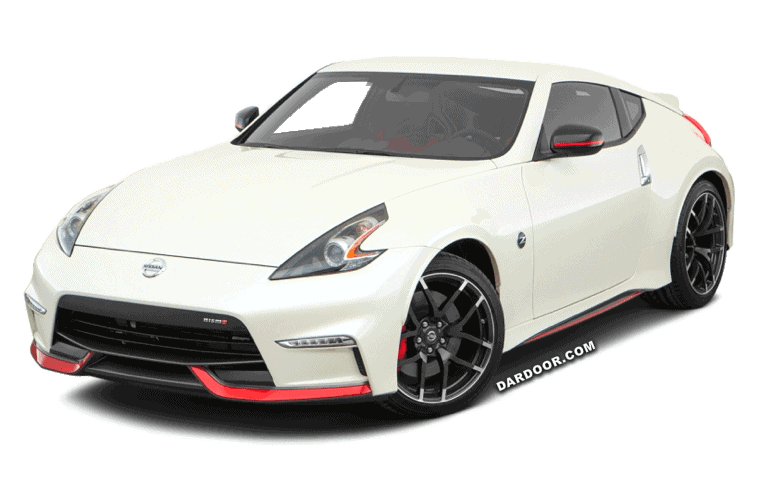
2016 Nissan 370Z (Z34) — OEM Workshop Service & Repair Manual (PDF)
This comprehensive factory repair manual provides detailed step-by-step procedures for maintenance, diagnostics, troubleshooting, inspection, overhaul, and component replacement. It also includes the complete OEM electrical wiring diagrams, connector views, circuit layouts, fuse and relay information, and system diagnostics, making it an essential reference for professional technicians and
experienced DIY mechanics. | File Format | PDF |
| File Language | English |
| You’ll Get | 156 MB |
| Wiring Diagram | Included |
| Delivery Method | Instant Download |
Coverage
- Model Year: 2016
- Model: Nissan 370Z
- Chassis: Z34 Series
- Format: PDF (searchable, printable)
- Includes: OEM Repair Manual + Wiring Diagrams
Key Features
Complete OEM Procedures
Factory-approved steps for maintenance, service, and repairs across all systems.
Detailed Wiring Diagrams
Electrical schematics, grounds, power distribution, connectors, and circuit tracing.
Diagnostics & DTCs
Dealer-style troubleshooting flowcharts, test values, and fault code guidance.
User-Friendly PDF
Indexed, searchable document—fast navigation on desktop, tablet, or mobile.
What’s Inside
- Service schedules, fluids, capacities, and torque specifications
- Engine and drivetrain service procedures
- Transmission and driveline repair guidance
- Brakes, suspension, steering and alignment
- Electrical: wiring diagrams, connector views, pinouts, ground points
- Body, interior, HVAC, and SRS/airbag systems
- Diagnostic procedures and troubleshooting guides
Download & Compatibility
Delivery: Instant digital PDF download
Compatibility: Windows • macOS • iOS • Android
This manual provides detailed instructions for maintenance, disassembly, reassembly, component inspection, adjustment, and diagnostics—intended for use by experienced mechanics. Proper application of this guide will help ensure thorough repairs and maintain your vehicle in peak condition.
Important Note: Before purchasing this manual, please check whether your vehicle is subject to any active service recalls, as authorized dealerships may perform necessary repairs free of charge. When replacing parts, always use genuine OEM components to ensure safety, reliability, and long-term performance.
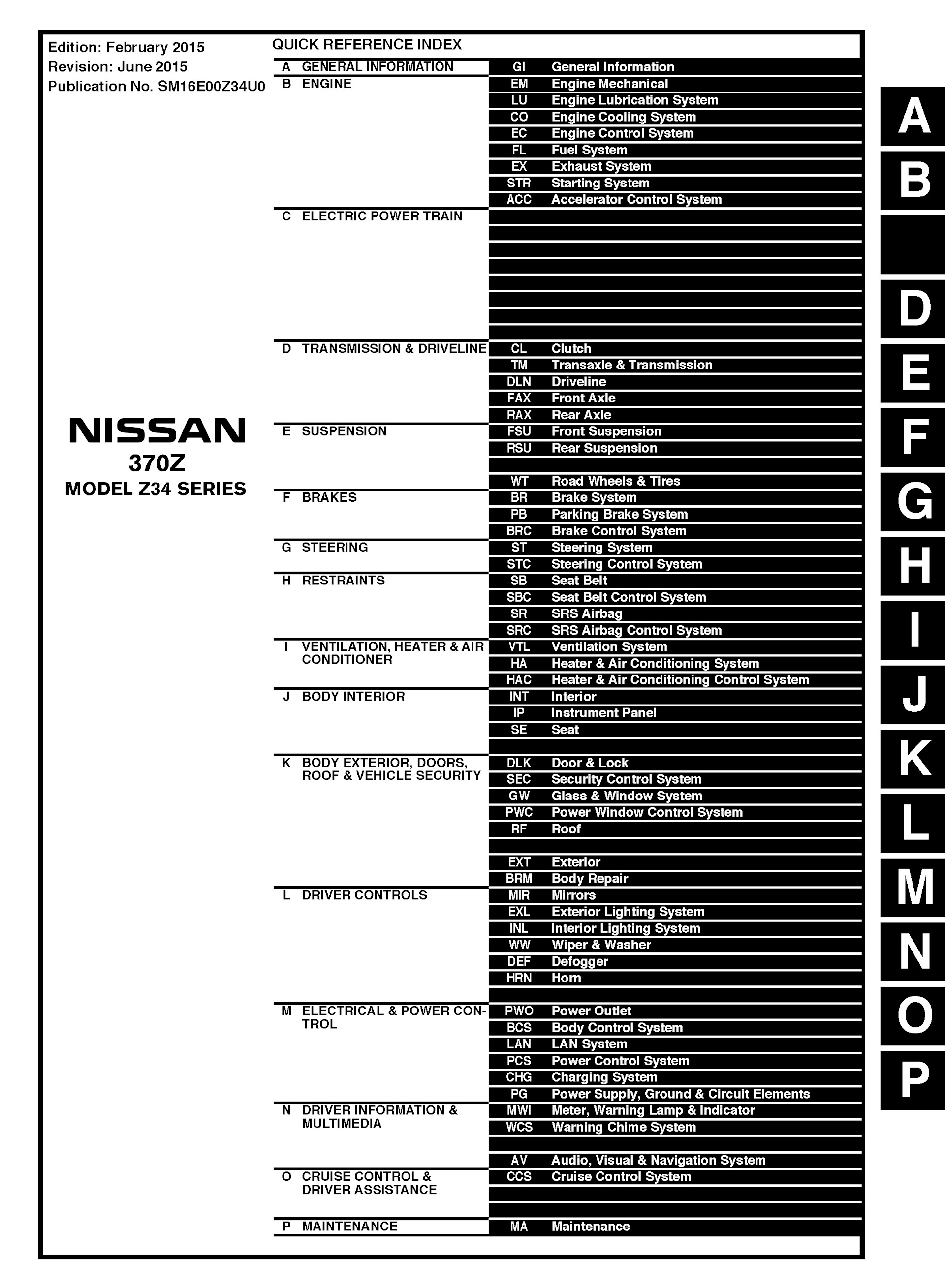
Table of Contents : 2016 Nissan 370Z Repair Manual
SAMPLE PAGES
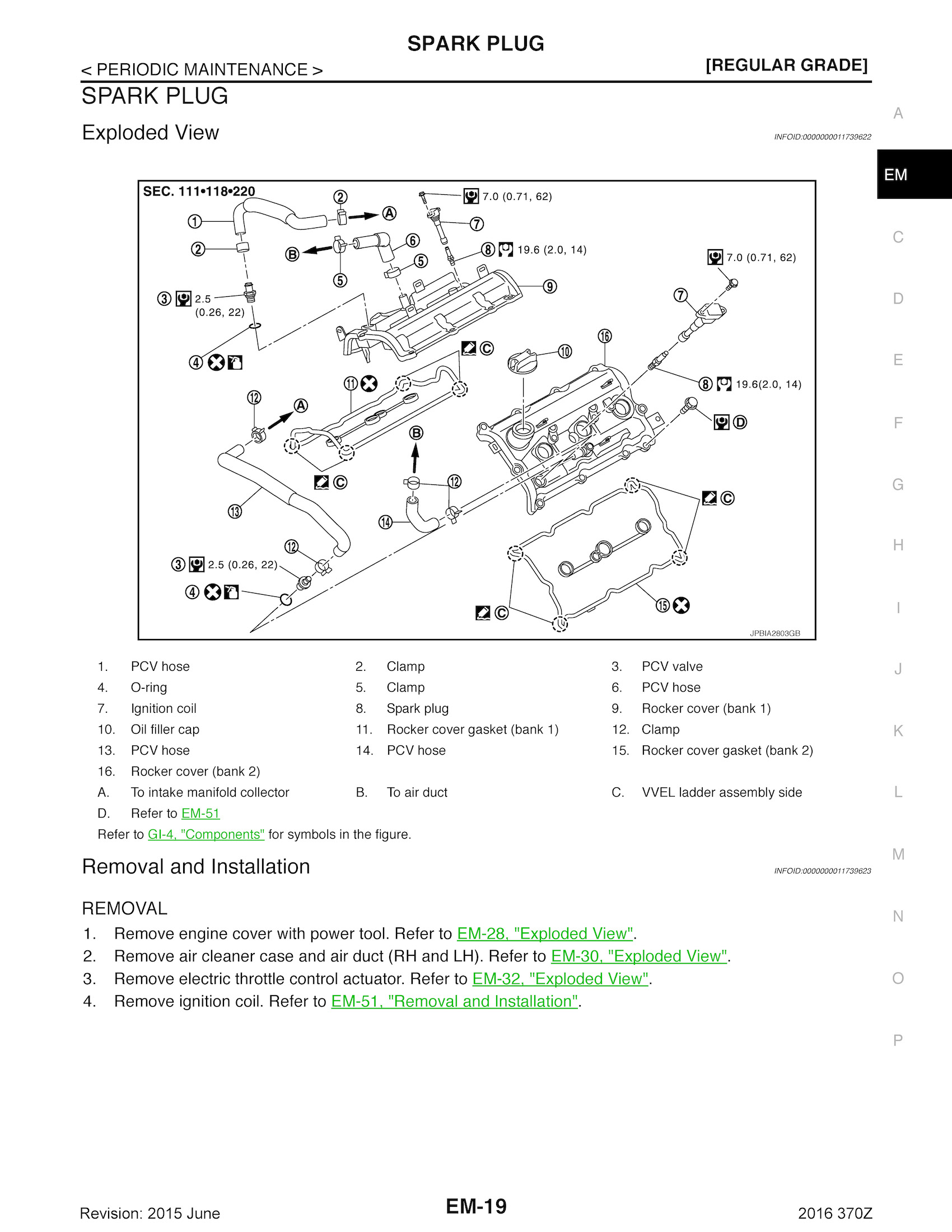
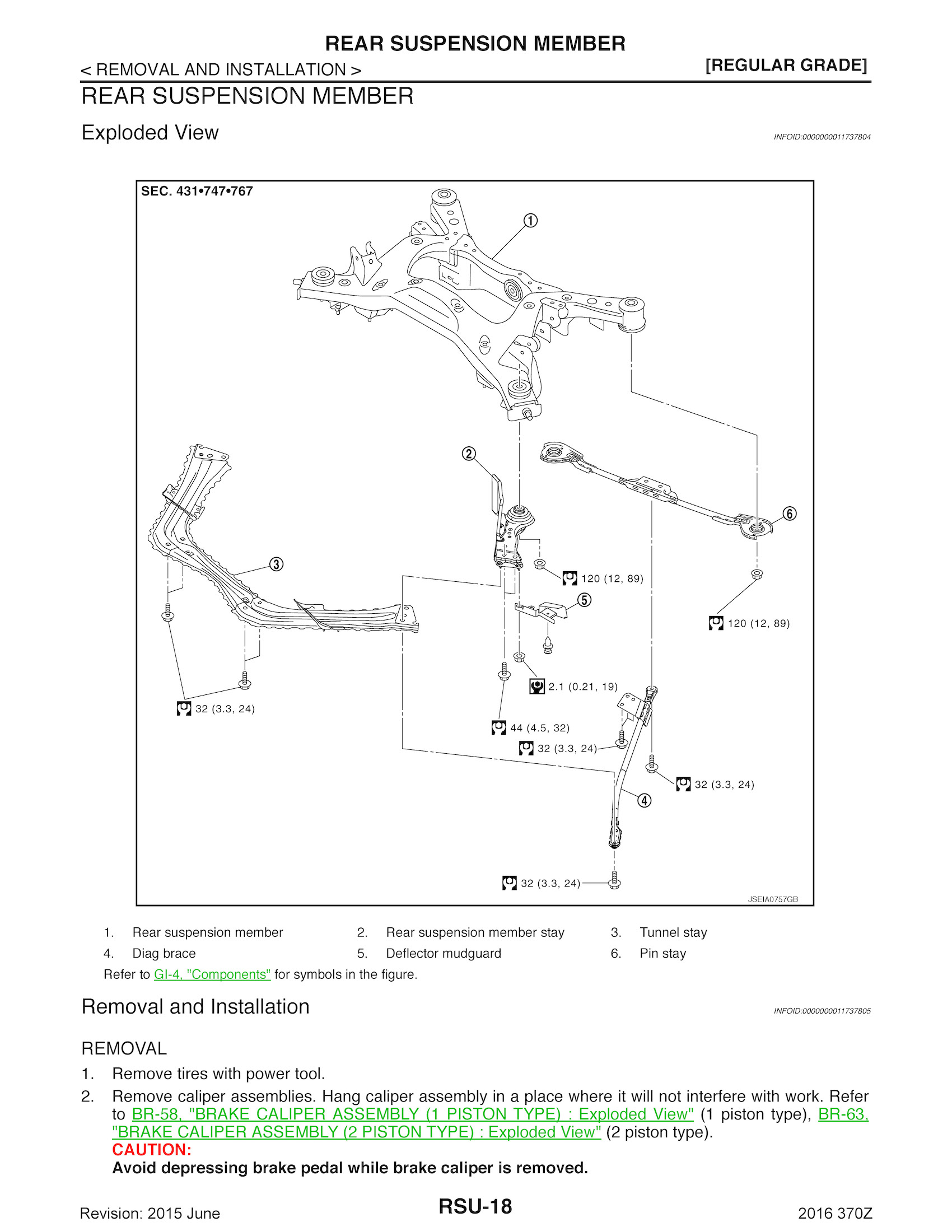
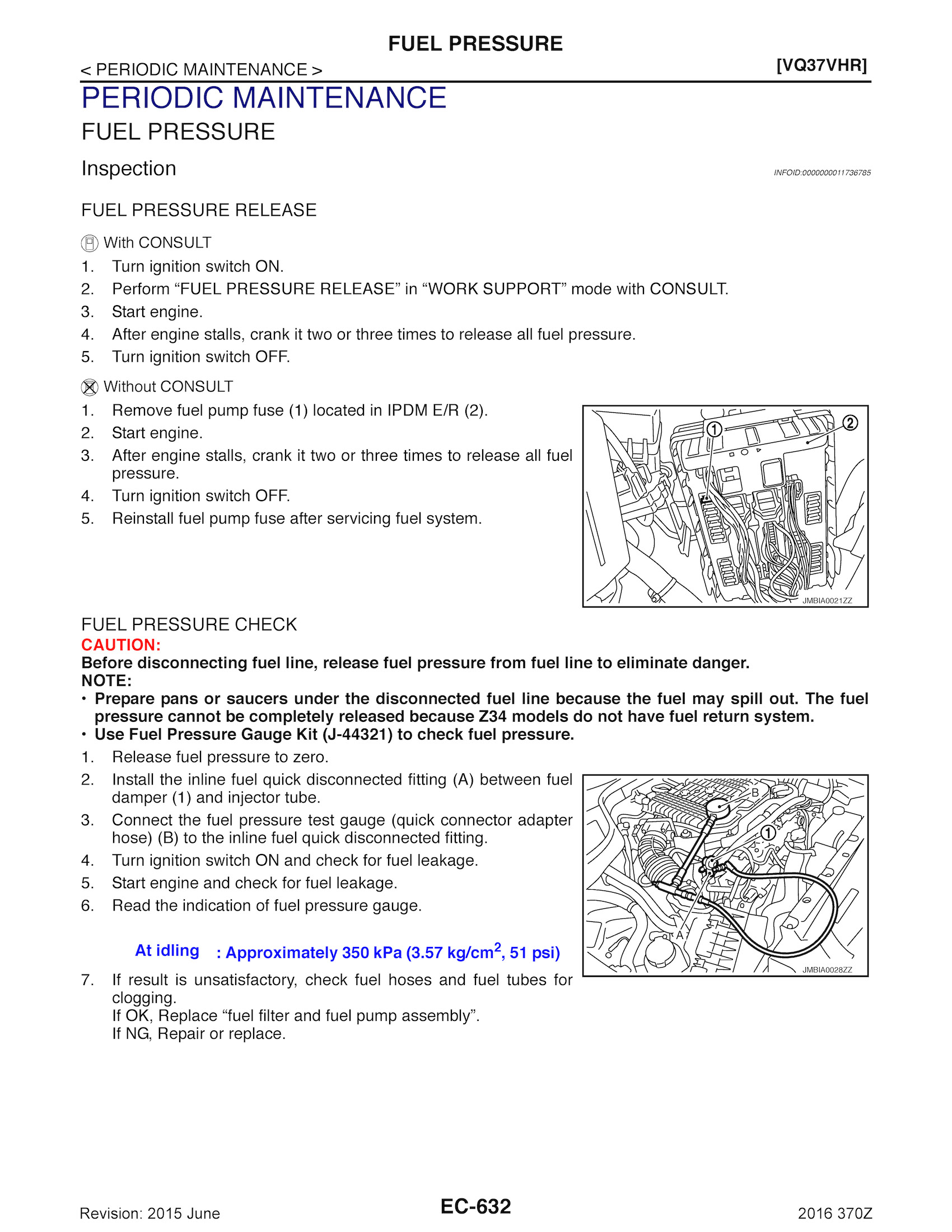
CAUTION: This OEM service and workshop repair manual provides detailed procedures for maintenance, disassembly, reassembly, inspection, adjustment, and diagnostics. It is intended as a comprehensive guide for experienced mechanics. To ensure thorough and accurate repairs that maintain your vehicle’s optimal performance, please read and follow this manual carefully. When replacing parts during any repair work, always
use genuine Nissan parts to ensure quality, safety, and reliability.
2016 Nissan 370Z (Z34): Comprehensive Guide
The 2016 Nissan 370Z (Z34) represents the eighth generation of Nissan’s iconic sports car lineage, now in its final full production year before the Z35 redesign. The Z34 generation (2009–2020) has proven to be one of the most reliable and engaging manual sports cars of its era, offering authentic, driver-focused performance without the complexity of turbocharged systems or advanced technology gimmicks.
Key Positioning
- Naturally aspirated 3.7L V6 engine
- 332 horsepower with responsive NA characteristics
- Available 7-speed automatic or 6-speed manual transmission
- Rear-wheel drive with traditional mechanical feel
- $30,000–$40,000 MSRP (2016 pricing)
- Target market: Affordable sports car enthusiasts, track day devotees, driving purists
Why 2016 Stands Out
The 2016 model year received subtle refinements including updated interior trim, improved infotainment, and chassis tweaks. It’s the sweet spot—mature Z34 platform with modern conveniences, just before the final 2017–2020 run-out years.
Technical Specifications
| Specification |
Details |
| Engine |
3.7L naturally aspirated V6 |
| Engine Code |
VQ37VHR |
| Horsepower |
332 hp @ 7,000 RPM |
| Torque |
270 lb-ft @ 5,200 RPM |
| Transmission (MT) |
6-speed manual |
| Transmission (AT) |
7-speed automatic |
| Drivetrain |
Rear-wheel drive |
| 0–60 mph |
4.6–4.9 seconds (manual); 4.9–5.2 seconds (automatic) |
| 1/4 mile |
12.9–13.3 seconds |
| Top Speed |
155 mph (electronically limited) |
| Fuel Economy |
18 city / 26 highway (manual); 17 city / 24 highway (auto) |
| Curb Weight |
3,251 lbs (manual); 3,309 lbs (automatic) |
| Wheelbase |
104.3 inches |
| Length/Width/Height |
169.6 x 72.6 x 50.2 inches |
| Track (F/R) |
60.6 x 60.2 inches |
| Suspension |
Double-wishbone (front & rear, independent) |
| Steering |
Electric power steering (EPS) with sport tuning |
| Brakes |
Brembo vented disc (front & rear) |
| Tires |
Bridgestone Potenza RE050 (225/45R18) |
| Fuel Tank |
18.5 gallons |
| Seating |
2 passengers |
| Trunk Capacity |
5.9 cubic feet |
| EPA Rating |
21 mpg combined (manual); 20 mpg combined (auto) |
Engine Characteristics
- VQ Heritage: The 3.7L VQ37VHR is part of Nissan’s legendary naturally aspirated family
- High-revving: Capable of 7,500+ RPM safely; 8,000 RPM redline
- Responsive torque curve: Peak torque at 5,200 RPM provides middle-range grunt
- Timing chain design: Extremely durable; no belt replacement needed
- Reliability record: Over 11 years of proven durability from Z34’s 2009 launch
10 Top Mechanical and Electrical Issues
1. Valve Cover Gasket Leaks & Oil Seepage
Symptoms:
- Oil stains on engine block below valve covers
- Slight oil smell from engine bay, especially when warm
- Minor smoke from engine during cold starts
- Visible oil accumulation on exhaust manifold
- Engine oil level drops between service intervals
Root Cause: Valve cover gaskets (both sides) deteriorate from thermal cycling and age. The VQ engine runs hot, and factory gaskets are mediocre quality. Improper gasket seating during installation exacerbates leaks. Both left and right covers typically fail around 80,000–120,000 miles.
Fix:
- Remove valve covers and thoroughly clean mating surfaces
- Replace gaskets with OEM Nissan units (or quality aftermarket gaskets like Fel-Pro)
- Apply thin bead of RTV silicone sealant to gasket surfaces
- Reinstall covers with proper torque specs (14–17 lb-ft)
- Clear any diagnostic codes related to air/fuel mixture after repair
Cost: $300–$500 (parts + labor for both sides); DIY parts only: $80–$150
2. Transmission Synchro Wear & Grinding on Downshifts (Manual)
Symptoms:
- Grinding noise when downshifting, especially 3rd to 2nd or 4th to 3rd
- Difficulty engaging lower gears smoothly
- Synchro rev-matching fails to prevent grind
- Clutch pedal feels heavier than normal
- Occasional difficulty disengaging gears (stuck in gear)
Root Cause: Aggressive track driving, rapid downshifts without proper rev-matching, or worn clutch cause synchro bronze cone degradation. The 6-speed manual in the Z34 uses traditional synchronizers prone to wear under spirited driving. Metal wear particles from synchros circulate in transmission fluid.
Fix:
- Flush transmission fluid with quality Nissan 75W-85 or 75W-90 synthetic
- Practice smoother downshift technique with proper engine blipping
- Consider transmission fluid additive (like Redline ShockProof) to reduce wear
- If grinding persists: partial rebuild required—replace worn synchros and replacement rings
- In severe cases: complete transmission rebuild or replacement needed
Cost: Fluid flush: $150–$250; synchro replacement: $800–$1,500; full rebuild: $2,500–$4,000
3. Catalytic Converter Failure & Clogging
Symptoms:
- Check engine light (P0420, P0421 codes: catalyst efficiency)
- Reduced power; hesitation during acceleration
- Rotten egg smell from exhaust (sulfur from unburned fuel)
- High exhaust gas temperatures (visible on scan tool)
- Loud rattling from exhaust system
Root Cause: Carbon buildup from fuel additives or incomplete combustion clogs catalytic converter. Running rich fuel mixture (bad O2 sensor, stuck fuel injector) overwhelms converter with unburned fuel. Cheap gasoline with low detergent content accelerates buildup.
Fix:
- Perform fuel injector cleaning service to remove carbon deposits
- Replace or clean faulty oxygen sensors (upstream O2 sensor most likely culprit)
- Use quality gasoline with TOP-TIER detergent (Shell, Chevron, Costco)
- If converter is severely clogged: replace with OEM or high-flow aftermarket converter
- Clear codes after repair; perform drive cycle to verify fix
Cost: Fuel injector cleaning: $150–$300; O2 sensor replacement: $200–$400; catalytic converter replacement: $600–$1,200
4. Crankshaft Position Sensor (CPS) Failure
Symptoms:
- Check engine light (P0335 code: crankshaft position sensor circuit)
- Engine won’t start or cranks but won’t fire
- Stalling during driving, especially at low speeds
- Rough idle or hesitation during acceleration
- Intermittent loss of spark at all cylinders
Root Cause: CPS located near crankshaft pulley experiences extreme heat cycling. Sensor wiring harness develops micro-fractures or connector corrosion from moisture exposure. Vibration from engine can loosen connector contact.
Fix:
- Replace crankshaft position sensor with OEM Nissan part
- Inspect wiring harness for damage; replace if corroded
- Clean connector terminals; apply dielectric grease to prevent future corrosion
- Clear diagnostic codes; perform starting procedure to verify operation
- Consider replacing both CPS units (front and rear) preventively if one fails
Cost: $250–$450 per sensor (parts + labor); both sensors: $400–$700
5. Mass Air Flow (MAF) Sensor Contamination
Symptoms:
- Check engine light (P0101 code: MAF sensor range/performance)
- Rough idle; engine stumbles on acceleration
- Black exhaust smoke (running rich)
- Poor fuel economy (drops by 3–5 mpg)
- Engine hesitation; loss of power
Root Cause: Air filter allows dust particles to reach MAF sensor hot wire element. Accumulated oil residue or dust degrades sensor accuracy, causing ECU to miscalculate air mass and inject too much fuel. Engine aftermarket intake systems without proper pre-filtration accelerate this issue.
Fix:
- Remove and carefully clean MAF sensor with MAF-specific cleaner (never use carb cleaner or touch sensor filament)
- Replace engine air filter with OEM or quality aftermarket element
- Verify proper air intake fit; ensure no intake leaks bypass air filter
- If cleaning doesn’t resolve: replace MAF sensor with new OEM unit
- Clear codes; perform short and long-term fuel trims to relearn
Cost: MAF sensor cleaning: $100–$200 (DIY: $15 in cleaner); replacement: $300–$500
6. Transmission Fluid Leaks (Automatic 7-Speed)
Symptoms:
- Red transmission fluid drips on driveway
- Transmission fluid level drops between services
- Burning smell from transmission
- Transmission slipping or delayed engagement
- Transmission overheating warnings on dashboard
Root Cause: Automatic transmission pan gasket deteriorates from thermal cycling. Shaft seals at transmission input/output leak after 100,000+ miles. Torque converter seal degrades, causing fluid to seep into engine. Improper pan installation during service can damage gasket.
Fix:
- Locate source of leak using UV dye or visual inspection
- If pan gasket: drain fluid, remove pan, replace gasket, reinstall with proper torque
- If shaft seal: requires partial disassembly; replace seal and inspect for damage
- If torque converter: fluid will leak into engine (symptom: milky coolant/transmission mix)
- Refill with OEM Nissan ATF Type-D fluid; bleed system if necessary
Cost: Pan gasket replacement: $300–$500; shaft seal: $400–$700; torque converter seal: $1,200–$1,800
7. Fuel Injector Clogging & Lean Running Condition
Symptoms:
- Check engine light (P0171 code: fuel system too lean)
- Rough idle; hesitation during low-rpm driving
- Poor fuel economy
- Black carbon buildup on spark plugs
- Misfiring (especially cold starts)
Root Cause: Low-quality gasoline with inadequate detergents leaves carbon deposits on fuel injector tips. Ethanol in fuel (E10 or E15) can promote deposit formation. Fuel injector gets partially clogged, reducing fuel spray pattern and atomization.
Fix:
- Run professional fuel injector cleaning service through fuel rail
- Switch to TOP-TIER gasoline brands (Shell, Chevron, Costco, Valvoline)
- Use fuel system cleaner additive (Chevron Techron, Redline fuel system cleaner) quarterly
- If cleaning ineffective: replace fuel injectors with new units (set of 6 recommended)
- Clear codes; perform fuel trim reset
Cost: Professional injector cleaning: $150–$300; replacement set of 6 injectors: $400–$700
8. Oxygen Sensor (O2) Sensor Degradation
Symptoms:
- Check engine light (P0135, P0136, P0155, P0156 codes)
- Rough idle; hesitation during acceleration
- Poor fuel economy; running rich or lean
- Failed emissions test
- Black sooty spark plugs; rotten egg smell from exhaust
Root Cause: Oxygen sensors located in exhaust manifold and catalytic converter experience extreme temperatures (1,400°F+) and sulfur/carbon contamination. Factory sensors degrade after 80,000–100,000 miles. Excessive exhaust gas temperature or lean running conditions accelerate failure.
Fix:
- Replace faulty O2 sensor with OEM Nissan unit (upstream and/or downstream, depending on which failed)
- Use proper O2 sensor socket to avoid damaging wiring
- Install anti-seize compound on sensor threads (prevents seizing)
- Inspect exhaust manifold for cracks (if manifold cracked, hotter exhaust damages sensors faster)
- Clear codes; perform emission drive cycle
Cost: $150–$300 per sensor (parts + labor); both upstream sensors: $300–$600
9. Dashboard Lights Flickering & Gauge Cluster Issues
Symptoms:
- Warning lights flicker intermittently
- Instrument cluster display dims or goes out temporarily
- Tachometer or speedometer reading incorrectly
- Check engine light flicker without stored codes
- Interior lights flickering in sync with dashboard issues
Root Cause: Loose ground connection in instrument cluster wiring harness or main ground bus. Vibration and thermal cycling loosen connectors. Poor connection from battery negative terminal to chassis ground causes voltage fluctuations affecting dashboard electronics.
Fix:
- Inspect and clean all ground connections: battery negative to frame, frame to engine block
- Check instrument cluster connectors behind dash (accessible after removing cluster trim)
- Apply dielectric grease to all connectors to prevent corrosion
- Tighten all connector terminals; replace if corroded
- Verify battery voltage (should be 13.5–14.5V at idle; 14.0–14.8V at 2,000 RPM)
Cost: $150–$400 (parts + labor); battery terminal replacement: $50–$100
10. Alternator Undercharging & Battery Drain
Symptoms:
- Battery warning light on dashboard
- Dim headlights, especially at idle
- Difficulty starting; weak engine cranking
- Dead battery after short periods parked
- Alternator whining noise
Root Cause: Alternator output decreases over time from brush wear and internal diode degradation. Serpentine belt slipping due to wear reduces charging efficiency. Corroded battery terminals or loose alternator ground connection impedes current flow.
Fix:
- Test alternator output with multimeter (should be 13.5–14.8V at 2,000 RPM load)
- Inspect serpentine belt; replace if cracked, frayed, or glazed
- Check battery voltage; replace if below 12.6V at rest
- Tighten alternator connectors; inspect wiring harness for damage
- If alternator output low: replace alternator with OEM or quality remanufactured unit
- Clean battery terminals with baking soda and wire brush
Cost: Serpentine belt replacement: $150–$300; alternator replacement: $400–$700; battery: $100–$200
Top 5 Competitors
| Competitor |
Key Strengths |
Key Weaknesses |
Price Range (2016-era) |
| Dodge Challenger R/T |
370 hp V8 engine, muscle car styling, spacious interior |
Heavy (~4,100 lbs), poor handling dynamics, dated platform |
$30,000–$38,000 |
| Chevrolet Camaro SS |
426 hp V8, modern turbocharged tech options, good handling |
Small interior, poor visibility, electronic steering lacks feedback |
$32,000–$42,000 |
| Ford Mustang GT |
435 hp V8, iconic design, affordable performance |
Older IRS suspension (2015 model older), less track-ready feel |
$32,000–$40,000 |
| BMW 340i |
Turbocharged power, luxury interior, AWD available |
Less engagement than Z34, expensive maintenance, heavier |
$40,000–$50,000 |
| Subaru BRZ / Toyota 86 |
Lightweight (2,800 lbs), perfect 50/50 weight distribution, exceptional handling |
200 hp engine underpowered vs. Z34, poor trunk space |
$26,000–$32,000 |
Unique Selling Point: The 370Z stands alone as the only affordable, naturally aspirated, rear-drive pure sports car with 332 hp and authentic driver feedback. No turbos, no complexities—just gas, air, and mechanical connection.
Top 10 Recalls, Advisories & TSB Highlights
1. Seatbelt Pretensioner Deployment Issue (NHTSA ID: 14V538000)
- Years Affected: 2009–2015
- Issue: Pretensioner may deploy inadvertently or fail to deploy in certain collisions
- Risk: Reduced restraint effectiveness or unexpected seatbelt tightening
- Fix: Seatbelt assembly replacement with updated pretensioner calibration
- Status: Recall completed; free dealer service (covers 2016 if originally 2009–2015 model)
2. Fuel Door Hinge Separation (TSB-B10-010)
- Years Affected: 2009–2016
- Issue: Fuel door hinge welds can crack, causing door to separate while driving
- Risk: Loss of fuel door; debris hazard; fuel tank exposure
- Fix: Fuel door hinge reinforcement or complete fuel door replacement
- Status: TSB issued; recall issued 2014; free dealer service
3. Door Lock Actuator Failure (Field Advisory)
- Years Affected: 2009–2016
- Issue: Power door lock actuators fail; door may unlock inadvertently or remain locked
- Risk: Security concerns; inability to enter/exit vehicle
- Fix: Door lock actuator motor replacement
- Status: Advisory issued; covered under warranty if defective
4. Steering Rack Seal Leakage (TSB-ST-11-052)
- Years Affected: 2009–2013 (less common in 2016 but reported)
- Issue: Power steering rack inner seals leak; fluid seeps into steering bellows
- Risk: Loss of power steering fluid; steering heaviness; potential steering failure
- Fix: Steering rack replacement or seal kit replacement
- Status: TSB issued; covered under powertrain warranty
5. Transmission Downshift Delay (Automatic 7-Speed, TSB-TR-13-002)
- Years Affected: 2010–2016
- Issue: Automatic transmission may exhibit delayed downshift response, especially 4–3 downshift
- Risk: Poor acceleration response; engine “hunting” between gears
- Fix: Transmission fluid replacement with updated fluid type and ECU calibration update
- Status: TSB issued; covered under warranty
6. Fuel Pump Noise/Humming Issue (TSB-FU-11-055)
- Years Affected: 2010–2016
- Issue: Fuel pump emits excessive humming or whining noise from tank
- Risk: Noise concern; potential pump failure if issue progresses
- Fix: Fuel pump module replacement; fuel tank cleaning may be required
- Status: TSB issued; covered under warranty if excessive noise confirmed
7. Catalytic Converter Rattle (Field Service Action)
- Years Affected: 2009–2016
- Issue: Catalytic converter internal structure loosens; rattling noise especially on cold starts
- Risk: Converter efficiency loss; potential converter failure; failed emissions test
- Fix: Catalytic converter replacement with updated mounting design
- Status: Field service action issued; covered under emissions warranty (8 years/80,000 miles)
8. Valve Cover Gasket Leaks (TSB-ENG-11-037)
- Years Affected: 2009–2016
- Issue: Valve cover gaskets leak oil after thermal cycling
- Risk: Oil contamination on engine components; fire hazard if oil contacts exhaust manifold
- Fix: Valve cover gasket replacement with improved gasket material
- Status: TSB issued; covered under warranty for first 5 years/60,000 miles
9. Differential Gear Noise (TSB-TR-11-042)
- Years Affected: 2009–2013 (reported in some 2016 models)
- Issue: Rear differential emits gear whine or chattering noise, especially on deceleration
- Risk: Potential differential bearing failure if ignored
- Fix: Differential fluid replacement (limited-slip additive); backlash adjustment if needed
- Status: TSB issued; covered under warranty if mechanical failure confirmed
10. Climate Control Blower Motor Failure (TSB-AC-11-043)
- Years Affected: 2009–2016
- Issue: Blower motor fails intermittently; fan doesn’t operate or operates at single speed only
- Risk: Loss of heating/cooling; windshield fogging in winter
- Fix: Blower motor module replacement
- Status: TSB issued; covered under warranty
Maintenance Schedule
Engine Maintenance
| Service |
Interval |
Cost |
| Oil & filter change (5W-30 synthetic) |
3,000–5,000 miles |
$60–$100 |
| Air filter replacement |
15,000–30,000 miles |
$80–$150 |
| Cabin air filter replacement |
15,000–30,000 miles |
$80–$150 |
| Spark plug replacement |
60,000 miles |
$150–$250 |
| Engine coolant flush |
30,000 miles |
$150–$300 |
| Transmission fluid change (manual) |
60,000 miles |
$150–$250 |
| Transmission fluid change (automatic) |
40,000 miles |
$200–$350 |
| Differential fluid change |
40,000 miles |
$150–$250 |
| Fuel filter replacement (in-tank, rarely needed) |
100,000 miles |
$200–$400 |
| Timing chain inspection |
120,000 miles |
Included in inspection |
Brake & Suspension Maintenance
| Service |
Interval |
Cost |
| Brake fluid flush |
24 months or 30,000 miles |
$120–$250 |
| Brake pad inspection |
10,000–20,000 miles |
Included in inspection |
| Brake pad replacement (front & rear) |
25,000–40,000 miles |
$300–$600 |
| Brake rotor resurfacing/replacement |
50,000–80,000 miles |
$300–$700 |
| Suspension inspection |
20,000 miles |
$100–$200 |
| Tie rod end inspection |
20,000 miles |
Included in inspection |
| Wheel bearing inspection |
60,000 miles |
$100–$200 |
| Tire rotation |
5,000–7,500 miles |
$50–$100 |
| Tire replacement (performance rubber) |
25,000–40,000 miles |
$200–$400 per tire |
| Wheel alignment |
20,000 miles or after suspension work |
$100–$200 |
Electrical & HVAC
| Service |
Interval |
Cost |
| Battery inspection |
24,000 miles |
Included in inspection |
| Battery replacement |
36,000–60,000 miles |
$100–$200 |
| Alternator output test |
60,000 miles |
$75–$150 |
| Air conditioning recharge |
24 months |
$100–$150 |
| Coolant fan operation check |
30,000 miles |
Included in inspection |
Body & Undercarriage
| Service |
Interval |
Cost |
| Undercarriage rust inspection |
Annually |
$75–$150 |
| Door hinge lubrication |
12 months |
$50–$100 |
| Body seam sealing (rust prevention) |
Every 2 years |
$150–$300 |
Annual Inspection Checklist
- Battery voltage and health (13.5V minimum)
- Fluid levels (oil, coolant, brake, power steering)
- Brake pad wear and rotor scoring
- Suspension components for play or damage
- Tire tread depth and pressure
- All lights and wiper operation
- Air filter condition
- Engine bay for leaks
10 FAQs for Buyers
1. Should I buy a 2016 370Z or wait for the new Z35?
The 2016 Z34 is an excellent choice if you want proven reliability and authentic driver engagement. The Z34 platform has 7+ years of real-world use data, well-documented issues, and a thriving aftermarket.
The Z35 (2023+) offers modern tech, turbocharged power, and hybrid options, but prices are significantly higher ($40,000–$60,000+) and long-term reliability is unproven. If you prioritize proven track performance and simplicity at a lower price point, the 2016 370Z is the better value.
Bottom line: Buy the 2016 if budget-conscious; wait for Z35 if you want cutting-edge tech and can afford the premium.
2. Manual or automatic transmission—which is more reliable?
Manual transmission is more reliable and popular among enthusiasts:
- Pros: Simpler mechanics, fewer failure points, better driving engagement, lower maintenance
- Cons: Requires coordination; synchro wear if abused; no tow capacity
Automatic 7-speed is convenient but slightly more complex:
- Pros: Smooth power delivery, convenient daily driving, torque converter locks for efficiency
- Cons: More fluid services needed (40k vs. 60k), potential transmission fluid leaks, less enthusiast appeal
Verdict: Choose manual if track-focused or enjoy spirited driving; choose automatic if prioritizing convenience and daily driving.
3. What’s the real-world fuel economy?
EPA estimates are 18–26 mpg (manual) or 17–24 mpg (automatic), but real-world varies:
- Spirited driving: 16–18 mpg
- Highway cruising: 24–28 mpg
- Mixed city/highway: 20–22 mpg
- Track driving: 12–15 mpg
Regular fuel (87 octane) is acceptable, but premium (91+) improves power output and engine responsiveness. With an 18.5-gallon tank, budget $2,000–$2,500 annually for fuel at moderate driving (12,000 miles/year).
4. What’s the best model year within the Z34 generation (2009–2020)?
2016–2017 models offer the sweet spot:
- Updated interior design and infotainment
- Mature platform with all teething issues resolved
- Modern conveniences (backup camera standard, Android Auto/Apple CarPlay available)
- Strong used market supply and competitive pricing
- More affordable than 2018–2020 models; more refined than 2009–2011
2009–2011: Excellent reliability but older interior, fewer conveniences 2012–2015: Good middle ground; watch for early thermal issues 2018–2020: Most refined but prices approach new Z35 cost
5. How reliable is the 370Z compared to competitors?
The 370Z is exceptionally reliable for a sports car:
| Metric |
370Z |
Challenger |
Camaro |
Mustang |
BRZ |
| Engine Durability |
Excellent (timing chain) |
Very Good (V8) |
Good (LS engines older) |
Good (V8) |
Excellent (timing chain) |
| Transmission |
Very Good |
Good |
Good |
Good |
Excellent |
| Electronics |
Very Good |
Average |
Average |
Good |
Very Good |
| Overall Reliability |
8.5/10 |
7/10 |
6.5/10 |
7/10 |
8/10 |
The 370Z’s simplicity—no turbos, electronic power steering only, proven V6 engine—makes it reliable. Common issues are minor and well-documented.
6. What’s the best color for the 2016 370Z?
Practical choices:
- Black Pearl: Stunning but shows swirls/dust easily; requires frequent washing
- Pearl White: Hides dust well; modern appearance; holds value better
- Gun Metallic: Professional look; hides dirt; excellent resale appeal
- Midnight Purple: Rare, distinctive; harder to match repairs; affects resale
Avoid:
- Solid blacks/whites: Show sun damage and swirls worse over time
Verdict: Pearl White or Gun Metallic for best combination of aesthetics, maintenance burden, and resale value. Black if you don’t mind frequent detailing.
7. Should I buy a high-mileage 370Z (80,000+ miles)?
Yes, cautiously. At 80,000+ miles:
- Engine (timing chain) is proven durable if oil changes done properly
- Valve covers likely leaking; budget $300–$500 for replacement
- Transmission may need fluid service (manual at 60k, automatic overdue at 80k)
- Brake pads/rotors approaching replacement
- Suspension bushings may show wear
Key: Verify complete service history. A documented high-mileage Z34 with all regular services performed is safer than a lower-mileage car with spotty records. Budget $1,500–$2,000 for deferred maintenance on high-mileage example.
8. How much does insurance cost?
Insurance for a 2016 370Z typically runs:
- Full coverage (collision/comprehensive): $1,000–$1,600 annually
- Liability only: $500–$900 annually
Factors affecting cost:
- Age and driving record
- Location (urban vs. rural)
- Garaging (stored overnight vs. street parking)
- Annual mileage
- Safety/anti-theft features
Pro tip: 370Z insurance is competitive compared to Mustang GT or Camaro; mention sports car to insurer and ask for high-performance driver discounts.
9. Can I modify/tune the 370Z safely?
Yes, safely and affordably. The 370Z is highly modifiable:
Safe modifications (no reliability concerns):
- Exhaust system upgrade (+10–15 hp, much better sound)
- Intake system (+5–10 hp, improved induction)
- ECU tune (+15–25 hp, better fuel mapping)
- Brake upgrade (brake pads/rotors/lines)
- Suspension (coilovers, sway bars)
- Cosmetic (body kit, wheels, graphics)
Moderate modifications (require care):
- Turbocharger kit (+100–150 hp but engine stress, cooling demands)
- Forced induction (supercharger)
Avoid:
- Engine overboring or internal modifications (unnecessary; cost/reliability tradeoff poor)
Best mod shops: Nissan Z Specialists (bolt-ons), reputable tuners (Uprev, Cobb tuning for ECU)
10. Should I buy a 370Z as a daily driver?
Yes, but with caveats:
Pros:
- Comfortable for 2-seater sports car (supportive seats, good visibility)
- Reasonable trunk space (5.9 cu ft) for groceries/luggage
- Good fuel economy (21–26 mpg) compared to V8 competitors
- Reliable engine suitable for daily use
- Manual transmission engaging; automatic smooth
Cons:
- Stiff suspension (especially in Sport mode); harsh over bumps
- Loud engine/intake noise at highway speeds
- No back seat (limits passenger comfort for long trips)
- Turbo lag from automatic gearing (manual preferred)
- High insurance/registration costs
- Limited ground clearance (no speed bumps or parking lot lips)
Verdict: Excellent daily driver if you have a second car for passengers, don’t mind road noise, and accept higher fuel/maintenance costs vs. sedan. Poor daily driver if you need back seats, shuttle passengers regularly, or want maximum comfort.
Final Buyer Recommendations
Who Should Buy the 2016 370Z?
✅ Ideal Buyers:
- Sports car enthusiasts who love pure, mechanical engagement
- Track day devotees seeking affordable, reliable performance
- Manual transmission purists (best remaining NA sports car option)
- Budget-conscious performance buyers ($25,000–$38,000 used)
- Nissan Z loyalists appreciating heritage and simplicity
- DIY mechanics comfortable with Japanese sports cars
❌ Poor Fit:
- Luxury-focused buyers (interior spartan, no amenities)
- Passenger haulers (only 2 seats; no back seat)
- Comfort-prioritizing buyers (stiff suspension, high NVH)
- Technology enthusiasts (infotainment basic for 2016)
- Budget reliability seekers (specialized Nissan maintenance required)
- Off-road/versatile vehicle seekers
Recommended Configuration
Best Overall: 2016 370Z NISMO with 6-Speed Manual
Why:
- NISMO adds aggressive styling, Brembo brakes, Recaro seats, and tuned suspension
- 6-speed manual offers authentic driver engagement
- NISMO models depreciate less than base models
- Manual transmission inherently more reliable than auto
- Better track performance; more desirable to enthusiasts
- Excellent compromise between affordability and capability
Alternative: Base/Sport 6-Speed Manual if budget is tight; still offers 95% of driving experience at lower cost
Pre-Purchase Inspection Checklist
- Engine compression test (verify even cylinder pressure)
- Transmission fluid inspection (manual and automatic)
- Differential fluid check (no metallic particles)
- Valve cover gasket inspection (signs of leaks)
- Clutch condition assessment (if manual; check bite point)
- Brake rotor scoring (depth and wear patterns)
- Suspension bushing play (especially lower control arms)
- Catalytic converter function (scan tool O2 sensor readings)
- Service history verification (all major services documented)
- Test drive observations (smooth shifts, responsive steering, no grinding)
Cost of Ownership Projection (Annual Estimate)
| Category |
Annual Cost |
| Fuel (12,000 miles @ 22 mpg) |
$1,500–$2,000 |
| Insurance (full coverage) |
$1,000–$1,400 |
| Maintenance & routine service |
$600–$900 |
| Unexpected repairs/reserves |
$800–$1,200 |
| Registration & taxes (varies by state) |
$200–$500 |
| Total Annual Cost |
$4,100–$5,600 |
Pricing Guide (2016 370Z Coupe, 2024 Market)
| Condition |
Mileage |
Estimated Price |
| Excellent (Collector) |
<30,000 miles |
$32,000–$38,000 |
| Very Good |
30,000–60,000 miles |
$28,000–$35,000 |
| Good |
60,000–90,000 miles |
$24,000–$30,000 |
| Fair |
90,000–120,000 miles |
$20,000–$26,000 |
| Poor/High Mileage |
120,000+ miles |
$18,000–$24,000 |
(Prices vary by location, color, transmission, NISMO trim, and service history)
Common Mistakes to Avoid
- Buying without compression/leak-down test → Engine issues aren’t always obvious
- Skipping service history verification → You have no idea what wasn’t done
- Ignoring valve cover leaks → Small problem becomes oil contamination nightmare
- Not test driving in aggressive mode → You won’t feel transmission issues in city driving
- Assuming warranty coverage → 2016 models likely out of factory warranty
- Neglecting scheduled fluid changes → Transmission synchro wear; differential damage
- Buying highest mileage example assuming “highway miles” → Cumulative wear is cumulative wear
- Assuming automatic is same reliability as manual → Subtle but real differences exist
- Buying in winter without seasonal assessment → You won’t know how it handles in summer heat
- Not negotiating based on deferred maintenance → Use service schedule as leverage
Our Final Verdict
The 2016 Nissan 370Z is an exceptional value sports car that delivers authentic driving engagement, proven reliability, and accessible performance without modern automotive complexity. It’s a bridge between analog driving sensation and contemporary convenience—a rare combination in the current market.
Strengths:
- Naturally aspirated engine reliability and high-rev response
- Pure, mechanical steering and suspension feel
- Affordable performance ($25,000–$35,000 used)
- Simple, proven platform
- Strong enthusiast community
- Excellent manual transmission option
Weaknesses:
- Basic interior appointments
- High road/engine noise
- Stiff ride quality
- Small trunk and no back seats
- Modest power vs. V8 competitors
- Aging infotainment (by 2024 standards)
Overall Rating: 8.5/10
Ideal for: Enthusiasts prioritizing driver engagement and mechanical simplicity over luxury or technology. The 370Z is the last of a dying breed—pure, unfiltered sports car driving without turbos, hybrid systems, or electronic steering dampers. In 10 years, values will appreciate as appreciation-hungry buyers seek naturally aspirated performance.
Best use case: Weekend warrior / Track day car with weekend drives; not suitable as primary family vehicle.
Recommendation: BUY if you:
- Appreciate mechanical driving engagement
- Can accept 2-seater limitations
- Will perform scheduled maintenance
- Prefer manual transmissions
- Have budget under $35,000
SKIP if you:
- Need luxury or modern tech
- Require passenger/cargo space
- Demand V8 power
- Want maximum sound deadening
- Seek cutting-edge safety features