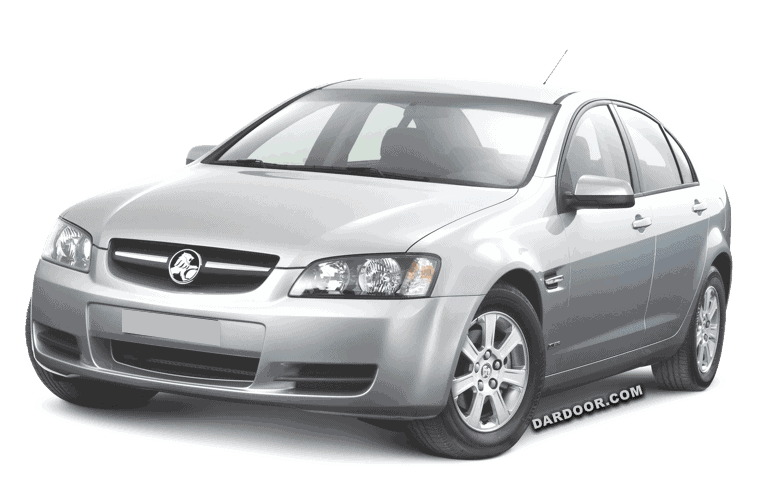
2006–2013 Holden Commodore (VE) — OEM Workshop Service & Repair Manual (Sedan & Wagon) + Wiring Diagrams (PDF)
Download the original OEM workshop service and auto repair manual for the 2006–2013 Holden Commodore (VE) Sedan and Wagon, complete with wiring diagrams in a simple, searchable PDF format. This factory documentation delivers dealer-grade procedures, torque specs, troubleshooting flowcharts, and electrical schematics—ideal for both professional workshops and serious DIY owners.
| File Format |
PDF |
| File Language |
English |
| You’ll Get |
636.5 MB |
| Pages Count |
10,660 |
| Wiring Diagram |
Included |
| Delivery Method |
Instant Download |
Work to factory standards—reduce guesswork and get repairs right the first time.
Also Known As
- Holden Berlina • Holden Calais • Holden Ute
- HSV E Series • CSV CR8
- Chevrolet Lumina (Middle East & South Africa) • Chevrolet Omega (Brazil)
- Pontiac G8 (USA) • Vauxhall VXR8 (UK)
Engines Covered
V6 & Small-Block Coverage
V8 & Performance Coverage
Transmissions Covered
Automatic Transmissions
- 4L60-E / 4L65-E / 4L70-E
- 5L40-E / 5L50-E
- 6L50 / 6L80 / 6L90
Transmission availability may vary by market/trim; the manual covers factory-installed configurations within the VE range.
Key Features
Complete OEM Coverage
Factory procedures across engine, drivetrain, chassis, body, HVAC, and electrical systems.
Wiring Diagrams Included
Power distribution, grounds, connectors, pinouts, harness routing, and network diagnostics.
Diagnostics & DTCs
Troubleshooting flowcharts, test values, fault code references, and repair steps.
Searchable PDF
Quick navigation on any device—print only the pages you need.
What’s Inside
- Maintenance schedules, fluids, capacities, and torque specifications
- Engine mechanical repair, cooling, lubrication, intake/exhaust, fuel & emissions
- Automatic & manual transmission service, diagnostics, and overhaul procedures
- Driveline, differential, axles, and drivability troubleshooting
- Brakes (ABS/ESC), suspension, steering, and alignment
- Electrical systems: wiring diagrams, modules, CAN networks, connectors & locations
- Body repair guidance, interior, restraints (SRS), HVAC & climate systems
Download & Compatibility
Delivery: Instant digital PDF download
Compatibility: Windows • macOS • iOS • Android
This manual provides detailed instructions for maintenance, disassembly, reassembly, component inspection, adjustment, and diagnostics—intended for use by experienced mechanics. Proper application of this guide will help ensure thorough repairs and maintain your vehicle in peak condition.
Important Note: Before purchasing this manual, please check whether your vehicle is subject to any active service recalls, as authorized dealerships may perform necessary repairs free of charge. When replacing parts, always use genuine OEM components to ensure safety, reliability, and long-term performance.
Table of Contents : 2006-2013 Holden Commodore
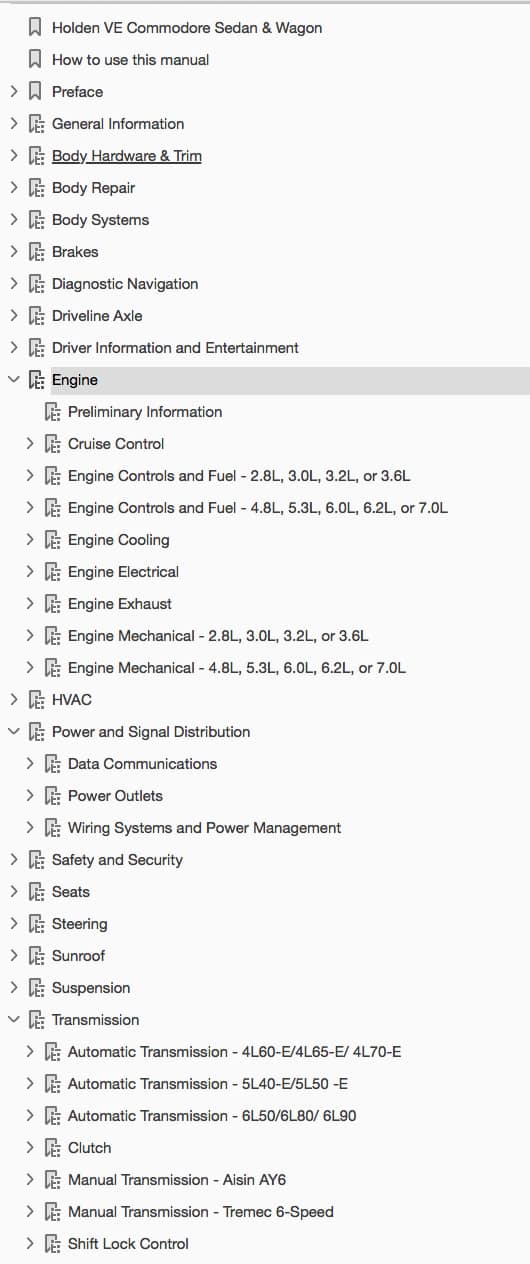
SAMPLE PAGES
CAUTION: This OEM service and workshop repair manual provides detailed procedures for maintenance, disassembly, reassembly, inspection, adjustment, and diagnostics. It is intended as a comprehensive guide for experienced mechanics. To ensure thorough and accurate repairs that maintain your vehicle’s optimal performance, please read and follow this manual carefully. When replacing parts during any repair work,
always use genuine Holden parts to ensure quality, safety, and reliability.
2006–2013 Holden Commodore (VE/VF Series)
Overview
The VE Commodore (2006–2013) was Holden’s full-size sedan/wagon/ute, representing a complete redesign from the previous VZ model. The VF series launched in mid-2013 as a significant facelift. These were Australia’s best-selling large cars during this era and were also exported as the Pontiac G8 (2008–2009) and Chevrolet SS (VF, 2014–2017) in North America.
Body Styles
- 4-door sedan
- 5-door wagon (Sportwagon)
- 2-door ute (pickup)
Market Position
Executive/family car segment, police/fleet vehicle, performance variants (SS, SSV, SV6)
Technical Specifications
Engines
3.0L V6 (LF1/LFW – SIDI)
- Power: 190 kW (255 hp) @ 6,700 rpm
- Torque: 288 Nm (212 lb-ft) @ 2,900 rpm
- Features: Direct injection (SIDI – Spark Ignition Direct Injection)
3.6L V6 (Alloytec/LY7 then SIDI)
- Early models (LY7): 195 kW (261 hp), 340 Nm (251 lb-ft)
- SIDI models (2010+): 210 kW (282 hp), 350 Nm (258 lb-ft)
- Features: Dual overhead cam, variable valve timing
6.0L V8 (L98/L77 – Gen IV)
- Power: 270 kW (362 hp) @ 5,700 rpm
- Torque: 530 Nm (391 lb-ft) @ 4,400 rpm
- Configuration: OHV, pushrod, 16-valve
- Used in: SS, SSV models
6.2L V8 (LS3 – Gen IV)
- Power: 317 kW (425 hp) @ 5,900 rpm
- Torque: 550 Nm (406 lb-ft) @ 4,600 rpm
- Used in: HSV variants, optional on late SS models
Transmissions
- 6-speed manual (Tremec T56/TR6060)
- 6-speed automatic (GM 6L50/6L80)
- 5-speed automatic (5L40-E on early V6 models)
Drivetrain
- Rear-wheel drive (RWD) standard
- All-wheel drive (AWD) available on some models
Dimensions
- Wheelbase: 2,915 mm (114.8 in)
- Length: 4,929 mm (194.1 in)
- Width: 1,899 mm (74.8 in)
- Height: 1,460–1,490 mm (57.5–58.7 in)
- Curb weight: 1,640–1,880 kg (3,615–4,145 lb)
Suspension
- Front: MacPherson strut, coil springs, anti-roll bar
- Rear: Multi-link independent, coil springs, anti-roll bar
Brakes
- Front: Ventilated disc (320–355 mm)
- Rear: Ventilated disc (315–340 mm on V8, solid on V6)
- ABS, EBD, Brake Assist standard
Fuel Capacity
- 71–73 liters (15.6–16.1 US gallons)
Fuel Economy (Combined)
- V6: 10–12 L/100km (20–24 mpg)
- V8: 12–14 L/100km (17–20 mpg)
Top 10 Mechanical & Electrical Issues
1. Timing Chain Failure (3.6L SIDI V6)
Symptoms:
- Rattling noise from engine on cold start
- Check engine light
- Poor performance, rough idle
- Catastrophic engine failure in severe cases
Root Cause:
- Premature wear of timing chain guides and tensioners
- Design flaw in early SIDI engines (2010–2012)
- Oil contamination from direct injection carbon buildup
Fix:
- Replace timing chains, guides, tensioners, and gears
- Often requires complete engine removal
- Update to revised parts
Cost: $3,500–$6,000 AUD ($2,300–$4,000 USD)
2. AFM (Active Fuel Management) Lifter Failure (V8)
Symptoms:
- Ticking/tapping noise from engine
- Check engine light (P0300 misfire codes)
- Reduced power, rough idle
- Oil consumption
Root Cause:
- Collapsed lifters in AFM/DOD (Displacement on Demand) system
- Oil pressure issues starving lifters
- Carbon buildup in lifter bores
Fix:
- Replace affected lifters and camshaft
- Some owners disable AFM with aftermarket solutions
- Flush oil system, use high-quality oil
Cost: $2,000–$4,500 AUD ($1,300–$3,000 USD)
3. Transmission Shudder (6-speed Auto)
Symptoms:
- Vibration/shudder during light acceleration (40–70 km/h)
- Hesitation on gear changes
- Harsh shifting
Root Cause:
- Torque converter clutch shudder
- Contaminated transmission fluid
- Worn clutch material in torque converter
Fix:
- Multiple fluid flushes with GM-approved fluid
- Torque converter replacement in severe cases
- Software updates
Cost: $300–$2,500 AUD ($200–$1,700 USD)
4. Power Steering Pump Failure
Symptoms:
- Whining/groaning noise when turning
- Heavy steering, especially at low speeds
- Power steering fluid leaks
- Warning lights on dashboard
Root Cause:
- Premature wear of pump bearings
- Contaminated fluid
- Design weakness in early VE models
Fix:
- Replace power steering pump
- Flush and refill system
- Check for leaks in hoses/rack
Cost: $400–$800 AUD ($270–$530 USD)
5. Rear Differential Bushing Failure
Symptoms:
- Clunking noise from rear on acceleration/deceleration
- Vibration through floor/chassis
- Wheel hop during hard acceleration
Root Cause:
- Worn or torn differential mount bushings
- Excessive torque (especially V8 models)
- Age-related rubber degradation
Fix:
- Replace differential mount bushings
- Upgrade to polyurethane bushings for longevity
- Check differential for leaks while accessing
Cost: $300–$700 AUD ($200–$470 USD)
6. Electronic Throttle Body Failure
Symptoms:
- Check engine light (P2101, P2119, P2135 codes)
- Reduced engine power mode (limp mode)
- Rough idle, stalling
- Poor throttle response
Root Cause:
- Carbon buildup on throttle plate
- Faulty throttle position sensors
- Electrical connector corrosion
Fix:
- Clean throttle body thoroughly
- Replace throttle body if sensors failed
- Reprogram ECU with updated software
Cost: $150–$800 AUD ($100–$530 USD)
7. Window Regulator Failure
Symptoms:
- Power windows slow or won’t move
- Grinding/clicking noise when operating windows
- Window drops into door or sits crooked
- Intermittent operation
Root Cause:
- Plastic components in regulator mechanism breaking
- Cable fraying or detaching
- Common issue on all doors, especially driver’s side
Fix:
- Replace window regulator assembly
- Lubricate tracks during replacement
- Often sold with motor as complete unit
Cost: $200–$450 AUD per window ($130–$300 USD)
8. Alternator Failure
Symptoms:
- Battery warning light illuminated
- Dimming headlights, interior lights
- Electrical accessories malfunctioning
- Difficulty starting, dead battery
- Whining noise from engine bay
Root Cause:
- Worn bearings in alternator
- Failed voltage regulator
- Diode pack failure
- Higher electrical demands on modern vehicles
Fix:
- Replace alternator (rebuilt or new)
- Test battery and charging system
- Check belt tension and condition
Cost: $300–$700 AUD ($200–$470 USD)
9. Ignition Coil Pack Failure
Symptoms:
- Check engine light (misfire codes P0301-P0308)
- Rough idle, hesitation
- Poor fuel economy
- Lack of power, stumbling under load
Root Cause:
- Heat cycling causing coil breakdown
- Moisture ingress into coil packs
- Age-related failure (common after 100,000 km)
Fix:
- Replace faulty coil pack(s)
- Replace spark plugs simultaneously
- Use OEM or quality aftermarket coils
Cost: $80–$150 AUD per coil ($50–$100 USD); full set $500–$900
10. Fuel Pump Failure (In-tank)
Symptoms:
- Engine cranks but won’t start
- Sputtering/hesitation under acceleration
- Loss of power at highway speeds
- Whining noise from fuel tank
- Stalling when fuel tank is low
Root Cause:
- Worn fuel pump motor
- Contaminated fuel damaging pump
- Electrical connector corrosion
- Common failure point at 150,000+ km
Fix:
- Replace in-tank fuel pump assembly
- Clean fuel tank if contaminated
- Replace fuel filter
Cost: $600–$1,200 AUD ($400–$800 USD)
Top 5 Competitors
- Direct rival, similar size/performance
- Inline-6 turbo (XR6 Turbo) vs Commodore’s V8
- Similar pricing, strong fleet presence
- Also discontinued with Australian manufacturing
2. Toyota Aurion (2006–2017)
- Front-wheel drive alternative
- 3.5L V6, more fuel-efficient
- More reliable but less sporty
- Lower operating costs
- American luxury competitor
- 5.7L/6.4L Hemi V8 options
- More premium positioning
- Higher purchase price
- Sporty FWD sedan
- 3.5L V6, good performance
- Better fuel economy
- Smaller interior space
- Value luxury alternative
- 3.8L V6 or 5.0L V8
- More features for the money
- Less performance heritage
Top 10 Recalls, Advisories & TSB Highlights
1. Takata Airbag Recall (Multiple Campaigns)
- Issue: Defective airbag inflators could rupture
- Models: Most VE/VF Commodores
- Action: Replace driver/passenger airbag inflators
- Status: Ongoing campaign, check VIN
2. Ignition Switch Recall (2013–2014)
- Issue: Ignition switch could move out of “run” position
- Models: VF Commodore (2013–2014)
- Risk: Engine shutdown while driving, loss of power steering/brakes
- Fix: Replace ignition switch assembly
3. Brake Hose Recall (2011–2013)
- Issue: Front brake hoses could crack and leak
- Models: VE Series II (built 2011–2013)
- Risk: Reduced braking effectiveness
- Fix: Replace front brake hoses
4. Fuel Pump Wiring Recall (2006–2007)
- Issue: Fuel pump wiring could chafe and short circuit
- Models: Early VE (2006–2007)
- Risk: Fire hazard
- Fix: Reroute/replace fuel pump wiring harness
5. Transmission Software Update (TSB)
- Issue: Harsh shifting, shudder, poor shift quality
- Models: All 6-speed automatics
- Fix: ECU/TCM software recalibration
- Cost: Usually covered under warranty
6. Timing Chain Inspection Program (TSB)
- Issue: Premature timing chain wear (3.6L SIDI)
- Models: 2010–2012 SIDI V6 engines
- Action: Inspection at dealer, replacement if necessary
- Note: Some warranty extensions applied
7. Power Steering Fluid Leak (TSB)
- Issue: Leaks from power steering pump, hoses, rack
- Models: VE (2006–2010)
- Fix: Replace affected components, updated parts available
8. Rear Suspension Knuckle Crack (Recall)
- Issue: Rear suspension knuckles could crack
- Models: VE Sportwagon (2008–2013)
- Risk: Loss of vehicle control
- Fix: Inspect and replace if cracked
9. Engine Oil Consumption (TSB)
- Issue: Excessive oil consumption (V8 AFM engines)
- Models: AFM-equipped V8s
- Action: Dealer inspection, piston ring replacement under warranty
- Note: Check oil frequently
10. Headlight Wiring Harness Recall (2013)
- Issue: Headlight wiring could overheat
- Models: VF Commodore (early 2013)
- Risk: Fire hazard
- Fix: Replace headlight wiring harness
Note: Always check with Holden/GM or local authorities for recall status using your VIN.
Maintenance Schedule
Every 10,000 km or 6 months
- Engine oil and filter change (conventional oil)
- Or 15,000 km with full synthetic oil
- Inspect brake pads, rotors, fluid level
- Check tire pressures and condition
- Inspect lights, horn, wipers
- Visual inspection of belts, hoses, leaks
Every 20,000 km or 12 months
- Rotate tires
- Lubricate door hinges, latches
- Inspect exhaust system
- Check battery condition
- Inspect suspension components
- Cabin air filter replacement
Every 40,000 km or 2 years
- Replace air filter
- Inspect drive belt(s)
- Inspect cooling system, check coolant strength
- Brake fluid replacement
- Inspect fuel system lines and connections
Every 60,000 km or 3 years
- Replace spark plugs (V6: iridium, V8: platinum/iridium)
- Transmission fluid and filter change (6-speed auto)
- Differential fluid change (RWD/AWD)
- Inspect steering and suspension thoroughly
- Replace fuel filter (if external)
Every 80,000 km or 4 years
- Replace engine coolant
- Inspect/replace drive belt(s)
- Inspect timing chain condition (V6)
- Throttle body cleaning
Every 100,000 km or 5 years
- Major service: all fluids
- Comprehensive brake system inspection/service
- Replace transmission fluid (manual)
- Inspect timing chain thoroughly (SIDI V6)
As Needed
- Brake pads: 40,000–80,000 km (varies by driving style)
- Battery: 3–5 years
- Tires: 40,000–80,000 km
- Wiper blades: 6–12 months
V8 AFM Models: Check oil level every 1,000 km due to consumption issues
Final Buyer Recommendations
1. Which engine is most reliable?
The early 3.6L Alloytec V6 (LY7) without direct injection is generally most reliable. The SIDI V6 (2010+) has timing chain issues. The V8s are robust but watch for AFM lifter problems. For reliability: LY7 V6 > L98/L77 V8 > SIDI V6.
2. What’s the difference between VE Series I and Series II?
Series II (2010–2013) featured:
- Updated 3.0L and 3.6L SIDI engines
- Revised exterior styling (grille, headlights, taillights)
- Improved interior materials
- Updated infotainment
- Better safety features
3. Are these expensive to maintain?
Moderate to high. Parts are reasonably priced in Australia but can be expensive elsewhere. V8 models consume more fuel. Budget $1,500–$2,500 AUD annually for routine maintenance, more for repairs on higher-mileage examples.
4. What mileage is too high?
With proper maintenance, these can exceed 300,000 km. Be cautious above 200,000 km and ensure full service history. V6 SIDI engines should have had timing chains addressed. V8s should show regular oil changes.
5. Is the manual or automatic better?
Manual (Tremec) is more engaging, reliable, and suited to performance driving. 6-speed auto is smooth when working properly but prone to shudder. The 5-speed auto in early V6s is less desirable.
6. What should I check when buying used?
- Full service history (critical)
- Timing chain condition (SIDI V6)
- Transmission smoothness (test drive in various conditions)
- Differential bushings (clunks)
- Window regulators operation
- Check engine light/fault codes
- Evidence of regular oil changes
- Recall completion status
7. Are parts still available?
Yes, but diminishing. Common service items remain widely available. Some specific parts becoming scarce. Aftermarket support is strong, especially for V8 performance parts. Source important spares now for long-term ownership.
8. How much does insurance cost?
Varies by model. SS/V8 models are expensive to insure (high theft/performance vehicle). Base V6 is more affordable. Expect $1,000–$2,500+ AUD annually depending on age, location, driving record, and model.
9. Can I use E85 fuel?
Some MY12-13 models came E85-capable from factory (flex-fuel). Others can be converted with aftermarket ECU tuning. E85 provides more power (especially V8) but reduces fuel economy by 20–30%. Check compliance plate or consult specialist.
10. What’s the best model for daily driving?
VE Series II Omega/Berlina with 3.6L Alloytec V6 (non-SIDI, 2010 only) or SV6 with manual transmission. Good balance of performance, fuel economy, and reliability. Avoid early SIDI unless timing chains confirmed replaced.
Final Buyer Recommendations
✅ Best Bets
For Reliability:
- 2006–2009 VE Omega/Berlina with 3.6L Alloytec V6 (LY7)
- Avoid direct injection SIDI engines unless timing chains documented as replaced
For Performance:
- 2010–2013 SS with 6.0L V8 and manual transmission
- Good power, proven engine, engaging to drive
- Ensure AFM lifters and differential bushings addressed
For Value:
- VE Series I SV6 (2006–2010) with manual transmission
- Depreciation bottomed out, parts still available
- Good performance without V8 running costs
For Family Use:
- VE/VF Sportwagon with V6 or V8
- Excellent cargo space, comfortable
- Check rear suspension knuckles (recall item)
⚠️ Proceed with Caution
- 2010–2012 models with 3.6L SIDI V6 (timing chain issues)
- High-mileage examples without service history
- Heavily modified performance variants
- Models with outstanding recalls
- Automatic transmission cars with shudder (expensive fix)
❌ Avoid
- Any vehicle without comprehensive service history
- SIDI V6 engines with rattling noise (expensive timing chain repair imminent)
- Automatics with harsh shifting/shudder unless priced to reflect repair
- Flood-damaged or accident-repaired vehicles
- Examples with check engine light on (could indicate major issues)
💰 Budget Planning
Purchase Price:
- VE Omega V6: $8,000–$15,000 AUD
- VE SS V8: $15,000–$25,000 AUD
- VF models: $20,000–$35,000+ AUD
Annual Operating Costs (estimate):
- V6: $3,000–$5,000 (fuel, insurance, maintenance)
- V8: $4,500–$7,000+ (higher fuel, insurance, potential repairs)
Emergency Fund: Keep $3,000–$5,000 for unexpected repairs (timing chains, transmission, etc.)
🔧 Pre-Purchase Inspection Checklist
- Professional mechanical inspection (mandatory)
- Scan for fault codes
- Compression/leak-down test on engine
- Timing chain inspection (V6 SIDI)
- Transmission fluid condition
- Test drive 15+ minutes, varied conditions
- Verify VIN against recalls/service bulletins
- Check for oil leaks, fluid weeps
- Inspect for accident damage/paintwork
- Verify all electrics function properly
🎯 Our Final Verdict
The VE/VF Commodore represents the end of an era for Australian-made large sedans. When properly maintained, they’re capable, comfortable, and enjoyable vehicles. The V8 models offer tremendous performance for the money, while V6 variants provide a good balance of economy and capability.
Key to success: Buy on condition and service history, not just price. A well-maintained example with records is worth significantly more than a neglected bargain. Budget for preventative maintenance and address known issues proactively.
These cars are becoming collectible, especially SS/V8 manual variants. Values may stabilize or appreciate for pristine examples as Australian manufacturing nostalgia grows.
Bottom line: A good VE/VF Commodore is an excellent value proposition for enthusiasts who understand the maintenance requirements and have realistic expectations about running costs.